

Your body works as one connected system
Body systems we map in our Lakewood Ranch office
Digestion, hormones, immunity, mood — every body system depends on nervous-system regulation. Explore the systems our team maps every day to understand what's driving how a patient feels.
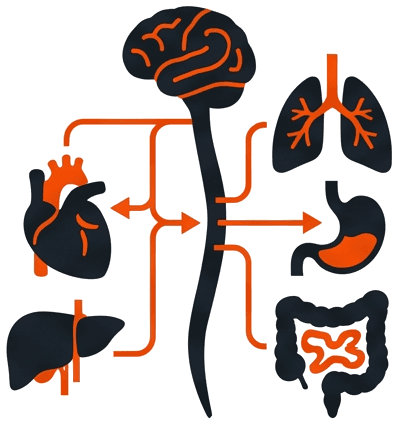
The body's automatic regulation system
Autonomic Nervous System
The autonomic nervous system runs everything you don't have to think about — heart rate, breathing, digestion, sleep cycles, stress response. When it's regulated, the body recovers easily; when it's stuck in 'fight or flight,' everything else strains.
Explore system →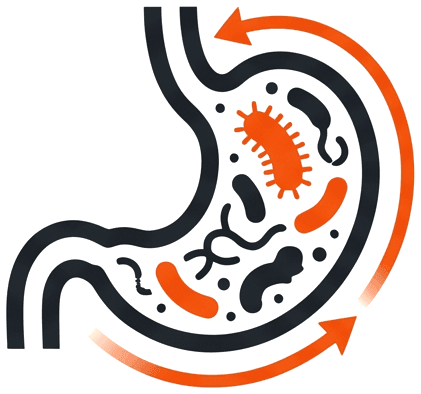
Gallbladder, liver, stomach, pancreas, spleen
Digestive & Detox
The mid-thoracic region is the gateway to the major digestive and detox organs. Patients with chronic digestive issues, gallbladder concerns, or liver-related fatigue often show structural patterns in this region.
Explore system →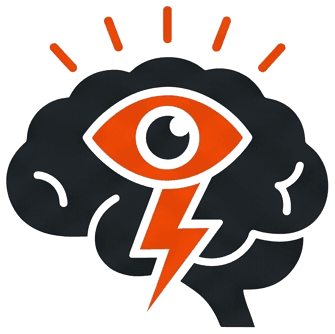
Head, neck, and sensory systems
ENT, Sinus, Vision & Balance
The structures of the upper neck and head — ears, nose, throat, sinuses, eyes, balance organs — share nerve supply with the upper cervical spine. Issues in this region show up as recurring sinus issues, balance disturbances, vision strain, and ear or throat sensitivity.
Explore system →
From pituitary to ovaries — the messenger system
Hormonal & Endocrine
The endocrine system spans multiple spinal regions. Hormonal imbalance often involves nervous system dysregulation as a contributor — which is why a structural assessment alongside hormone-focused medical care can be helpful for some patients.
Explore system →
The body's defense + repair network
Immune System
The immune system spans multiple regions of the body and is influenced by the nervous system, gut health, and stress response. Chronic immune dysregulation often shows up as recurring illness, slow recovery, allergies, or chronic inflammation.
Explore system →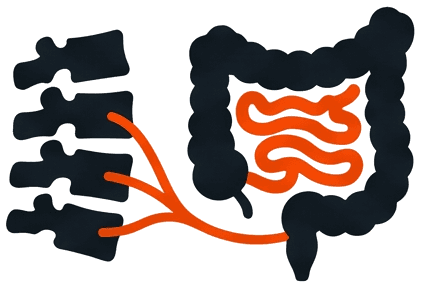
Large intestine, bladder, and elimination
Lower GI & Elimination
The lower thoracic and lumbo-sacral regions house nerves that influence the colon, bladder, and elimination function. Chronic constipation, IBS-style patterns, and bladder issues frequently correlate with structural patterns in this region.
Explore system →
Joints, muscles, and the structures that move you
Musculoskeletal & Mobility
Every region of the spine influences musculoskeletal function. Chronic pain, restricted movement, and joint dysfunction often start as a small structural pattern that compounds over years. Early structural assessment + corrective care prevents the cascade.
Explore system →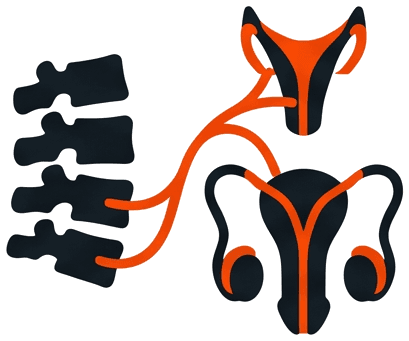
From cycles to pelvic floor function
Reproductive & Pelvic
The lumbo-sacral region houses nerve supply to reproductive organs, the pelvic floor, and surrounding tissue. Patients with cycle issues, fertility patterns, or pelvic dysfunction often see structural patterns here. Always alongside gynecological or urological medical care.
Explore system →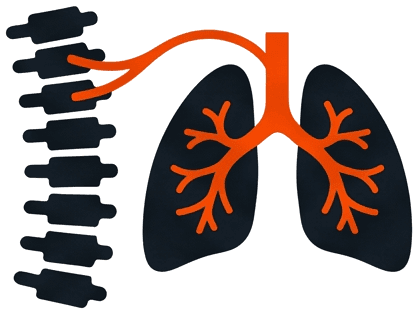
Heart and lungs — the engine room
Respiratory & Cardiac
The upper thoracic spine houses nerve supply to the heart, lungs, and bronchi. Patients with chronic respiratory or functional cardiac patterns sometimes find that addressing structural patterns in this region complements primary medical care.
Explore system →
The cortisol axis — how the body handles stress
Stress Response & Adrenal
Chronic stress shows up everywhere. The lower thoracic spine houses adrenal nerve supply, and dysregulation here often correlates with the cluster: poor sleep, fatigue, low motivation, abdominal weight gain, anxiety. Care here is about supporting nervous system recovery.
Explore system →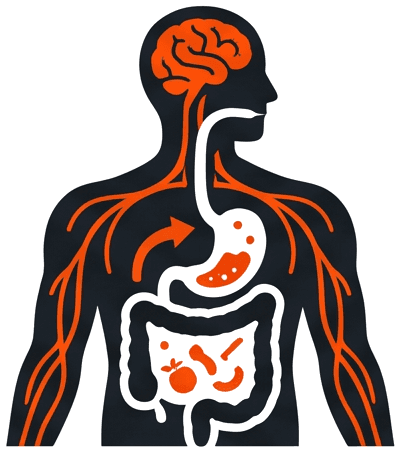
Esophagus, stomach, and metabolic regulation
Upper GI & Metabolism
The cervical and upper thoracic regions influence the esophagus, upper stomach, and metabolic glands like the thyroid. Patients with chronic reflux, weight regulation, or thyroid-related concerns often see structural patterns here.
Explore system →These pages describe how nervous-system regulation can support each body system — they're educational, not medical advice. Always consult your medical doctor for serious health concerns; chiropractic care complements but doesn't replace primary medical care.
Want a personalized look at your nervous system?
Start with a complimentary consultation. We use a neurological evaluation to map your nervous system in person — no commitment, no cost.