

The Science
How Red Light Heals at the Cellular Level
Photobiomodulation isn't a wellness fad — it's a well-researched mechanism for stimulating cellular repair, reducing inflammation, and accelerating healing.
Photobiomodulation Explained
Light → Mitochondria → Energy → Repair
Specific wavelengths of red and near-infrared light penetrate skin and tissue and reach the mitochondria — the small structures inside every cell that produce energy. The light is absorbed by an enzyme called cytochrome c oxidase, which kicks off a cascade of cellular activity.
The result: your cells produce more ATP (adenosine triphosphate, the energy currency that powers every biological process), inflammation decreases, blood flow improves, and tissue repair accelerates. This isn't a placebo effect — it's a measurable shift in how your cells function.
The research literature on photobiomodulation now includes hundreds of peer-reviewed studies covering pain management, wound healing, skin health, athletic recovery, and inflammation reduction. The science is mature enough that the FDA has cleared multiple red light devices for specific therapeutic uses.
Not All Red Light Is Equal
Why Medical-Grade Matters
Consumer red light panels and infrared saunas can feel nice, but they often fall short of the wavelength precision and intensity required to drive the therapeutic mechanisms above. The difference between a hobbyist device and a clinical-grade system is the difference between feeling warm and triggering measurable cellular change.
Our system delivers calibrated wavelengths in the precise red and near-infrared bands that research has shown to be most effective. The intensity is dialed to therapeutic levels, the exposure time is controlled, and the care environment is private and consistent.
That precision is why we recommend red light therapy as part of an integrated care plan rather than a standalone wellness add-on. When the cellular mechanisms are firing properly, the rest of your care — chiropractic, decompression, soft tissue work — works better and faster.
Hear It Explained
Dr. Logan on Red Light Therapy
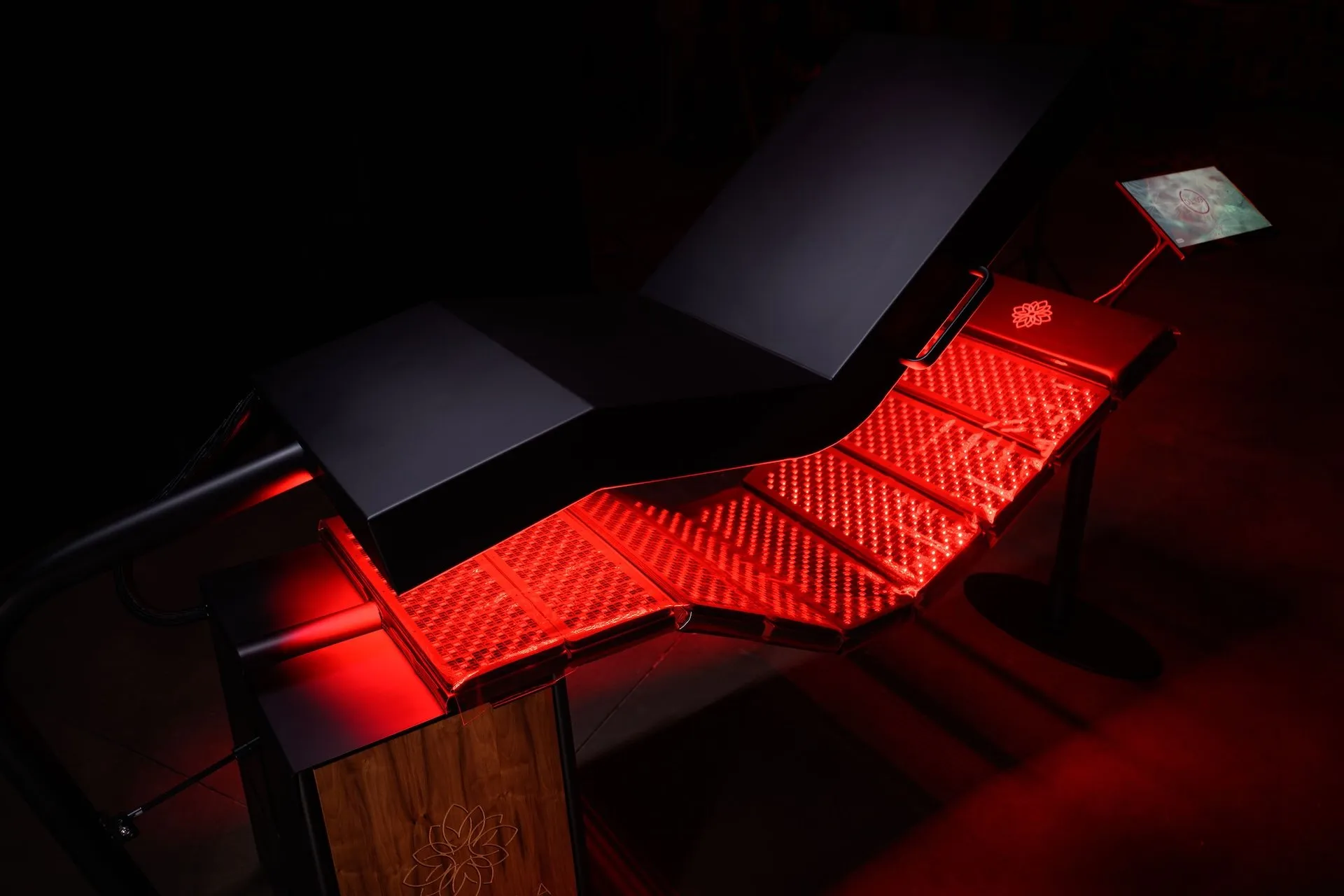
Inside the bed
The mechanism,
from photon to cell.
Dr. Logan on the research
Red light vs saunas, and the lung research.
The DAHLIA Pinnacle, up close
Engineering meets clinical-grade care.
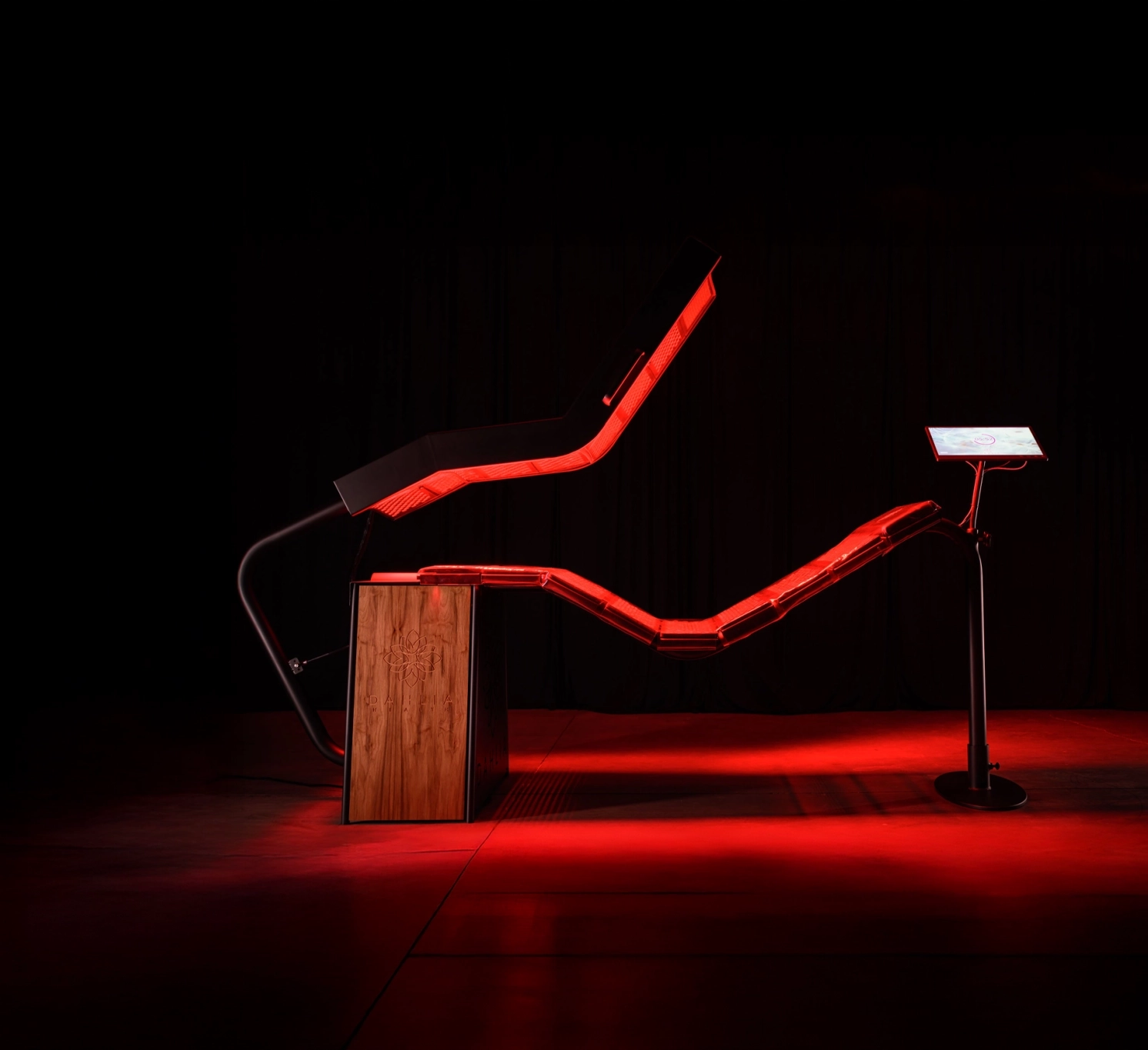
The DAHLIA Pinnacle — our full bed, glowing.
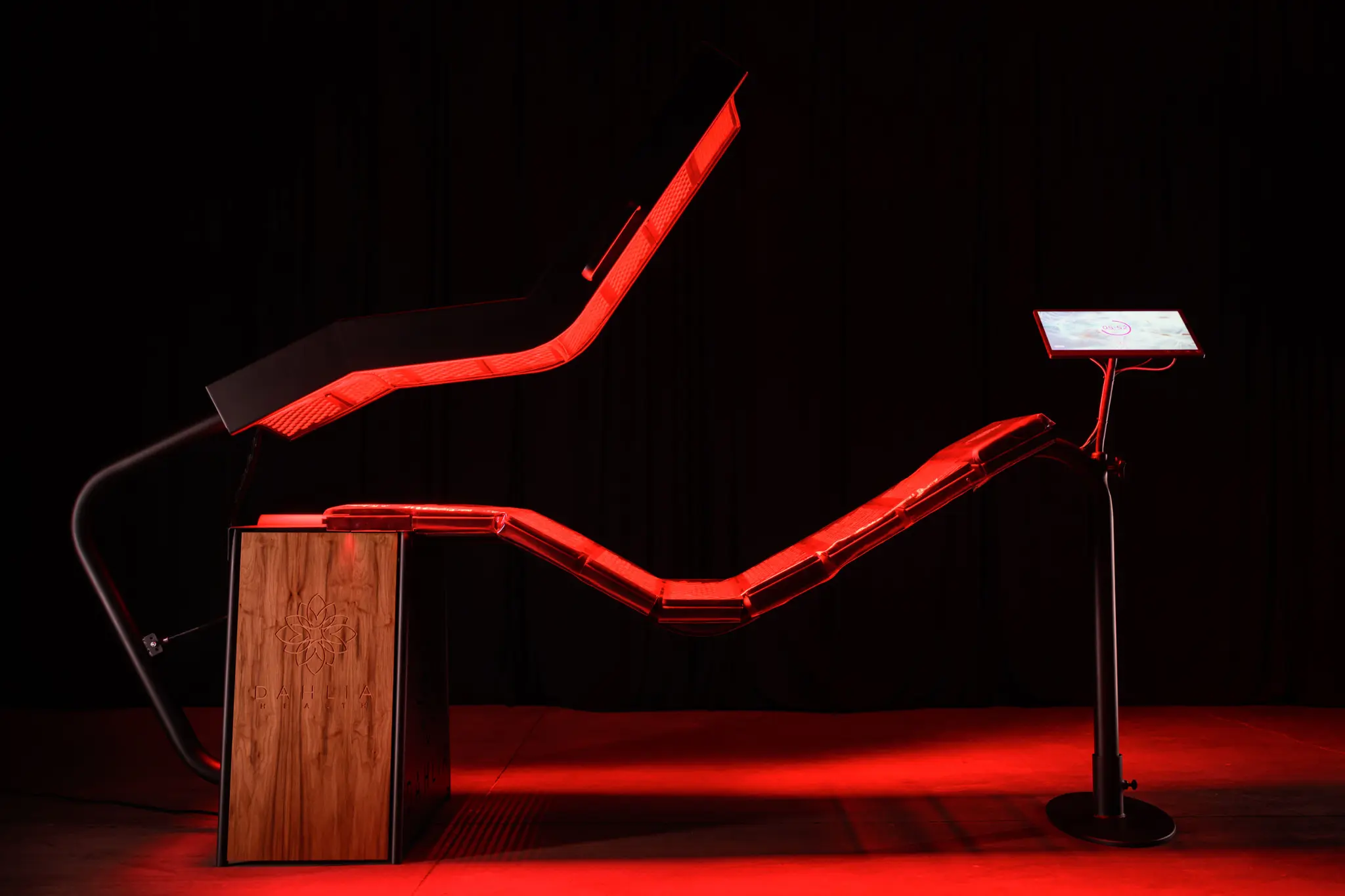
A chaise that curves with the body.
16 panels, each with its own sensor.
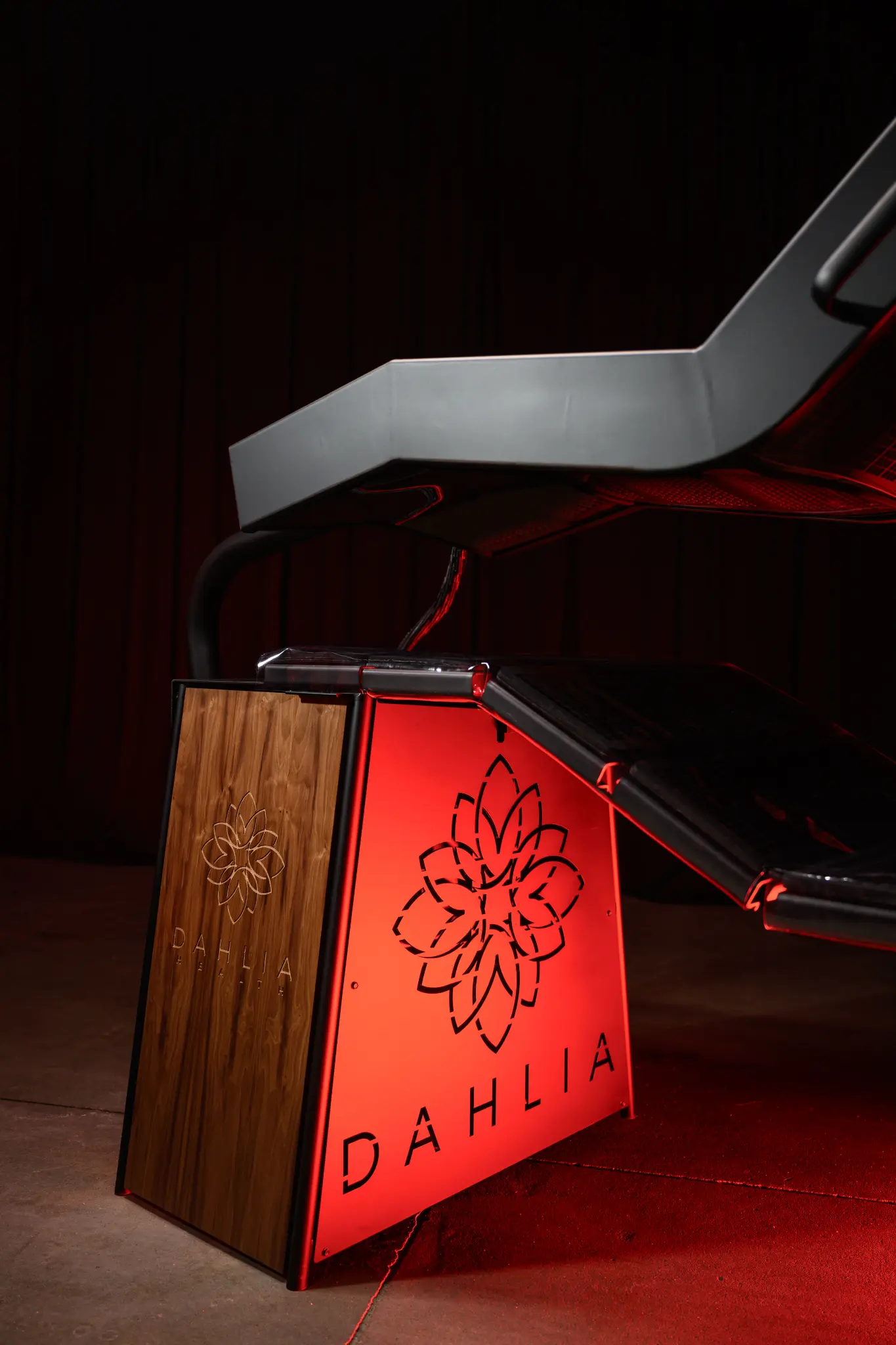
Craftsmanship you can feel — DAHLIA Health.
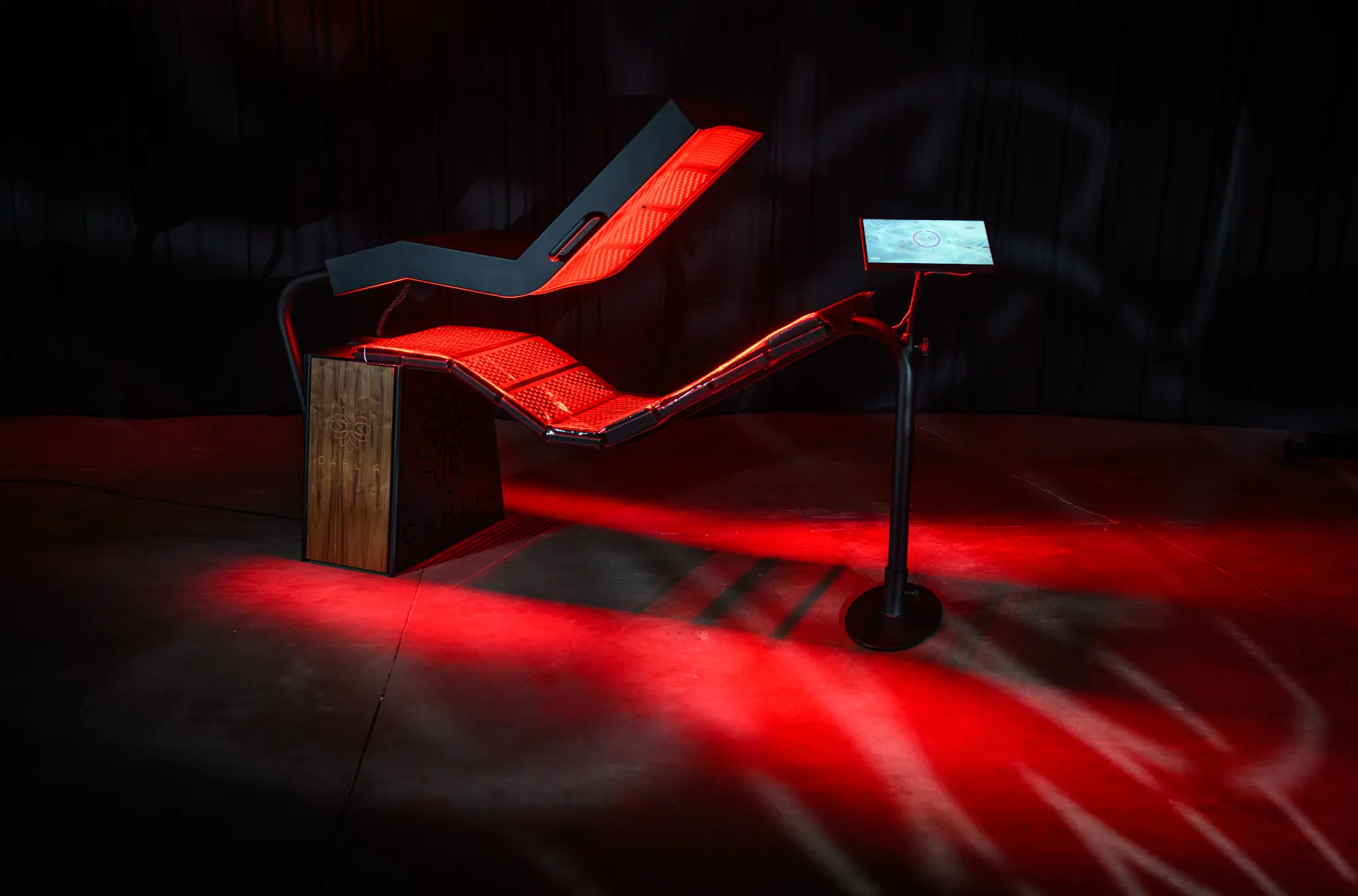
A room built for the bed.
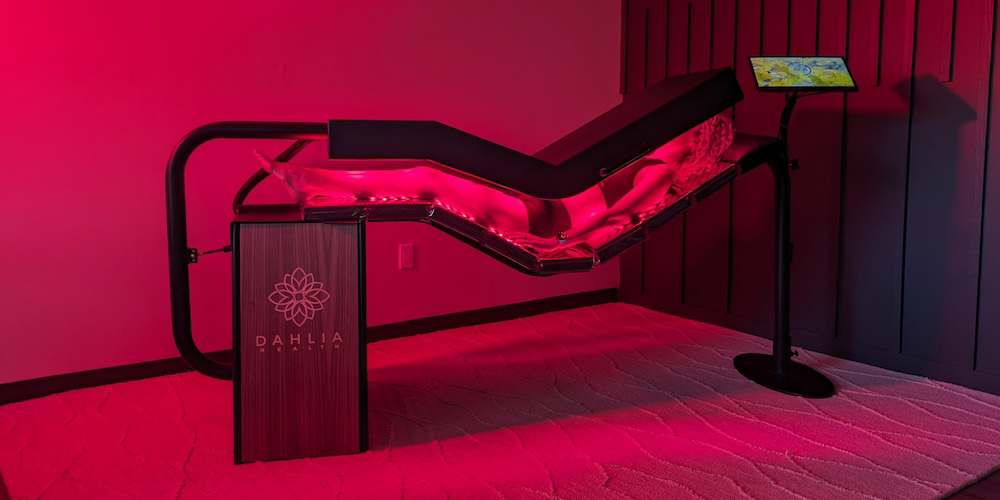
Your private room.
Keep Exploring
Conditions red light supports
See It in Person.
Schedule a comprehensive exam and we'll walk you through whether red light therapy is right for your care plan.