

Breech Baby? How the Webster Technique Supports Natural Turning
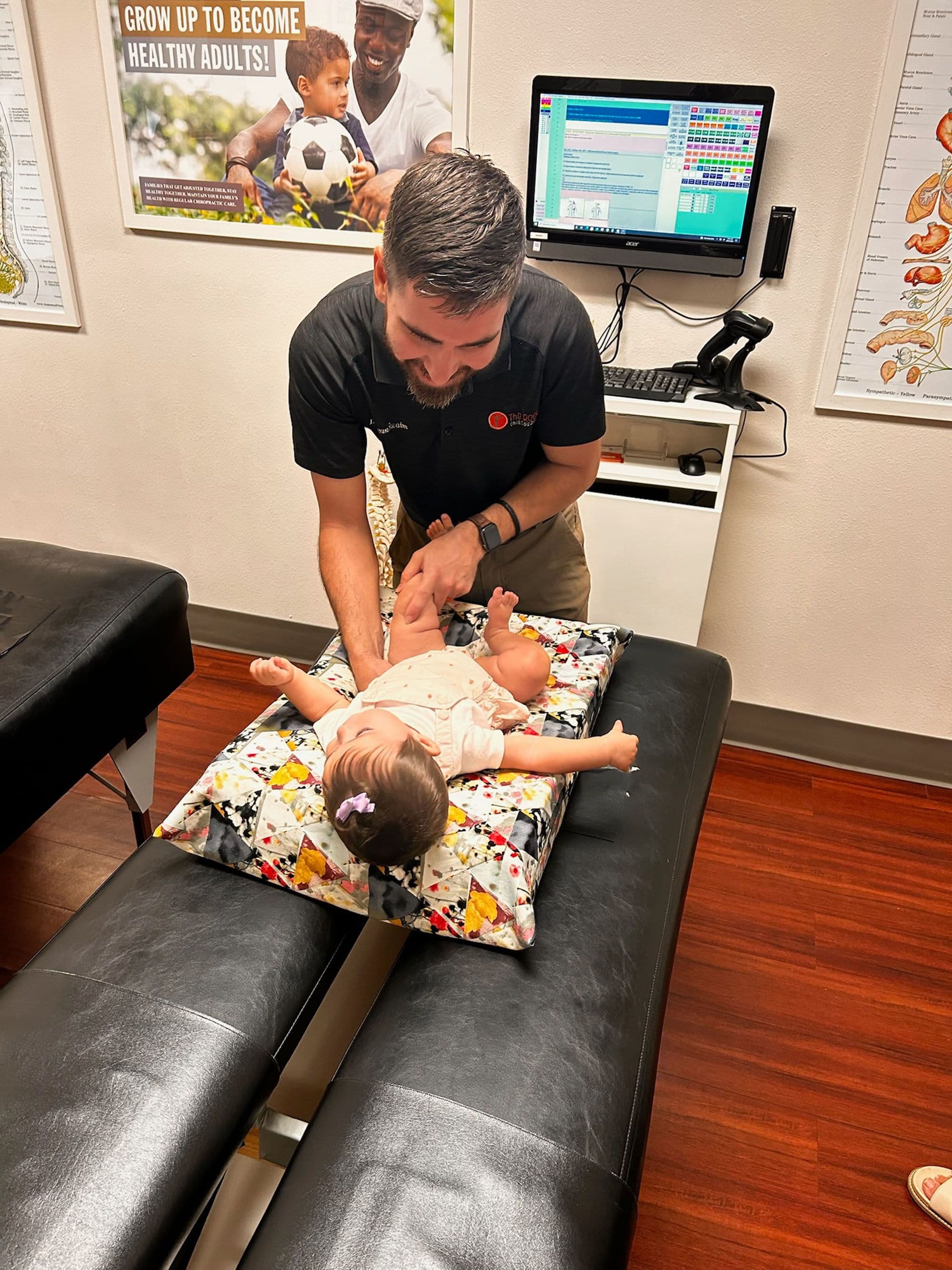
If your provider just told you your baby is breech, your mind is probably racing. You are picturing a C-section, Googling "how to flip a breech baby," and wondering what you did wrong. Take a breath. Breech presentation is more common than most parents realize — roughly 3 to 4 percent of full-term pregnancies present breech — and in many cases the baby still has time and space to move into a head-down position before delivery. The Webster Technique, a specific chiropractic analysis and adjustment developed for pregnancy, is one of the gentlest, most well-studied ways to support that process.
At Little Roots Pediatric Chiropractic in Lakewood Ranch, FL, our team is ICPA Webster Technique Certified and works with pregnant moms throughout Sarasota, Bradenton, and Manatee County who are looking for options beyond "wait and see" or an immediate surgical birth.
What Does Breech Presentation Actually Mean?
In a typical pregnancy, the baby settles into a head-down (vertex) position by the early-to-mid third trimester. Breech means the baby is positioned with their buttocks or feet closest to the birth canal instead of their head. There are a few variations:
- Frank breech — buttocks down, legs folded up toward the head (the most common type)
- Complete breech — buttocks down, knees bent with feet near the buttocks
- Footling breech — one or both feet are positioned to come out first
Breech presentation is not a disease or a defect. It is a positioning issue, and in many cases it is directly related to the space and balance available inside the pelvis. That is exactly where the Webster Technique comes in.
What Is the Webster Technique — And What Does It Actually Do?
Here is the most important thing to understand: the Webster Technique does not turn babies. No chiropractor turns a baby. The technique restores balance to the pelvis — specifically the sacrum, the sacroiliac joints, and the round ligaments — so that the uterus is no longer constrained and the baby has room to move into an optimal position on their own.
Developed by Dr. Larry Webster, founder of the International Chiropractic Pediatric Association (ICPA), the technique addresses a common pregnancy pattern: when the sacrum (the triangular bone at the base of the spine) shifts or locks, the round ligaments that support the uterus tighten unevenly. That uneven tension changes the shape of the space the baby has available. The baby ends up in whatever position fits — sometimes that is breech, sometimes transverse, sometimes posterior.
The Webster adjustment is a specific sacral analysis followed by a gentle, low-force correction. There is no twisting, no cracking, and no pressure on the abdomen. Many moms describe it as one of the most relaxing parts of their prenatal care.
Why Does Pelvic Balance Matter for Baby Positioning?
Your pelvis is not just a bony ring — it is a dynamic structure held together by ligaments, supported by muscles, and constantly adapting to the weight and hormonal shifts of pregnancy. The round ligaments, which attach from the uterus to the front of the pelvis, act like guide wires. When those guide wires are balanced, the uterus sits symmetrically and the baby has maximum room to move.
When the pelvis is restricted — from sitting at a desk all day, from a previous fall, from the natural asymmetries of daily life — one side tightens more than the other. The uterus gets pulled slightly off-center. The baby, who is constantly seeking the most comfortable position, may settle breech or transverse because head-down no longer fits the available space.
Restoring pelvic balance does not guarantee the baby will turn. But it removes one of the most common mechanical reasons the baby stays in a non-optimal position. Many moms who receive consistent Webster care during their third trimester find that their baby moves into a head-down position without any external force.
What Does a Webster Session Look Like?
If you have never been to a chiropractor — or if your only experience is the traditional twist-and-crack style — a Webster session will probably surprise you. Here is what to expect at Little Roots:
- Assessment. our team evaluates your sacrum, pelvis, and round ligaments. She is looking for specific imbalances that could be contributing to uterine constraint.
- Adjustment. A gentle, specific correction to the sacrum using a pregnancy-adapted drop-piece table. You lie face down on a table with a built-in belly panel so there is zero abdominal pressure. The adjustment itself takes seconds.
- Soft tissue work. Light work on the round ligaments to release any uneven tension.
- Follow-up guidance. Positioning suggestions, stretches, and recommendations for visit frequency based on where you are in your pregnancy.
The entire visit typically runs 15 to 20 minutes. There is no medication, no invasive procedure, and no risk to the baby. Most moms report feeling lighter and more comfortable walking out than walking in.
Is the Webster Technique Safe During Pregnancy?
Yes. The Webster Technique was specifically developed for pregnant women and is one of the most widely studied chiropractic protocols in prenatal care. The ICPA has published data showing a high rate of resolution for breech presentation among mothers receiving Webster care.
Key safety points:
- No abdominal contact. The adjustment is to the sacrum and pelvis, not the belly.
- Low force. The correction is gentle enough to use throughout all three trimesters.
- Pregnancy-adapted tables. The drop-piece table at Little Roots has a belly cutout so you can lie face-down comfortably even at 38 or 39 weeks.
- No contraindications for normal pregnancy. If you have a high-risk condition (placenta previa, preeclampsia, etc.), Dr. Laura coordinates with your OB or midwife before beginning care.
The American Pregnancy Association recognizes chiropractic care as safe throughout pregnancy, and the ICPA specifically endorses the Webster Technique for addressing sacral subluxation and uterine constraint.
When Should You Start Webster Care for a Breech Baby?
The earlier, the better — but it is rarely too late. Many moms start prenatal chiropractic care in the first trimester for general comfort and continue through delivery. If you are specifically seeking Webster care because your baby is breech, here is a general timeline:
- Before 30 weeks: Babies move frequently at this stage and breech is common. Webster care supports overall pelvic balance as the baby grows.
- 30 to 34 weeks: Most babies begin settling into their delivery position. This is an ideal window to begin focused Webster care if the baby has not turned.
- 34 to 37 weeks: The window where most moms feel urgency. The baby has less room to move but pelvic balance still matters. Many moms experience their baby turning during this period with consistent Webster care.
- 37+ weeks: Tighter quarters, but not hopeless. Restoring pelvic balance can still support the baby in finding a head-down position.
Each pregnancy is different, and we take a personalized approach based on what your body needs. Some moms notice their baby move after one or two visits. Others benefit from consistent weekly care over several weeks. There is no one-size-fits-all timeline.
How Is the Webster Technique Different from an ECV?
An external cephalic version (ECV) is a medical procedure performed by an OB-GYN, usually at 36 to 37 weeks. The doctor places their hands on your abdomen and physically pushes the baby into a head-down position. It is typically done in a hospital setting with continuous fetal monitoring, and in some cases with medication to relax the uterus.
The Webster Technique takes a completely different approach:
| Webster Technique | ECV | |
|---|---|---|
| What it does | Restores pelvic balance so baby can turn on their own | Manually rotates the baby from outside |
| Who performs it | Webster-certified chiropractor | OB-GYN in a hospital |
| Force | Very gentle, no abdominal contact | Moderate to firm abdominal pressure |
| Timing | Can begin any trimester | Usually 36-37 weeks |
| Sessions | Multiple visits over days or weeks | Single procedure |
| Risk profile | Extremely low | Low but includes rare complications (placental abruption, cord compression) |
These are not competing options — they are complementary. Many moms pursue Webster care first and keep ECV as a backup if the baby has not turned by 37 weeks. Others do both. our team works alongside your OB or midwife, not in place of them.
What Else Can You Do Alongside Webster Care?
Pelvic balance is the foundation, but there are other things that support a baby in finding a head-down position:
- Spinning Babies techniques. Forward-leaning inversions, side-lying releases, and other positioning exercises designed to create space in the pelvis.
- Swimming or floating. Buoyancy takes pressure off the pelvis and gives the baby room to move.
- Hands-and-knees position. Spending 10 to 15 minutes a day on all fours encourages the baby to move away from the spine.
- Moxibustion. An acupuncture technique that applies heat near the pinky toe. Some studies support its effectiveness alongside chiropractic care.
- Avoiding deep reclined positions. Couches and recliners can encourage posterior positioning. Sitting upright or leaning slightly forward is better.
None of these replace Webster care, but they complement it. Managing pregnancy-related back pain through regular chiropractic visits also keeps the pelvis mobile and balanced throughout the third trimester.
Frequently Asked Questions About the Webster Technique and Breech Babies
Does the Webster Technique turn a breech baby? No. The Webster Technique restores balance to the pelvis and reduces uterine constraint. This gives the baby more room to move into a head-down position on their own. The chiropractor never applies force to the baby.
How many visits does it take for a breech baby to turn? Each pregnancy is unique, so there is no set number. Some moms notice their baby move after the first visit, while others benefit from several weeks of consistent care. We take a personalized approach based on what your body needs.
Is the Webster Technique safe in the third trimester? Yes. The technique was designed specifically for pregnancy and is safe throughout all three trimesters, including weeks 37 through 40. The adjustment is gentle, involves no abdominal pressure, and uses a pregnancy-adapted table.
Can I get Webster care if I am already seeing an OB or midwife? Absolutely. Webster care complements your existing prenatal team. our team coordinates with your provider to make sure your care plan is aligned.
What if my baby does not turn after Webster care? Some babies remain breech for reasons unrelated to pelvic balance — cord length, placental position, or the shape of the uterus. Webster care still benefits the mother by reducing pregnancy-related back pain, improving pelvic mobility, and supporting a smoother delivery regardless of the baby's position.
Is the Webster Technique only for breech babies? No. The technique supports pelvic balance for any pregnancy. Many moms receive Webster care to help with back pain, round ligament discomfort, and overall comfort — not just for breech presentation. Read more about the Webster Technique and pregnancy.
Take the Next Step
If your baby is breech and you want to give your body the best chance at a head-down delivery, pelvic balance is the place to start. our team is ICPA Webster Technique Certified and has helped moms throughout Lakewood Ranch, Sarasota, and Bradenton navigate breech presentation with gentle, evidence-based care.
You do not have to choose between "wait and hope" and a scheduled C-section. There is a middle path — and it starts with giving your pelvis and your baby the space they need.
Book a complimentary consultation or call (941) 932-4611 to talk through your options. You can also learn more about our full prenatal care program and infant chiropractic services for after your baby arrives.