

First Trimester Chiropractic Care: What Every Expecting Mom Should Know
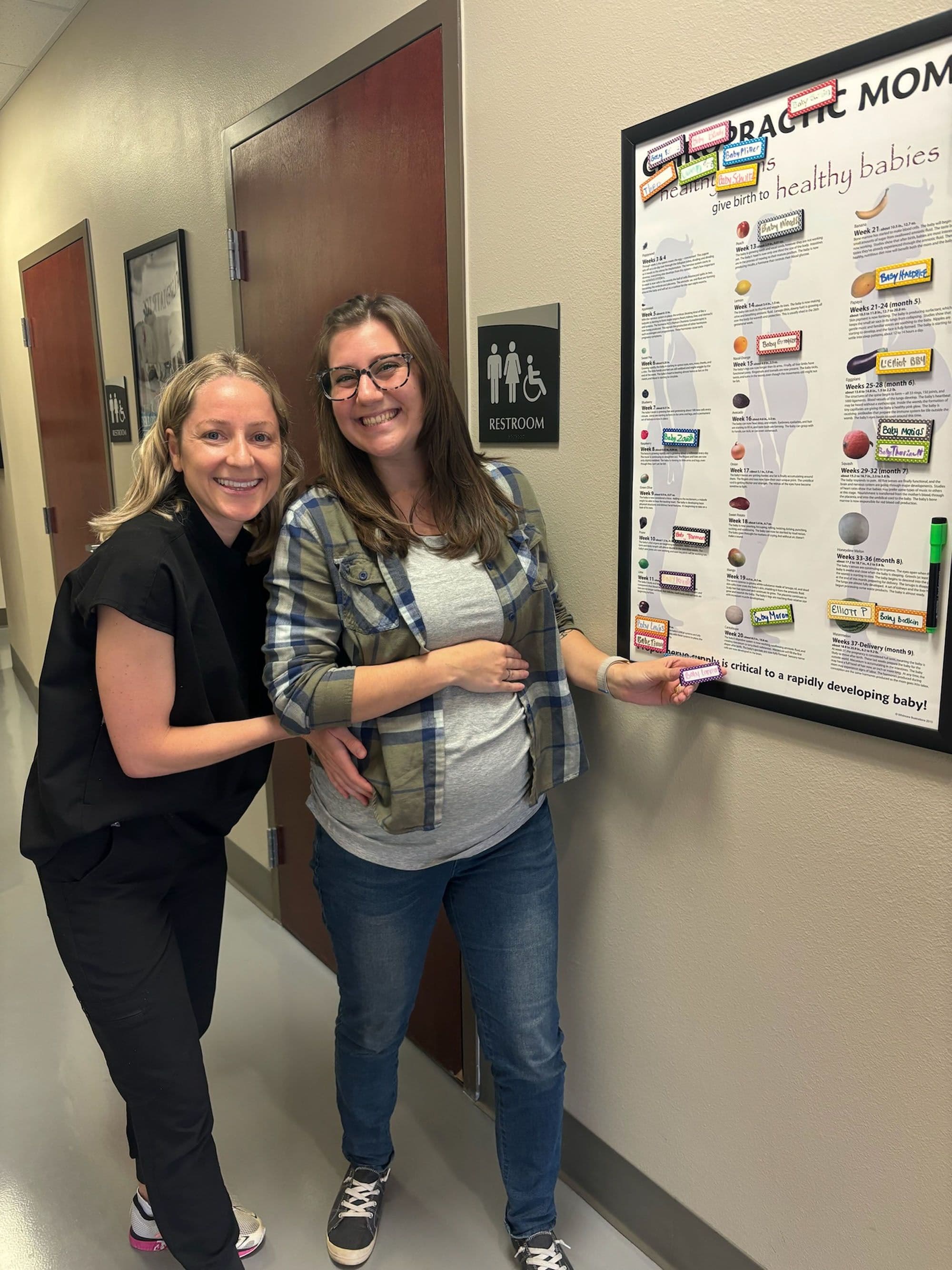
First trimester chiropractic care is one of the questions we hear most often at Little Roots Pediatric Chiropractic — usually from moms who just got a positive test and are already feeling the changes in their body. The short answer: yes, chiropractic is safe during early pregnancy. The longer answer is that for many women, the first trimester is the single most beneficial time to start, because the structural and hormonal shifts happening right now will shape how the rest of your pregnancy feels.
We understand the instinct to be cautious. You are protecting someone who cannot protect themselves yet. That caution is healthy — and it is exactly why we want you to have real information instead of secondhand anxiety. Everything that follows comes from our team, who is ICPA Webster Technique Certified and has supported hundreds of moms through all three trimesters at our Lakewood Ranch office.
Is Chiropractic Safe During the First Trimester?
The American Pregnancy Association recognizes chiropractic care as safe throughout pregnancy, including the first trimester. There are no known contraindications to chiropractic adjustments for healthy pregnancies.
A few things that make prenatal chiropractic different from what you might picture:
- No high-force twisting or cracking. our doctors use the Webster Technique — a specific analysis and gentle adjustment designed for the pregnant pelvis (read our full explainer). The pressure is about what you would use to test the ripeness of an avocado.
- Modified positioning. Our tables have drop-away sections and pregnancy pillows so you never lie flat on your belly — even in the first weeks.
- Collaborative care. We work alongside your OB-GYN or midwife, not instead of them. If you have a high-risk pregnancy, placenta previa, or an ectopic pregnancy concern, we always coordinate with your provider first.
The moms who feel most nervous about starting care are often the ones who benefit most, because that anxiety usually signals they are already dealing with discomfort and do not know where to turn.
What Changes in Your Body During the First Trimester?
You may not look pregnant yet, but your body is already doing extraordinary structural work:
- Relaxin is rising. This hormone loosens ligaments throughout the pelvis and spine to prepare for delivery. The side effect: joints that were stable before pregnancy are now a little too mobile, especially the SI joints and pubic symphysis.
- Your center of gravity is shifting. Even before a visible bump, the uterus is growing and your lumbar spine begins to adapt its curve.
- Postural muscles are compensating. As pelvic alignment changes, the muscles in your lower back, hips, and mid-back start working overtime to stabilize a body that feels subtly different every week.
- Blood volume is increasing. Your cardiovascular system is ramping up, which can affect how quickly soft tissues swell and how slowly they recover.
These changes are normal. They are also the reason so many first-trimester moms experience low back aching, round ligament twinges, SI joint stiffness, pelvic pressure, and hip tightness well before they start showing. Addressing pelvic alignment early — before compensations become habits — sets the foundation for a more comfortable second and third trimester.
How Does Prenatal Chiropractic Help with Nausea and Fatigue?
Morning sickness and bone-deep fatigue are two of the hallmarks of the first trimester, and while they have obvious hormonal drivers, the nervous system plays a role that often gets overlooked.
Your vagus nerve — the longest cranial nerve in the body — runs from your brainstem through your neck and into your digestive organs. When the upper cervical spine and cranial base are misaligned, that nerve does not communicate as efficiently. Many prenatal patients report that gentle upper cervical work helps them feel less nauseated and more rested.
We are careful about how we frame this: chiropractic care does not cure morning sickness. What it can do is support better communication between the brain and the digestive system, which for some moms makes a noticeable difference in how they feel day to day.
The same principle applies to sleep. First-trimester fatigue is real and partly hormonal, but when your spine and pelvis are out of alignment, your body spends energy on muscular compensation that it could be spending on rest and recovery. Many patients tell us they sleep better within the first week or two of starting care.
What Happens at a First-Trimester Chiropractic Visit?
If you have never been to a chiropractor — or if your only reference is a loud-cracking adjustment from a sports chiropractor — a prenatal visit at Little Roots will feel very different.
Your first visit includes:
- Consultation. Dr. Laura will ask about your pregnancy, your symptoms, your birth plan, and any concerns. This is not a rushed intake form — she wants to understand what you are feeling and what matters to you.
- Neurological evaluation. A non-invasive scan that shows how your nervous system is functioning. This gives us a baseline so we can measure progress objectively over the course of your pregnancy.
- Postural and pelvic assessment. We look at how your pelvis is sitting, whether one side is higher or rotated, and how your spine is adapting to the changes already underway.
- Gentle adjustment. If appropriate at that first visit, Dr. Laura will perform a Webster Technique adjustment — a light, specific contact on the sacrum and surrounding ligaments. Most moms describe it as surprisingly gentle.
- Personalized recommendations. Each pregnancy is different. We take a personalized approach based on what your body is showing us, your comfort level, and your goals for pregnancy and birth.
The entire first visit takes about 45 minutes. Follow-up visits are shorter — typically 15 to 20 minutes.
When Should You Start Prenatal Chiropractic Care?
There is no "too early" for prenatal chiropractic. Many of our moms begin care as soon as they find out they are pregnant — sometimes before they have even seen their OB for the first time.
Here is a general guide for your pregnancy journey:
- Weeks 4–8: Relaxin is climbing, early structural shifts are beginning. Starting care now helps your pelvis stay balanced as everything loosens.
- Weeks 8–12: Nausea, fatigue, and low back aching peak for many moms. This is when most new patients call us.
- Weeks 12–14 (end of first trimester): Your body has established its new hormonal baseline and the bump is just starting to appear. Moms who started care earlier often notice they feel more stable and less symptomatic than they expected.
If you are already past the first trimester — that is completely fine. You can start prenatal chiropractic care at any point. But the earlier you begin, the more time we have to support your body through every phase of growth.
Some moms ask whether they should wait until they are "further along" or until something hurts. Our perspective: you do not need to be in pain to benefit from care. Keeping the pelvis balanced throughout pregnancy is the same logic as seeing your dentist before you have a cavity.
What Should You Tell Your OB or Midwife?
Most OB-GYNs and midwives in the Lakewood Ranch and Sarasota area are familiar with chiropractic care during pregnancy, and many actively recommend it. If your provider asks about it, here is what you can share:
- You are seeing a chiropractor who is ICPA Webster Technique Certified — a credential specific to prenatal and pediatric chiropractic
- The adjustments are gentle and low-force — no high-velocity rotational manipulation
- Your chiropractor uses objective nervous-system scans to track progress
- The focus is on pelvic balance and nervous-system support, not pain management alone
If your OB or midwife has specific concerns based on your pregnancy history, we are happy to coordinate directly. We regularly communicate with providers in the area to make sure everyone on your care team is aligned.
Can First-Trimester Chiropractic Help Prevent Problems Later?
One of the most common reasons moms seek chiropractic care in the third trimester is a breech baby. The Webster Technique is well-studied for supporting optimal fetal positioning by maintaining pelvic balance — but by the 34th or 36th week, the window is narrow.
Moms who start care in the first trimester are already working with a balanced pelvis by the time positioning matters most. They are also less likely to develop the compensatory patterns — sciatic nerve irritation, severe round ligament pain, pubic symphysis dysfunction — that make the third trimester so uncomfortable for many women.
This is not a guarantee. Every pregnancy is different, and we never promise specific outcomes. What we can say is that a pelvis that has been supported and balanced from early on tends to adapt more gracefully as the baby grows.
From Dr. Laura: "The moms who start earliest are the ones who tell me their pregnancy was so much easier than they expected. They are not necessarily pain-free every day — pregnancy is a full-body experience — but they feel more in control of how their body adapts, and that confidence carries into labor and delivery."
Frequently Asked Questions
Can I see a chiropractor in my first trimester if I have had a miscarriage before?
Yes. Chiropractic adjustments do not increase miscarriage risk. The forces used in prenatal care — especially the Webster Technique — are extremely gentle. If your pregnancy is considered high-risk, we will coordinate with your OB or midwife before beginning care.
How often should I go to the chiropractor during the first trimester?
Each pregnancy is different, so we take a personalized approach. Many first-trimester moms come in once a week. Some come every other week if their symptoms are mild. Dr. Laura will recommend a schedule based on what your neurological evaluation and pelvic assessment show.
Will the chiropractor crack my back while I am pregnant?
No. The Webster Technique does not involve twisting, popping, or high-force manipulation. It is a gentle, specific contact primarily on the sacrum and surrounding ligaments. Most moms say it feels like light pressure — nothing startling.
Is chiropractic covered by insurance during pregnancy?
Many plans do cover chiropractic care. We offer a complimentary benefits check at your first visit so you know exactly what your plan covers before any financial decisions.
What if I am not sure chiropractic is right for me yet?
Come in for a complimentary consultation. Meet Dr. Laura, tour the office, ask your questions. There is zero pressure to start care — we would rather you feel fully comfortable and informed.
Can prenatal chiropractic help with sciatica during pregnancy?
Sciatic nerve irritation is one of the most common reasons pregnant moms seek care, especially as the pelvis shifts and the baby grows. The Webster Technique addresses pelvic alignment, which is often the root of pregnancy-related sciatica. Many moms experience meaningful relief within the first few visits.
Pregnancy is a season of change — fast, constant, and sometimes overwhelming. First trimester chiropractic care is not about fixing anything. It is about supporting your body through one of the most demanding things it will ever do, starting from the moment you know you are growing a new life.
If you are newly pregnant and curious about whether prenatal chiropractic is right for you, our team would love to meet you. Call (941) 932-4611 or book a complimentary consultation online.