

Florida's 14-Day PIP Window: What Auto Accident Victims Need to Know
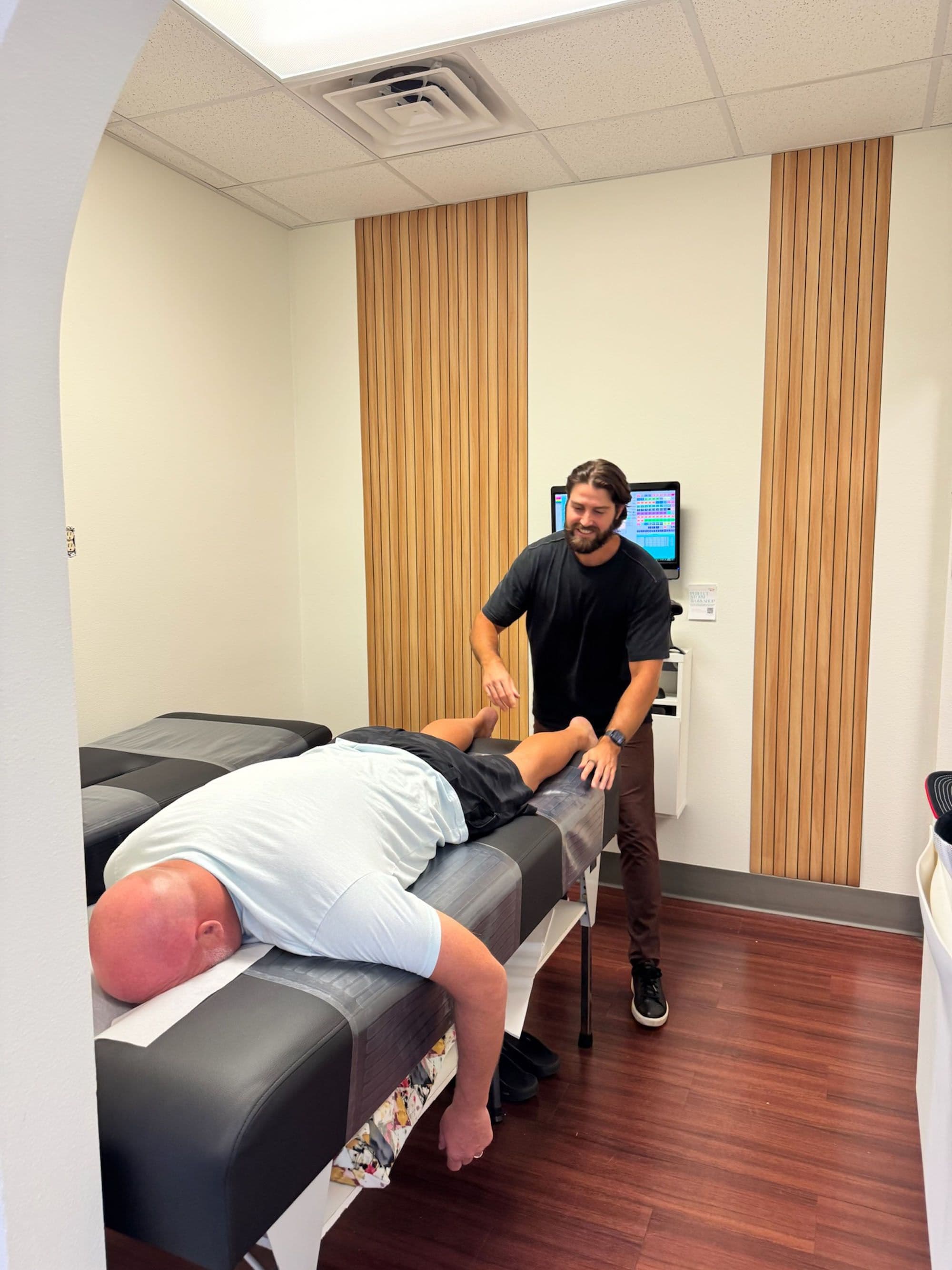
You get rear-ended in traffic on University Parkway. The other driver's insurance exchanges information with yours. Your car has a crumpled bumper but drives fine. You feel shaken but physically okay — maybe a little tight through the neck, nothing serious. You drive home, file the claim, call the body shop, and get on with your week. Two and a half weeks later you wake up with a throbbing headache and a neck that barely turns. You call your insurance to start treatment, and a claims adjuster tells you matter-of-factly that you missed your 14-day window. Your Personal Injury Protection benefits are forfeited. Whatever care you need now, you will be paying for out of pocket. This scenario happens every single day in Florida.
Florida's no-fault system, explained simply
Florida is one of about a dozen states with a no-fault auto insurance system. The core idea: regardless of who caused an accident, your own insurance covers your medical bills (up to your policy limit) so minor accidents do not get tied up in fault determinations and litigation.
The vehicle that holds this coverage is Personal Injury Protection (PIP). Every registered driver in Florida must carry a minimum $10,000 in PIP coverage. That coverage pays:
- 80% of reasonable and necessary medical expenses
- 60% of lost wages (if applicable)
Remaining balances are sometimes covered by other policies or by the at-fault party in a liability claim.
Where the 14-day rule came from
In 2012, House Bill 119 reformed Florida's PIP statute. One of the biggest changes was the 14-day rule: to use your PIP coverage for medical care related to an accident, you must receive initial medical treatment within 14 days of the date of the accident. Miss that window, and you forfeit PIP coverage entirely for that accident — regardless of how injured you turn out to be.
The legislature's reasoning was to reduce PIP fraud and incentivize prompt, documented treatment for people who were actually injured. The side effect: people who are injured but do not immediately realize it can lose their coverage entirely.
The 14-day clock is strict. It starts on the date of the accident. It does not extend because you were on vacation, because you thought you were fine, or because you were waiting to see if the pain would clear on its own. There is no "but I did not know" exception.
What counts as "initial medical treatment"
The initial treatment must be rendered by an approved provider and documented as accident-related. Approved providers include:
- Medical doctors
- Osteopaths
- Chiropractors
- Dentists
- Supervised advanced practitioners
A straightforward evaluation visit within the 14 days is typically sufficient. You do not need to begin a full course of treatment — you just need to have seen an eligible provider and had your condition documented.
Emergency Medical Condition (EMC) determinations
Here is where the statute gets more complex and more important:
- The 14-day rule gives you access to PIP coverage up to $2,500
- To unlock the full $10,000 of your PIP coverage, a qualified provider must make an Emergency Medical Condition (EMC) determination
- Without an EMC determination, your benefits are capped at $2,500 — which runs out quickly with any substantive treatment
Who can make an EMC determination? Medical doctors, osteopaths, dentists, physician assistants, advanced registered nurse practitioners — and chiropractors with specific training and credentialing. Dr. Logan Swaim qualifies to make EMC determinations based on clinical findings, and this is part of our initial auto accident evaluation.
How a Florida PIP claim actually works, step by step
The legal deadline is only part of the picture. Here is the process itself, in order:
- Report the accident to your own auto insurer as soon as possible, separate from your medical evaluation and regardless of who was at fault.
- Get evaluated by an eligible provider within 14 days, who documents your condition as accident-related.
- The provider bills your PIP carrier directly — not your health insurance, which is not interchangeable for accident-related care.
- If the findings support it, your provider makes an EMC determination, moving you from the $2,500 cap to your full PIP benefit.
- Documentation continues throughout your care — every visit builds the record your carrier, and any attorney if one gets involved, will rely on.
At The Roots Health Centers, our front office manages steps three through five directly with your carrier, so you are not untangling paperwork while you are still recovering.
Why post-accident injuries often show up late
Many of the most common auto accident injuries are designed by the body's physiology to show up over days, not minutes:
- Whiplash and cervical/lumbar sprain-strain
- Disc bulges and herniations
- Concussions
- Soft-tissue damage
Immediately after an accident, adrenaline and endorphins mask pain for several hours. Over the next 24 to 72 hours, your body mounts an inflammatory cascade — and the inflammation itself causes the stiffness, headache, neck pain, and mid-back pain most whiplash patients describe. Disc injuries often take 3 to 14 days to declare themselves. Concussion symptoms can take 24 to 72 hours to fully emerge.
The "I feel fine, I will wait and see" strategy is the single most dangerous move you can make after a Florida auto accident.
The first hours after a crash: what to do at the scene
What you do in the first hour or two shapes both your health outcome and your ability to use your PIP coverage later:
- Check for injuries and move to safety first, if it is safe to do so
- Call the police, even for a low-speed fender bender — Florida law requires a report for injury or meaningful property damage, and it becomes part of your documentation either way
- Exchange information: name, insurance carrier and policy number, license plate, and a photo of the other driver's insurance card
- Photograph everything — both vehicles, the license plates, the road or intersection, and any visible injuries
- Get contact information for any witnesses, in case fault is disputed later
- Start a simple symptom log that same day, even for things that feel minor — a stiff neck, a headache — since it becomes valuable if symptoms develop further in the days that follow
None of this requires you to know yet how injured you are. It just means you are not scrambling to reconstruct details two weeks later.
Common mistakes Florida drivers make after a crash
A few patterns repeat themselves, and most come from a reasonable place — nobody wants to overreact to a fender bender:
- Waiting to see if the pain goes away on its own, which quietly eats into the 14-day window
- Assuming a low-speed or minor-looking accident does not warrant a visit — vehicle damage and bodily injury do not always correlate
- Assuming health insurance will automatically cover accident-related care — many plans exclude it once PIP is in play
- Treating an ER visit as the end of the process — it rules out serious trauma but is not the same as a follow-up evaluation focused on your spine, joints, and nervous system
Why early treatment matters even if you feel fine
Beyond the legal and insurance issues, there are strong clinical reasons to be evaluated early:
- When soft tissue is damaged, your body immediately begins laying down scar tissue
- Scar tissue is less elastic, less organized, and less able to transmit forces
- Started early (within the first week or two), scar tissue can be guided into a functional pattern
- By 6 to 8 weeks post-injury, the pattern is consolidated and much harder to reverse
Patients who wait to seek care for a "minor" accident often end up with chronic neck pain, intermittent headaches, and stiffness that lasts years.
When a chiropractic evaluation makes sense after a crash
A common question we hear: "Do I really need to be seen? It was not that bad of an accident." A chiropractic evaluation makes sense more often than people expect — after any collision with a noticeable jolt, even at low speed, since the forces involved in a rear-end impact do not need to total your car to affect your neck and spine. It also makes sense even if you already went to the ER: an emergency evaluation rules out fractures and other acute trauma, but it is not designed to assess spinal alignment or the kind of auto accident injury patterns a chiropractic exam looks for. And it makes sense even if you feel fine, since an evaluation this early is about documentation and catching what has not surfaced yet.
An evaluation does not commit you to a specific care plan. It gives you and your provider a clear picture of what is actually going on, so next steps are based on findings, not guesswork.
What the evaluation looks like at The Roots Health Centers
When an auto accident patient comes in for their initial visit, we do:
- A thorough history — mechanism of injury, symptoms, medical background, medications
- A full neurological and orthopedic examination
- A neurological evaluation to see how the accident affected the nervous system
- Digital x-rays if clinically indicated
- An EMC determination if the findings support it
- Documentation thorough enough for any claim, attorney review, or deposition
This is the foundation of our auto accident recovery care, which typically combines:
- Torque Release Technique chiropractic
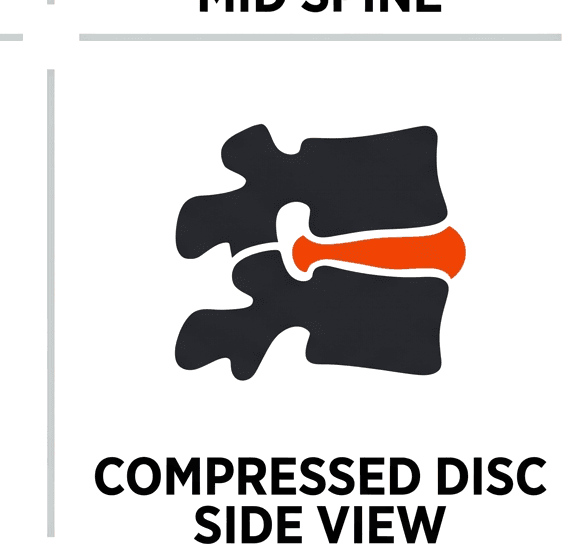
- Spinal decompression if disc involvement is present
- Shockwave therapy for soft-tissue restrictions
- Red light therapy for inflammation control
We handle the PIP paperwork entirely. Our front office works directly with your carrier, verifies your coverage, submits documentation, and manages claims. We also coordinate directly with personal injury attorneys in Manatee and Sarasota counties.
If you go outside PIP
If your injuries exceed the $10,000 PIP limit, or if you miss the 14-day window entirely:
- Health insurance may cover some care (many plans do not cover "accident-related" care once PIP is involved)
- The at-fault driver's liability insurance may cover additional medical expenses and pain and suffering through a third-party claim
- Uninsured or underinsured motorist coverage on your own policy may apply
The legal landscape is specific to your circumstances, which is why we coordinate with attorneys when cases require it.
What if you already missed the 14-day window?
If more than 14 days have passed since your accident and you haven't yet seen a provider, your PIP benefits for that accident are generally forfeited under Florida law — there's no retroactive exception for not realizing you were injured in time. That doesn't mean you're out of options entirely. Your own health insurance, a liability claim against the at-fault driver, or other available coverage may still apply, though the path looks different than a straightforward PIP claim. An evaluation now is still worthwhile: understanding what's actually going on in your body matters regardless of which coverage applies, and documentation from this point forward still supports whatever claim path is available to you. If you're not sure where you stand, our front office can walk you through your options.
Frequently Asked Questions
What happens if I miss the 14-day window? You generally forfeit PIP coverage for that accident, with no exception for not realizing you were injured. Other coverage may still apply, so it's worth having an evaluation and discussing your options with our front office.
Does the 14-day visit have to include X-rays or a full treatment plan? No. A documented evaluation visit with an eligible provider is typically enough to preserve PIP eligibility. Necessary X-rays are ordered only when clinically indicated, not as a default.
Do I need a lawyer to use my PIP benefits? Not for a straightforward claim. Many patients use PIP without ever involving an attorney. For more complex cases, we coordinate directly with personal injury attorneys in Manatee and Sarasota counties.
What if I feel fine after my accident? Many common accident injuries, like whiplash and disc irritation, take days to fully show up because of how the body's inflammatory response works. Feeling fine on day one doesn't rule out an injury that's still developing.
Can a chiropractor make an Emergency Medical Condition determination? Yes. Chiropractors with the appropriate training and credentialing can make EMC determinations, which is part of what unlocks your full PIP benefit rather than the reduced $2,500 cap.
What should I bring to my first evaluation after an accident? Your driver's license, insurance card, the police report or report number if you have one, and any photos or notes about your symptoms since the crash. It helps us document your case thoroughly from the start.
If you have been in any auto accident in Florida — even one where you feel fine — the right move is a thorough evaluation within the first week. Call (941) 877-1507 or schedule a complimentary consultation. We see auto accident patients within 24 to 48 hours. The Roots Health Centers sees hundreds of PIP patients every year. See patient case studies for examples of how we manage recovery. You focus on healing. We take care of the rest.
Conditions We Treat
Auto Accident Injuries
Comprehensive post-accident care including whiplash care, spinal correction, and proper documentation for your case.
Whiplash
Comprehensive whiplash care for car accident victims — corrective chiropractic, decompression, and full PIP documentation within Florida's 14-day window.

Neck Pain
Precise cervical adjustments and decompression that restore alignment, reduce nerve pressure, and eliminate chronic neck pain at its source.
Herniated Disc
Non-surgical care for herniated and bulging discs using FDA-cleared spinal decompression, corrective chiropractic, and integrated soft-tissue therapies.
Services Related to This Post
Keep Reading
Related articles
5 Signs Your Back Pain Isn't Just Muscular
Not all back pain is created equal. If you're experiencing these warning signs, the problem might be deeper than tight muscles.
Read articleHerniated Disc vs. Bulging Disc: What's the Difference?
Both show up on MRIs, both can cause pain — but they're not the same thing. Here's how to tell the difference and what your options are.
Read articleWhat Is Corrective Chiropractic — And How Is It Different?
Most chiropractors focus on temporary symptom relief. Corrective chiropractic is designed to make lasting structural changes — here's how.
Read article