

Massage or Chiropractor First? An Honest Decision Guide

If you're dealing with back pain, neck tension, or a nagging ache and you're standing at the "massage or chiropractor?" fork in the road, you're asking a genuinely useful question — not falling into an either/or trap. The honest, short answer: it depends on what's actually driving your discomfort. Massage therapy works primarily on soft tissue — the muscles and fascia that tighten up around a problem. Chiropractic care works primarily on the joints of your spine and the nervous system running through them, starting with a full evaluation to figure out what's actually happening before recommending a plan. A lot of people benefit from both, sometimes at the same time — but knowing which one to reach for first can save you a frustrating detour.
What Chiropractic Care Actually Addresses
Chiropractic care starts with understanding why an area is bothering you, not just where it's bothering you. At The Roots Health Centers, that begins with a consultation and a full neurological evaluation — a look at how your spine and nervous system are actually functioning, not a generic once-over. If there's a joint that isn't moving the way it should, or nervous system irritation contributing to the pain signal itself, that's the piece chiropractic care using Torque Release Technique is built to address. It's a different starting point than "where does it hurt," and it's why two people with the same symptom can walk away with different recommendations.
What Massage Therapy Actually Addresses
Massage therapy works on soft tissue — the muscles, fascia, and tension patterns that build up around stress, overuse, or a joint that isn't moving well. It can be genuinely effective for relaxation, circulation, and easing tight, overworked muscles. We don't offer massage at The Roots Health Centers, so if that's the right first step for what you're dealing with, a licensed massage therapist is the right call. This guide exists to help you figure out which is the better starting point for your specific situation, not to steer you away from a legitimate option.
A Scenario-by-Scenario Guide
A few common situations tend to point more clearly toward one starting point than the other:
General muscle tightness or stress-related tension. If nothing specific is "wrong" and you just feel tight and want to unwind, massage is often a reasonable first stop.
Back pain that's been building for weeks, or comes and goes. When back pain is tied to how your spine is actually moving, a neurological evaluation can identify what massage alone might not reach.
Neck pain or a stiff neck that won't loosen up. A tight neck can be pure muscle tension, but it's also one of the most common places where joint restriction hides underneath the tightness — worth a chiropractic evaluation before assuming it's "just tension."
Sciatica or pain radiating down your leg. Nerve-related pain like this is squarely chiropractic territory — a massage may temporarily ease the muscle guarding around it, but it won't address a nerve being compressed at the spine.
Numbness, tingling, or a "pins and needles" feeling. Any symptom involving nerve sensation, rather than just tightness, is a signal to get a neurological evaluation first.
After a car accident. Auto accident recovery should start with a proper evaluation, since impact injuries often involve the joints and nervous system in ways that aren't obvious from how sore your muscles feel.
During pregnancy. Pregnancy-related back and pelvic pain calls for a provider trained in pregnancy-specific technique — our sister clinic, Little Roots Pediatric Chiropractic, offers gentle, pregnancy-specific prenatal chiropractic care using the Webster Technique.
Can You Use Both?
For many people, this isn't really an either/or decision at all. Some patients find that massage helps loosen tight muscles that were guarding around a joint issue, which can make the underlying evaluation and care more comfortable. Others find that once a joint restriction has been addressed, ongoing muscle tension actually eases on its own. There's no universal sequence that's right for everyone — each person and case is different, and the right approach depends on what your body actually needs. If you're already seeing a massage therapist and considering chiropractic care too, that's worth mentioning at your consultation so your doctor has the full picture.
A Few Questions to Ask Yourself
If you're still not sure which direction to go, a few questions can help point you toward an answer:
Is the discomfort mostly in the muscle, or does it feel like it's coming from deeper — a joint, or something that radiates? Muscle-only tightness leans toward massage. Anything that radiates, or feels like it's coming from inside a joint, leans toward a neurological evaluation.
Has it been building gradually, or did it show up suddenly with a specific movement or impact? A sudden onset tied to a specific incident, like an accident or a hard fall, is worth a chiropractic evaluation regardless of how it feels, since impact injuries can involve structures beyond just muscle.
Have you tried rest, stretching, or a massage already, without lasting improvement? If temporary relief keeps fading and the issue keeps returning, that's often a sign the source hasn't actually been addressed yet, which is what a full evaluation is designed to identify.
Is there any numbness, tingling, or weakness involved? Any of these point toward the nervous system and are worth a neurological evaluation before anything else.
What to Expect at Your First Chiropractic Visit
If you decide chiropractic care is the right starting point, your first visit is built around gathering the information the rest of the plan depends on: a consultation about your history and symptoms, a full neurological evaluation, any necessary X-rays, and the doctor's recommendations based on what's actually found. We don't promise a same-day adjustment for every new patient — what happens next depends on your evaluation. What to Expect at Your First Chiropractic Visit walks through the full visit in more detail, and Are Chiropractors Safe? covers the safety questions we hear most often.
Frequently Asked Questions
Should I get a massage or see a chiropractor first for back pain? It depends on whether your back pain is mostly muscle tightness or tied to how your spine is moving. If it's been building over weeks, comes with stiffness, or hasn't responded to rest, a neurological evaluation is a reasonable starting point.
Can a chiropractor help with muscle tension, or is that only a massage thing? Muscle tension is often a downstream effect of a joint that isn't moving well or nervous system irritation. Addressing that underlying piece may ease the tension itself, even though chiropractic care isn't a soft-tissue treatment in the way massage is.
Is it safe to get a massage and see a chiropractor in the same week? Many people do both without issue. If you're doing both, it's worth mentioning to each provider so your care is coordinated rather than working at cross purposes.
Which is better for sciatica, massage or chiropractic care? Sciatica involves nerve compression, which is chiropractic territory. Massage may ease the muscle tension that builds up around sciatic pain, but it doesn't address a compressed nerve at its source.
Do I need a referral to see a chiropractor first? No referral is needed. A consultation and neurological evaluation is the starting point, and your doctor's recommendations from there are based on what that evaluation actually shows.
Not sure which one is the right starting point for what you're dealing with? Schedule a complimentary consultation at The Roots Health Centers in Lakewood Ranch, and we'll walk you through a neurological evaluation and help you figure out what your body actually needs.
The Roots Health Centers, 8209 Natures Way, Unit 115, Lakewood Ranch, FL 34202. (941) 877-1507.
Conditions We Treat

Back Pain
Corrective chiropractic care that addresses the structural root cause of back pain — not just masking symptoms with medication.

Neck Pain
Precise cervical adjustments and decompression that restore alignment, reduce nerve pressure, and eliminate chronic neck pain at its source.
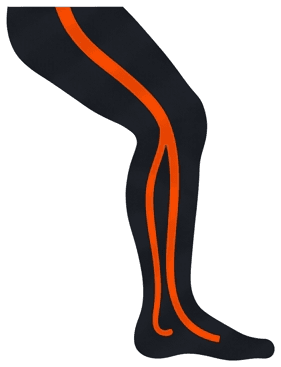
Sciatica
Non-surgical care for sciatic nerve pain using spinal decompression, corrective chiropractic, and supporting therapies.
Services Related to This Post
Keep Reading
Related articles
Are Chiropractors Safe? What to Know Before Your First Visit
Wondering if chiropractic adjustments are safe? Here's what the research shows, what the risks really are, and what to look for in a provider.
Read articleWhat to Expect at Your First Chiropractic Visit
Wondering what happens at your first chiropractic appointment? Here's the full walkthrough — intake, neurological evaluation, X-rays, and your care plan.
Read article