
Are Chiropractors Safe? What to Know Before Your First Visit
Are chiropractors safe? The short answer is yes — chiropractic care has one of the strongest safety records in musculoskeletal healthcare, with decades of research supporting its use for back pain, neck pain, headaches, and a wide range of related conditions. But the better question isn't "is chiropractic safe?" in the abstract. It's "is it safe for me, given my specific history and situation?" That distinction matters, and it's worth understanding before you book your first appointment.
What the Research Actually Shows
Multiple large-scale studies and systematic reviews have assessed the safety of chiropractic care. The consistent finding: serious adverse events from chiropractic are rare. The most commonly cited concern — a possible association between cervical manipulation and vertebrobasilar stroke — appears in studies at approximately 1 in 1–2 million cervical manipulations. Most researchers now interpret this as correlational rather than causal: people in the very early stages of a stroke sometimes experience neck pain or headache and seek care in the days before the event, creating an association that isn't the same as causation.
For comparison, the risk of serious gastrointestinal bleeding from regular NSAID use — a common first-line recommendation for the same conditions chiropractic addresses — is considerably higher. Multiple systematic reviews have found chiropractic management of neck and low-back pain to be a safe clinical option when provided by a properly trained practitioner with a thorough intake process.
What Are the Real Risks?
The most common side effects of chiropractic adjustments are temporary and minor:
Post-treatment soreness. Approximately 30–40% of patients report mild muscle soreness or achiness in the hours after an adjustment, particularly after a first visit or after working on an area that's been tense for a long time. This typically resolves within 24–48 hours and feels similar to the mild soreness after physical therapy or a new exercise routine — not an injury.
Temporary increase in symptoms. Occasionally an area may feel more tender before it starts to feel better, particularly in the first few visits. This is the body adapting to changed spinal mechanics, not worsening damage.
Catastrophic outcomes are rare in the research literature. Providers who conduct thorough intake evaluations and neurological assessments before beginning care are better positioned to identify contraindications that would change or rule out the approach entirely.
When More Caution Is Needed
Chiropractic care isn't appropriate for every situation, and a thorough provider screens for these before recommending it:
Bone fracture or active spinal instability. Manipulation at or near a fracture site or an unstable segment is contraindicated. Recent trauma warrants imaging before any spinal work.
Severe osteoporosis. Very low bone density requires significant technique modification. Low-force approaches may still be appropriate; traditional high-velocity manipulation may not be.
Active spinal cord compression with neurological symptoms. Urgent medical evaluation takes priority over any chiropractic intervention.
Active inflammatory arthritis flares. Timing and approach should be coordinated around inflammatory disease activity.
Cancer involving the spine. Primary spinal tumors or metastatic lesions are contraindications for manipulation.
Blood thinners or clotting disorders. Relevant history, particularly for soft-tissue work.
A good chiropractor asks about all of these during intake. If a provider wants to begin treatment without a thorough health history, that's a warning sign — not a sign of efficiency.
The Technique Makes a Difference
Not all chiropractic approaches are alike. Traditional high-velocity, low-amplitude manipulation — the kind associated with an audible release — is safe for most patients without the contraindications above. But for patients with osteoporosis, significant anxiety about spinal work, or complex health histories, low-force techniques can achieve the same goals with far less mechanical input.
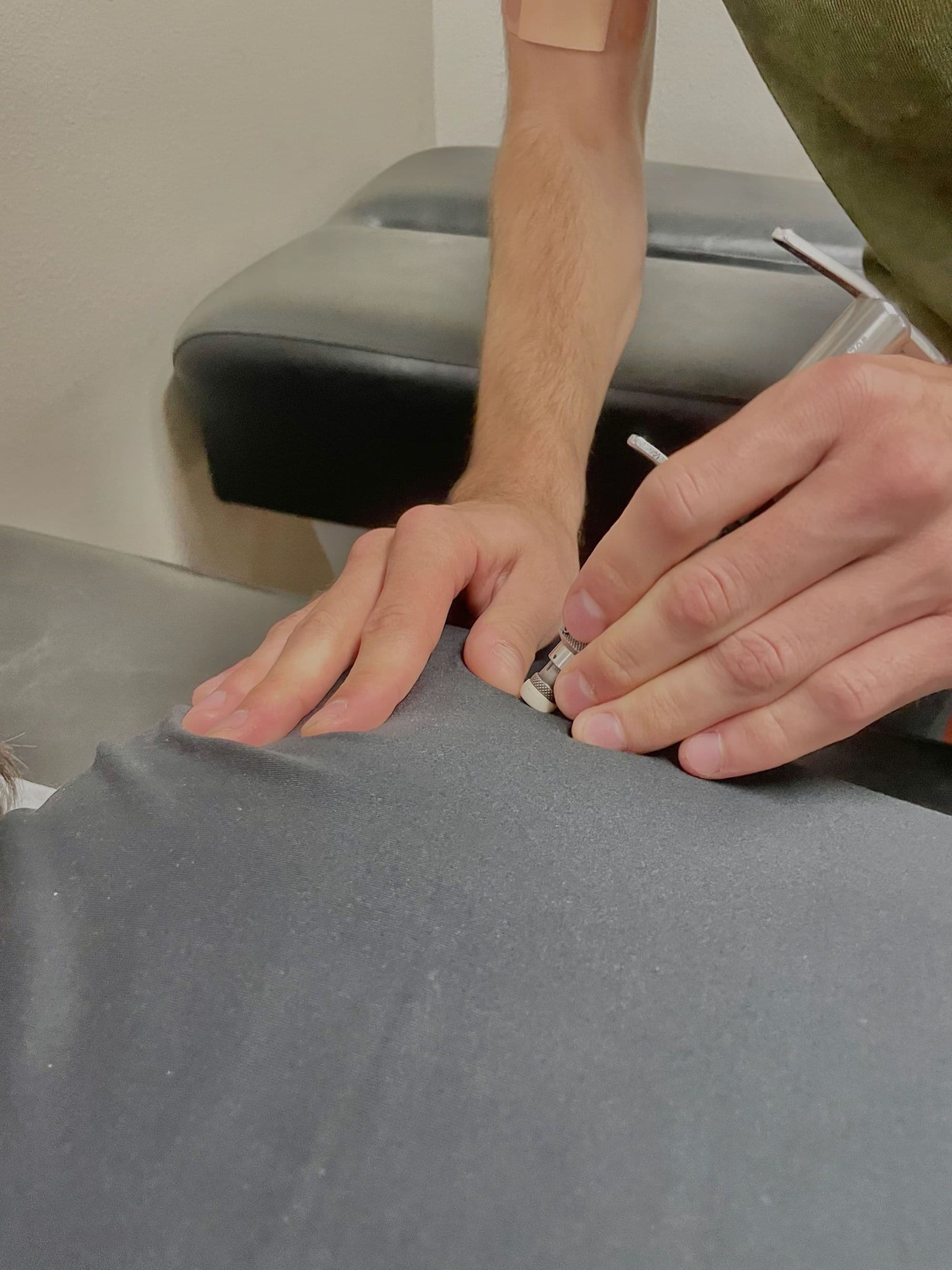
At The Roots Health Centers, our primary adjustment approach is Torque Release Technique (TRT) — a low-force, instrument-assisted method that uses a small hand-held instrument to deliver a precise, controlled impulse. There's no twisting, no cracking, and no bracing. Patients who've been anxious about traditional chiropractic consistently find it far more comfortable than they anticipated.
Every case begins with a full neurological evaluation before any adjustment — mapping nervous system function and identifying what's actually happening in the spine. Understanding the picture first means the care that follows is targeted and appropriate, not routine.
Is Chiropractic Safe During Pregnancy?
Yes — with a provider who has specific prenatal training and adapts their technique accordingly. The primary considerations during pregnancy are: avoiding prone positioning (face-down on the table), steering clear of direct abdominal pressure, and modifying force and positioning as pregnancy progresses.
Webster Technique — a specific chiropractic analysis and adjustment approach developed for prenatal care — is widely used throughout pregnancy and supported by the International Chiropractic Pediatric Association (ICPA). Many OBs and midwives refer patients for it when pelvic pain, low-back discomfort, or suboptimal fetal positioning is present.
At The Roots Health Centers, prenatal care is part of what we do for families across Lakewood Ranch and the surrounding area. If you're expecting, ask about Webster Certified prenatal care when you call.
Is Chiropractic Safe for Children?
Yes, when provided by someone with pediatric training and appropriate technique adaptation. Chiropractic for infants and young children uses dramatically less force than adult care — in newborns, a fingertip-level pressure is the appropriate input. Force and approach scale with the child's size, age, and development.
Research on pediatric chiropractic safety shows a very low rate of adverse events. The most common outcome reported in studies is mild, temporary soreness — consistent with what adults experience. Common reasons parents bring children to a chiropractor include colic, reflux, sleep difficulties, ear infections that keep recurring, and concerns related to posture or backpack strain during school years.
Any provider working with children should have specific pediatric training and be able to explain how their approach differs for younger patients.
What to Look for in a Chiropractic Provider
A thorough intake process is the foundation of safe chiropractic care. Before any treatment, your provider should:
- Take a complete health history (medications, prior surgeries, fractures, bone conditions, neurological history)
- Conduct a physical and orthopedic exam
- Order or review imaging when clinically warranted — and explain what it shows in plain language
- Give you a clear set of recommendations that you can make an informed decision about
At The Roots Health Centers, your first visit is built around exactly this: a full neurological evaluation, a thorough intake conversation, any necessary X-rays reviewed with you directly, and a clear recommendation based on your individual findings. The goal of that appointment is your information — not pressure to commit on the spot. Questions about cost and what's included are always fair to ask before you decide.
Frequently Asked Questions
Is chiropractic safe for someone with osteoporosis?
Moderate bone density reduction doesn't automatically exclude chiropractic care, but it does require technique modification — specifically, avoiding high-velocity manipulation and using low-force instrument-based methods instead. Severe osteoporosis may limit what's appropriate; that conversation needs to happen based on your bone density results and imaging. Always disclose your bone density history to any chiropractor before your first visit.
Can a chiropractic adjustment cause a stroke?
This concern comes up often because of early case reports, but large population studies have not established a causal link. The current interpretation in the research literature is that people in the early stages of a cervical arterial dissection sometimes seek care for the neck pain that precedes the event, creating a correlation without causation. The observed rate in research is approximately 1 in 1–2 million cervical manipulations — consistent with background stroke incidence in the general population.
Is it safe to go to a chiropractor for a herniated disc?
For most herniated disc presentations, yes — chiropractic care is one of the most studied non-surgical approaches for disc-related pain. The specific technique matters: high-velocity manipulation directly over an acutely herniated segment may be avoided in favor of decompression-focused or low-force approaches. Your intake exam and any available imaging guide what's appropriate for your specific level and presentation.
Is chiropractic safe after spine surgery?
Post-surgical spines require careful evaluation and a modified approach. Direct manipulation at or adjacent to a surgical site is generally avoided. Low-force technique in surrounding areas may still be beneficial. Bring your surgical records and any available imaging — the more the doctor knows about your history, the more precisely care can be adapted.
How often is it safe to get adjusted?
For most patients in a structured care plan, visits at higher frequency during an initial phase are clinically appropriate and well-tolerated. As the spine stabilizes, visit frequency decreases. Progress re-exams at defined intervals confirm whether the plan is working and when it's appropriate to reduce frequency or transition to maintenance care.
Chiropractic care is safe for the vast majority of people when provided by a qualified provider who evaluates before treating. If you've been wondering whether it's right for your specific situation, the best way to find out is a proper evaluation — not a guess made without knowing your history.
Book your new patient appointment at The Roots Health Centers in Lakewood Ranch. We'll review your health history, examine your spine and nervous system, and give you an honest picture of whether chiropractic care is a fit — and what the best path forward looks like if it is.
The Roots Health Centers, 8209 Natures Way, Unit 115, Lakewood Ranch, FL 34202. (941) 877-1507.
Conditions We Treat

Back Pain
Corrective chiropractic care that addresses the structural root cause of back pain — not just masking symptoms with medication.
Herniated Disc
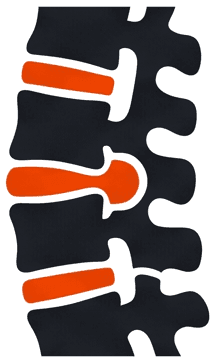
Non-surgical care for herniated and bulging discs using FDA-cleared spinal decompression, corrective chiropractic, and integrated soft-tissue therapies.