
chiropractic-education

What Is Corrective Chiropractic — And How Is It Different?
The Roots Health CentersMarch 7, 20265 min read
What Is Corrective Chiropractic — And How Is It Different?

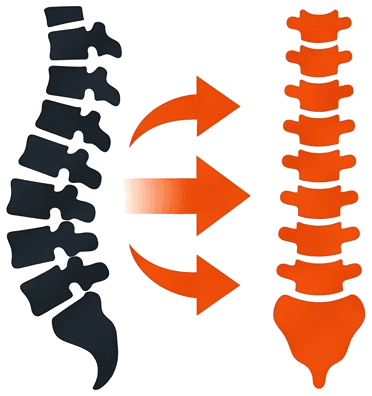
If you have ever been to a chiropractor, you probably experienced what the profession calls "relief care." Something hurts, you go in, you get adjusted, you feel better for a few days, and then the pain comes back. So you go again. Maybe you do this for months or years — a revolving door of temporary fixes that never actually resolve the underlying problem. That is not a flaw in chiropractic. It is a flaw in how most chiropractic is practiced. Relief care treats the symptom. Corrective chiropractic treats the structure. The difference between the two is the difference between taking painkillers for a broken bone and actually setting the bone so it heals straight.

The orthodontics analogy

The easiest way to understand corrective chiropractic is to compare it to orthodontics. When a teenager gets braces, nobody expects the teeth to be straight after one visit. The orthodontist takes measurements, builds a plan, applies progressive force over months, and monitors progress with periodic imaging. The teeth move slowly, predictably, and permanently.

Corrective chiropractic follows the same logic:

  • Objective baseline measurements — we do not guess where the problems are
  • A structured, phased care plan — typically 3 to 6 months depending on severity
  • Progressive adjustments that move the spine toward its proper alignment over time
  • Periodic re-assessment with the same objective tools to measure real change

Braces do not fix teeth in one visit. Corrective chiropractic does not fix spinal misalignments in one adjustment. But just as braces produce permanent structural change, so does a well-executed corrective care plan.

What makes our approach different

At The Roots Health Centers in Lakewood Ranch, corrective care starts with data — not guesswork. Every new patient receives:

  • CLA INSiGHT nerve scans — measuring surface EMG (muscle tension patterns), thermal scanning (autonomic nervous system function), and heart rate variability (stress adaptability)
  • Digital x-rays when clinically indicated — showing vertebral alignment, disc spacing, and degenerative changes
  • A thorough neurological and orthopedic exam — identifying functional deficits, range-of-motion restrictions, and pain patterns

Dr. Logan Swaim reviews all findings with you in a detailed report of findings visit. You see your own scans, understand exactly what is happening in your spine, and walk out with a clear plan — not a vague "come back three times a week" prescription with no end date.

The three phases of corrective care

A typical corrective care plan moves through three distinct phases:

Phase 1 — Acute / Intensive (weeks 1-4). The goal is to reduce pain, calm the nervous system, and begin addressing the worst structural issues. Visit frequency is highest during this phase — typically two to three times per week. Most patients experience meaningful pain relief within the first two to four weeks.

Phase 2 — Corrective / Rebuilding (weeks 5-16). This is where the structural changes happen. Visit frequency drops to once or twice per week. Adjustments are focused on progressively moving the spine toward its ideal alignment. Re-scans at the midpoint show objective progress — patients see their own numbers improving.

Phase 3 — Stabilization / Maintenance (ongoing). Once the corrective goals are met, most patients transition to a wellness schedule of one to two visits per month. The purpose shifts from correction to maintenance — keeping the spine aligned, supporting the nervous system, and catching small issues before they become big ones.

The patients who get the best results are not the ones who come in when it hurts. They are the ones who commit to the full corrective plan and let the structural changes take hold.

Why relief care fails long-term

Relief care is not bad. It works for what it is — temporary symptom reduction. The problem is that it never addresses the structural cause. Here is what typically happens:

  • You feel pain, you go to the chiropractor, you get adjusted
  • The adjustment temporarily reduces nerve irritation and muscle tension
  • You feel better for a few days
  • The underlying misalignment is still there, so the tension rebuilds
  • The pain returns, and you go back

This cycle can repeat indefinitely because the structure was never corrected. It is like getting your car aligned but never fixing the bent frame. The tires will keep wearing unevenly no matter how many times you realign them.

Who benefits from corrective care

Corrective chiropractic is particularly effective for:

  • Chronic back pain and neck pain that has not responded to relief-based care
  • Post-accident recovery — restoring structural integrity after whiplash or auto injury
  • Disc conditions — correcting the alignment patterns that stress discs
  • Headaches and migraines driven by cervical misalignment
  • Postural dysfunction — tech neck, forward head posture, loss of cervical curve
  • Preventive wellness — patients who want to maintain optimal nervous system function before problems develop

Age is not a limiting factor. We treat patients from newborns through their eighties. The Torque Release Technique we use is gentle enough for every population — no twisting, no cracking, no high-force manual thrusts.

Objective measurement is non-negotiable

One of the biggest problems in chiropractic is the lack of objective measurement. Many offices adjust based on how the patient feels, how the spine palpates, or how many visits the insurance will cover. None of those are structural measurements.

We re-scan with CLA INSiGHT at defined intervals throughout your care — typically every 12 to 24 visits. The scans show:

  • Whether muscle tension patterns are normalizing
  • Whether autonomic nervous system function is improving
  • Whether HRV (stress adaptability) is increasing
  • Whether the structural changes from adjustments are holding

Patients see their own data. Progress is visible and measurable. This is one of the main reasons our patients stick with their care plans — they are not guessing. They are watching real change happen in their own nervous system. You can see patient case studies for examples of how this plays out.

How corrective chiropractic pairs with other modalities

Corrective chiropractic is the foundation, but it works best as part of a comprehensive plan. Depending on the patient's condition, we often layer in:

  • Spinal decompression for disc conditions — correcting alignment while simultaneously healing the disc
  • Shockwave therapy for chronic soft-tissue restrictions that resist adjustment alone
  • Red light therapy for inflammation control and accelerated tissue repair
  • Home rehabilitation exercises to retrain the muscles that support the corrected alignment

Having all of these modalities under one roof means we can coordinate the plan instead of sending you to three different providers who never talk to each other.

If you have been getting adjusted for years without lasting improvement, or if you have never tried chiropractic because the idea of cracking and twisting puts you off, corrective care with the Torque Release Technique is a different experience entirely. The first visit includes a full history, neurological exam, CLA INSiGHT scans, and a consultation with Dr. Logan Swaim. Book your $49 new patient special or call (941) 877-1507.

Services Related to This Post

Have a Health Question?

Call us or book a consultation. We'd love to help.