

Piriformis Syndrome vs. Sciatica: How to Tell the Difference
If you're dealing with pain that starts deep in your buttock and sometimes shoots down the back of your leg, you've probably already searched "sciatica" — and along the way, run into another term: piriformis syndrome. The two get confused constantly, and it's easy to see why: the symptoms can feel nearly identical from the inside. But they're not the same problem, and the difference matters, because the care that helps one doesn't always help the other. Here's how to tell piriformis syndrome and true spinal-origin sciatica apart, and why getting the right answer matters more than guessing.
What Is Piriformis Syndrome?
The piriformis is a small muscle deep in the buttock that runs from the base of the spine to the top of the thigh bone, helping rotate and stabilize the hip. In most people, the sciatic nerve — the longest nerve in the body — runs just beneath this muscle. In some people, it runs directly through it.
When the piriformis becomes tight, inflamed, or spasms, it can irritate or compress the sciatic nerve at that exact point. The result is pain, tingling, or numbness that can feel a lot like classic sciatica — but the source is a muscle in the hip, not a nerve root in the spine.
What Is Sciatica, Really?
Here's something that trips a lot of people up: "sciatica" isn't actually a diagnosis. It's a description of pain that travels along the path of the sciatic nerve — from the low back or buttock down through the leg. What's actually causing that pain can vary widely.
Most commonly, when people say "sciatica," they mean pain caused by a nerve root being compressed or irritated as it exits the spine — often from a herniated disc, spinal stenosis, or degenerative changes in the lower back. We've written a full breakdown of what causes sciatica and how to find relief if you want the deeper picture. Piriformis syndrome is sometimes called "pseudo-sciatica" because it produces sciatica-like symptoms without any spinal nerve root involvement at all.
Key Differences: Piriformis Syndrome vs. Spinal-Origin Sciatica
A few patterns tend to separate the two, though only a proper evaluation can confirm which one you're dealing with:
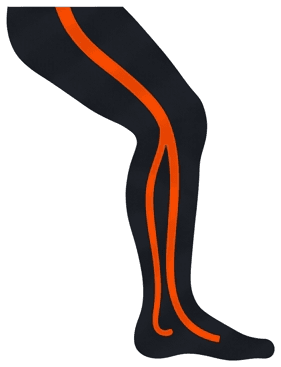
Where it starts. Piriformis-related pain tends to begin deep in the buttock and may radiate down the back of the thigh, sometimes stopping around the knee. Spinal-origin sciatica often starts in the low back itself and follows a more specific path down the leg, sometimes reaching the calf or foot.
What makes it worse. Piriformis syndrome is commonly aggravated by sitting on hard surfaces, sitting with your legs crossed, climbing stairs, or sitting for long stretches (a long car ride or desk day). Spinal-origin sciatica is more often aggravated by bending forward, coughing, sneezing, or straining — movements that increase pressure inside the spine.
Numbness and tingling pattern. Piriformis-related symptoms tend to stay more localized to the buttock and upper thigh. Spinal-origin sciatica more often follows a specific nerve pattern extending further down the leg, sometimes into specific toes.
Back symptoms. Spinal-origin sciatica is frequently accompanied by low-back pain or stiffness. Piriformis syndrome often exists with a back that otherwise feels fine.
None of these patterns are foolproof on their own — that's exactly why self-diagnosing from a symptom checklist can lead you in the wrong direction, and why a hands-on evaluation matters.
Why the Two Get Confused So Often
Because the sciatic nerve runs so close to — or in some people, directly through — the piriformis muscle, irritation at that muscle can mimic nerve-root symptoms almost exactly. On top of that, SI joint dysfunction and other pelvic and hip issues can also refer pain into the same general area, adding another layer of overlap. This is part of why so many people spend months addressing the wrong thing before getting a clear answer.
Why the Distinction Matters for Your Care
Piriformis syndrome tends to respond well to care that addresses the muscle, hip, and pelvis directly — things like soft-tissue work, hip mobility, and correcting movement patterns that keep the muscle irritated. Spinal-origin sciatica often needs a different focus, one aimed at reducing pressure on the nerve root itself, which may involve spinal decompression or an adjustment approach targeted at the level of the spine that's actually involved.
Each person and case is different, so a personalized approach based on what your evaluation actually shows matters more than a generic protocol. Addressing a spinal issue like a muscle problem — or the reverse — can leave you stuck without real progress.
How We Evaluate Piriformis Pain and Sciatica at The Roots Health Centers
Your first visit starts with a thorough intake and a full neurological evaluation — looking at how your nervous system, spine, hips, and pelvis are functioning together, not just where it hurts. Orthopedic and neurological testing can help distinguish a muscle-based pattern from a nerve-root pattern, and any necessary X-rays are reviewed with you directly when clinically indicated.
From there, our chiropractic care — including our low-force Torque Release Technique adjustment approach — is built around what your evaluation actually shows, whether that points toward the hip and pelvis or toward the spine itself.
What You Can Do While You Wait for Your Evaluation
A few gentle habits may help ease tension in the meantime:
- Avoid sitting on a thick wallet or anything in your back pocket, which can add direct pressure to the piriformis
- Break up long periods of sitting with short walks or position changes
- Try gentle hip and glute stretches, like a seated figure-4 stretch, if it doesn't increase your symptoms
- Alternate ice and heat on the area if that feels supportive
- Avoid activities that clearly and consistently worsen your symptoms until you've been evaluated
These are general comfort measures, not a substitute for finding out what's actually driving your pain.
Frequently Asked Questions
What does piriformis syndrome feel like?
Most people describe a deep, aching pain in the buttock that can radiate down the back of the thigh, sometimes with tingling or numbness. It's often worse with sitting, especially on hard surfaces or with legs crossed, and can feel like a dull ache one day and a sharp, shooting sensation the next.
How long does piriformis syndrome last?
There's no single timeline — it depends on the underlying contributing factors, how long the pattern has been present, and how consistently things like sitting habits and hip mobility are addressed. A personalized evaluation gives you a much clearer picture than a generic estimate.
Can a chiropractor help with piriformis syndrome?
Many people with piriformis-related pain find that care addressing hip and pelvis mechanics, along with soft-tissue work, is a helpful part of their plan. Because piriformis syndrome can have several contributing factors, what helps varies from person to person — which is why an evaluation matters before starting any plan.
Does piriformis syndrome go away on its own?
For some people, mild symptoms ease with rest, stretching, and simple activity changes. For others — especially when symptoms are persistent or connected to underlying hip and pelvic mechanics — addressing those contributing factors directly tends to make a bigger difference than waiting it out.
Is walking good or bad for piriformis syndrome?
Gentle movement is generally supportive for circulation and overall function, but pace and distance matter. If walking clearly worsens your symptoms, that's useful information to bring to your evaluation rather than a reason to push through pain.
If you've been dealing with buttock or leg pain and you're not sure whether it's piriformis syndrome, spinal-origin sciatica, or something else entirely, guessing isn't the answer. Book a complimentary consultation at The Roots Health Centers in Lakewood Ranch. We'll do a full neurological evaluation, look at what's actually driving your pain, and give you a clear, personalized set of recommendations from there.
The Roots Health Centers, 8209 Natures Way, Unit 115, Lakewood Ranch, FL 34202. (941) 877-1507.
Conditions We Treat
Services Related to This Post
Keep Reading
Related articles
Sciatica: What Causes It, What It Feels Like, and How to Find Relief Without Surgery
Sciatica is nerve pain that travels from your low back down the leg. Here's what causes it, the red flags to know, and a non-surgical path to relief.
Read articleHerniated Disc vs. Bulging Disc: What's the Difference?
Both show up on MRIs, both can cause pain — but they're not the same thing. Here's how to tell the difference and what your options are.
Read article