

Baby Won't Sleep? The Nervous System Connection Most Parents Never Hear About
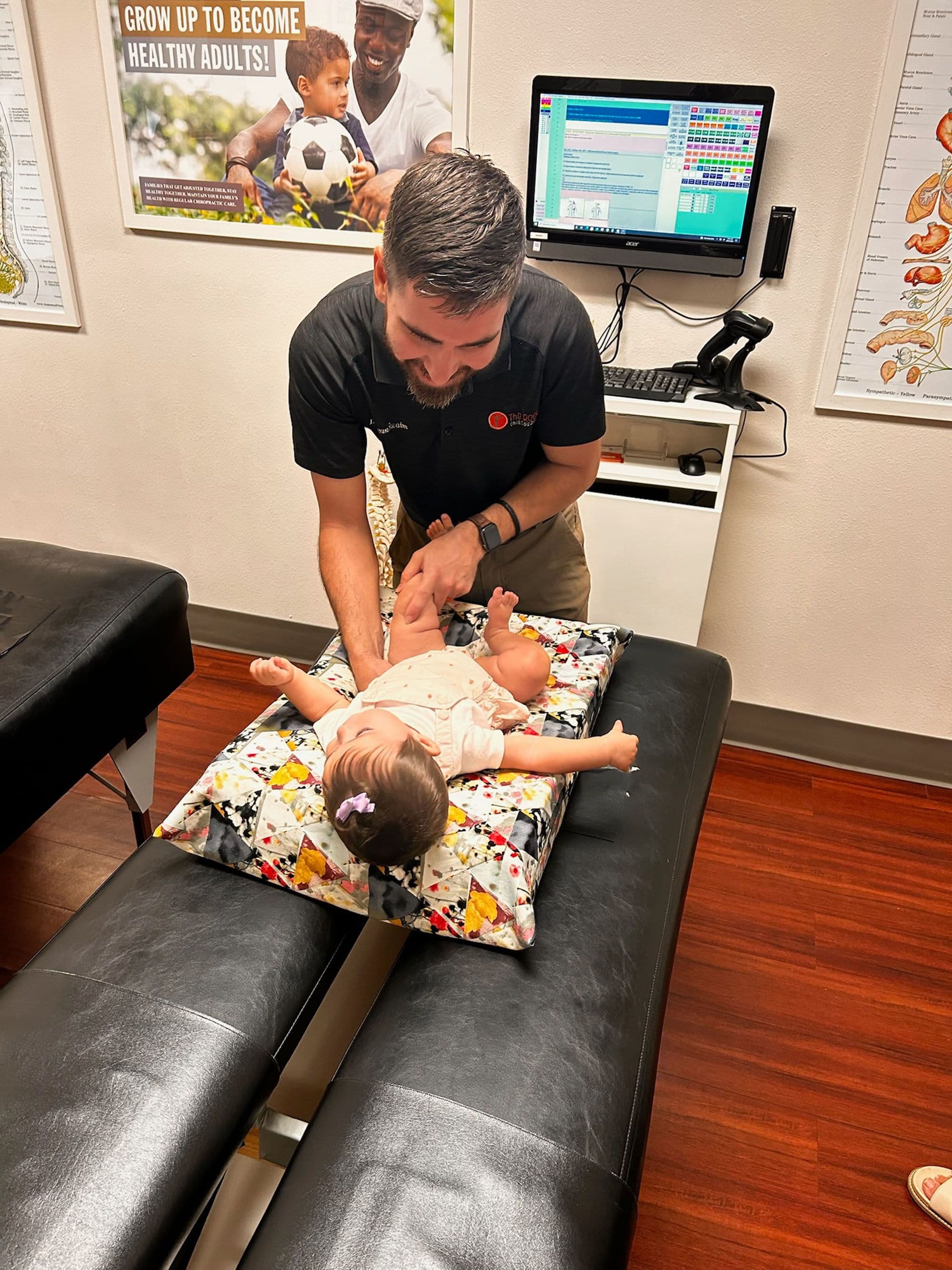
You have read every baby sleep book. You have tried white noise, blackout curtains, swaddles, specific hold positions, sleep consultants, and driving around the neighborhood at midnight. When your baby won't sleep despite all of it, the problem is rarely about the environment. It is often about the nervous system — and that is the conversation most parents never get to have.
At Little Roots Pediatric Chiropractic in Lakewood Ranch, sleep disruption is one of the most common reasons families come through our door. Not because parents are looking for chiropractic specifically, but because everything else has failed and someone — a friend, a lactation consultant, a mom in their toddler group — told them to get the baby's nervous system checked.
This post explains what is actually happening inside your baby's body when sleep will not come, why the nervous system matters more than the sleep environment, and how gentle pediatric chiropractic care helps many families find relief.
Why Won't My Baby Sleep Through the Night?
Before we talk about the nervous system, it helps to understand what normal infant sleep actually looks like.
Newborns do not have consolidated sleep cycles the way adults do. Their sleep architecture is still developing — they cycle between active sleep (similar to REM) and quiet sleep in shorter intervals, and they wake frequently to feed. That is biologically normal.
What is not normal is a baby who:
- Cannot settle — fights sleep for 45 minutes or longer despite being fed, dry, and held
- Wakes every 30 to 60 minutes all night, not just for hunger
- Only sleeps when held upright on a parent's chest or in a moving car seat
- Startles awake constantly — the Moro reflex fires repeatedly, even in deep sleep
- Seems wired — alert, tense, unable to relax even when clearly exhausted
- Catnaps only — 20-minute naps with no ability to connect sleep cycles
When parents describe these patterns, they are not describing a baby who needs better sleep hygiene. They are describing a baby whose nervous system is stuck in a stress response and cannot downshift into the deep, restorative sleep their body needs.
How Does the Nervous System Affect Baby Sleep?
Your baby's autonomic nervous system controls the transition between wakefulness and sleep. It has two primary branches:
- Sympathetic — the alert, stress-response side. Heart rate up, muscles tense, digestion slowed, pupils dilated. This is fight-or-flight.
- Parasympathetic — the calm, recovery side. Heart rate down, muscles relaxed, digestion active. This is rest-and-digest — and it is the state your baby must enter to fall asleep and stay asleep.
A healthy newborn moves between these two states fluidly. A baby with sleep issues gets stuck in sympathetic dominance — locked in a low-grade stress response they cannot voluntarily turn off.
When the sympathetic nervous system stays elevated, the downstream effects on sleep are predictable:
- Cortisol stays high. Cortisol is the stress hormone that keeps us alert. In sympathetic dominance, cortisol does not drop the way it should at bedtime, making it physically difficult for the baby to transition into sleep.
- The Moro reflex stays hyperactive. That full-body startle that wakes your baby mid-nap is modulated by the autonomic nervous system. When the sympathetic side is dominant, the threshold for triggering it drops.
- Melatonin production is suppressed. A stressed nervous system produces less melatonin, which means the biological signal for sleep is weaker.
- Muscle tension remains elevated. Babies stuck in sympathetic mode often have visible tension — arched backs, clenched fists, stiff limbs. Relaxation is a neurological event, not a behavioral one, and it requires parasympathetic engagement.
The connection between sleep regulation and the autonomic nervous system is not fringe science. It is basic neurology. The question is: why would a baby's nervous system get stuck in this pattern?
What Causes a Dysregulated Nervous System in Newborns?
The most common answer is birth itself.
Even a straightforward vaginal delivery places significant mechanical force on a newborn's cranium and cervical spine. The baby's head is compressed through the birth canal, rotated during crowning, and pulled as the shoulders emerge. These forces are normal — but they are not trivial.
When birth involves intervention, the forces increase substantially:
- Vacuum extraction applies sustained traction to the skull
- Forceps delivery adds lateral compression to the cranium
- Prolonged pushing (over two hours) means extended compression in the birth canal
- Emergency C-section often involves rapid extraction with significant traction on the head and neck
- Fast or precipitous labor (under three hours) means the baby's body does not have time to gradually mold through the canal
The upper cervical spine — C1 and C2, the top two vertebrae — is particularly vulnerable. This is where the brainstem transitions into the spinal cord, and it is where the vagus nerve exits the skull. The vagus nerve is the primary parasympathetic pathway. It is the nerve responsible for telling your baby's body to calm down, digest food, and sleep.
When birth forces create subtle restrictions in the upper cervical area, they can interfere with vagus nerve signaling. The baby's parasympathetic system cannot engage fully. The sympathetic side stays dominant by default.
The result is a baby who seems perpetually alert, physically tense, and unable to settle — not because something is psychologically wrong, but because the neurological hardware for calming down is compromised.
This is also why colic and sleep issues so often appear together. Both are expressions of the same underlying pattern: a nervous system stuck in overdrive. For a deeper look at that connection, read Colic and the Nervous System.
Does Sleep Training Work if the Nervous System Is Dysregulated?
Sleep training methods — Ferber, Taking Cara Babies, gentle fading, pick-up-put-down — all assume that the baby's nervous system is fundamentally capable of self-regulation and just needs practice. For many babies, that assumption is correct, and these methods work well.
But for babies whose nervous systems are genuinely stuck in sympathetic dominance, sleep training often produces one of two outcomes:
- It does not work at all. The baby cries, the parents follow the protocol, and nothing changes after weeks of effort. The parents feel like failures.
- It partially works but cannot hold. The baby learns to settle for a few days, then regresses. Every illness, every teething episode, every growth spurt resets the pattern completely.
If you have been consistent with a sleep training method and it is not producing results, the problem is not your execution. The problem may be that your baby's nervous system literally cannot do what the method is asking it to do — downregulate on its own.
Addressing the nervous system first does not mean you cannot sleep train later. Many families find that once the neurological interference is addressed, their baby naturally sleeps better without formal training. Others combine nervous system support with a gentle sleep method and see results they could not achieve with either approach alone.
How Does Pediatric Chiropractic Help Baby Sleep?
Pediatric chiropractic care for infant sleep is not about "cracking a baby's back." The adjustment used on a newborn involves fingertip pressure roughly equivalent to what you would use to test whether a tomato is ripe. Most babies are calm or sleeping during the process.
At Little Roots, our doctors use the Torque Release Technique — an instrument-assisted method that delivers a precise, low-force impulse to specific areas of the spine where nerve interference is detected. No twisting. No popping. No manual thrusting.
Here is what gentle spinal care does for a baby who cannot sleep:
Releases the vagus nerve pathway. When subtle restrictions in the upper cervical spine are addressed, the vagus nerve can communicate more freely between the brainstem and the rest of the body. Parasympathetic function improves. The baby's system gains access to the "calm down" switch it has been missing.
Shifts the nervous system out of sympathetic dominance. The adjustment supports the nervous system in moving from its stuck stress response back toward balance. Parents often describe the first sign of this shift as "my baby just... relaxed."
Reduces global muscle tension. That arched back, those clenched fists, those stiff little legs — these are physical expressions of neurological tension. When the nerve interference is addressed, the tension downstream softens.
Supports more complete sleep cycles. A nervous system that can self-regulate transitions into sleep more easily and stays in deep sleep longer. Many families tell us that longer sleep stretches are the first change they notice — often before feeding, fussiness, or other symptoms improve.
For parents wondering about safety, we wrote a detailed post on that topic: Is Chiropractic Safe for Babies?
What Does a First Visit Look Like for a Baby With Sleep Issues?
Your first visit at Little Roots includes:
- A thorough history. Pregnancy details, birth story (every detail matters — position, duration, interventions, cord issues), feeding patterns, sleep patterns, fussiness patterns, and what you have tried so far. We listen to the parents first.
- A gentle hands-on evaluation. Baby on your lap or on a padded table. Dr. Laura assesses cranial motion, upper cervical mobility, sacral alignment, and tension patterns throughout the spine. She is looking for areas where the nervous system is being interfered with.
- A neurological evaluation. Non-invasive technology that shows us how your baby's autonomic nervous system is functioning in real time — where the sympathetic side is dominant, where the parasympathetic side is suppressed, and how the two are communicating.
- A conversation about findings. Your doctor walks you through the results in plain language. No jargon, no pressure. If nervous system interference is present, she explains exactly what it means and how care would work.
- If indicated, a gentle first adjustment. Your doctor demonstrates the Integrator instrument on your hand first so you feel exactly how light the force is before she touches your baby.
The entire visit takes about 20 minutes. Most parents leave saying some version of "that was it?"
Each child is different. We take a personalized approach based on what your child's nervous system is showing us — never a one-size-fits-all protocol.
For a full walkthrough of what to expect at your first infant visit, we have a dedicated page for nervous first-time parents.
When Should I Bring My Baby In for a Sleep Evaluation?
The earlier, the better. The held-tension patterns from birth are most responsive to gentle support in the first weeks and months of life.
Consider scheduling an evaluation if your baby:
- Will not sleep unless held or in motion
- Wakes every 30 to 60 minutes and is not hungry
- Startles awake constantly, even in a dark, quiet room
- Fights sleep despite clear tired cues
- Had a birth involving vacuum, forceps, C-section, prolonged pushing, or fast labor
- Also has colic, reflux, latching difficulty, or a head turn preference
- Has been labeled a "bad sleeper" by multiple people
We want to be clear: chiropractic care works alongside your pediatrician, not instead of them. Your baby's pediatrician should always be your first call for medical concerns. What pediatric chiropractic addresses is the mechanical and neurological component of sleep disruption — the piece that conventional well-child visits are not designed to evaluate.
Many of the families at Little Roots maintain regular pediatrician visits while also bringing their baby in for nervous system support. The two approaches complement each other. Our pediatric wellness philosophy is built on this collaborative model.
Frequently Asked Questions About Baby Sleep and Chiropractic
How quickly do babies respond to chiropractic care for sleep issues?
Many parents notice a shift within the first few visits — longer sleep stretches, easier settling at bedtime, and a calmer baby overall. Every baby responds differently. We track progress with periodic neurological re-evaluations rather than promising specific timelines.
Is chiropractic safe for newborns?
Yes. Pediatric chiropractic uses fingertip pressure lighter than you would use to check a ripe tomato. Our doctors are ICPA-trained specifically for infant and pediatric care. Most babies are calm or sleeping during their adjustment. For a full discussion, read Is Chiropractic Safe for Babies?
My baby sleeps fine during the day but not at night. Is that a nervous system issue?
Possibly. Daytime sleep and nighttime sleep are regulated by different neurological pathways. A baby who naps well but falls apart at night may have a pattern where their nervous system copes during the day but becomes overwhelmed by evening — when sympathetic load has accumulated. A neurological evaluation can show us whether this pattern has a structural component.
Does my baby need to stop seeing their pediatrician if we start chiropractic care?
Absolutely not. We work alongside your pediatrician, not instead of them. Regular well-child visits should continue. Pediatric chiropractic addresses a specific gap — the mechanical and neurological consequences of birth — that conventional pediatrics is not designed to evaluate.
Will my baby cry during the adjustment?
Most babies do not. The Torque Release Technique uses an instrument that delivers a quick, light impulse — most babies startle less from the adjustment than they do from a diaper change. Dr. Laura always demonstrates the instrument on a parent's hand first.
How do I know if my baby's sleep problem is behavioral or neurological?
If you have been consistent with a sleep method for two or more weeks with no improvement, or if your baby's sleep disruption is accompanied by other signs like colic, reflux, head turn preference, or visible physical tension, there is a good chance the nervous system is involved. A neurological evaluation gives us objective data — not guesswork.
Your baby is not a bad sleeper. Your baby's nervous system may be stuck in a pattern it cannot break out of on its own. That is not a character flaw. It is not a parenting failure. It is a mechanical issue with a gentle, safe path forward.
If that sounds like your family, the Little Roots team would love to meet you. Book a free newborn check or call (941) 932-4611.
Conditions We Treat
Sleep Issues (Toddlers & Kids)
Bedtime battles, frequent night wakings, and 2 a.m. visits to your room aren't just phases — they're signals that a toddler or child's nervous system isn't downshifting the way it should. Gentle care helps it find the transition the body needs to rest.
Sleep Regulation
Short naps, frequent wakings, a baby or toddler who fights sleep no matter what you try — these are signals that the nervous system is stuck in 'on.' Gentle care helps it find the off switch.
Colic
Colic isn't a personality trait — it's often a baby's nervous system stuck on high alert. Gentle chiropractic care helps the system downshift so feeding, sleeping, and being held start to feel okay again.
Reflux
Spit-up is normal. Arching through feeds, crying after eating, sleeping fitfully, and never seeming satisfied — that's reflux, and it's almost always a nervous-system regulation story before it's a digestion story.