

Kids Backpack Weight: How Heavy Should Your Child's Backpack Be?
If you have ever picked up your child's backpack and thought that cannot be good for them — you are probably right. Kids backpack weight is one of those problems that looks minor but compounds over years. The American Academy of Pediatrics (AAP) and the American Occupational Therapy Association (AOTA) both recommend that a child's backpack weigh no more than 10 to 15 percent of their body weight. For a 60-pound third grader, that means a maximum of 6 to 9 pounds. The average loaded school bag weighs 12 to 20 pounds.
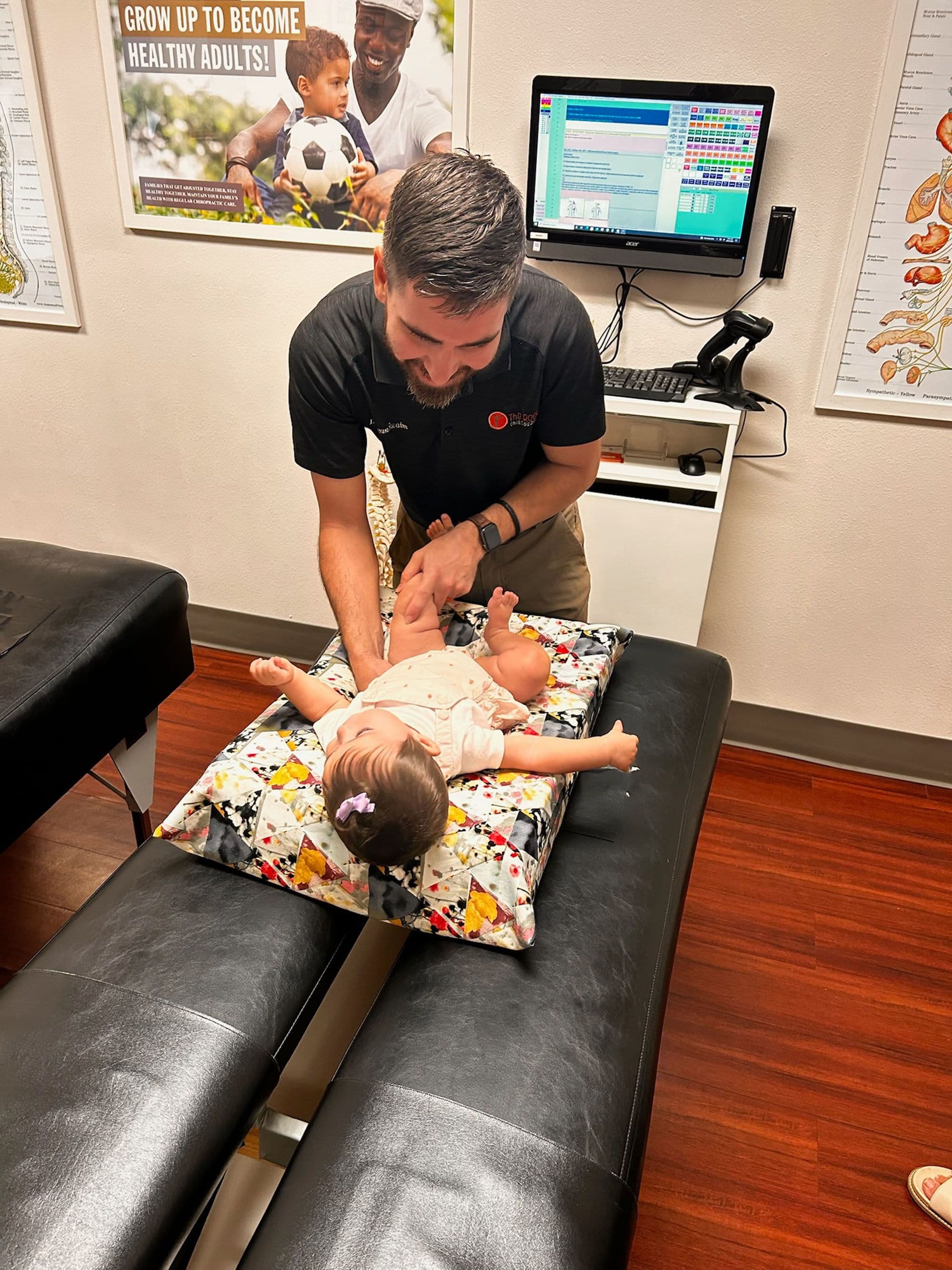
At Little Roots Pediatric Chiropractic in Lakewood Ranch, backpack-related spinal complaints are something our team evaluates regularly — especially in late August and early September when school starts, and again in January when new semester textbooks pile up. This post covers what the research actually says about backpack weight and spine health in kids, the warning signs parents should watch for, and practical steps to protect your child's developing spine.
How Heavy Should a Child's Backpack Be?
The short answer: no more than 10 to 15 percent of your child's body weight, according to guidelines from the AAP, AOTA, and the American Chiropractic Association.
Here is what that looks like in practice:
| Child's Weight | Maximum Backpack Weight (10%) | Upper Limit (15%) |
|---|---|---|
| 50 lbs | 5 lbs | 7.5 lbs |
| 60 lbs | 6 lbs | 9 lbs |
| 75 lbs | 7.5 lbs | 11.25 lbs |
| 90 lbs | 9 lbs | 13.5 lbs |
| 110 lbs | 11 lbs | 16.5 lbs |
The 10 percent threshold is the more conservative recommendation and the one our team suggests for younger children whose spines are still developing rapidly. For older kids and teens with stronger musculature, 15 percent is a reasonable ceiling — but even that gets exceeded easily once you add a full water bottle, a laptop, and three textbooks.
Try this tonight: put your child's loaded school backpack on a bathroom scale. Most parents are surprised by the number.
What Happens to a Child's Spine When Their Backpack Is Too Heavy?
A child's spine is not a smaller version of an adult spine. It is still growing, still forming its natural curves, and significantly more pliable under load. That pliability is what makes heavy backpacks a bigger deal for kids than for adults.
When a child carries an overloaded backpack, their body compensates in predictable ways:
- Forward head posture. The weight pulls the torso backward, so the child leans forward to compensate. The head drifts ahead of the shoulders to maintain balance. Over time, this flattens or reverses the natural cervical curve — the same structural pattern our team sees in adults with chronic neck pain.
- Rounded shoulders and thoracic kyphosis. The upper back curves forward under the load. The chest collapses inward. This is not just a cosmetic issue — it compresses the thoracic spine and can restrict rib expansion, which affects breathing efficiency during physical activity.
- Lateral spinal curvature. Kids who wear their backpack over one shoulder — which is almost every middle schooler — develop asymmetric loading that pulls the spine to one side. Sustained over months and years, this can contribute to functional scoliotic patterns.
- Lumbar compression. The lower back absorbs the downward force of the pack. For a child whose lumbar spine is still developing, that compression can lead to early disc stress, back pain, and muscle fatigue that shows up as stiffness, fidgeting, or reluctance to sit in class.
The critical point: these changes are cumulative and often silent. A child does not come home one day and announce that their cervical curve is flattening. The pattern builds across semesters and years, and by the time symptoms appear — headaches, shoulder aching, difficulty concentrating — the structural compensation is well established.
What Are the Warning Signs of Backpack-Related Spinal Stress?
Most kids will not connect their symptoms to their backpack. Parents are usually the first to notice the pattern. Watch for:
- Complaints of back, neck, or shoulder pain — especially in the afternoon or evening after school
- Tingling or numbness in the arms or hands after carrying their bag
- Visible postural changes — one shoulder sitting higher than the other, head jutting forward, rounding through the upper back
- Difficulty sitting upright at the dinner table or during homework — their muscles are fatigued from carrying the load all day
- Frequent headaches — often tension headaches originating from the neck and upper back
- Red marks or indentations on the shoulders from backpack straps
- Leaning to one side when walking — the body compensating for uneven load distribution
- Reluctance to carry their bag — younger kids especially will resist when it genuinely hurts, but they may not articulate why
If any of these sound familiar, the first step is simple: weigh the backpack. If it exceeds the 10 to 15 percent guideline, the load itself is the most likely contributor.
The second step is worth considering if symptoms persist even after lightening the bag: a pediatric neurological evaluation can show whether structural compensation patterns have already started. Catching them early — while the spine is still growing — makes a meaningful difference in how quickly the body can rebalance.
How Should a Child's Backpack Fit Properly?
The weight inside the bag is half the equation. How the bag sits on the body is the other half. A properly fitted backpack distributes load across the strongest parts of the torso instead of concentrating it on the shoulders and lower back.
Here is what proper fit looks like:
Both shoulder straps, every time. Wearing one strap doubles the load on one side of the body. This is the single biggest contributor to asymmetric spinal stress in school-age kids. Both straps, snugged, no exceptions.
The bottom of the pack sits at waist level, not at the hips or below. When the bag hangs low, the child leans forward more aggressively to counterbalance. The pack should rest against the mid and lower back, ending at the waist.
Shoulder straps are wide and padded. Thin straps dig into the trapezius and compress the nerves and blood vessels that run through the shoulder. If your child's straps leave marks, they are too narrow or too tight.
Use the chest strap and hip belt if the pack has them. These features exist to transfer load from the shoulders to the hips — the strongest weight-bearing structure in the body. Most kids never clip them. Teaching your child to use them is one of the highest-impact changes you can make.
Heaviest items packed closest to the back. Textbooks against the spine, lighter items toward the front of the bag. This keeps the center of gravity close to the child's body and reduces the forward-pull effect.
No hanging items off the front of the pack. Water bottles, keychains, and lunch boxes strapped to the outside shift the center of gravity and add sway. Everything should be inside or in the side pockets.
Does Your Child's Backpack Choice Matter?
Yes — but not in the way most marketing suggests. You do not need a $200 ergonomic pack to protect your child's spine. You need a pack that fits their frame and distributes weight well.
What actually matters:
- Size relative to the child. The pack should not be wider than the child's torso or extend above the shoulders. A common mistake: buying a full-size pack for a first grader because it will "last longer." The oversized frame encourages overpacking and prevents proper load distribution.
- Padded back panel. A flat, padded panel keeps hard-edged objects (binder corners, laptop edges) from pressing into the spine.
- Multiple compartments. Compartments help distribute weight evenly instead of letting everything pool at the bottom.
- Rolling backpacks are an option for kids with heavy loads, but they come with their own issues — pulling a rolling bag from one side creates rotational stress, and stairs eliminate the benefit entirely. They are a reasonable choice if your child's school is flat and allows them.
For most school-age kids, the right approach at every developmental stage is the same: a right-sized pack, worn correctly, with both straps snug and the weight distributed. The backpack itself matters less than how it is used.
What Can Parents Do to Reduce Backpack Weight?
Once you have weighed the bag and it exceeds the guideline, the next question is practical: how do you actually lighten it when your child needs all those things for school?
Audit the contents weekly. Kids accumulate. Old assignments, forgotten snacks, books for classes they do not have that day — a weekly clean-out is the simplest way to shed 2 to 4 pounds.
Use the locker (if available). Many schools provide lockers but kids skip them because they do not want to stop between classes. Teach your child to swap books at their locker instead of carrying the full day's load all morning.
Ask about digital textbooks. Many schools offer digital versions of textbooks. A tablet or Chromebook weighs a fraction of three hardcovers. If digital is an option, use it.
Split the load. A lunch bag carried separately (or eaten at school) removes 1 to 2 pounds from the main pack. A separate small bag for sports or after-school activities keeps the primary pack lighter during the school day.
Talk to the teacher. If your child's pack consistently exceeds 15 percent of their body weight even after trimming, the teacher may have solutions — classroom sets of textbooks, reduced take-home requirements, or digital assignments.
These changes sound small. Over a 180-day school year, they add up to thousands of pounds of cumulative load removed from a developing spine.
How Does Pediatric Chiropractic Help Kids With Backpack-Related Spinal Stress?
Lightening the backpack is the first and most important step. But if your child has already developed postural compensation patterns — forward head, rounded shoulders, one-sided loading habits — reducing the weight alone may not be enough to let the spine fully rebalance.
This is where a pediatric neurological evaluation provides real value. At Little Roots, the evaluation gives our team an objective look at how your child's nervous system and spine are functioning. We can see whether the sympathetic nervous system is running higher than it should (a common finding in kids with chronic postural stress), and whether specific spinal segments are restricted.
Gentle chiropractic care using the Torque Release Technique supports the spine in regaining its natural alignment. The adjustments used on children are extremely light — instrument-based, precise, no twisting or cracking. Most kids tolerate them easily.
Our team often sees backpack-related spinal stress overlapping with other patterns: sleep disruption from neck tension, difficulty focusing in the classroom from postural fatigue, headaches that get blamed on screen time but actually originate from the upper cervical spine. Addressing the spinal component helps the whole picture, not just the posture.
Each child is different. We take a personalized approach based on what your child's nervous system is showing us — there is no standard "backpack protocol." Some kids need a few visits. Others benefit from periodic check-ins through the school year, especially during growth spurts when the spine is changing rapidly.
When Should You Get Your Child's Spine Checked?
You do not need to wait for pain. The structural changes from heavy backpack use begin before symptoms appear. But there are specific moments when an evaluation is especially worthwhile:
- Before the school year starts. A baseline evaluation in August gives you a reference point. If your child's posture shifts during the semester, you will have data to compare against.
- If your child complains of back, neck, or shoulder aching that was not there over summer break.
- If you notice postural changes — head forward, shoulders rounding, one hip higher than the other.
- During growth spurts. The spine is most vulnerable when it is growing fastest. Rapid growth + heavy backpack = accelerated compensation patterns.
- If your child has ADHD or sensory processing challenges. These kids often have underlying nervous system patterns that make their bodies less resilient to physical stress like heavy loads. Supporting their spine supports their regulation.
A complimentary consultation at Little Roots takes about 20 minutes and gives you a clear answer on whether your child's spine needs attention. No pressure, no commitment to care — just information you can act on.
Book a complimentary consultation or call (941) 932-4611.
Frequently Asked Questions About Kids Backpack Weight and Spine Health
How much should a child's backpack weigh?
The AAP and AOTA recommend no more than 10 to 15 percent of the child's body weight. For a 70-pound child, that is 7 to 10.5 pounds. Our team recommends staying closer to 10 percent for younger children whose spines are developing most rapidly.
Can a heavy backpack cause scoliosis?
A heavy backpack does not cause structural scoliosis (which has a genetic component), but it can contribute to functional spinal curvature — an asymmetric postural pattern that mimics scoliosis. If your child consistently carries their bag on one shoulder, the risk of developing a functional curve increases. An evaluation can distinguish between structural and functional patterns.
At what age should parents start worrying about backpack weight?
As soon as your child starts carrying a loaded school bag regularly — typically kindergarten or first grade. The spine is most pliable during early childhood, which means both that it adapts quickly to correction and that it absorbs damage more readily.
Are rolling backpacks better for kids' spines?
They can be, if the child's school allows them and the route is flat. The downside is that pulling from one side creates rotational stress on the spine and shoulder. If your child uses a rolling pack, teach them to alternate pulling sides. Stairs negate the benefit entirely.
My child says their backpack does not hurt. Should I still check the weight?
Yes. Most spinal compensation from heavy backpacks develops silently — kids adapt to the load without realizing their posture is changing. Pain is a late-stage signal. Weighing the pack and watching for postural shifts catches the problem well before discomfort sets in.
Does chiropractic help kids who already have back pain from their backpack?
Gentle pediatric chiropractic care supports the spine in recovering its natural alignment after periods of sustained load. At Little Roots, our team uses techniques specifically designed for children — light, instrument-based, and comfortable. Many parents notice posture improvements and pain reduction within the first few visits. Contact our team to schedule an evaluation.
Conditions We Treat
Back Pain
Corrective chiropractic care that addresses the structural root cause of back pain — not just masking symptoms with medication.
Neck Pain
Precise cervical adjustments and decompression that restore alignment, reduce nerve pressure, and eliminate chronic neck pain at its source.
Headaches & Migraines
Neurologically-focused care targeting the spinal misalignments that trigger tension headaches and debilitating migraines.