

Ear Infections and Chiropractic: Why Your Child's Ears Keep Getting Infected
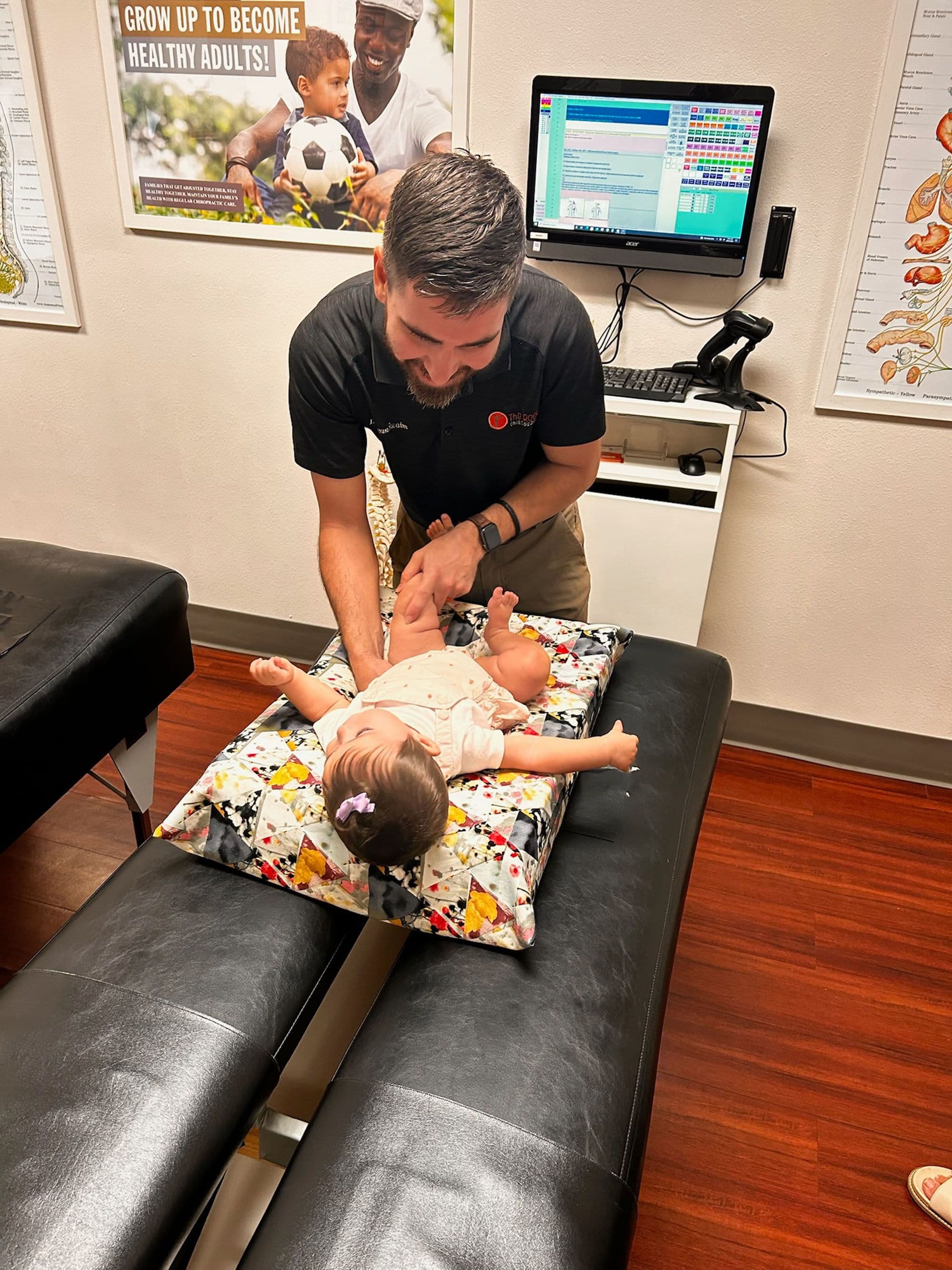
If your child keeps getting ear infections, you already know the cycle. Fever, tugging at the ear, a rushed visit to the pediatrician, a round of antibiotics, temporary relief — and then it happens again six weeks later. Ear infections and chiropractic care might not seem like an obvious pairing, but there is a growing body of clinical evidence connecting the two. At Little Roots Pediatric Chiropractic in Lakewood Ranch, chronic ear infections are one of the most common reasons parents walk through our door — and one of the areas where families see meaningful change.
Why Do Ear Infections Keep Coming Back?
The medical term is otitis media — inflammation and fluid buildup in the middle ear. The American Academy of Pediatrics estimates that roughly 80% of children will have at least one ear infection by age three, and many will have several.
The standard approach follows a predictable path:
- Diagnose the infection
- Prescribe antibiotics
- Wait for it to clear
- Repeat when it returns
- Refer to an ENT for tubes if it keeps recurring
Antibiotics address the bacteria present during an active infection. That is their job, and they do it. But antibiotics do not answer the question that matters most to parents watching this cycle repeat: why can't my child's ears stay clear?
The answer, in most cases, is mechanical. The middle ear drains through a small passage called the eustachian tube. In adults, this tube angles downward from the ear to the throat — gravity helps fluid drain. In infants and young children, the eustachian tube is nearly horizontal. It depends almost entirely on muscular coordination to open, close, and move fluid out of the ear.
When that coordination is disrupted, fluid pools. Pooled fluid becomes a breeding ground for bacteria. Infection follows. The antibiotics clear the bacteria, but the drainage problem remains — so the fluid accumulates again, and the cycle restarts.
What Does the Nervous System Have to Do With Ear Infections?
The muscles that control the eustachian tube — the tensor veli palatini and the levator veli palatini — are innervated by cranial nerves that originate in the brainstem and travel through the upper cervical spine. The vagus nerve, which regulates the entire parasympathetic ("rest and digest") branch of the autonomic nervous system, also exits through this region.
When the upper cervical vertebrae (C1 and C2) are restricted or misaligned — something that happens frequently during birth, particularly with vacuum extraction, forceps, prolonged pushing, or C-section delivery — the nerve signals controlling eustachian tube function can be compromised.
The result is a child whose ears cannot drain properly. Not because the anatomy is abnormal, but because the neurological signaling that drives the drainage mechanism is not firing the way it should.
This is the connection between ear infections and the nervous system that most parents never hear about. The ears are not broken. The drainage system is not getting the right instructions.
What Does Chiropractic Care Actually Do for Ear Infections?
Pediatric chiropractic care does not "treat" ear infections. That distinction matters, both clinically and legally. What gentle upper cervical adjustments do is remove interference in the nervous system so the body can regulate its own drainage and immune response more effectively.
At Little Roots, our doctors use the Torque Release Technique — an instrument-assisted method that applies about the same pressure you would use to test whether a tomato is ripe. There is no twisting, no popping, no manual force that would alarm even the most cautious parent.
The goal is specific: restore proper motion and alignment in the upper cervical spine so the nerves controlling the eustachian tube and the surrounding lymphatic drainage can function without interference.
A 2012 case series published in the Journal of Clinical Chiropractic Pediatrics followed children with recurrent otitis media who received upper cervical chiropractic care. The researchers documented significant reductions in ear infection recurrence over a six-month follow-up period. A separate 2006 retrospective published in Explore: The Journal of Science and Healing found that chiropractic care was associated with fewer episodes of otitis media and reduced antibiotic use in the study group.
These are observational studies, not randomized controlled trials — the gold standard in clinical evidence is still developing. But the pattern is consistent across the published literature: when upper cervical function improves, many children's ear infections become less frequent and less severe.
What Happens at the First Visit?
A first visit at Little Roots for a child with recurrent ear infections includes:
- A detailed history — birth details, feeding patterns, ear infection timeline, antibiotics used, any prior ENT involvement, sleep quality, and what you have observed at home
- A gentle hands-on assessment — Your doctor evaluates upper cervical mobility, cranial motion, and tension patterns in the neck and occiput. Your child stays on your lap or on a padded table the entire time
- A neurological evaluation — a non-invasive scan that shows how your child's autonomic nervous system is functioning. This gives us objective data on where the nervous system is stuck in a stress response
- A conversation about what we find — Your doctor walks you through the results and explains exactly what she is seeing, what it means for your child's ears, and what the care plan looks like
If an adjustment is indicated at the first visit, Your doctor demonstrates the Integrator instrument on your hand first so you feel exactly how gentle it is before it touches your child. Most kids are calm or playing by the end of the visit.
Each child is different. We take a personalized approach based on what your child's nervous system is showing us — never a one-size-fits-all protocol.
For more on what infant and toddler visits look like, see our full guide to common issues we see in infants.
Does This Replace My Pediatrician?
No. We say this clearly and often: chiropractic care works alongside your pediatrician, not instead of them.
If your child has an active ear infection with fever and pain, they need to be seen by their pediatrician. If antibiotics are prescribed, give them. The medical management of an acute infection is important.
What chiropractic care addresses is the pattern — the reason the infections keep returning after each round of antibiotics clears. Your pediatrician manages the acute episode. We support the nervous system and drainage function so those episodes become less frequent over time.
Many of the families at Little Roots maintain regular well-child visits with their pediatrician while also bringing their child in for periodic chiropractic care. The two approaches complement each other. We are happy to communicate with your pediatrician if they have questions about what we do.
For parents who want to understand the safety profile of pediatric chiropractic more broadly, we wrote a detailed post on that topic: Is Chiropractic Safe for Babies?
The Bigger Picture: Ear Infections Rarely Travel Alone
In our experience, children who come in for chronic ear infections often have other signs that their nervous system is under stress. The ear infections are the symptom that brings the family in, but they are rarely the only thing going on.
Common presentations we see alongside recurrent ear infections:
- Colic or fussiness that never fully resolved
- Reflux — frequent spit-up or discomfort during feeds
- Sleep disruption — difficulty falling asleep or staying asleep
- Head turn preference — consistently favoring one side
- Delayed milestones — slower to roll, sit, or crawl than expected
- Mouth breathing or snoring — often related to the same upper cervical and lymphatic drainage issues
When multiple symptoms cluster together, it is usually not five separate problems. It is one nervous system under stress expressing itself in different ways. Supporting the nervous system often helps the whole picture — not just the ears.
Our pediatric wellness approach is designed around this understanding. We look at the whole child, not just the chief complaint.
What About Ear Tubes?
Myringotomy with tube placement (ear tubes) is one of the most common surgical procedures performed on children in the United States. The tubes are tiny cylinders inserted through the eardrum to allow fluid to drain from the middle ear and equalize pressure.
Ear tubes are effective at reducing fluid buildup while they are in place. For children with severe, complicated, or hearing-threatening ear infections, they can be the right call.
But tubes are a mechanical solution to a drainage problem — and they do not address why the drainage failed in the first place. The tubes eventually fall out (usually within 6 to 18 months), and in a percentage of children, the infections return because the underlying issue was never resolved.
Many families come to Little Roots specifically because they have been told their child needs tubes and want to explore whether supporting normal drainage function through chiropractic care could change the trajectory first. We cannot promise that it will — every child is different. But we can evaluate your child's nervous system, explain what we find, and give you honest guidance about whether chiropractic care is a reasonable option before proceeding to surgery.
If tubes are the right path for your child, we support that decision fully. Our job is to give families options and information, not to replace medical care.
Frequently Asked Questions
Can a chiropractor help with ear infections in kids?
Pediatric chiropractic care does not treat ear infections directly. What gentle upper cervical adjustments do is support proper nervous system function and eustachian tube drainage. When the nervous system is functioning well and the ears can drain properly, many children experience fewer and less severe ear infections over time.
How many visits before we see a change?
Every child responds differently. Some parents notice changes — calmer behavior, better sleep, longer gaps between infections — within the first few visits. Others take longer. We track progress with periodic re-evaluations rather than promising specific timelines.
Is it safe for babies and toddlers?
Yes. Pediatric chiropractic uses fingertip pressure lighter than you would use to check a ripe tomato. The Integrator instrument delivers a precise, controlled impulse — no manual twisting or cracking. Our doctors are ICPA-trained specifically for infant and pediatric care. For more detail, read Is Chiropractic Safe for Babies?
Should I still give antibiotics if my child has an active infection?
If your pediatrician prescribes antibiotics for an active ear infection, follow their guidance. Chiropractic care addresses the pattern of recurrence, not the acute infection. The two approaches work alongside each other.
What if my child has already had tubes?
Children who have already had ear tubes placed can still benefit from chiropractic care. Supporting nervous system function and drainage may help reduce the chance of infections returning after the tubes fall out.
Do I need a referral from my pediatrician?
No referral is needed. You can book a complimentary consultation directly or call (941) 932-4611 to schedule.
Your child's ear infections are real, and the toll they take on the whole family — the sleepless nights, the urgent care visits, the worry every time they tug at their ear — is real too.
If you have been through multiple rounds of antibiotics and the infections keep coming back, it may be worth looking at what is driving the pattern. The nervous system is a piece of that picture that most families never hear about.
the Little Roots team specialize in working with children whose bodies need a little extra support. Book a complimentary consultation or call (941) 932-4611 to learn whether chiropractic care makes sense for your child.