
Chiropractic Care for Scoliosis in Teens vs. Adults: What's Different
A scoliosis diagnosis lands differently depending on when it happens. In a teenager, scoliosis is often caught early, while the spine is still growing and changing shape. In an adult, scoliosis is either a curve that's been present since adolescence or one that developed later in life, in a spine that's done growing. Chiropractic care for teenage scoliosis and adult scoliosis care actually start from different questions, because a growing spine and a mature spine respond to different things — and a personalized approach looks different at each stage.
How Scoliosis Shows Up Differently at Each Age
In teens, scoliosis is most often idiopathic, meaning there's no single identifiable cause, and it tends to appear or become noticeable during a growth spurt. Because the spine is still actively growing, a teen's curve has the potential to change — sometimes quickly — over months, which is why timing and monitoring matter so much at this age.
In adults, scoliosis generally falls into two categories: a curve that was present since the teen years and has carried into adulthood, or a curve that develops later in life, often related to disc and joint changes that come with age (sometimes called degenerative scoliosis). An adult spine isn't growing anymore, so the concern shifts from "how much might this curve change" to "how is this curve affecting day-to-day comfort and function right now." Our guide on back pain covers more on how spinal changes like this can show up as discomfort over time.
What a Teen Evaluation Looks At
When we evaluate a teenager for possible scoliosis, growth stage is one of the most important pieces of the picture. A teen who still has significant growth ahead carries a different level of concern than one who's nearly finished growing, because remaining growth is closely tied to how much a curve might still change. A consultation, full neurological evaluation, and any necessary X-rays help establish a clear starting point — not just whether a curve is present, but its size and pattern.
From there, monitoring becomes part of the plan. Because curves in growing teens can progress, especially during a growth spurt, regular re-evaluation matters more than any single snapshot. Each teen's growth pattern is different, so how often we check back is based on what that individual evaluation shows, not a standard schedule applied to every case.
What an Adult Evaluation Looks At
An adult evaluation starts from a different place. Since the spine has finished growing, we're less focused on whether a curve might progress rapidly and more focused on how it's functioning day to day — where there's discomfort, whether there's any nerve involvement, and how posture and movement patterns have adapted around the curve over time, sometimes over decades.
A full neurological evaluation and any necessary X-rays help us understand not just the curve itself, but what's happening around it: disc changes, joint stiffness, and compensations elsewhere in the spine that often develop alongside a long-standing curve. Our guide on chiropractic care for scoliosis goes further into how ongoing support can look for an adult curve.
Why Growth Timing Changes Everything for Teens
The single biggest difference between teen and adult scoliosis care comes down to growth. A curve in a teen with significant growth remaining can change meaningfully in a matter of months, which is why timely evaluation and consistent monitoring are emphasized so heavily at this age. This isn't about creating alarm — most scoliosis curves in teens are mild and many stay that way — but a curve that's actually progressing is far easier to keep an eye on early than to address later.
For adults, that growth-driven urgency isn't part of the picture anymore. Adult scoliosis care tends to focus on comfort, function, and supporting the spine as it is now, rather than tracking rapid change.
What Chiropractic Support Can (and Can't) Do at Either Age
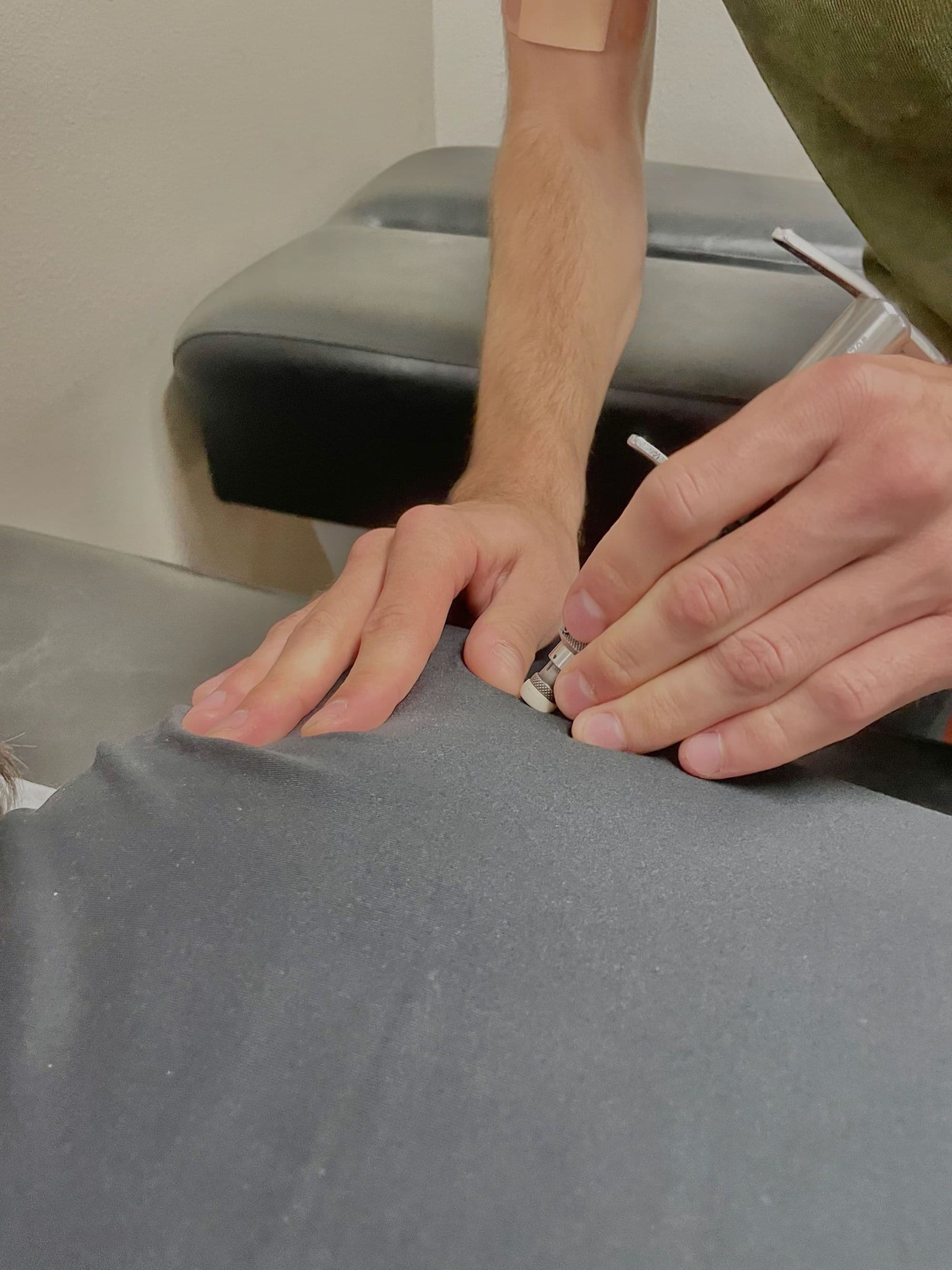
Chiropractic care doesn't straighten a scoliosis curve, and we won't tell you otherwise. What gentle, technique-based care can do is support the nervous system and the muscles and joints working around a curve — which may help with comfort, posture awareness, and overall function at either age. At The Roots Health Centers, our doctors use the Torque Release Technique (TRT), a low-force approach, rather than the more forceful manipulation some people associate with scoliosis-specific chiropractic programs.
For teens with a curve that's actively being monitored or braced by an orthopedic specialist, our role is to work alongside that care, not instead of it — significant or rapidly progressing curves belong under orthopedic monitoring, and we'll say so plainly if that's what an evaluation suggests. For adults, support tends to focus more on managing day-to-day discomfort and function around a long-standing curve. Each person's plan is built around what their own evaluation shows, because scoliosis at any age is never a one-size-fits-all picture.
Signs Worth a Closer Look, at Any Age
A few signs are worth a closer look whether you're watching your teen or noticing something in your own body:
- One shoulder appears higher than the other
- One shoulder blade sticks out more than the other
- Uneven hips, or leaning noticeably to one side
- Clothes hanging unevenly, even when properly fitted
- A visible curve when bending forward at the waist
None of these signs confirm scoliosis on their own, but they're worth a conversation and, if appropriate, an evaluation — at any age.
Getting Started
Whether you're bringing in a teenager after a school screening flagged something, or you're an adult who's lived with a curve for years and want a closer look at how it's affecting you now, the starting point is the same: a consultation, a full neurological evaluation, and any necessary X-rays to understand exactly what's happening in your spine. From there, our doctors can talk through what monitoring or support actually looks like for your specific situation.
Frequently Asked Questions
Does scoliosis in teens always get worse? No. Many scoliosis curves in teens are mild and stay that way, but because the spine is still growing, curves have more potential to change than they do in adults — which is why monitoring matters, not because progression is guaranteed.
Can chiropractic care straighten a scoliosis curve? No. Chiropractic care doesn't straighten a structural curve. Gentle, technique-based care may support comfort, posture, and overall function alongside whatever monitoring or orthopedic care is appropriate for the curve.
At what age is scoliosis usually diagnosed in teens? Idiopathic scoliosis in teens is most often noticed around a growth spurt, commonly between ages 10 and 15, though it can be picked up earlier or later.
Is adult scoliosis the same condition as teen scoliosis? Sometimes — a curve that started in the teen years can carry into adulthood. Other times, adult scoliosis develops later in life and is more closely tied to age-related changes in the discs and joints.
Should a teen with scoliosis see an orthopedic specialist instead of a chiropractor? For curves that are significant or actively progressing, orthopedic monitoring is important, and we'll say so directly. Chiropractic support can work alongside that care rather than replace it.
Whether you're watching a teen's growing spine or an adult curve you've lived with for years, an evaluation is the clearest way to understand what's actually happening. Book your complimentary consultation at The Roots Health Centers in Lakewood Ranch, and let's take a personalized look at your spine.
The Roots Health Centers, 8209 Natures Way, Unit 115, Lakewood Ranch, FL 34202. (941) 877-1507.
Conditions We Treat
Scoliosis
Chiropractic care doesn't straighten a scoliotic curve — and we'll never tell you otherwise. What it can do is help manage the pain, stiffness, and uneven muscle load that come with living in a curved spine, while keeping an honest eye on the curve itself.
Back Pain
Corrective chiropractic care that addresses the structural root cause of back pain — not just masking symptoms with medication.
Services Related to This Post
Keep Reading
Related articles
Chiropractic Care for Scoliosis: What Actually Helps
Scoliosis can't be reversed, but chiropractic care can support comfort, posture, and mobility around an existing curve. Here's what to know before you book anything.
Read articleDo Posture Correctors Work? An Honest Look
An honest, no-hype look at whether posture correctors actually work, what they can and can't do for your posture, and how postural habits like tech neck really improve.
Read article