

Do Posture Correctors Work? An Honest Look
If you've searched "do posture correctors work" while wearing one of these straps right now, here's the honest answer: sort of, for a narrow purpose, but probably not for the reason you bought it. A posture corrector can remind your shoulders where they're supposed to sit while you have it on. It doesn't retrain the muscles, joints, and habits that let your posture drift in the first place, which is exactly why so many people notice the old slouch creeping back the moment the brace comes off. At The Roots Health Centers in Lakewood Ranch, we see a lot of patients who've already tried a posture corrector before ever asking why their posture keeps drifting to begin with — this is what we tell them.
What Is a Posture Corrector, Actually?
Posture correctors come in a few forms — cross-back straps, clavicle braces, magnetic pull-back vests, even smart wearables that buzz when you slouch. All of them work on the same basic principle: external mechanical pressure that pulls your shoulders back and your chest up for as long as you're wearing it. None of them do anything to your spine, joints, or muscles once you take them off. It's less a corrective device and more a physical reminder, in the same category as a sticky note on your monitor that says "sit up."
Do Posture Correctors Work? The Honest Answer
For the specific job of holding your shoulders in a more upright position while you're wearing it, yes — a posture corrector does what it says on the box. For the job most people actually want it to do — permanently changing years of forward-head, rounded-shoulder posture — the mechanics say no. A brace can't strengthen the muscles between your shoulder blades, and it can't address whatever is happening at the joint level in your neck and upper back that let the posture drift in the first place. Postural change that actually sticks tends to come from addressing why the posture changed, not from bracing the position it changed into.
What Posture Correctors Can Actually Help With
There's a real, limited role here, worth naming so the whole category doesn't get dismissed. Wearing one for short, occasional stretches can give you a felt sense of what an upright position feels like, which some people find genuinely useful while they're first learning to notice their own slouch. It can also offer a bit of relief during an unavoidable stretch of long-haul driving or a flight. Used that way — as an occasional cue, not a daily crutch — a posture corrector is doing a reasonable job of the one thing it's actually built for.
Why Wearing One All Day Can Backfire
Wearing a posture corrector for hours at a stretch can quietly work against you. When an external brace does the job your postural muscles are supposed to be doing, those muscles get less practice holding you upright on their own. Lean on a brace heavily enough for long enough, and it's common for people to notice their own muscles feel weaker, not stronger, the moment it comes off — the opposite of what they were hoping for. A posture corrector is a prop, not a workout, and using it as a substitute for the strengthening work your body actually needs is where most of the disappointment with these devices comes from.
The Real Driver Behind Most "Bad Posture"
Most of the posture people are trying to correct with a brace didn't develop overnight, and it usually isn't a willpower problem. Hours spent looking down at a phone, hunched over a laptop, or sitting in the same desk position most of the day gradually change how the joints in your neck and upper back move and how the muscles around them behave — a pattern we refer to as tech neck when we see it in the office, and one we've written about in more detail in Tech Neck: The Modern Posture Epidemic Nobody's Talking About and our desk-setup guide for remote workers. A posture corrector strapped over that pattern addresses the part you can see in the mirror, not the joint restriction or muscular imbalance underneath it — which is the part a brace, by design, was never built to reach.
What We Look at Instead
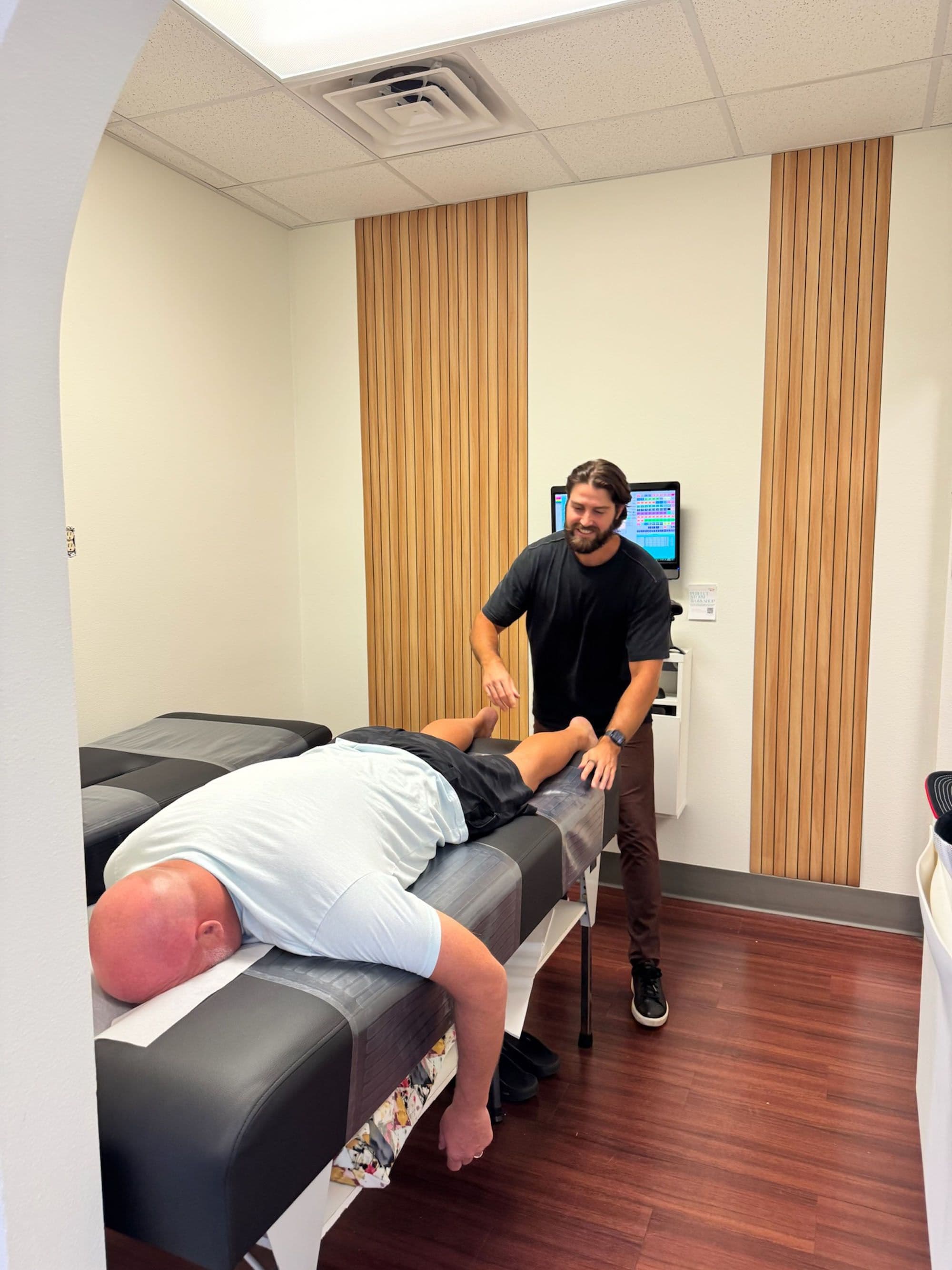
When posture comes up during a visit at The Roots, we don't start with a brace — we start with a consultation and a full neurological evaluation to understand what's actually going on in your neck, upper back, and nervous system, along with any necessary X-rays when they're clinically indicated. From there, our chiropractic care uses the Torque Release Technique, a gentle, low-force adjustment approach, to help address the joint restrictions the evaluation identifies. We pair that with guidance on movement, stretching, and desk setup, because posture is a habit that gets reinforced dozens of times a day — an adjustment can help address restriction at the joint, but the habits around it matter just as much. Each person's case is different, so we take a personalized approach rather than promising a specific number of visits or an exact timeline.
So Should You Use One?
If you already own a posture corrector, wearing it for short, occasional stretches — a long drive, a flight, an unavoidable afternoon at a desk that isn't set up right — isn't harmful and may offer a useful reminder. Just don't expect it to undo months or years of postural habit on its own, and don't wear it so often that your own muscles stop doing their share of the work. If your posture has been drifting for a while, or you're dealing with neck pain, headaches, or stiffness that comes along with it, that's worth having looked at directly instead of working around it with a strap.
Frequently Asked Questions
Do posture correctors actually work? They do the one job they're built for — holding your shoulders in a more upright position while you're wearing them. They don't retrain the muscles or joints responsible for your posture, so most people find the effect disappears once the brace comes off.
Can a posture corrector permanently correct rounded shoulders? Not on its own. Lasting postural change tends to come from addressing the underlying joint restriction and muscle imbalance, along with new movement habits — not from an external brace.
How long should you wear a posture corrector each day? There's no universal number, but relying on one for hours at a time, every day, can let your own postural muscles get weaker rather than stronger. Short, occasional use tends to be more useful than constant wear.
Are posture correctors bad for you? They're not inherently harmful, but heavy daily reliance can work against you by letting your postural muscles do less of their own job over time.
What actually helps posture long-term? Addressing what's happening at the joint level in the neck and upper back, building strength in the muscles that support upright posture, and changing the daily habits — like phone and desk posture — that caused the drift in the first place. We take a personalized approach based on what an evaluation shows, rather than a one-size-fits-all timeline.
If your posture hasn't budged no matter what strap or app you've tried, it might be time to actually look at what's driving it. Book a complimentary consultation at The Roots Health Centers in Lakewood Ranch — meet the team, tour the clinic, and get honest answers about what's really going on. No commitment to start care.
The Roots Health Centers, 8209 Natures Way, Unit 115, Lakewood Ranch, FL 34202. (941) 877-1507.
Conditions We Treat
Tech Neck
Forward head posture from daily screen use shifts the mechanical load on your cervical spine, compresses nerves, and drives chronic neck pain, headaches, and upper back tension. Corrective care addresses the structural change — not just the symptoms.

Neck Pain
Precise cervical adjustments and decompression that restore alignment, reduce nerve pressure, and eliminate chronic neck pain at its source.
Services Related to This Post
Keep Reading
Related articles
Tech Neck: The Modern Posture Epidemic Nobody's Talking About
If you spend hours a day looking at a phone or screen, your spine is paying the price. Here's what tech neck does to your body — and how to undo it.
Read articleText Neck in Remote Workers: A Desk-Setup Guide
Hours of screen time can quietly reshape your posture. Here's a practical desk-setup guide for text neck in remote workers, and when it's time for a real evaluation.
Read article