
Fibromyalgia: A Nervous-System-First Approach to Widespread Pain

If you've been told your body-wide pain, exhaustion, and brain fog are "all in your head" — or worse, that nothing more can be done — you're not imagining any of it. Fibromyalgia is a real, recognized condition, and the research on what's actually happening in the body has moved a long way past the old idea that it's simply pain amplification with no clear cause. The clearest picture emerging today points to the nervous system itself as a central driver of fibromyalgia symptoms. Understanding that shift matters, because it changes where support can reasonably start.
What Is Fibromyalgia?
Fibromyalgia is a chronic condition marked by widespread pain, tenderness, and a cluster of symptoms that go well beyond the muscles and joints. It's classified as a central sensitization disorder, meaning the nervous system's volume knob for pain signals gets turned up — ordinary sensations that shouldn't hurt start registering as painful, and pain that should fade lingers instead. This is different from a musculoskeletal injury or straightforward inflammation. The tissue itself is often not damaged; it's the way the nervous system is processing signals from that tissue that has changed.
Common Symptoms
Fibromyalgia looks different from person to person, but a recognizable pattern shows up again and again:
- Widespread pain and tenderness on both sides of the body, above and below the waist
- Persistent fatigue that doesn't improve with rest
- "Fibro fog" — trouble concentrating, word-finding, and short-term memory
- Sleep that feels unrefreshing even after a full night
- Headaches and jaw tension
- Heightened sensitivity to touch, temperature, light, or sound
- Digestive symptoms and mood changes, since the same nervous-system regulation affects gut and emotional processing too
Because the symptom list is so broad, fibromyalgia is often mistaken for — or dismissed in favor of — something else, which is part of why so many people go years before getting real answers.
What's Actually Driving It: A Nervous-System-First View
The leading research on fibromyalgia centers on central sensitization — a state where the central nervous system amplifies pain signals rather than the body producing more "real" pain input at the tissue level. Several nervous-system-related factors are commonly discussed as contributors:
- Dysregulated stress response. Chronic stress keeps the nervous system in a heightened, protective state, which can lower the threshold for pain.
- Sleep disruption. Poor deep-sleep quality is closely tied to next-day pain sensitivity, creating a cycle that's hard to break without addressing sleep itself.
- Autonomic nervous system involvement. The same nervous-system branch that regulates heart rate, digestion, and temperature control is frequently found to be functioning differently in people with fibromyalgia.
- Past physical or emotional stress. A significant injury, illness, or period of prolonged stress often precedes the onset of symptoms, suggesting the nervous system's regulation gets disrupted and doesn't reset on its own.
This nervous-system-first view is why a narrow focus on the painful muscle or joint alone tends to fall short — the pain signal is being generated and interpreted by a system that spans the whole body, not manufactured at a single sore spot.
Fibromyalgia and Small Fiber Neuropathy: Is There an Overlap?
Research has found that a meaningful subset of people diagnosed with fibromyalgia also show measurable small-fiber nerve damage — a distinct condition our sister site covers in depth: small fiber neuropathy. The symptoms can look similar (widespread pain, burning sensations, heightened sensitivity), which is one more reason a real evaluation matters instead of assuming every case of chronic widespread pain has the same underlying driver. If your pain pattern includes prominent burning, tingling, or numbness — especially in your feet or hands — it's worth asking your provider whether small-fiber testing makes sense alongside a fibromyalgia workup.
How Nervous-System-Focused Chiropractic Care May Help
At The Roots Health Centers, care for fibromyalgia starts the same way every case does: a full neurological evaluation and any necessary X-rays to understand how your nervous system is currently functioning, not just where you feel pain. Chiropractic care using Torque Release Technique is a gentle, low-force approach aimed at supporting nervous-system regulation rather than forcing joints — a distinction that matters for a nervous system that's already in a heightened, sensitized state. The goal isn't to chase every individual pain point; it's to support the underlying regulation that's driving how those signals are processed in the first place. Each person's presentation is different, so we build a personalized plan around what your evaluation actually shows.
Everyday Strategies That May Support Your Nervous System
Alongside clinical care, a few daily habits are commonly discussed as supportive for people managing fibromyalgia:
- Consistent, gentle movement. Low-impact activity like walking, swimming, or stretching tends to be better tolerated than high-intensity exercise and may help over time.
- Protecting sleep. A consistent sleep schedule and a wind-down routine support the deep, restorative sleep most closely tied to pain sensitivity — something we address directly when sleep disturbance is part of the picture.
- Stress-regulation practices. Breathing exercises, gentle yoga, or time outdoors can help shift the nervous system out of a constant "on" state.
- Pacing activity. Alternating activity with rest, rather than pushing through until you crash, helps avoid the boom-and-bust cycle many people with fibromyalgia describe.
- Whole-food nutrition. An anti-inflammatory eating pattern is often part of a broader neurometabolic approach to supporting the nervous system.
None of these replace a proper evaluation, but they're reasonable, low-risk habits to build alongside a care plan.
When to See a Doctor First
Fibromyalgia shares symptoms with several other conditions, so a proper diagnosis matters before assuming that's what's happening. See a physician promptly if you notice swelling or redness in your joints (which points toward inflammatory arthritis rather than fibromyalgia), unexplained weight loss, fevers, or symptoms that are isolated to one side of the body rather than widespread. Those patterns suggest something that needs medical evaluation first. If your pattern is the more typical one — widespread pain, fatigue, brain fog, and unrefreshing sleep that's built up gradually — a nervous-system-focused evaluation is a reasonable next step.
Frequently Asked Questions
What triggers a fibromyalgia flare-up? Stress, poor sleep, changes in weather, overexertion, and illness are commonly reported triggers. Because the nervous system is already sensitized, almost any added physical or emotional load can tip symptoms into a flare.
Is fibromyalgia an autoimmune disease? No — fibromyalgia is not currently classified as an autoimmune condition. It's understood as a central sensitization disorder involving how the nervous system processes pain signals, which is a different mechanism than the immune system attacking the body's own tissue.
Can fibromyalgia be seen on an X-ray or blood test? No single test confirms fibromyalgia. Diagnosis is typically based on a pattern of widespread pain and associated symptoms, often after other conditions have been ruled out — which is part of why a thorough evaluation matters.
Does fibromyalgia get worse over time? Every person's pattern is different, and progression isn't the same for everyone. Rather than a fixed trajectory, ongoing nervous-system support and consistent daily habits are generally associated with better day-to-day function.
Is fibromyalgia connected to fatigue and brain fog, or just pain? Both. Because fibromyalgia involves broader nervous-system regulation — not just pain processing — fatigue, sleep quality, and cognitive symptoms like brain fog are considered part of the same underlying pattern, not separate problems.
If widespread pain, fatigue, and brain fog have been part of your life for a while without real answers, schedule a complimentary consultation at The Roots Health Centers in Lakewood Ranch, FL, or call (941) 877-1507. We'll walk you through a full neurological evaluation and help you understand what your nervous system is telling us.
The Roots Health Centers, 8209 Natures Way, Unit 115, Lakewood Ranch, FL 34202.
Conditions We Treat
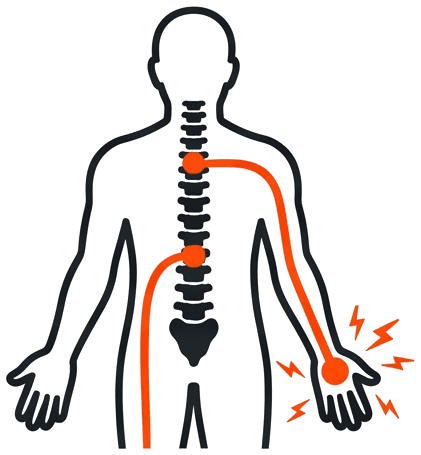
Fibromyalgia
Nervous-system-focused care to reduce widespread pain, fatigue, and brain fog associated with fibromyalgia.
Sleep Disturbance
Poor sleep is rarely just a sleep problem. For many adults, chronic pain, nerve compression, and an overactivated nervous system are the actual barriers to restful sleep — and a chiropractic care plan that addresses those drivers can change the picture.