

Chronic Fatigue and the Nervous System: What's Actually Driving Your Exhaustion

If you've been sleeping eight hours a night and still waking up exhausted, or you hit a wall by early afternoon no matter how much coffee you drink, you already know "tired" doesn't quite cover it. Chronic fatigue is one of the most common things we hear about from new patients at The Roots Health Centers in Lakewood Ranch, FL — often from people who've had bloodwork come back "normal" and been told there's nothing more to look into. We think there's more to that conversation, and it starts with understanding what's actually driving the exhaustion.
What Is Chronic Fatigue?
Chronic fatigue is persistent, whole-body exhaustion that doesn't resolve with rest and often lasts for weeks or longer. It's worth knowing there's a specific medical diagnosis called Chronic Fatigue Syndrome (sometimes called ME/CFS) that has its own defined criteria and is best evaluated by a physician. But for most people searching "chronic fatigue," what they're describing is a persistent pattern of low energy that shows up alongside other things — poor sleep, stress, gut issues, or an underlying condition — rather than a single stand-alone diagnosis. Either way, the exhaustion is real, and it deserves a real look at what's behind it.
Why Fatigue Isn't Always "Just Tired"
Your energy levels are regulated in large part by your autonomic nervous system — the part of your nervous system that quietly manages the balance between your "go" state (sympathetic) and your "rest and digest" state (parasympathetic). When that system stays tilted toward "go" for too long, whether from chronic stress, poor sleep quality, or an underlying health issue, your body doesn't get the deep, restorative signal it needs, even if you're technically getting hours of sleep. We think about this through what we call neurometabolic health — the idea that nerve health, gut health, and metabolic function are connected systems, not separate problems to chase down one at a time.
Common Contributors We See in the Office
Chronic fatigue rarely has one single cause. Some of the patterns we see most often include:
- Poor sleep quality, even when total sleep time looks adequate on paper — we cover this connection in more depth in our guide to sleep disturbances
- Chronic stress and nervous system dysregulation, where the body stays in a heightened state longer than it's designed to
- Gut health imbalances, since digestion and energy production are closely linked
- Unaddressed autoimmune activity, which can quietly drain energy long before other symptoms show up — see autoimmune support
- Fibromyalgia, a condition where widespread pain and fatigue often travel together — read more on our fibromyalgia page
- Sedentary patterns, where a lack of movement paradoxically makes fatigue worse rather than better
Often it's a combination of a few of these rather than one clear culprit, which is exactly why a real evaluation matters more than guessing.
When Fatigue Signals Something More Serious
Most chronic fatigue is manageable and improves with the right support, but some patterns deserve prompt medical attention rather than a wait-and-see approach. Talk to your physician promptly if your fatigue comes with unexplained weight loss or gain, fever, chest pain, shortness of breath, new swelling, or a severe headache unlike anything you've had before. Those symptoms point toward something that needs a medical workup first, before anything else.
A Nervous-System-First Approach at The Roots
At The Roots Health Centers, we start with a full neurological evaluation to understand how your nervous system is actually functioning, rather than assuming every case of fatigue looks the same. From there, care might include chiropractic support aimed at nervous system regulation, or red light therapy, which we think about through that same neurometabolic lens — we've written more about the neurometabolic picture beyond pain relief if you want the fuller explanation. Because every person's case is different, we don't promise a specific timeline or outcome — what we can promise is that your plan is built around what your evaluation actually shows.
Practical Support Alongside Care
A few habits that support your nervous system and energy levels day to day, alongside whatever care plan makes sense for you:
- Protect a consistent sleep and wake time, even on weekends — irregular timing works against your body's natural rhythms
- Stay hydrated, since even mild dehydration can worsen fatigue
- Move gently and regularly, rather than pushing through hard workouts or staying completely sedentary
- Build in real downtime, not just screen time, so your nervous system gets a genuine chance to shift out of "go" mode
These habits won't undo an underlying issue on their own, but they support whatever else your care plan involves.
Frequently Asked Questions
Is chronic fatigue the same as Chronic Fatigue Syndrome? Not necessarily. Chronic Fatigue Syndrome (ME/CFS) is a specific medical diagnosis with defined criteria. Many people experience persistent fatigue without meeting that specific diagnosis, though the exhaustion is just as real either way.
What causes chronic fatigue? It's rarely one thing. Poor sleep quality, chronic stress, gut health imbalances, autoimmune activity, and conditions like fibromyalgia are all common contributors, often overlapping rather than standing alone.
Can chiropractic care help with chronic fatigue? Our approach starts with a full neurological evaluation to understand how your nervous system is functioning. From there, nervous-system-focused care may help support your body's ability to regulate energy, though results vary and every case is different.
When should I see a doctor about fatigue? If your fatigue comes with unexplained weight changes, fever, chest pain, shortness of breath, new swelling, or a severe headache, see your physician promptly rather than waiting it out.
Does poor sleep cause chronic fatigue? Poor sleep quality is one of the most common contributors, but it's often tangled up with stress, gut health, and other factors, which is why looking at the whole picture matters more than focusing on sleep alone.
If exhaustion has become your new normal and you're ready for a real look at what's behind it, schedule a complimentary consultation at The Roots Health Centers in Lakewood Ranch, FL, or call us at (941) 877-1507. We'll talk through what you're experiencing and what a personalized, nervous-system-first approach could look like for you.
The Roots Health Centers, 8209 Natures Way, Unit 115, Lakewood Ranch, FL 34202.
Conditions We Treat
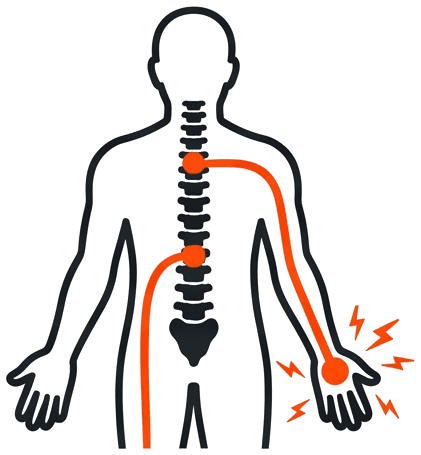
Fibromyalgia
Nervous-system-focused care to reduce widespread pain, fatigue, and brain fog associated with fibromyalgia.
Sleep Disturbance
Poor sleep is rarely just a sleep problem. For many adults, chronic pain, nerve compression, and an overactivated nervous system are the actual barriers to restful sleep — and a chiropractic care plan that addresses those drivers can change the picture.

Autoimmune Inflammation Support
Patients with Hashimoto's, lupus, rheumatoid arthritis, and other autoimmune conditions often find that managing the diagnosis doesn't fully address the pain, fatigue, and systemic inflammation they live with. Red light therapy and nervous system care offer a complementary layer that works alongside your medical plan.
Services Related to This Post

Keep Reading
Related articles
Red Light Therapy Beyond Pain Relief: The Neurometabolic Picture
Red light therapy is known for pain and skin, but the bigger story is cellular energy. Here's the neurometabolic angle and how it fits whole-body care.
Read articleWhat Is a Chiropractic Neurological Evaluation? How We Measure Your Nervous System
A chiropractic neurological evaluation uses surface EMG, thermal scanning, and heart rate variability to show how your nervous system is actually functioning — not just where it hurts. Here is what each measurement means and why it matters for your care.
Read article