

How Sitting 8 Hours a Day Is Quietly Wrecking Your Spine
The average American adult sits for 9 to 10 hours a day between work, commuting, meals, and screen time in the evening. Your spine wasn't built for that. It evolved to move — walking, standing, bending, squatting — not to hold a static, rounded posture in a chair for the better part of your waking hours. The damage from prolonged sitting is gradual rather than sudden, which is exactly why it sneaks up on people: nothing hurts on day one, but the cumulative effect on your spine and posture can build for years before it turns into pain you can't ignore.
What Prolonged Sitting Actually Does to Your Spine
Sitting for long stretches sets off a predictable chain reaction in your body:
- It flattens your natural lumbar curve, which changes how weight and pressure distribute across the discs in your low back — instead of even loading, certain areas take on more stress than they're built for.
- It tightens your hip flexors. Shortened hip flexors pull the front of your pelvis downward into an anterior tilt, which increases the curve — and the stress — in your low back even after you stand back up.
- It deactivates your glutes. Your glute muscles are meant to stabilize your pelvis and support your low back during standing and walking. Hours of sitting on them essentially puts them to sleep, so they're not doing that job when you need them.
- It pulls your head and shoulders forward into the posture most people know as "desk posture" or tech neck. Research on cervical spine mechanics has estimated that every inch your head shifts forward of a neutral position adds significant extra load on the muscles and joints of your neck — which is part of why a long day at a desk can leave your neck and upper back feeling disproportionately wrecked.
None of these changes happen in one sitting (literally). They build slowly, which is exactly why so many people don't connect years of desk work to the stiffness, achiness, or posture changes they're dealing with now.
Why "Just Sit Up Straight" Doesn't Fix It
If better posture were purely a matter of willpower, this wouldn't be such a common problem. The trouble is that the muscles responsible for holding you upright — your deep core, your glutes, the muscles between your shoulder blades — fatigue relatively quickly when they've been deconditioned by years of sitting. You can consciously pull your shoulders back for a few minutes, but as soon as your attention shifts back to your screen, the muscles that are used to doing the least amount of work take back over. Real change usually involves more than a posture reminder: it means addressing the tightness, the deactivated muscles, and the structural patterns that built up over time, not just the moment-to-moment slouch.
Signs Your Sitting Habits Are Catching Up With You
A few patterns tend to show up before sitting-related spine issues become a bigger problem:
- Back or neck pain that's worse at the end of a workday, better on weekends or vacation
- Waking up stiff even though you slept fine
- Noticing in photos or mirrors that your head sits forward of your shoulders
- A coworker, partner, or friend mentioning your posture
- Tension headaches that seem to start at the base of your skull
If a few of these sound familiar, it's worth getting an actual look at what's going on rather than guessing. We've written more about the signs your back pain isn't just muscular if you want to dig into that distinction further.
What You Can Do Right Now
A few habit changes can meaningfully offset the effects of a desk-bound day:
- Set a movement reminder. Standing, stretching, or walking for even a minute or two every 30–45 minutes helps keep your postural muscles engaged instead of shutting off completely.
- Check your screen height. Your monitor's top edge should sit roughly at eye level so you're not tilting your head down or craning it forward for hours.
- Support your low back. A small cushion or rolled towel behind your lower back can help maintain your natural lumbar curve while seated.
- Stretch your hip flexors. A brief hip flexor stretch once or twice a day can help counter the tightening that comes from sitting.
- Reactivate your glutes. Simple glute bridges or standing glute squeezes throughout the day help wake these muscles back up.
These habits won't undo years of sitting overnight, but they're reasonable, low-effort things to build into a workday.
How a Nervous-System-Focused Evaluation Helps
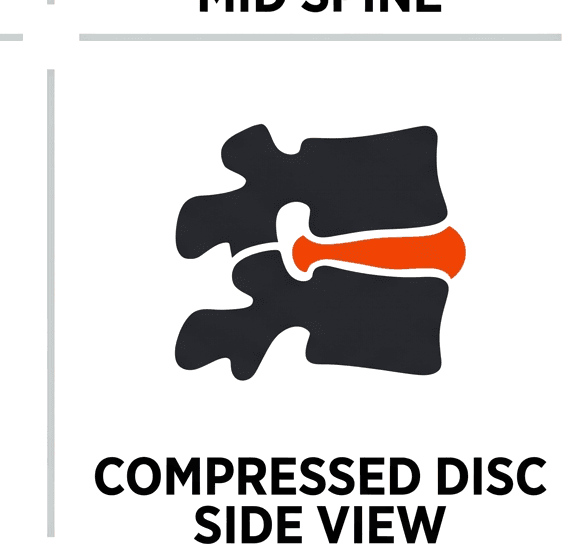
Desk-posture changes aren't just cosmetic — over time they can affect how your nervous system communicates through your spine. At The Roots Health Centers, chiropractic care using Torque Release Technique is aimed at supporting nervous-system regulation and addressing the structural patterns that build up from years of sitting, rather than just masking the ache at the end of the day. For people whose sitting-related back pain involves disc-related pressure, spinal decompression may also be part of a personalized plan. A full neurological evaluation and any necessary X-rays give us a clearer picture of what your spine is actually dealing with, so care is based on your evaluation rather than a generic assumption about "desk posture."
Frequently Asked Questions
Can sitting all day actually damage your spine? Prolonged sitting doesn't cause sudden damage, but it can gradually flatten your lumbar curve, tighten your hip flexors, deactivate your glutes, and pull your head and shoulders forward — changes that build up over months and years rather than all at once.
How many hours of sitting is considered too much? There's no single cutoff that applies to everyone, but many ergonomics and posture researchers point to total daily sitting time — often 8 hours or more between work, commuting, and screen time — as the bigger issue, along with how rarely people break it up with movement.
Can a standing desk fix the problem on its own? Standing all day brings its own postural challenges, so a standing desk alone isn't a complete fix. Alternating between sitting and standing, combined with regular movement breaks, tends to matter more than which position you're in.
Is it too late to fix my posture if I've been sitting for years? Every case is different, so we don't promise a specific outcome, but a proper evaluation is the best way to understand what's realistic for your spine and build a personalized plan from there.
What's the difference between tech neck and general desk posture? Tech neck specifically refers to the forward head posture caused by looking down at phones and screens, while general desk posture also includes the seated hip and low-back changes that come from sitting itself. The two often show up together.
If years at a desk have left your back or neck feeling worse than it should, schedule a complimentary consultation at The Roots Health Centers in Lakewood Ranch, FL, or call (941) 877-1507. We'll walk you through a full neurological evaluation and help you understand what your spine is actually dealing with.
The Roots Health Centers, 8209 Natures Way, Unit 115, Lakewood Ranch, FL 34202.
Conditions We Treat


Services Related to This Post
Keep Reading
Related articles
Tech Neck: The Modern Posture Epidemic Nobody's Talking About
If you spend hours a day looking at a phone or screen, your spine is paying the price. Here's what tech neck does to your body — and how to undo it.
Read articleBest Sleep Position for Spine Health: A Chiropractor's Guide
Back, side, or stomach? The best sleep position for spine health depends on your body — but some positions protect your spine while others quietly damage it. Here's what our team recommends.
Read article5 Signs Your Back Pain Isn't Just Muscular
Not all back pain is created equal. If you're experiencing these warning signs, the problem might be deeper than tight muscles.
Read article