

Occipital Neuralgia: Headaches at the Base of the Skull
If you've ever felt a sudden jolt of sharp, shooting, or electric-shock pain start at the base of your skull and radiate up over your scalp, you may be dealing with occipital neuralgia — irritation of the occipital nerves that run from the top of your neck up through your scalp. It's frequently mistaken for a migraine or a bad headache, which means many people spend months chasing the wrong kind of relief before getting real answers. Occipital neuralgia has a distinct pattern once you know what to look for, and recognizing that pattern is the first step toward finding the right kind of support.
What Is Occipital Neuralgia?
The occipital nerves are a pair of nerves that originate in the upper cervical spine — the top of your neck — and travel up through the muscles at the base of your skull into your scalp. When these nerves become irritated, compressed, or inflamed, the result is occipital neuralgia: a distinct type of headache that originates from nerve irritation rather than the vascular or muscular changes behind a typical migraine or tension headache. Because the occipital nerves connect so closely to structures in the upper neck, irritation there often traces back to what's happening in the cervical spine itself, not just the head.
Symptoms: How to Tell It's Occipital Neuralgia
Because it overlaps so much with migraines and tension-type headaches, occipital neuralgia is one of the more commonly missed sources of head pain. A few patterns tend to set it apart:
- Sharp, shooting, or electric-shock-like pain starting at the base of the skull
- Pain that radiates up over the scalp, sometimes toward one eye or temple
- Tenderness when touching the back of the head or upper neck
- Scalp sensitivity — even light touch, brushing your hair, or resting your head on a pillow can trigger pain
- Pain that comes in short, intense bursts rather than building slowly like a typical headache
- Discomfort that worsens when you turn or extend your neck
Distinguishing occipital neuralgia from a migraine or tension headache usually comes down to the exact location, quality, and triggers of the pain — not just how bad it feels.
What Causes Occipital Neuralgia?
A few common contributors tend to show up together:
- Tension or tightness in the muscles at the base of the skull and upper neck
- Prolonged forward-head posture from desk work or phone use — sometimes called tech neck
- Whiplash or other neck injuries, including from car accidents
- Irritation or compression affecting the nerves in the cervical spine
- Degenerative changes in the upper neck
In some cases, no single clear trigger is ever identified, and the irritation seems to build gradually from a combination of posture, stress, and how the upper cervical spine is functioning day to day.
How Occipital Neuralgia Is Diagnosed
There's no blood test or imaging scan that definitively confirms occipital neuralgia on its own. Diagnosis is largely based on your symptom pattern, a physical exam that checks for tenderness along the occipital nerves, and ruling out other causes of head and neck pain. At The Roots Health Centers, that starts with a full neurological evaluation and any necessary X-rays to understand what's actually happening in your cervical spine — since so much occipital nerve irritation traces back to what's going on in the neck, not just the head itself.
How Chiropractic Care May Help
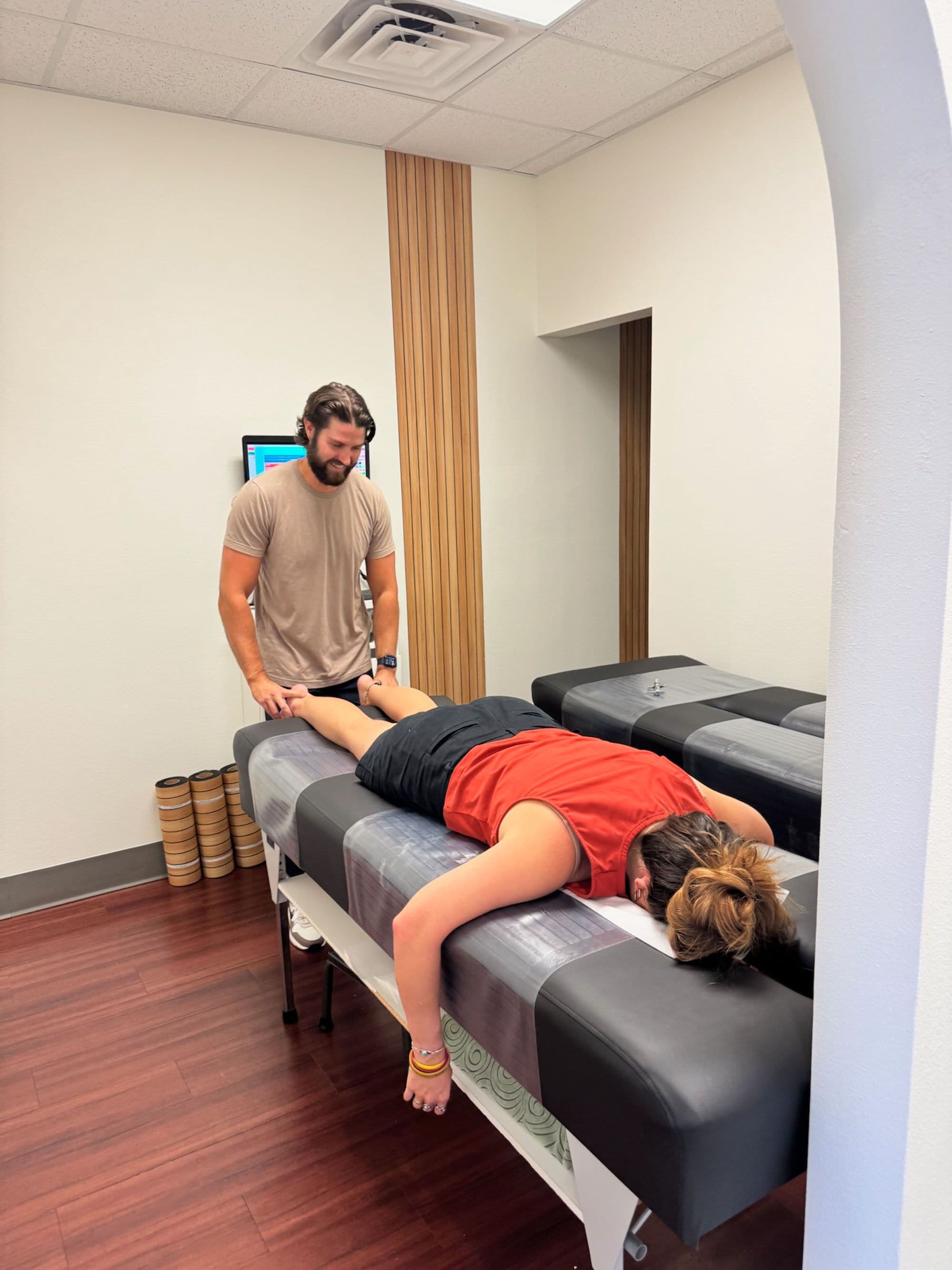
Because so much occipital nerve irritation is tied to tension and restriction in the upper cervical spine, chiropractic care using Torque Release Technique is often part of a nervous-system-focused approach to occipital neuralgia. TRT is a low-force, gentle technique aimed at supporting nervous-system regulation in the neck rather than forcing joints — a distinction that matters when the nerves involved are already irritated and sensitive to pressure. Depending on what your evaluation shows, care may also include guidance on posture, movement, and daily habits that reduce ongoing strain on the upper neck. Each person's presentation is different, so we build a personalized plan based on what your evaluation actually shows — there's no single protocol that fits everyone.
Everyday Habits That May Ease Occipital Neuralgia
A few low-risk habits are commonly discussed as supportive alongside care:
- Take posture breaks. Set a reminder to reset your head and neck position every 30–45 minutes if you work at a desk.
- Watch what touches the base of your skull. Tight ponytails, headbands, or hats can aggravate an already-irritated nerve.
- Try a warm compress. Gentle heat at the base of the skull may help ease muscle tension that's contributing to nerve irritation.
- Support your neck at night. A pillow that keeps your neck in a neutral position can reduce overnight strain.
- Manage stress where you can. Chronic tension in the shoulders and neck often shows up as tightness at the base of the skull.
These habits don't replace a proper evaluation, but they're reasonable things to try alongside care.
When to See a Doctor First
Most occipital neuralgia is uncomfortable but not dangerous. Still, some symptoms warrant prompt medical attention rather than assuming it's occipital neuralgia: a sudden, severe headache unlike any you've had before; head pain accompanied by fever, stiff neck, confusion, vision changes, or weakness on one side of the body; or head pain that started after a significant blow to the head. Those patterns need medical evaluation first. If your pattern is the more typical one — recurring, sharp pain at the base of the skull tied to neck tension or posture — a nervous-system-focused evaluation is a reasonable next step.
Frequently Asked Questions
What does occipital neuralgia feel like? Most people describe a sharp, shooting, or electric-shock-like pain starting at the base of the skull and radiating up over the scalp, often with tenderness to touch in that area.
What triggers an occipital neuralgia flare-up? Common triggers include prolonged poor posture, neck tension, stress, and pressure on the scalp from things like tight hats or ponytails. For some people, no clear trigger is identifiable.
Is occipital neuralgia the same as a migraine? No. While the two can feel similar and even occur together, occipital neuralgia originates from irritation of specific nerves at the base of the skull, while migraine involves different underlying mechanisms. The location and quality of the pain are usually the clearest way to tell them apart.
Can neck problems cause occipital neuralgia? Yes — tension, restriction, or irritation in the upper cervical spine is one of the most common contributors, which is why an evaluation of the neck is often a meaningful part of understanding the pattern.
How long do occipital neuralgia flare-ups last? Episodes are typically brief but can recur, especially if the underlying tension or posture pattern isn't addressed. Since every case is different, we don't predict specific timelines — your evaluation and response to care will tell us more.
If sharp pain at the base of your skull keeps coming back, schedule a complimentary consultation at The Roots Health Centers in Lakewood Ranch, FL, or call (941) 877-1507. We'll walk you through a full neurological evaluation and help you understand what's actually driving your pain.
The Roots Health Centers, 8209 Natures Way, Unit 115, Lakewood Ranch, FL 34202.
Conditions We Treat

Services Related to This Post
Keep Reading
Related articles
Tension Headaches: Why They Keep Coming Back and How to Find Relief
That tight band of pressure around your head has a source, and it's often the neck. Here's why tension headaches recur and how to find relief beyond reaching for pills.
Read articleMigraine vs. Tension Headache: How to Tell the Difference (and What Helps)
Migraines and tension headaches can feel similar but come from different mechanisms — and respond to different approaches. Here's how to tell them apart.
Read article