
Tension Headaches: Why They Keep Coming Back and How to Find Relief
If your headaches feel like a tight band squeezing around your head, a dull, pressing ache that builds through the day across your forehead, temples, and the back of your skull, you're likely dealing with a tension headache. They're the most common kind of headache, and for a lot of people they're a recurring fixture: reach for pain relievers, get through the afternoon, repeat. But headaches are a signal, not a life sentence, and that band of pressure usually has a source worth understanding. At The Roots Health Centers in Lakewood Ranch, FL, we help people get underneath their recurring headaches and find relief that doesn't depend on the medicine cabinet.
What a tension headache feels like
Tension headaches have a recognizable signature that sets them apart from migraines:
- A dull, aching pressure rather than a sharp or throbbing pain
- A sensation like a tight band wrapping around the head
- Pain on both sides, often across the forehead or the back of the head and neck
- Tenderness in the scalp, neck, and shoulder muscles
- A build-up of pressure that worsens as the day goes on
Unlike migraines, tension headaches usually don't bring nausea or strong sensitivity to light and sound, and they don't typically stop you in your tracks. If you're unsure which you're dealing with, we break down the difference between migraines and tension headaches in more detail.
Why your neck is so often the source
Here's what surprises people: a great many tension headaches actually start in the neck. The muscles and joints at the top of your neck, just below the skull, refer pain up and over the head when they're tight or irritated. When the upper neck is the origin, it's called a cervicogenic headache, and it's extremely common.
Modern life keeps that area under near-constant strain. Hours looking down at screens pull your head forward, loading the muscles at the base of your skull, a pattern we explore in tech neck. Add stiff, knotted neck and shoulders, and you have a recipe for headaches that keep returning, because the muscular and joint tension feeding them never really lets go.
What triggers tension headaches
Tension headaches usually have more than one ingredient. Common contributors include:
- Posture, especially long stretches hunched over a desk, phone, or steering wheel
- Stress, which drives people to clench the jaw and tighten the neck and shoulders
- Poor sleep or an unsupportive pillow that leaves the neck strained overnight
- Eye strain from screens
- Dehydration, skipped meals, and caffeine swings
- Jaw tension, including teeth grinding
You'll notice a theme: most of these load the same neck and shoulder region. That's why managing only the pain, without addressing the tension underneath, tends to leave the headaches free to come back.
Why reaching for pills isn't a long-term answer
Over-the-counter pain relievers absolutely have their place, and they can rescue a bad afternoon. The issue is what they don't do: they quiet the pain signal without changing the tight muscles, the irritated upper-neck joints, or the posture driving the whole thing.
There's also a catch worth knowing about. Leaning on pain medication frequently can lead to what's called a rebound, or medication-overuse, headache, where the very thing you're taking for relief starts contributing to the cycle. If you find yourself reaching for something most days, that's a strong signal it's time to look at the source rather than chase the symptom.
How chiropractic care helps with tension headaches
When recurring headaches trace back to the neck, addressing the neck is what changes the pattern. That's the heart of how we approach them.
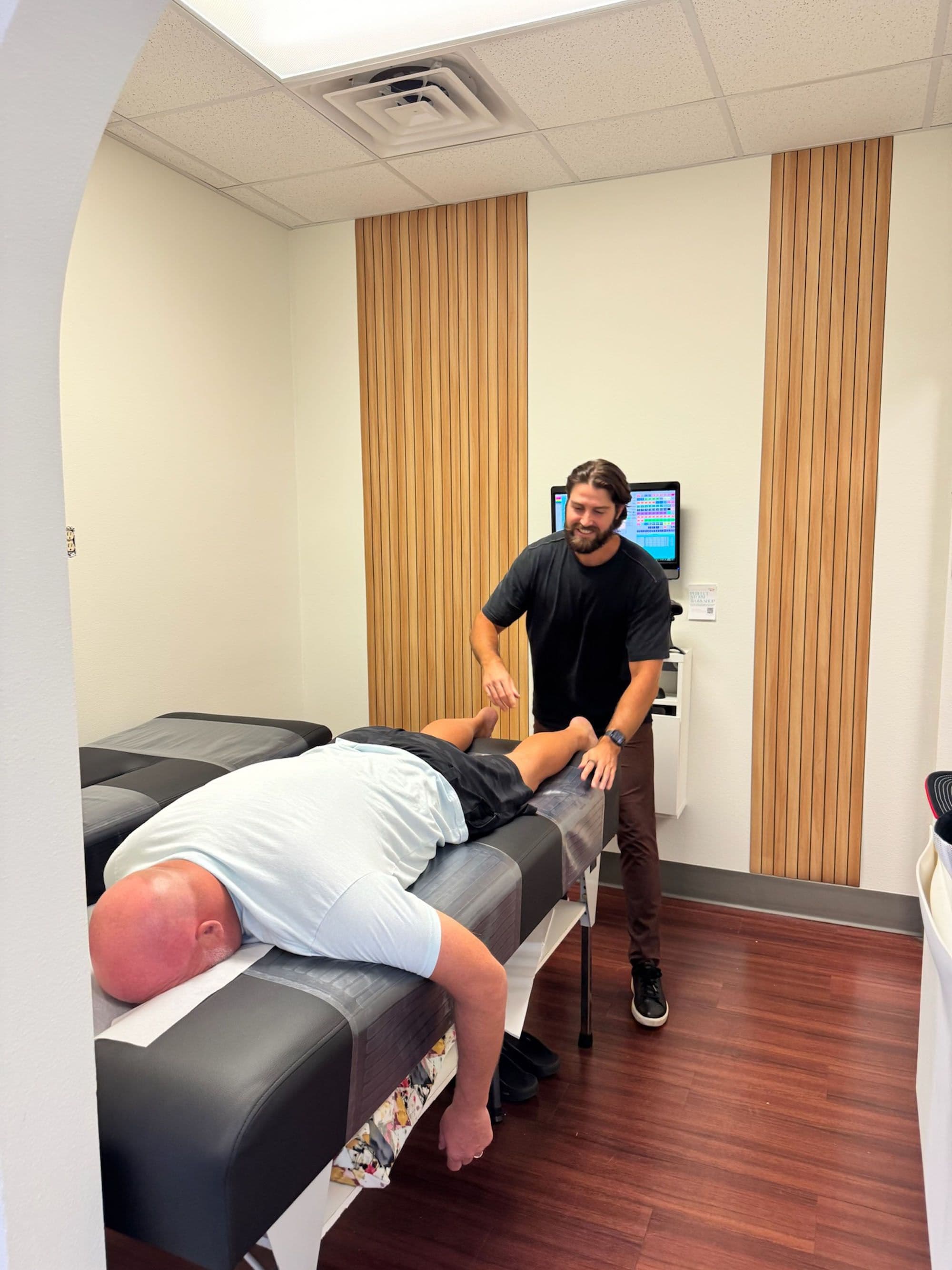
Using the gentle, precise Torque Release Technique, our chiropractic care works to restore healthy motion to the upper neck joints and ease the muscular tension that refers pain into the head. By improving how that region moves and reducing the strain at the base of the skull, the aim is to turn down the headaches at their source rather than masking them.
We pair that with the practical pieces that keep tension from rebuilding: guidance on your desk and screen setup, sleep position and pillow support, and the daily habits that load your neck. After a full neurological evaluation, we build a personalized plan, because the mix of factors behind your headaches is specific to you.
When a headache needs prompt medical attention
Most tension headaches are uncomfortable but not dangerous. Certain headaches, though, warrant immediate medical care:
- A sudden, severe "worst headache of your life"
- A headache with fever and a stiff neck, confusion, or a rash
- A headache following a head injury
- A headache with weakness, numbness, vision loss, or difficulty speaking
- A clear, lasting change in your usual headache pattern
If any of these apply, seek medical attention right away. Our care complements medical evaluation, it does not replace it, and these warning signs always come first.
Where to start in Lakewood Ranch
If tension headaches have become a standing appointment you never agreed to, you don't have to keep managing them one pill at a time. Understanding what's driving the pressure, often the neck, is the first step toward real relief.
You can explore the conditions we care for and our full range of services, or meet the team who would be working with you.
Ready for answers? Book a complimentary consultation at The Roots Health Centers in Lakewood Ranch, FL, or call us at (941) 877-1507. We'll talk through your headache pattern and whether a neck-related source may be part of it. No commitment to start care.
Frequently Asked Questions
Can a chiropractor help with tension headaches?
When tension headaches stem from the neck, often called cervicogenic headaches, chiropractic care can help by restoring motion to the upper neck joints and easing the muscle tension that refers pain into the head. Care is personalized after a full evaluation and complements, rather than replaces, medical care.
What's the difference between a tension headache and a migraine?
Tension headaches feel like a dull, pressing band of pressure, usually on both sides, without nausea or strong light sensitivity. Migraines are often one-sided, throbbing, and can come with nausea and sensitivity to light and sound. They're different patterns, and telling them apart helps guide care.
Why do I get tension headaches almost every day?
Daily tension headaches often point to an ongoing source that never resolves, such as posture strain, an irritated upper neck, stress, or frequent pain-reliever use that can cause rebound headaches. Identifying and addressing the underlying driver is what breaks a daily pattern.
Can poor posture really cause headaches?
Yes. Forward-head posture from screens and desk work loads the muscles at the base of the skull and the upper neck joints, which can refer pain up and over the head. Improving posture and neck mechanics is often a key part of relief.
How can I relieve a tension headache at home?
Short term, stepping away from screens, gentle neck and shoulder stretches, hydration, a warm compress on the neck, and easing jaw clenching can help. If headaches keep returning despite these steps, it's worth having the source evaluated rather than only managing each episode.
Conditions We Treat
Headaches & Migraines
Neurologically-focused care targeting the spinal misalignments that trigger tension headaches and debilitating migraines.

Tech Neck
Forward head posture from daily screen use shifts the mechanical load on your cervical spine, compresses nerves, and drives chronic neck pain, headaches, and upper back tension. Corrective care addresses the structural change — not just the symptoms.

Neck Pain
Precise cervical adjustments and decompression that restore alignment, reduce nerve pressure, and eliminate chronic neck pain at its source.