

Why Your Plantar Fasciitis Keeps Coming Back (And How to Stop It)
If you've battled plantar fasciitis for any length of time, you know the frustrating cycle: weeks of pain, eventual relief through rest and stretching, then it comes roaring back the moment you ramp up activity again. It feels like the problem never fully heals — because it doesn't.
Here's what most providers miss. Plantar fasciitis isn't just inflammation. It's microtearing in the plantar fascia tissue plus the formation of scar tissue plus altered biomechanics that stress the fascia in the first place. Rest can calm down the inflammation, but it doesn't repair the microtears, doesn't break down the scar tissue, and doesn't fix the underlying mechanics. That's why the pain keeps coming back the moment you start walking or running again.
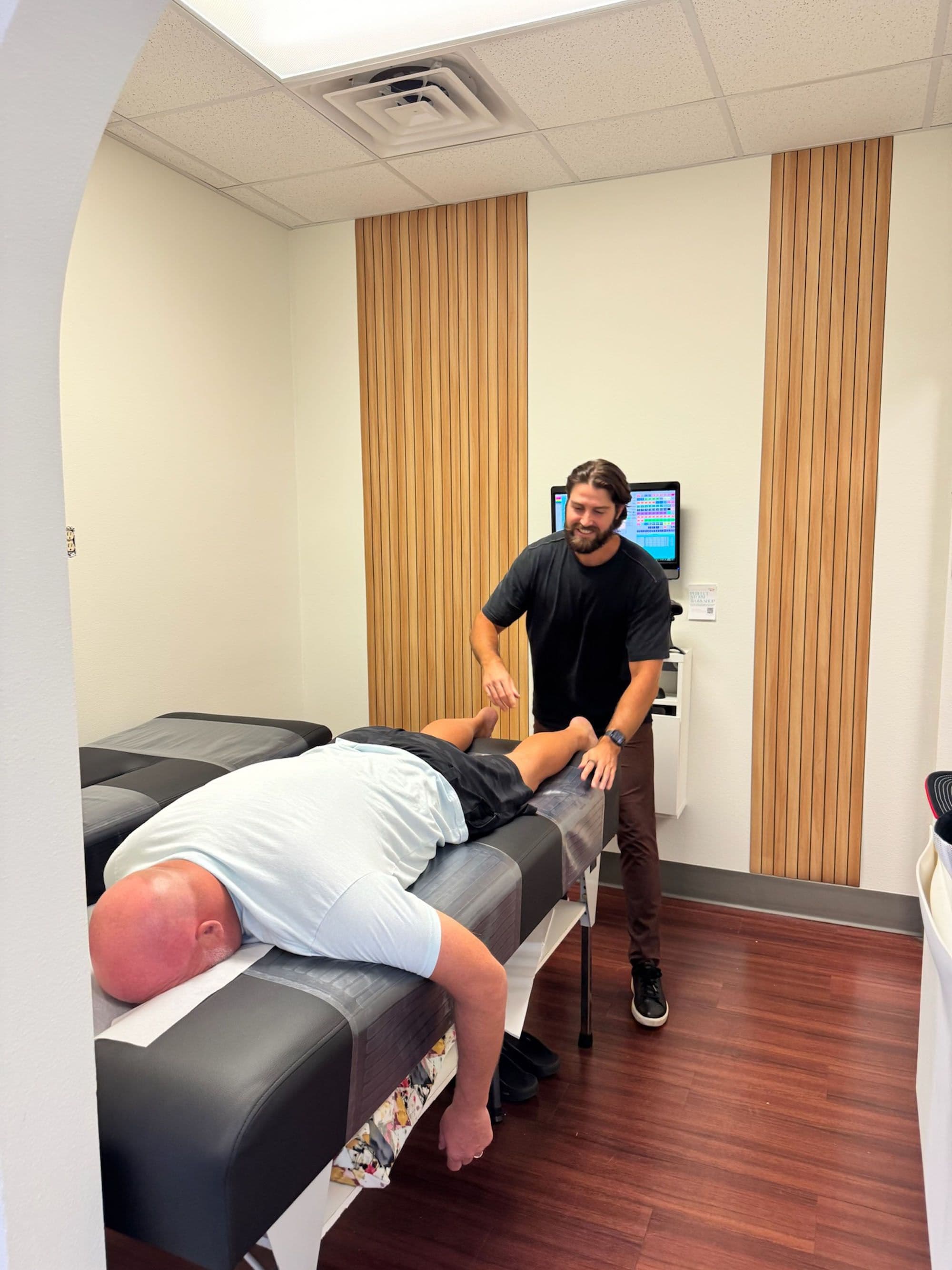
The fix has to address all three drivers. Shockwave therapy delivers acoustic pressure waves directly to the plantar fascia, breaking down scar tissue, stimulating new blood vessel growth, and reactivating the body's healing response in tissue that has stalled. Red light therapy reduces inflammation at the cellular level. Corrective chiropractic addresses the foot, ankle, hip, and spinal patterns that contribute to chronic plantar fasciitis.
Most patients see meaningful improvement within the first three shockwave sessions. Full resolution usually takes a complete treatment course, but the early progress confirms the protocol is working. The patients who do best stick with it through the full plan instead of quitting the moment the morning pain eases.
If you've been chasing plantar fasciitis for months or years, it's time to try something different. Rest and stretching aren't enough.
Services Related to This Post
Keep Reading
Related articles
Shockwave Therapy for Plantar Fasciitis: A Non-Surgical Solution
Extracorporeal shockwave therapy is changing how we treat chronic plantar fasciitis. Here's how it works and what to expect.
Read article5 Early Warning Signs of Peripheral Neuropathy
Don't ignore these symptoms — early detection gives you the best chance of slowing or even reversing nerve damage.
Read articleWhat Is Corrective Chiropractic — And How Is It Different?
Most chiropractors focus on temporary symptom relief. Corrective chiropractic is designed to make lasting structural changes — here's how.
Read article