
Standing Desks: Do They Actually Fix Back Pain?
Standing desks are everywhere now, sold with a simple promise: sit less, and your back pain gets better. If you've already bought one and you're still hurting, or you're weighing whether it's worth the money before you order one, the honest answer is more nuanced than the marketing. Standing desks can be one useful piece of a desk-worker's back pain picture — but on their own, they don't fix back pain, and used the wrong way, a standing desk can trade one problem for another.
What a Standing Desk Actually Changes
A standing desk changes your posture options, not your posture itself. Standing shifts load off the discs and soft tissue in your lower back compared to prolonged sitting, and it can reduce the rounded, slumped-forward position that many people fall into at a keyboard. That's a real, measurable difference — but it's a difference in load distribution, not a repair of whatever is already going on in your spine, hips, or back pain pattern before you started standing.
Where Standing Desks Can Genuinely Help
For some people, especially those whose pain flares specifically with long, unbroken sitting, alternating between sitting and standing throughout the day may help ease that particular pattern of discomfort. Standing also naturally encourages small movements — shifting weight, taking a step, adjusting your stance — that sitting tends to suppress. If your pain is closely tied to how long you've been sitting still, breaking that up is a reasonable, low-risk thing to try.
Where Standing Desks Fall Short
Standing all day is not automatically better than sitting all day — it's just a different static position, and static positions of any kind tend to cause stiffness and discomfort given enough time. Standing for hours without shifting can load the lower back, hips, and knees in its own way, and it's common for someone who switches to full-time standing to trade sitting-related back pain for standing-related foot, knee, or hip discomfort a few weeks in. A standing desk also does nothing to address why your back is reactive to begin with — a spine that isn't moving well, joints that are restricted, or posture habits that show up whether you're sitting or standing.
Movement Matters More Than the Furniture
The research on sit-stand desks consistently points to the same underlying idea: it's the variation that matters, not which single position you land in. A body that changes position every 30–45 minutes tends to do better than one that holds any single posture, sitting or standing, for hours on end. Our guide to desk stretches for back and neck pain covers simple movement breaks that do more for a lot of people than the desk itself.
Getting the Most Out of a Standing Desk, If You Use One
- Alternate — aim to change position every 30–45 minutes rather than committing to all-day standing
- Keep your monitor at eye level and elbows near 90 degrees in both the sitting and standing positions, so you're not trading a sitting slouch for a standing hunch
- Use an anti-fatigue mat and supportive shoes if you're standing on hard flooring
- Shift your weight and take short walks rather than locking your knees and standing still
- Pay attention to your neck and shoulders, not just your low back — our desk setup guide for remote workers covers monitor height and screen distance in more detail
When Desk Changes Aren't Enough
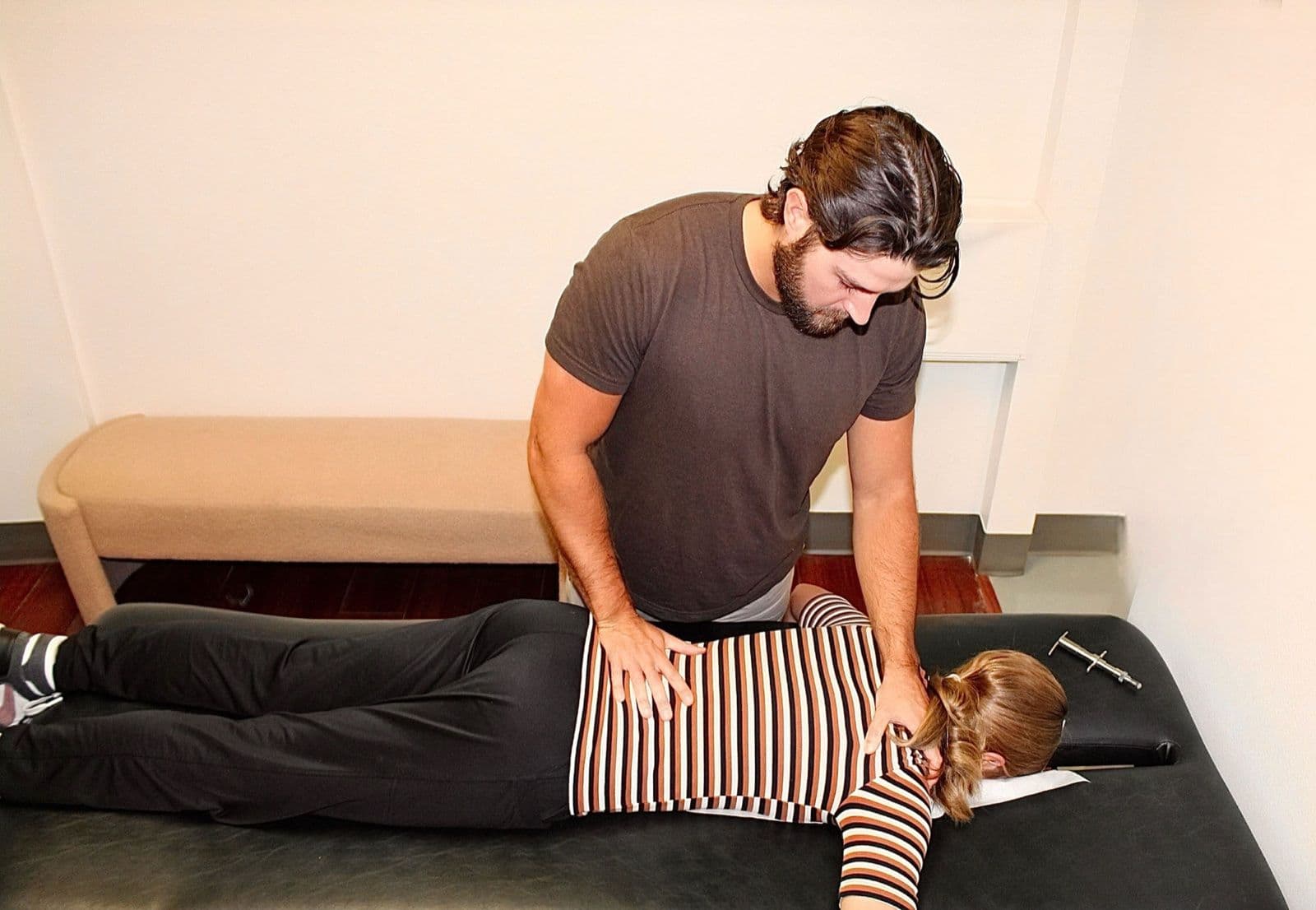
If you've tried alternating positions, adjusted your setup, and you're still dealing with regular back pain, the furniture probably isn't the actual problem. Ongoing back pain at a desk job is often tied to how well the spine and surrounding joints are moving, not just how long you sit or stand. A chiropractic evaluation looks at what's actually happening in your spine — restricted joints, muscle tension patterns, or posture habits that show up in how you move, not just how you sit. From there, care is built around what your specific evaluation shows, since a desk-related back-pain pattern in one person can look completely different from another's.
Frequently Asked Questions
Do standing desks actually help back pain? They can help some people, particularly if pain is closely tied to long, unbroken sitting — but a standing desk alone doesn't address the underlying reason a spine is reactive in the first place.
Is it bad to stand all day at a standing desk? Standing in one position for hours can create its own discomfort in the feet, knees, hips, or low back. Alternating between sitting and standing tends to work better than committing to either position all day.
How often should I switch between sitting and standing? Many people do well switching roughly every 30–45 minutes, though the right rhythm depends on your own body and how your symptoms respond.
Can a standing desk cause new pain? Yes — standing with locked knees, poor monitor height, or unsupportive footwear can shift strain to the feet, knees, or neck even as low-back sitting pain improves.
Do I need a standing desk to fix my back pain? No single piece of furniture fixes back pain. Movement variation throughout the day matters more than the specific desk, and ongoing pain is worth having evaluated rather than assuming better furniture will resolve it.
If your back pain hasn't budged no matter how you've rearranged your desk, it may be worth understanding what's actually happening in your spine. Book your complimentary consultation at The Roots Health Centers in Lakewood Ranch, and let's take a personalized look.
The Roots Health Centers, 8209 Natures Way, Unit 115, Lakewood Ranch, FL 34202. (941) 877-1507.
Conditions We Treat

Back Pain
Corrective chiropractic care that addresses the structural root cause of back pain — not just masking symptoms with medication.

Tech Neck
Forward head posture from daily screen use shifts the mechanical load on your cervical spine, compresses nerves, and drives chronic neck pain, headaches, and upper back tension. Corrective care addresses the structural change — not just the symptoms.