

5 Signs Your Back Pain Isn't Just Muscular
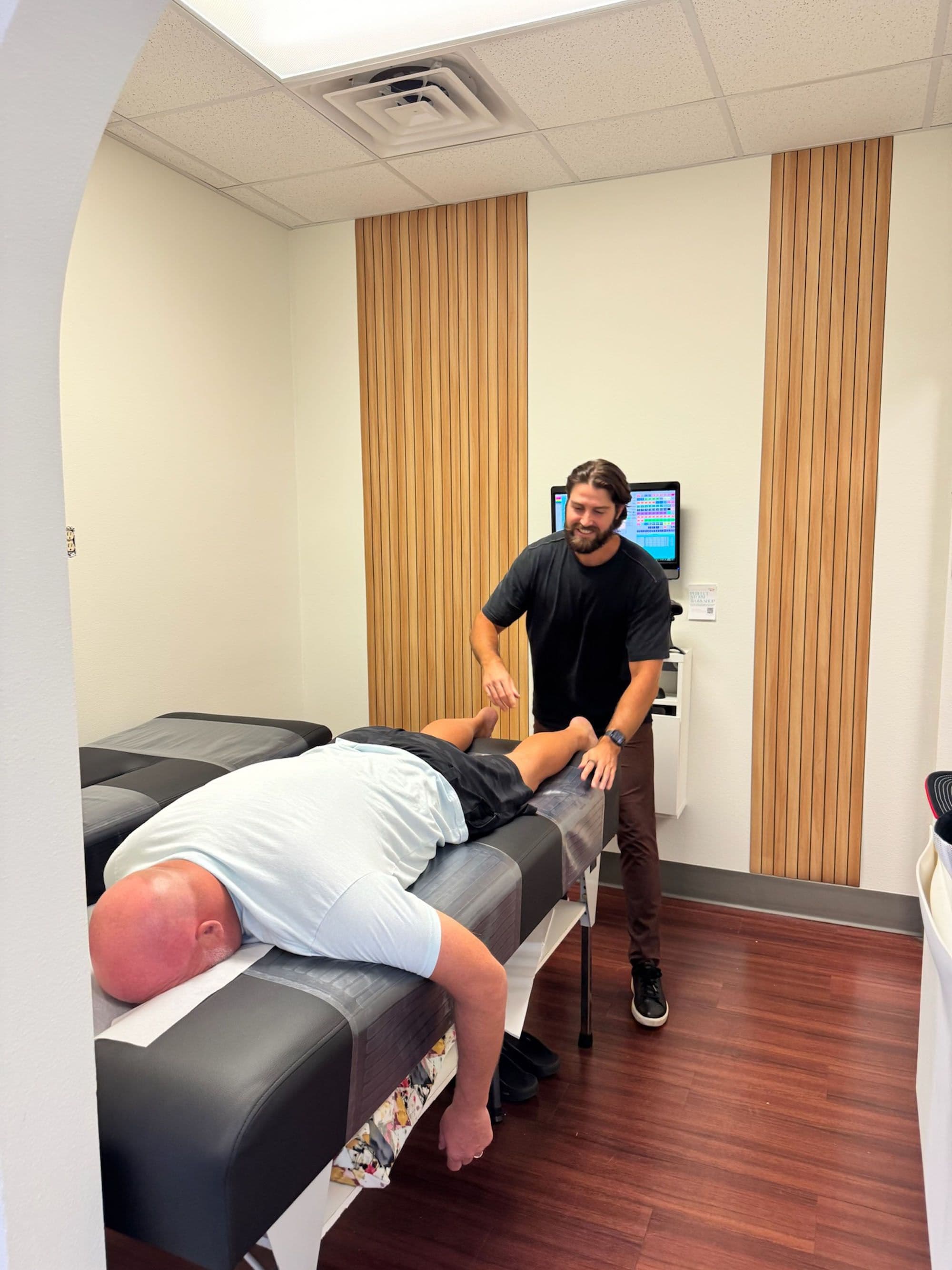
Everyone pulls a muscle now and then. You sleep funny, you spend a Saturday pulling weeds, you help a friend move a couch, and your back is tight for a few days. That is normal. It hurts, it fades, and you get on with life. The problem is when it does not fade. When the same low-grade ache is still there three weeks later, or it keeps coming back every few months, or heating pads and ibuprofen stopped touching it a year ago — that is a different conversation. Muscles heal in days. Pain that persists beyond that timeline is telling you something more is going on.
Nobody should have to live with back pain. It is not a normal part of aging, it is not character-building, and it is not something you deserve.
Sign 1: the pain radiates down your leg
This is the clearest sign that your back pain is not actually a back problem — it is a nerve problem. When pain starts in your lower back and travels down one buttock, through the hamstring, past the knee, and into the calf or foot, you are describing sciatica. The sciatic nerve is the largest nerve in your body, and it exits the spine at the lumbar level.
When something compresses the nerve as it exits, you get radiating pain. Common causes:
- Disc bulge or herniation
- Spinal misalignment
- Tight piriformis muscle
- Stenosis narrowing the nerve exit
The pain follows the nerve path because the nerve is the injured structure, not the muscle. Muscles cannot refer pain down an entire leg in a reproducible pattern. Nerves can, and do.
What to do about it: stop treating the leg. Stretches, foam rolling, and leg-focused massage rarely help sciatica because the source is in the spine. We run a neurological evaluation and, when indicated, digital x-rays to see exactly where the compression is. If it is a disc, spinal decompression is often the non-surgical answer. If it is misalignment, Torque Release Technique chiropractic addresses it directly.
Sign 2: numbness, tingling, or pins-and-needles
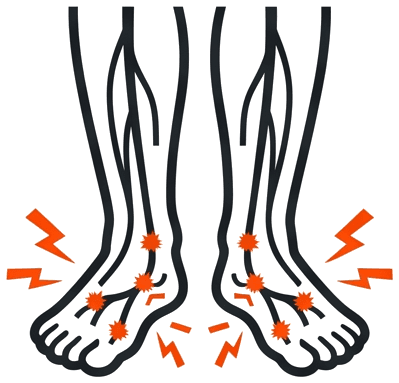
Any time symptoms include pins-and-needles, a crawling feeling, burning, electric shocks, or actual numbness, you are looking at a nerve compression issue — not a muscle issue. Muscles can ache, spasm, and feel tight. They do not produce tingling or numbness. Those symptoms come specifically from nerves being compressed, irritated, or damaged.
- Symptoms in your feet → usually lumbar spine involvement
- Symptoms in your hands → usually cervical spine (neck)
- Symmetrical symptoms in both feet, progressing slowly → possibly peripheral neuropathy, not a disc issue
What to do about it: get evaluated quickly. Numbness is a sign that the nerve is not just irritated — it is starting to lose function. Left long enough, that damage can become permanent. The fix depends on the cause: disc compression needs decompression, misalignment needs adjustment, and true neuropathy needs the multi-modality approach we use in our neuropathy program.
Sign 3: pain is worse in the morning and eases as you move
This is a classic disc pattern most people misinterpret. Intervertebral discs are the shock-absorbing pads between your vertebrae. They have no blood supply of their own — they absorb fluid overnight while you are lying flat.
- A healthy disc rehydrates fine overnight and feels normal in the morning
- A damaged disc swells with fluid overnight and presses on surrounding nerves
- You wake up stiff and aching, then loosen up as the fluid gets squeezed back out
What to do about it: take it seriously even if the stiffness clears within an hour. A disc that is swelling overnight is already compromised. Spinal decompression creates negative pressure inside the disc capsule and pulls nutrients, fluid, and oxygen back into the damaged tissue. Paired with corrective chiropractic, red light therapy, and inflammation control, most disc issues heal without surgery.
Sign 4: over-the-counter medication does not touch it
If ibuprofen, naproxen, or acetaminophen has stopped working — or was never really enough — your pain is not primarily inflammatory or muscular. Those medications work well on:
- Acute soft-tissue sprains and strains
- Post-workout soreness
- Short-term inflammatory flares
They do not fix structural problems. They do not heal disc damage. They do not decompress nerves. They do not correct misaligned vertebrae.
What to do about it: get a mechanical diagnosis. Long-term NSAID use is not a benign strategy — it is hard on your gut, kidneys, and heart. If the medication has stopped working, that is information: the problem is not one a pill can solve.
Sign 5: it has been going on more than two weeks
Acute back pain from overexertion or a specific incident typically resolves in 7 to 10 days with rest and time. Muscles heal fast. Ligaments take a little longer. Pain that persists past the two-week mark is starting to move from acute to chronic, and that transition matters.
- Your nervous system begins adapting to the pain signal
- Pain pathways get reinforced
- Compensatory movement patterns develop, loading surrounding joints
- Secondary problems stack on top of the original one
What to do about it: do not normalize it. The phrase we hear most often is "I just learned to live with it." Two weeks of continuous pain is your body asking for help.
Our diagnostic process
When a patient comes in with one or more of these five signs, we do not guess. The neurological evaluation takes about ten minutes and measures:
- Surface EMG — muscle tension patterns along the spine
- Thermal scanning — autonomic nervous system function
- Heart rate variability — your overall stress resilience
Where indicated, we add digital x-rays to see disc space, vertebral alignment, and degeneration patterns. Dr. Logan Swaim reviews the findings with you and walks through exactly what we are seeing and what the options are.
From there, the care plan is specific:
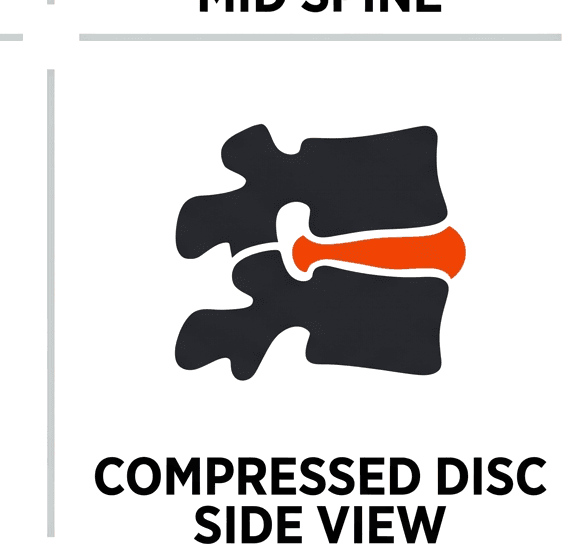
- Disc issues → spinal decompression
- Nervous system dysfunction → Torque Release Technique
- Soft-tissue component → shockwave therapy
- Chronic inflammation → red light therapy
For most back pain patients, the care plan is a combination. Most chronic back pain has multiple drivers, and having all those modalities under one roof means we can layer them strategically.
If any of these five signs sound like your back pain, get evaluated. The first visit at The Roots Health Centers includes a full history, a neurological evaluation, and a consultation with Dr. Logan Swaim. You can see patient case studies for examples of what recovery looks like. Book a complimentary consultation or call (941) 877-1507.
Conditions We Treat
Back Pain
Corrective chiropractic care that addresses the structural root cause of back pain — not just masking symptoms with medication.
Sciatica
Non-surgical care for sciatic nerve pain using spinal decompression, corrective chiropractic, and supporting therapies.
Herniated Disc
Non-surgical care for herniated and bulging discs using FDA-cleared spinal decompression, corrective chiropractic, and integrated soft-tissue therapies.
Services Related to This Post
Keep Reading
Related articles
Herniated Disc vs. Bulging Disc: What's the Difference?
Both show up on MRIs, both can cause pain — but they're not the same thing. Here's how to tell the difference and what your options are.
Read articleSciatica: What Causes It, What It Feels Like, and How to Find Relief Without Surgery
Sciatica is nerve pain that travels from your low back down the leg. Here's what causes it, the red flags to know, and a non-surgical path to relief.
Read articleSpinal Decompression Therapy: How Non-Surgical Decompression Works and Who It Helps
What non-surgical spinal decompression actually is, how it differs from surgery and basic traction, and which back and disc problems it helps.
Read article