

Bursitis Treatment: How to Calm a Hip or Shoulder Flare-Up
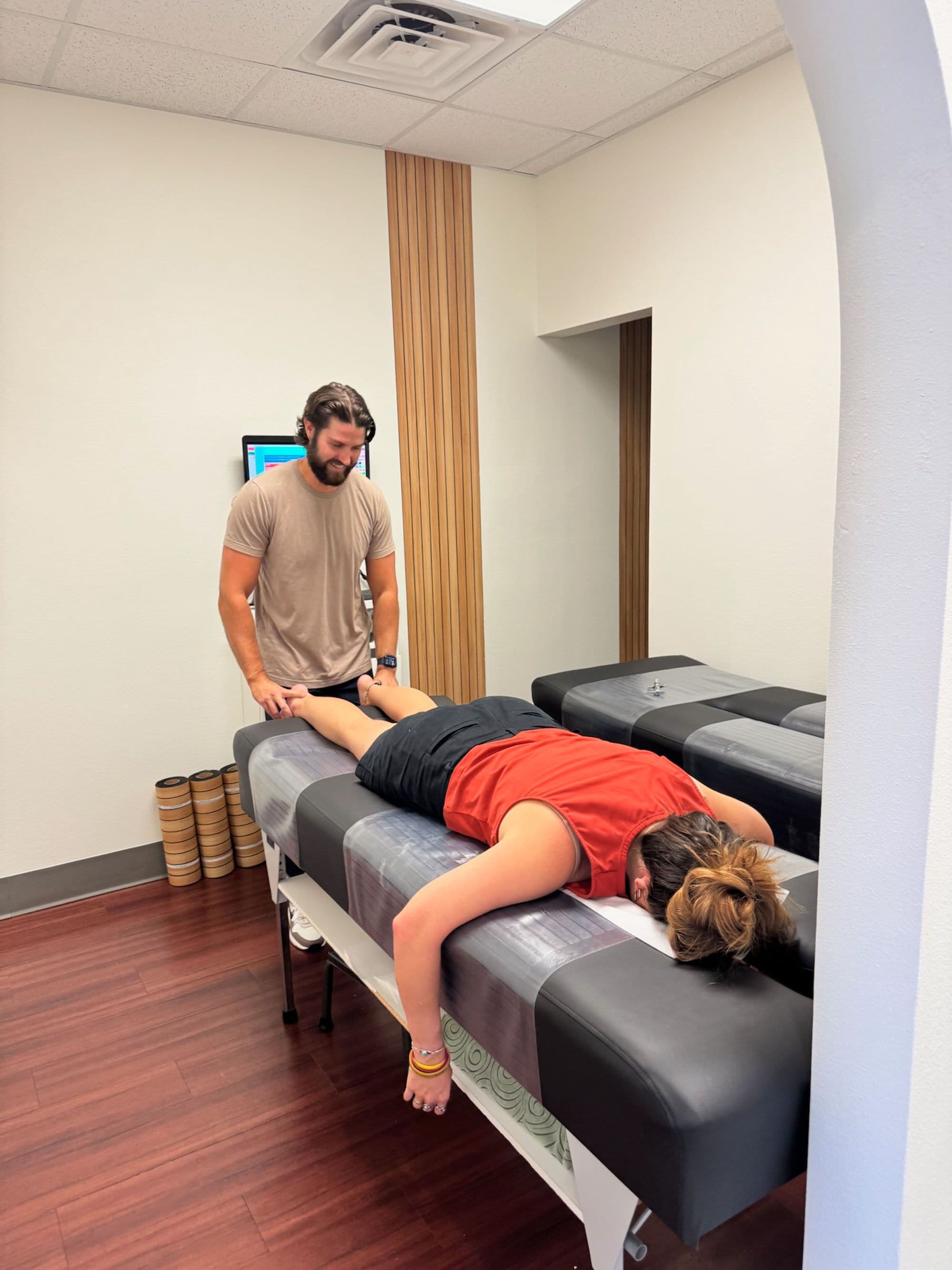
If you can't lie on your side at night without a deep ache in your hip, or you wince every time you reach overhead, you may be dealing with bursitis. It's one of the more common — and most misunderstood — sources of joint pain we see at The Roots Health Centers, and finding the right bursitis treatment starts with understanding what's actually inflamed and why. Bursitis isn't a joint problem or a muscle problem; it's an issue with the small, fluid-filled cushions that let your tendons and skin glide smoothly over bone. When one of those cushions gets irritated, ordinary movements — reaching for a cabinet, walking up stairs, rolling over in bed — can suddenly hurt in a very specific spot.
What Is Bursitis?
A bursa is a small, fluid-filled sac that sits between bones, tendons, and skin, reducing friction wherever tissues would otherwise rub against each other. You have more than 150 of them scattered throughout your body, but only a handful cause trouble often enough to have their own names — the ones at the hip (over the bony point you feel when you lie on your side) and the shoulder (tucked beneath the point of the shoulder blade) are the most common offenders. When a bursa becomes irritated, it produces extra fluid and becomes inflamed, and that swelling is what creates the sharp, localized pain that makes bursitis so recognizable once you know what you're feeling for.
Hip Bursitis vs. Shoulder Bursitis: Different Joints, Same Problem
Hip bursitis (technically called trochanteric bursitis) tends to show up as an ache or sharp pain on the outside of the hip, often worse when lying on that side, climbing stairs, or standing up after sitting for a while. Shoulder bursitis (subacromial bursitis) usually causes pain when reaching overhead, reaching behind your back, or sleeping on that shoulder, and it's frequently mistaken for a rotator cuff problem since the symptoms overlap so much. In both cases, the underlying mechanism is the same: repetitive friction or direct pressure irritates the bursa faster than it can settle back down.
What Causes Bursitis?
A few patterns show up again and again in people who develop it:
- Repetitive movement, like frequent overhead reaching, running, or cycling, that keeps friction on the same bursa day after day
- Direct pressure, such as sleeping on one side consistently or kneeling for long periods
- Muscle imbalances or weakness around the joint, which change how tendons track over the bursa
- A prior injury or surgery near the joint that changed its mechanics
- Age-related changes in tendon and joint tissue, which is part of why bursitis becomes more common as people move through their 40s, 50s, and beyond
None of these causes are anyone's fault — they're mechanical, which is exactly why a mechanical approach to bursitis treatment often helps.
Bursitis vs. Tendinitis and Rotator Cuff Pain: How to Tell the Difference
Because bursitis, tendinitis, and rotator cuff irritation can all cause pain in the same general area, they're easy to confuse. Tendinitis usually centers on the tendon itself and often hurts most during the specific motion that stresses that tendon, while bursitis tends to cause a more diffuse ache that can linger even at rest, especially with pressure. A stiff, hard-to-move shoulder that barely moves in any direction is more consistent with frozen shoulder, which has its own care path — see Frozen Shoulder: Your Real Recovery Options if that sounds more familiar. And in older adults, hip or shoulder joint pain that comes with stiffness across multiple joints is sometimes actually arthritis rather than bursitis. A proper evaluation is what sorts out which of these is actually driving your symptoms.
Non-Surgical Bursitis Treatment Options That May Help
Most bursitis responds to conservative care that reduces the friction and pressure driving the inflammation:
Activity modification. Temporarily easing off the specific movement or position aggravating the bursa — side-sleeping, kneeling, overhead reaching — gives irritated tissue a chance to calm down.
A full evaluation of joint and movement mechanics. Our Corrective Chiropractic approach starts with a consultation and a full neurological evaluation, looking at how the hip or shoulder moves as a whole rather than just the painful spot.
Shockwave therapy for stubborn cases. When bursitis has been irritated for a while and isn't settling down on its own, shockwave therapy uses focused acoustic waves to stimulate the body's own repair response — the same approach that's supported recovery in other stubborn, repetitive-stress conditions like tennis elbow.
Strengthening the surrounding muscles. Once the acute flare has calmed, building strength and stability around the joint helps reduce the repetitive friction that caused the irritation in the first place.
Each joint and each case is different, so we take a personalized approach based on what your evaluation shows.
Bursitis and an Active Lakewood Ranch Lifestyle
We see a specific pattern often in our Lakewood Ranch patients: a golf swing, a pickleball serve, or a long bike ride sets off hip or shoulder bursitis that wasn't a problem the season before. Repetitive, sport-specific motion is exactly the kind of friction that irritates a bursa, and it doesn't mean you need to give up the activity — it usually means your mechanics, warm-up routine, or recovery between sessions need a closer look. If pickleball is part of the pattern for you, our guide to pickleball injuries and chiropractic care covers some of the other overuse issues we see on the court.
At-Home Self-Care: What Helps and What to Avoid
While you're waiting to be seen, a few simple choices can keep a flare from getting worse:
- Do modify the aggravating position — switch which side you sleep on, or take a short break from the repetitive motion involved
- Do apply ice for short periods if the area feels warm or acutely irritated
- Avoid pushing through sharp pain during exercise, which tends to prolong the irritation rather than "work it out"
- Avoid deep massage or aggressive stretching directly over an actively inflamed bursa, which can aggravate it further
- Avoid assuming rest alone will fix a bursa that keeps flaring — if it's recurring, the underlying mechanics usually deserve a closer look, not just downtime
None of this replaces an evaluation — it's simply what tends to help in the meantime.
When to Get It Looked At
Mild bursitis after an unusually active weekend often settles down with a few days of rest. But it's worth getting evaluated if the pain keeps recurring, if it's limiting your sleep or daily movement, or if it doesn't ease up despite backing off the aggravating activity. The longer an irritated bursa stays irritated, the more it can affect how you move — which tends to create new compensations and new pain elsewhere.
Frequently Asked Questions
What does bursitis feel like? Most people describe a sharp or aching pain localized to one spot — the outside of the hip or the point of the shoulder — that's worse with pressure, certain movements, or lying on that side.
What's the fastest way to calm down a bursitis flare? Reducing the specific pressure or repetitive motion aggravating the bursa is usually the first and most useful step, alongside a proper evaluation of what's driving the irritation.
Is bursitis the same as arthritis? No. Bursitis involves inflammation of a fluid-filled cushion near a joint, while arthritis involves the joint surfaces themselves. The two can occur together, which is part of why an evaluation matters.
Can bursitis go away on its own? Mild cases sometimes settle with rest and activity changes. More persistent or recurring bursitis usually benefits from addressing the underlying mechanics rather than waiting it out.
Does bursitis treatment require surgery? Most cases respond to non-surgical approaches — activity modification, a mechanics-focused evaluation, and options like shockwave therapy for stubborn cases. Surgery is rarely the first step.
Can golf or pickleball cause bursitis? Yes — repetitive swinging, serving, or overhead motion is a common trigger for both hip and shoulder bursitis, especially without adequate warm-up or recovery between sessions.
Is heat or ice better for bursitis? Ice tends to help more during an acute flare, when the area feels warm or irritated. Heat can feel good for general stiffness once the acute irritation has settled, but isn't usually the first choice right after a flare-up.
If that hip or shoulder ache hasn't settled down with rest, a real evaluation can help you understand what's actually driving it. Schedule a complimentary consultation at The Roots Health Centers in Lakewood Ranch, and let's take a closer look at what your joint is telling us.
Conditions We Treat
Frozen Shoulder
Non-surgical care for adhesive capsulitis (frozen shoulder) using shockwave therapy, red light therapy, and corrective adjustments to restore range of motion and end chronic shoulder pain.

Arthritis
Drug-free arthritis care that reduces joint inflammation, slows degeneration, and restores function — using corrective chiropractic, decompression, red light therapy, and shockwave.
Hip Pain
Hip pain can start in the joint itself — or in the SI joint, the lower back, a tilted pelvis, or the muscles that cross the hip. Because those sources feel remarkably similar, finding the right one comes before any adjustment.
Shoulder Pain
Impingement, rotator cuff strain, bursitis, tendonitis, referred pain from the neck — shoulder pain has more possible sources than almost any other complaint. Naming the right one is the difference between care that works and months of chasing symptoms.
Services Related to This Post
Keep Reading
Related articles
Frozen Shoulder: Your Real Recovery Options
Frozen shoulder can take 1–3 years to resolve on its own. Here's how to dramatically speed up recovery and avoid the wait.
Read articleTennis Elbow That Won't Heal: A Non-Surgical Path With Shockwave Therapy
Tennis elbow can drag on for months because tendons heal slowly. Here's why it lingers and how shockwave therapy supports recovery without surgery or injections.
Read article