
Red Light Therapy for Skin: What the Research Actually Shows
If you've searched for whether red light therapy actually does anything for your skin, you've probably found two extremes: viral claims that it works miracles, and skeptics who dismiss it as a wellness fad. The honest answer sits in between. Red light therapy has real, published research behind it, and skin is one of the areas where that research is strongest — but what it actually does is more specific than "anti-aging in a box." Here's what the evidence says about red light therapy for skin, and what a session at The Roots Health Centers in Lakewood Ranch, FL actually involves.
How Red Light Therapy for Skin Actually Works
Red light therapy, also called photobiomodulation, uses specific wavelengths of red and near-infrared light that penetrate into the upper layers of skin tissue. Unlike UV light, which damages skin cells and is linked to sun damage and skin cancer risk, these wavelengths don't burn or damage tissue. Instead, they're absorbed by structures inside your cells called mitochondria, which respond by producing more cellular energy (ATP).
In skin specifically, that added cellular energy appears to stimulate fibroblasts, the cells responsible for producing collagen and elastin, the proteins that give skin its structure and bounce. Several published studies on photobiomodulation have measured increased collagen density in skin tissue following a course of red light treatment, along with improvements in fine lines and skin texture that trial participants and observers noted.
Does Red Light Therapy Help With Fine Lines and Loose Skin?
This is one of the most common questions we hear, and the research-backed answer is: it may help support skin firmness and texture over time, though it isn't an instant fix and results vary from person to person. Collagen production is a gradual biological process — it isn't rebuilt overnight, and no non-invasive tool can recreate it in a single session. What the research supports is a supportive role: consistent sessions, over weeks and months, paired with an otherwise healthy lifestyle, appear to support the skin's own collagen-building process.
We're careful not to oversell this. If you're looking for a same-day dramatic transformation, red light therapy isn't that. If you're looking for a non-invasive way to support your skin's long-term structure alongside the rest of your care, it's a reasonable, well-tolerated option worth understanding.
Does Red Light Therapy Actually Tighten Skin?
"Tightening" is the word most people search for, but it's worth being precise about what's actually happening. Red light therapy doesn't physically pull or lift skin the way a surgical procedure would. What it appears to do is support the underlying collagen and elastin network that gives skin its firmness from the inside. Over a course of consistent sessions, some people notice their skin feels and looks more supported — that's the collagen-support mechanism at work, not an acute tightening effect.
Is Red Light Therapy Safe for Skin?
Red light therapy is generally well tolerated, and its safety profile is one of the main reasons it's gained attention. A few things worth knowing:
- It doesn't use UV wavelengths. UV light is the type associated with sun damage and increased skin cancer risk. Red and near-infrared wavelengths are a different part of the light spectrum and don't carry that same risk profile.
- Bare skin exposure matters. For the light to reach the target tissue, the area being treated generally needs direct exposure rather than being covered by clothing or heavy product layers.
- It's non-invasive with no downtime. There's no needle, no recovery period, and no sedation involved.
As with any treatment, individual skin sensitivities vary, which is why we start every new patient with a conversation about their skin, their goals, and their health history before recommending it.
How Skin Fits Into the Bigger Red Light Picture
Skin is often people's first introduction to red light therapy, but at The Roots Health Centers we think about it through a wider lens. The same cellular-energy mechanism that supports collagen production in skin also plays a role in tissue recovery, joint comfort, and what we call neurometabolic health, the idea that nerve health, energy, and metabolic function are connected systems. If you want the fuller picture, we've written about the evidence-based benefits of red light therapy and the neurometabolic angle beyond pain relief.
Many patients pair their red light therapy sessions with other care, like chiropractic adjustments, so the nervous system, tissues, and skin are all being supported at once.
What a Red Light Therapy Session for Skin Looks Like
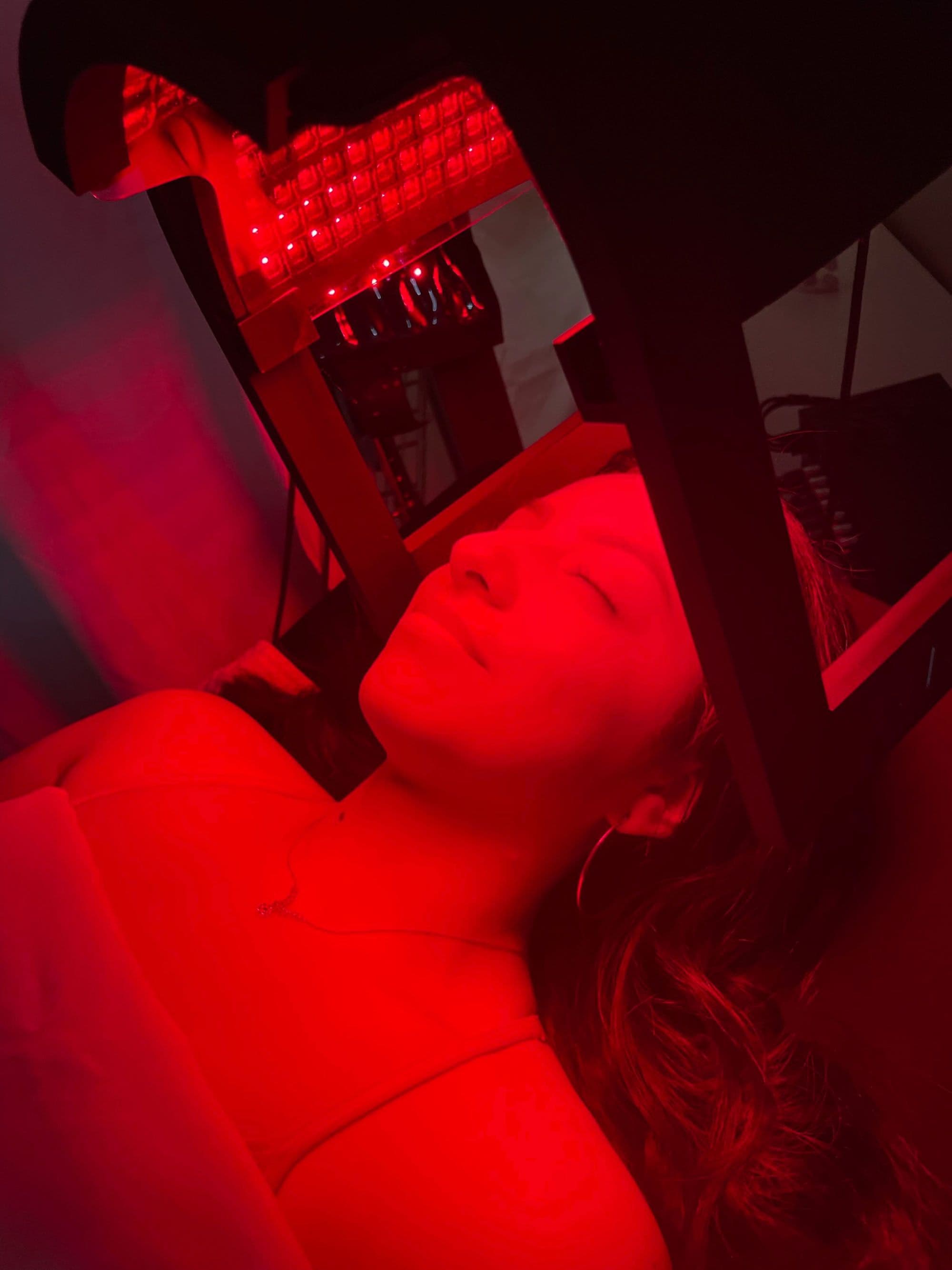
One of the more approachable things about red light therapy is how simple it is. A session runs about 15 minutes, with roughly 45 minutes total for your visit at our Lakewood Ranch clinic. You'll expose the treatment area to the light with no needles, no numbing, and no downtime afterward. You can review what to expect before your first visit, or see the full list of conditions we treat with red light therapy.
Frequently Asked Questions
What does red light therapy actually do for your skin? It uses red and near-infrared light to stimulate cellular energy production in skin cells, which appears to support fibroblasts and the collagen and elastin they produce. That supports skin structure and texture over time rather than causing an immediate change.
Does red light therapy tighten skin? Not in the sense of a physical pulling or lifting effect. It supports the underlying collagen network that gives skin its firmness, which some people notice as improved texture and support over a course of consistent sessions.
Is red light therapy safe for skin? Yes, for most people. It doesn't use UV wavelengths, so it doesn't carry the skin-damage or skin-cancer risk associated with UV exposure. It's non-invasive, with no needles or downtime.
Do you need bare skin for red light therapy to work? Generally yes. The treatment area needs direct light exposure to work as intended, so clothing or heavy product layers over the area can block the effect.
How soon will I notice a difference in my skin? It varies. Collagen production is a gradual process, so most people think of red light therapy as a supportive tool built into a longer-term plan rather than a one-time fix.
If you're curious whether red light therapy fits your skin goals, book a complimentary consultation at The Roots Health Centers in Lakewood Ranch, FL, or call us at (941) 877-1507. We'll talk through your skin, your goals, and whether it makes sense as part of your care.
The Roots Health Centers, 8209 Natures Way, Unit 115, Lakewood Ranch, FL 34202.