

SI Joint Dysfunction vs. a Slipped Disc: How to Tell the Difference
Low back pain that sits deep, feels like it's coming from one side, and won't fully let up can point to more than one source — and two of the most commonly confused culprits are SI joint dysfunction and a slipped (herniated) disc. Both can cause pain low in the back that spreads into the buttock or thigh, both can make standing up from a chair or getting out of bed feel like a production, and both get misdiagnosed as the other more often than you'd expect. Telling them apart matters, because the care that helps one doesn't always help the other in the same way. Here's how to sort out which one you're actually dealing with.
Two Different Structures, One Confusing Overlap
The sacroiliac (SI) joints sit on either side of your spine, where the triangular sacrum bone meets the wing-shaped bones of your pelvis. They're built for stability, not mobility — just a few millimeters of movement — but that small amount of give matters every time you walk, stand, or shift your weight.
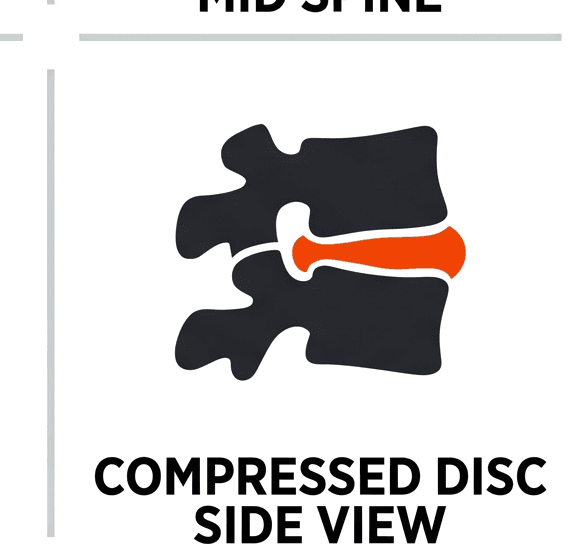
A disc, by contrast, is the shock-absorbing cushion sitting between two vertebrae higher up in the spine. A herniated or bulging disc happens when that cushion's outer wall weakens or tears, and inner material presses outward — sometimes far enough to touch a nearby nerve root.
Different structures, different mechanisms, but similar enough symptoms on the surface that the two get mixed up constantly.
Where the Pain Actually Shows Up
Location is one of the more useful clues. SI joint dysfunction tends to sit low in the back, close to the beltline, and is usually felt more on one side than the other, often right around the dimple above the buttock. It can refer into the buttock, hip, groin, or upper thigh, but it rarely travels much further.
A disc issue — particularly one affecting a nerve root — can start in a similar spot but often extends further: down the back or side of the leg, sometimes past the knee, occasionally all the way into the foot. That longer, nerve-path pattern is one of the clearest signs you're dealing with a disc problem rather than the SI joint.
What Makes Each One Worse
The two conditions tend to flare up in different situations, which is another useful clue:
- SI joint dysfunction often worsens with standing up from sitting, climbing stairs, rolling over in bed, or standing on one leg (putting on pants is a classic trigger)
- Disc-related pain more often worsens with prolonged sitting, bending forward, or anything that increases pressure inside the disc — coughing, sneezing, and straining all count
Paying attention to which specific movements set your pain off is worth mentioning at your evaluation, since it often points fairly clearly toward one structure or the other.
The Clue That Matters Most: Numbness, Tingling, and Weakness
This is where the two conditions diverge the most. A herniated disc that's pressing on a nerve root frequently produces true neurological symptoms along a specific path — numbness or tingling that follows a predictable line down the leg, or measurable weakness, like a foot that's harder to lift or a calf that tires quickly on one side.
SI joint dysfunction, on the other hand, is a mechanical and inflammatory joint problem. It can refer pain into the buttock or thigh, but it doesn't typically produce that same clean pattern of numbness, tingling, or true weakness. If you're noticing a specific nerve-path pattern of numbness rather than just an ache, that's a meaningful data point for whoever is evaluating you.
Who Tends to Get Each One
Certain patterns show up more often with each condition. SI joint dysfunction is more common during and after pregnancy, when hormonal changes loosen the ligaments that normally stabilize the joint, and in people with a leg-length difference, a prior fall onto the buttocks, or habits that load one side of the body more than the other over time.
Disc-related pain is more associated with repetitive bending and twisting, prolonged sitting (a desk job is a common contributor), and the gradual, age-related changes discs go through over the years. Neither pattern is a guarantee — plenty of exceptions exist in both directions — but they're useful context.
How an Evaluation Actually Tells the Two Apart
Because the symptoms overlap enough to fool a patient (and sometimes a quick exam), a thorough evaluation matters more than guessing from an internet search. That typically includes specific orthopedic tests that stress the SI joint directly, alongside tests that check for nerve root involvement — reflexes, strength, and the pattern of any numbness or tingling. A full neurological evaluation and any necessary X-rays help complete the picture.
If you want the deeper dive on either condition individually, our guides on SI joint pain and herniated vs. bulging discs go further into each one on its own.
Where Non-Surgical Care Overlaps — and Where It Differs
The good news is that both conditions commonly respond to conservative, non-surgical care, though the specifics differ. Chiropractic care using a low-force approach can help address joint restriction and alignment for SI joint dysfunction, often paired with core and glute stabilization work, since the SI joint relies heavily on surrounding muscles for support.
For disc-related pain involving a nerve root, spinal decompression is often part of the picture — a non-surgical approach designed to reduce pressure on the disc and give an irritated nerve root more room. Every case is different, so which combination of care actually applies to you depends on what your evaluation shows, not a standard protocol handed to everyone who walks in with low back pain.
When to Seek Care Sooner Rather Than Later
Most SI joint and disc-related pain responds to conservative care over time, but a few signs mean it's worth being seen sooner:
- Pain that's lasted more than a few weeks without any improvement
- Numbness, tingling, or weakness that's spreading or getting worse
- Pain that started after a fall, accident, or specific injury
- Any loss of bowel or bladder control, or numbness in the groin or inner thighs — this combination is rare but needs immediate medical attention
Outside of those red-flag situations, a proper evaluation is still the clearest way to understand what's actually going on before committing to any care plan.
Frequently Asked Questions
How can I tell if my back pain is from my SI joint or a disc? Location and pattern are the biggest clues — SI joint pain tends to stay low, one-sided, and closer to the buttock, while disc-related pain more often travels further down the leg and can come with true numbness, tingling, or weakness along a specific path. A thorough evaluation is the most reliable way to know for sure.
Can SI joint dysfunction cause leg pain like a disc does? It can refer pain into the buttock, hip, or upper thigh, but it doesn't typically produce the same nerve-path numbness or measurable weakness that a disc pressing on a nerve root can cause.
Do SI joint dysfunction and a slipped disc need different care? Often, yes, though there's overlap. SI joint dysfunction tends to respond well to joint-focused chiropractic care and stabilization work, while disc-related nerve involvement more often benefits from spinal decompression alongside chiropractic care. What applies to you depends on your evaluation.
Is one of these more serious than the other? Neither is inherently more serious — both are common and usually respond well to conservative care. The exception is the rare case involving loss of bowel or bladder control, which needs immediate medical attention regardless of which structure is involved.
Can I have both an SI joint issue and a disc issue at the same time? Yes, that combination isn't unusual, particularly since pain from one area can change how you move and indirectly load the other. A full evaluation looks at the whole picture rather than assuming only one structure is involved.
If your low back pain has you searching symptoms online trying to guess whether it's your SI joint or a disc, a proper evaluation is a far more reliable next step. Book your complimentary consultation at The Roots Health Centers in Lakewood Ranch, and we'll help you understand what's actually happening and what a personalized path forward looks like.
The Roots Health Centers, 8209 Natures Way, Unit 115, Lakewood Ranch, FL 34202. (941) 877-1507.
Conditions We Treat
Back Pain
Corrective chiropractic care that addresses the structural root cause of back pain — not just masking symptoms with medication.
Herniated Disc
Non-surgical care for herniated and bulging discs using FDA-cleared spinal decompression, corrective chiropractic, and integrated soft-tissue therapies.
Sciatica
Non-surgical care for sciatic nerve pain using spinal decompression, corrective chiropractic, and supporting therapies.
Services Related to This Post
Keep Reading
Related articles
SI Joint Pain: Causes and Non-Surgical Relief
SI joint pain causes deep low-back and hip pain often mistaken for sciatica. Learn what causes it and how to find relief without surgery.
Read articleHerniated Disc vs. Bulging Disc: What's the Difference?
Both show up on MRIs, both can cause pain — but they're not the same thing. Here's how to tell the difference and what your options are.
Read article