
Spinal Stenosis: A Non-Surgical Care Plan That Actually Works
You have been dealing with pain in your legs that gets worse the longer you stand or walk. Grocery shopping has become a calculation — which aisles can you get through before you need to stop? Walking the neighborhood with your spouse is something you used to do effortlessly and now avoid entirely. You have noticed that leaning on a shopping cart helps, and sitting down gives almost immediate relief. Eventually you see a doctor, get imaging, and hear the words "spinal stenosis." The treatment options presented are usually the same three: pain medication, epidural steroid injections, or surgery — a laminectomy or spinal fusion. What you probably do not hear about is the non-surgical spinal decompression protocol that helps the majority of our stenosis patients walk comfortably again without ever entering an operating room.
What spinal stenosis actually is
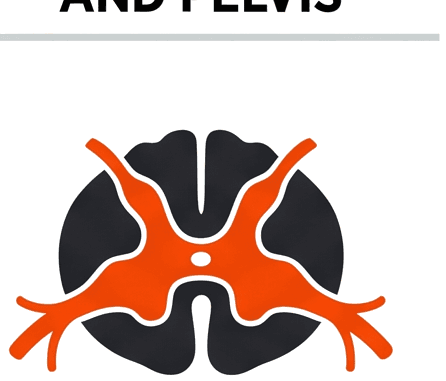
Spinal stenosis is a narrowing of the bony canal that houses your spinal cord and the nerve roots that branch off from it. The narrowing can happen for several reasons:
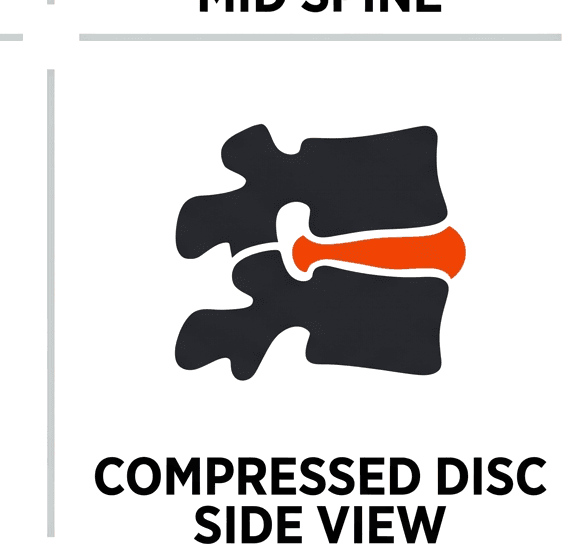
- Degenerative disc disease — as discs lose height, the space inside the canal shrinks
- Bone spurs (osteophytes) — the body's attempt to stabilize a degenerating segment
- Thickened ligamentum flavum — a ligament inside the canal that thickens with age
- Facet joint hypertrophy — overgrowth of the joints that guide spinal motion
- Spondylolisthesis — forward slippage of one vertebra on another
Most stenosis is in the lumbar spine (lower back) and develops gradually after age 50. Cervical stenosis (neck) is less common but can be more serious because it compresses the spinal cord itself rather than just nerve roots.
The classic symptom pattern is called neurogenic claudication: leg pain, cramping, heaviness, or weakness that comes on with standing and walking and eases when you sit or lean forward. Leaning forward opens the spinal canal slightly, which is why the shopping cart trick works.
Why surgery is not always the answer
Laminectomy and spinal fusion are the two most common surgical approaches for stenosis. Laminectomy removes a portion of the vertebral bone to widen the canal. Fusion locks two or more vertebrae together to prevent motion at the affected segment.
Both are real options for severe cases — but they come with real considerations:
- Spinal fusion at one level accelerates degeneration at the segments above and below (adjacent segment disease), which may require additional surgery 5 to 15 years later
- Laminectomy can lead to spinal instability if too much bone is removed
- Recovery from either surgery takes months
- Outcomes are variable — not every patient gets the relief they expected
- Surgery is essentially irreversible
For the majority of stenosis patients, the symptoms are very manageable without surgery. The narrowing itself is permanent — we cannot undo bone spurs or re-inflate discs. But the pain, the walking limitation, and the nerve compression symptoms respond to non-surgical care when the protocol addresses the right mechanisms.
How non-surgical decompression works for stenosis
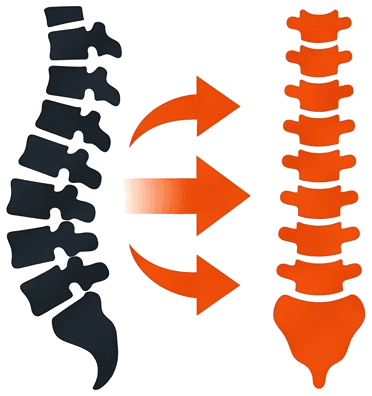
Spinal decompression therapy uses a computer-controlled table to gently stretch the lumbar spine in precise, cyclical patterns. The controlled traction creates negative pressure inside the disc and canal space. That negative pressure does three things:
- Increases functional space around the compressed nerves
- Draws fluid, oxygen, and nutrients into disc tissue that has been chronically starved of blood flow
- Reduces intradiscal pressure that contributes to disc bulging into the canal
Decompression does not widen the bony canal. What it does is optimize the soft-tissue environment within the canal — and for most stenosis patients, that is enough to dramatically reduce symptoms.
The goal is not to cure the narrowing. It is to give the nerves enough room and enough blood flow to stop producing pain — and for most patients, that is entirely achievable.
Our stenosis protocol
At The Roots Health Centers in Lakewood Ranch, stenosis patients receive a layered treatment plan:
- FDA-cleared spinal decompression — the primary modality, typically 20 to 24 sessions over 8 to 12 weeks
- Corrective chiropractic using the Torque Release Technique — restoring proper spinal mechanics to reduce the load on stenotic segments
- Red light therapy — reducing chronic inflammation around the compressed nerves and supporting cellular repair
- Shockwave therapy when soft-tissue restrictions (tight paraspinal muscles, thickened fascia) are contributing to the compression
- Targeted rehabilitation exercises to strengthen the core stabilizers that support the lumbar spine
Dr. Logan Swaim builds each plan based on imaging findings, symptom severity, and the specific stenosis pattern. Not every stenosis patient needs the same combination.
What to expect during treatment
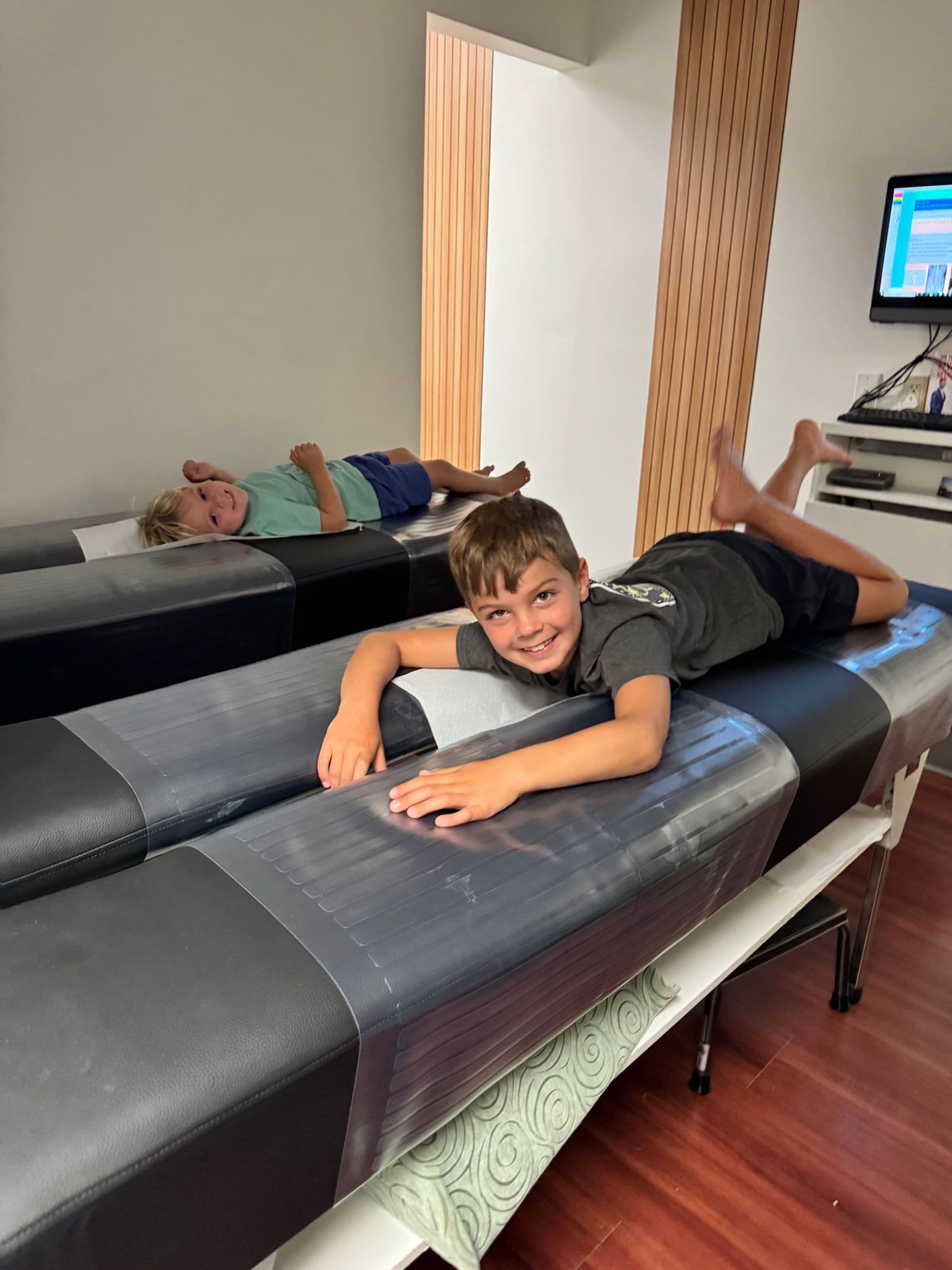
Decompression sessions are comfortable. You lie on a specialized table, a harness secures around your pelvis, and the table gently stretches the lumbar spine in rhythmic cycles. Each session takes about 20 to 30 minutes. Many patients fall asleep during treatment.
Typical progression:
- Weeks 1-3 — most patients notice initial improvement in walking tolerance and a reduction in leg symptoms
- Weeks 4-8 — cumulative improvement builds; many patients return to activities they had stopped
- Weeks 8-12 — consolidation phase; the remaining sessions lock in the gains
Throughout the course, we monitor progress with periodic re-assessment of walking tolerance, nerve function, and pain levels. If the protocol is not producing measurable improvement by the midpoint, we adjust the approach.
Age is not a barrier
Many of our stenosis patients are in their 60s, 70s, and 80s. Decompression is one of the safest treatment modalities we offer:
- No anesthesia
- No incisions
- No recovery time between sessions
- Low-force and well-tolerated even by elderly patients with osteoporosis
- Does not interfere with other medications or medical treatments
The oldest patient we have successfully treated for stenosis was in their late eighties. Age alone is not a disqualifier.
When surgery is the right call
We are not anti-surgery. There are stenosis cases where surgery is genuinely the best option:
- Progressive neurological deficit (muscle weakness that is getting worse)
- Bowel or bladder dysfunction (cauda equina signs)
- Severe stenosis with cord compression on MRI and matching clinical findings
- Failure to improve after a full course of conservative care
When imaging and clinical findings point toward surgery, we refer to trusted spine surgeons in the Sarasota-Bradenton area and support the patient through post-surgical rehabilitation. But for the majority of stenosis patients who walk through our door, surgery is not where the journey needs to start.
If you have been told spinal stenosis means surgery, a second opinion is worth your time. Bring your MRI, bring your questions, and let Dr. Logan Swaim review the full picture with you. Most of our stenosis patients are back to comfortable walking within two to three months of starting care. Book your $49 new patient special or call (941) 877-1507. You can also see patient case studies for examples of how stenosis patients progress through care.
Conditions We Treat
Spinal Stenosis
Non-surgical care for spinal stenosis using FDA-cleared decompression therapy and corrective chiropractic to take pressure off compressed nerves and restore comfortable walking.
Back Pain
Corrective chiropractic care that addresses the structural root cause of back pain — not just masking symptoms with medication.
Sciatica
Non-surgical treatment for sciatic nerve pain using spinal decompression, corrective chiropractic, and supporting therapies.