
Tight Hip Flexors and Low Back Pain: Why Sitting Makes It Worse
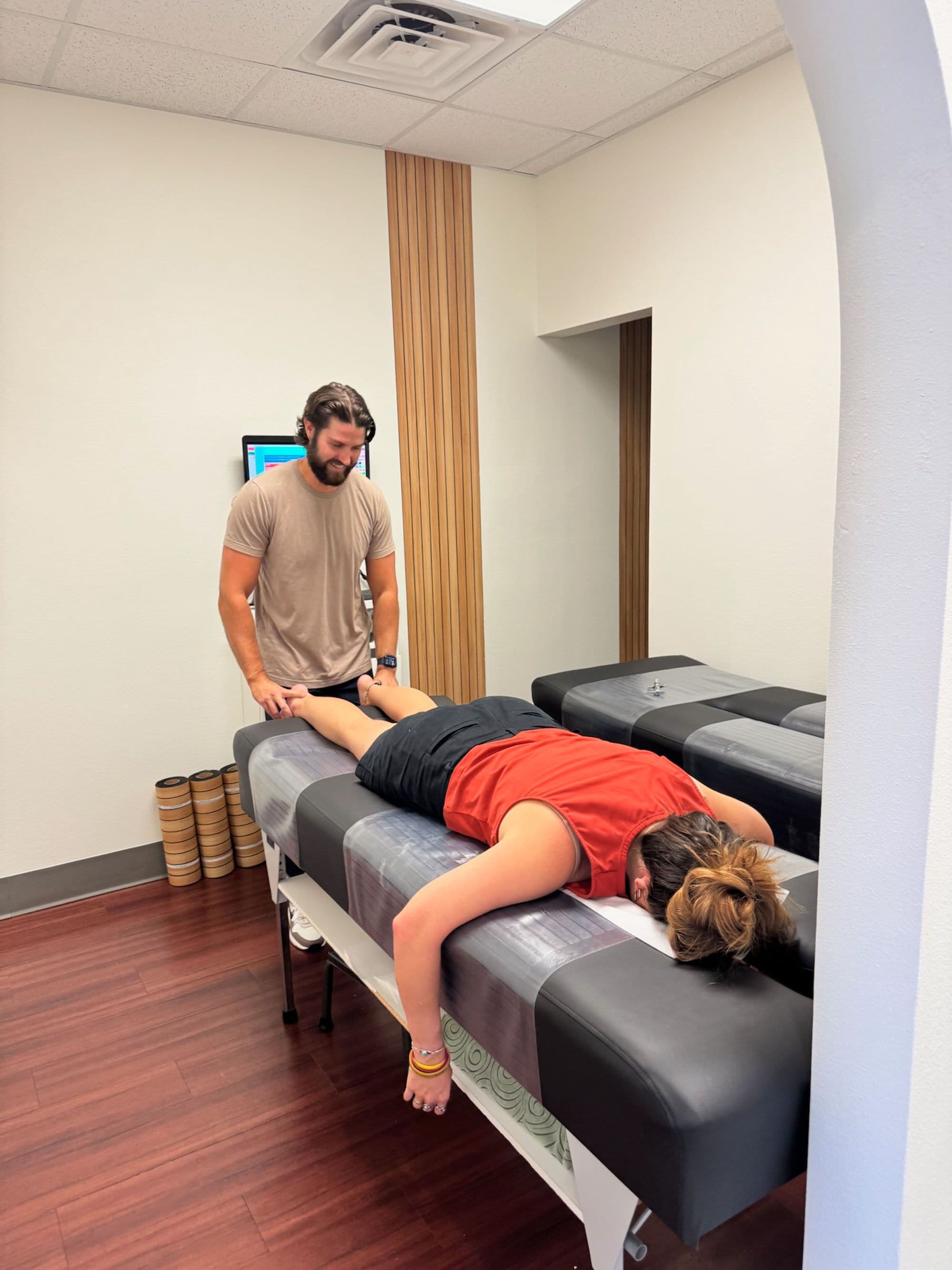
If your low back aches after a long day at a desk, in the car, or on the couch, your hips may be part of the story. Tight hip flexors, the muscles that lift your thigh toward your body, can tug on the pelvis and low spine when you stand up, which is one reason a back can feel stiff and cranky even when you haven't done anything strenuous. The short answer: yes, tight hip flexors can contribute to low back pain, and the good news is that gentle movement, better sitting habits, and a proper look at how your hips and spine work together often help. Below, we'll explain the connection, the signs to watch for, and what a chiropractor in Lakewood Ranch looks for.
What Are Your Hip Flexors, and Why Do They Matter for Your Back?
Your hip flexors are a group of muscles at the front of your hip. The largest, the psoas, is unusual because it starts on the sides of your lower spine, travels through the pelvis, and attaches to the top of your thigh bone. Another, the iliacus, joins it from the inside of the pelvis. Together with muscles at the front of the thigh, they lift your knee when you walk, climb stairs, or bring your leg toward your chest.
Because the psoas is anchored directly to the lumbar spine, it doesn't just move the leg. When it stays short and tense, it can pull the low back forward into a deeper arch and tilt the pelvis. That extra load on the joints and muscles of the low back is one of several patterns we see in people with back pain.
Why Sitting Makes Tight Hip Flexors Worse
When you sit, your hips stay bent for hours. The hip flexors are held in a shortened position, and muscles that spend a lot of time short can adapt by feeling tight when you try to lengthen them. Then you stand up, and the front of the hip resists straightening. Your pelvis and low back may compensate by arching or tilting, and the muscles along your spine work harder to hold you upright.
This is one reason the pattern shows up in so many desk workers, drivers, and people who spend evenings on the couch. It also isn't limited to inactive people. Runners, cyclists, and golfers can develop tight hip flexors from repetitive hip bending, and weak glutes can leave the hip flexors doing extra work. We explore the sitting side of this in more detail in how sitting affects your back.
Signs Your Hip Flexors May Be Involved
No single sign proves that tight hip flexors are behind your discomfort, but a few patterns are common:
- Stiffness at the front of the hip or groin when you first stand after sitting
- A pulling or aching feeling across the low back, often worse when standing or walking for a while
- Difficulty standing fully upright after a long stretch of sitting
- A deep arch in your low back when you stand or lie flat on your back
- Shorter stride or hip tightness when you walk, run, or climb stairs
- Tightness that eases a little with gentle movement but returns when you sit again
If your symptoms include pain that travels below the knee, or numbness or tingling in the leg, the source may be somewhere else, such as an irritated nerve. Our overview of lower back pain covers how these patterns differ, and our post on when hip pain actually comes from the spine explains why the hip and low back are so often confused.
Gentle Things That May Help at Home
You don't need an elaborate routine. Small, consistent habits tend to do more than an occasional intense effort.
Break up long sitting
Standing, walking to refill your water, or changing position regularly gives the hip flexors a chance to lengthen. Even a short break is useful. Our desk stretches routine is a good starting point.
Try a gentle half-kneeling stretch
Kneel on one knee with the other foot in front, on a cushion if the floor is hard. Tuck your tailbone slightly under, keep your ribs stacked over your hips, and shift your weight forward a little until you feel a mild stretch at the front of the back hip. Breathe slowly. It should feel like a stretch, never a sharp or pinching pain in the hip or back. Stop if it does.
Wake up the glutes
The glutes work opposite the hip flexors. Simple bridges, where you lie on your back with knees bent and lift your hips, help those muscles do their share of the work so the front of the hip doesn't have to.
Check your setup
A chair that's too low bends the hips even more. Raising the seat slightly, sitting back into the chair, and keeping your feet supported can reduce how much your hips are flexed all day.
Keep moving in ways you enjoy
Walking is one of the simplest ways to move the hips through a natural range of motion. If a certain activity clearly aggravates your symptoms, ease off it rather than pushing through.
How a Chiropractor Looks at Hip Flexor Tightness
Stretching alone doesn't always solve a pattern that started somewhere else. At The Roots Health Centers, our doctors look at how the hips, pelvis, and spine move together rather than treating the sore spot in isolation. A visit typically includes a conversation about your daily habits and history, a look at posture and movement, and a neurological evaluation to understand how well your nervous system is communicating with the muscles involved.
Dr. Logan Swaim uses Torque Release Technique, a gentle, low-force approach to spinal adjustments, when it's appropriate for the patient. The aim is to help the spine and pelvis move well so the surrounding muscles no longer have to guard, and then to give you simple movements to support that change at home. Every person is different, and what your doctor recommends depends on what your evaluation shows. You can read more about our approach on our chiropractic care page.
When to Get Checked Sooner
Most hip flexor tightness is a mechanical, movement-related problem, but a few situations call for prompt medical attention rather than a stretching routine. Contact a doctor or seek urgent care if you have:
- Back pain after a significant fall or accident
- Numbness in the groin or inner thighs, or new trouble controlling your bladder or bowels (seek emergency care)
- Progressive leg weakness
- Fever together with back pain
- Pain that is constant, severe, and unrelieved by any position
If your discomfort is simply persistent or keeps returning, it's reasonable to have it evaluated rather than waiting for it to get in the way of your routines.
Frequently Asked Questions
Can tight hip flexors cause lower back pain?
They can contribute. Because the psoas attaches to the lumbar spine, ongoing tightness may increase the arch in the low back and add strain to nearby muscles and joints. It's rarely the only factor, which is why a full evaluation is helpful.
How do I know if my hip flexors are tight?
Common clues are front-of-hip stiffness after sitting, difficulty standing tall, and a pulling feeling across the low back. A doctor can assess your range of motion and how your pelvis and spine move to give you a clearer picture.
Should I stretch my hip flexors if my back hurts?
Gentle stretching is often comfortable and useful, but it shouldn't cause sharp pain. If a stretch aggravates your back, stop and have your symptoms checked, since the cause may not be muscular tightness.
Does sitting too much really tighten the hip flexors?
Long periods with the hips bent can leave these muscles feeling short and resistant to lengthening. Regular movement breaks and a better-supported seat are simple ways to counter that.
Ready to Find Out What's Behind Your Low Back Pain?
If tight hips and a cranky low back have become part of your day, you don't have to guess at the cause. Our team in Lakewood Ranch can walk you through what's happening and what your options are. Book a complimentary consultation and we'll start with a conversation about what you're feeling.
Conditions We Treat
Back Pain
Corrective chiropractic care that addresses the structural root cause of back pain — not just masking symptoms with medication.
Hip Pain
Hip pain can start in the joint itself — or in the SI joint, the lower back, a tilted pelvis, or the muscles that cross the hip. Because those sources feel remarkably similar, finding the right one comes before any adjustment.
Services Related to This Post
Keep Reading
Related articles
Desk Stretches for Back and Neck Pain: A 10-Minute Routine
Feeling it in your neck and lower back by 3pm? Here's a simple 10-minute desk stretch routine, plus why the ache keeps coming back no matter how many stretches you do.
Read articleHip Pain: When It’s Actually Coming From Your Spine
Hip pain is common, but the source isn’t always the hip itself. Spine, SI joint, and piriformis problems all produce pain that feels like hip pain — and getting the source right changes what helps.
Read article