

Pain Behind the Knee: Common Causes and When to Get It Checked
You stand up from the couch and feel a tight, achy pull right behind your knee. Maybe it is sharp when you straighten the leg, or maybe it is a dull fullness you cannot quite place. If you are dealing with pain behind the knee, the short answer is that the back of the knee is a crowded space where hamstring tendons, a calf muscle, joint fluid, nerves, and blood vessels all meet, so the cause can be muscular, joint-related, nerve-related, or occasionally a circulation problem. Most cases are not emergencies, but a few signs need prompt care. Below, we walk through the common causes, how to read your pattern, the red flags, and what a thorough exam looks at here in Lakewood Ranch. This is educational information, not a diagnosis.
What Is Behind Your Knee?
The area behind the knee, sometimes called the popliteal fossa, is a diamond-shaped space. The hamstring tendons form its upper edges, and the two heads of the calf muscle form its lower edges. Running through the middle are the main nerves and blood vessels that serve your lower leg, along with a small bursa (a fluid-filled cushion) that helps the joint glide.
Because so many structures share one small space, pain here can be hard to pin down. Where exactly it hurts, what brings it on, and whether it travels up or down the leg all give useful clues.
Common Causes of Pain Behind the Knee
Hamstring tendon strain
The hamstring tendons attach on either side of the back of the knee. Sprinting, hill walking, a sudden stretch, or simply tight hamstrings can irritate them. The pain is often felt on the inner or outer back corner of the knee and may increase when you bend the knee against resistance. Tight hamstrings often travel with low back tension, which we cover in our post on tight hamstrings and low back pain.
Calf muscle strain
The upper end of the calf muscle attaches just below the back of the knee. A pull here can feel like a sudden tug or a deep ache when you push off, climb stairs, or play pickleball or tennis.
Baker's cyst
A Baker's cyst is a fluid-filled swelling that can form behind the knee when the joint produces extra fluid, often alongside irritation or wear inside the knee. It can feel like tightness or a bulge, and it may be more noticeable when the knee is fully straight. Because a cyst usually signals that something else is going on inside the joint, it is worth having the knee examined rather than only focusing on the lump.
Meniscus irritation
The meniscus is the cartilage cushion inside the knee. Irritation at the back portion can refer pain to the back of the knee, sometimes with clicking, catching, or swelling. See our overview of meniscus tears and non-surgical options.
Joint wear and general knee irritation
Age-related wear, old injuries, or changes in how the knee tracks can all produce achiness behind the joint, especially after a long day on your feet. Our knee pain page describes the patterns we see most often.
A nerve problem from the low back
Sometimes the knee is not the true source. A nerve root in the low back can refer pain, tingling, or tightness down the back of the leg and behind the knee. Clues include low back or buttock pain, symptoms that change when you sit, bend, or cough, and pain that travels. Our sciatica page explains this pattern, and the pinched nerve page covers related signs.
Reading Your Pattern
A few observations help narrow things down. Jot them down before any appointment:
- Where exactly? Inner corner, outer corner, or dead center each point toward different structures.
- What brings it on? Pain when you straighten the knee, bend it, climb stairs, or after exercise suggests different causes.
- Is there swelling or a bulge? A noticeable fullness can point toward fluid in the joint.
- Does it travel? Pain that runs up into the buttock or down into the calf or foot raises the question of a nerve source.
- Any numbness, tingling, or weakness? These deserve a closer look.
- Did it start with an injury? A pop, twist, or fall is worth mentioning early.
Red Flags: When Pain Behind the Knee Needs Urgent Care
Most pain behind the knee is not an emergency, but one cause matters a great deal: a blood clot in a deep vein of the leg. Call 911 or go to the nearest emergency room if you have:
- Sudden swelling, warmth, redness, or tenderness in the calf or behind the knee, especially after a long trip, surgery, or time off your feet
- Shortness of breath, chest pain, or a racing heart together with leg pain
- A leg that looks pale, blue, or cold, with sudden severe pain
- Fever together with a red, hot, swollen knee
- Pain that began right after a significant injury and you cannot put weight on the leg
Get a prompt exam if the pain is getting worse, keeps you up at night, comes with a growing lump, or is paired with numbness or weakness. Waiting for it to sort itself out is not a plan.
Gentle Things That May Help While You Sort It Out
Each person and case is different, so treat these as general ideas, not a plan.
- Back off what flares it. Pause deep squats, hill sprints, or long stretches of kneeling for a few days.
- Keep moving gently. Easy walking usually feels better than complete rest for many people.
- Try gentle hamstring and calf stretches. Go only to mild tension, never into pain.
- Use warmth or cold. Some people prefer warmth to loosen tight muscles, and others prefer cold after activity. See our post on ice or heat for back pain for how to think about the choice.
- Check your shoes and your sitting posture. Worn-out shoes and long periods with the knee fully bent can both add strain.
- Do not massage a hot, swollen, or very tender calf. If the calf looks swollen and sore, get it checked first.
How Our Team Looks at Knee Pain
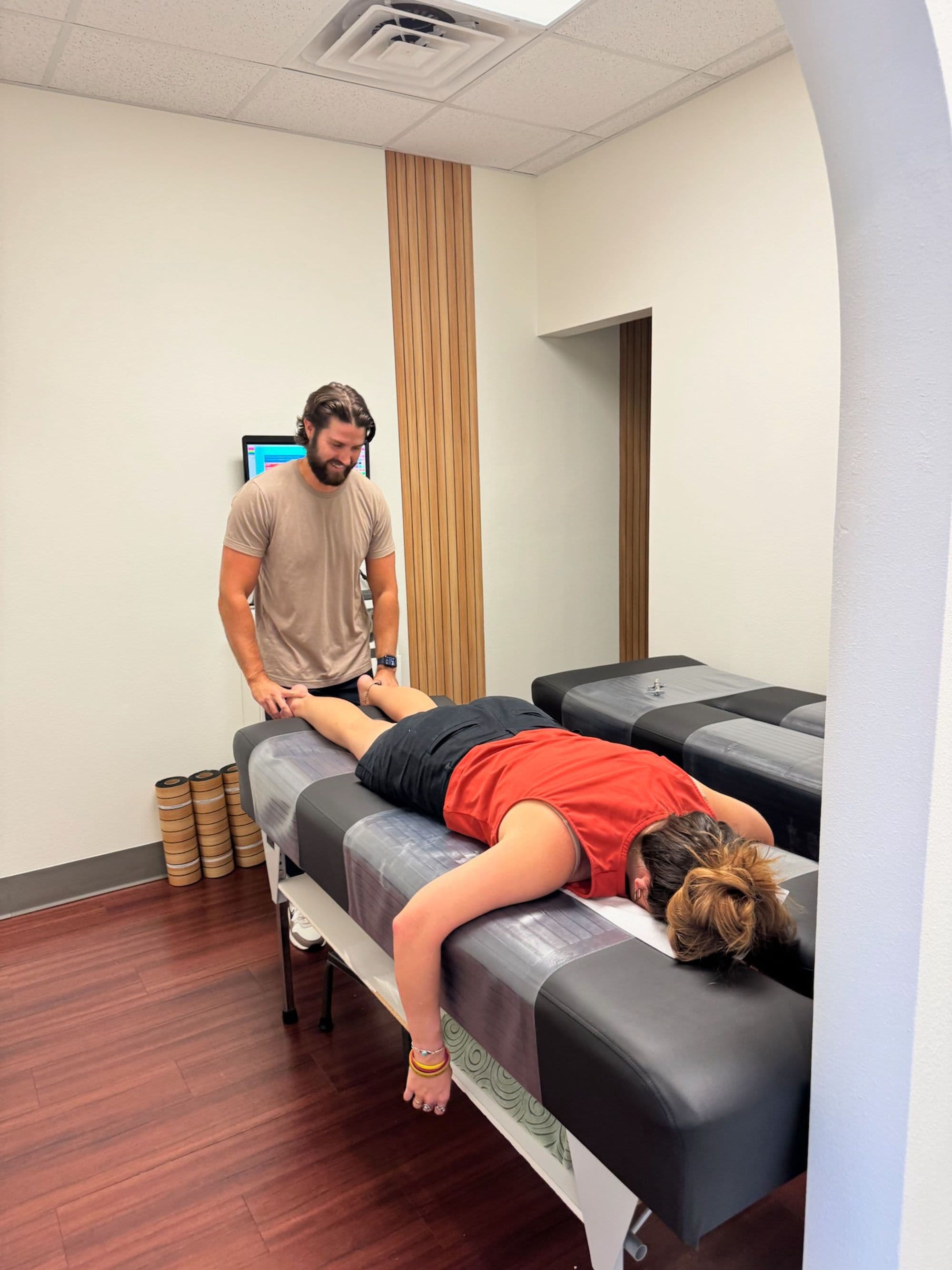
At The Roots Health Centers, we start with your story: when the pain began, what it feels like, what you do for work and play, and whether anything travels. Our doctors then perform a hands-on exam of the knee, hip, low back, and foot, because the cause often sits above or below the spot that hurts. Where it is appropriate, we include a neurological evaluation to see how the nerves serving the leg are behaving. If something falls outside what chiropractic care addresses, we refer you to the right provider.
We use Torque Release Technique (TRT), a gentle, low-force approach, and we explain what we find in plain English before anything is done. Depending on the findings, options may include chiropractic care for the spine and pelvis, or knee decompression when the joint itself is the focus. Dr. Logan Swaim and our team serve patients across Lakewood Ranch, Bradenton, and Sarasota. We do not promise a specific result or timeline, because every knee is different.
Frequently Asked Questions
What causes pain behind the knee?
Common causes include a hamstring or calf strain, a Baker's cyst, irritation inside the knee such as a meniscus problem, joint wear, and a nerve referring pain from the low back. Less often, it can signal a blood clot, which is why swelling and warmth in the calf need urgent attention.
What does a Baker's cyst feel like?
Many people describe tightness, fullness, or a visible bulge behind the knee that is more noticeable when the leg is straight. Because a cyst often goes along with something happening inside the joint, it is worth having the knee examined.
How can I tell if pain behind my knee is a blood clot?
Warning signs include sudden swelling, warmth, redness, and tenderness in the calf or behind the knee, sometimes with shortness of breath. You cannot confirm this at home. If you notice these signs, seek emergency care right away.
Can a back problem cause pain behind the knee?
Yes. An irritated nerve in the low back can refer pain or tingling down the back of the leg and behind the knee. Symptoms that change when you sit, bend, or cough are a clue.
Should I stretch or rest pain behind the knee?
Gentle movement within a comfortable range is often better than complete rest, but stop any stretch that increases pain. If the pain is sharp, swollen, or not settling, have it checked.
Ready for a Closer Look?
If pain behind your knee keeps coming back or is not settling, you do not have to keep guessing. Our team can take a careful look at the knee, hip, and low back together. Book a complimentary consultation and we will take it from there.
Conditions We Treat
Knee Pain
Non-surgical knee pain relief using knee decompression, shockwave therapy, red light therapy, and corrective chiropractic — addressing the mechanical root cause of joint dysfunction.
Sciatica
Non-surgical care for sciatic nerve pain using spinal decompression, corrective chiropractic, and supporting therapies.
Services Related to This Post
Keep Reading
Related articles
Knee Pain Going Down Stairs: Causes and What May Help
Does your knee ache or give way on the way down the stairs? Here's why descending stairs is so demanding on the knee, what may be behind the pain, and when to get it checked.
Read articleKnee Pain When Squatting: Why It Happens and What Helps
Knee pain when squatting is rarely just a knee problem. Here is what commonly sits behind it, which signs need a prompt exam, and how a whole-body look at movement can help.
Read articleTight Hamstrings and Low Back Pain: What's the Link?
Tight hamstrings and a sore low back often show up as a pair. Here's how the two connect, why stretching alone doesn't always settle it, and when to get checked.
Read article