

Waking Up With a Stiff Neck: Why It Happens and What May Help
You go to bed feeling fine, and by morning you can barely turn your head to check the driveway. If you keep waking up with a stiff neck, you're in very good company, and the reassuring news is that most cases come down to muscles, joints, and the way you slept rather than anything dangerous. A stiff neck in the morning usually happens when the small joints and muscles of the neck spend hours in a position they don't like, then protest when you ask them to move. Below, we'll walk through what's often behind it, what a good sleep setup looks like, the warning signs that deserve a quicker call, and how a chiropractor approaches a stiff neck here in Lakewood Ranch.
Why You Wake Up With a Stiff Neck
Your neck holds up a head that weighs roughly as much as a bowling ball, and it does so with a stack of small joints, discs, and layers of muscle. During the day, you constantly shift and adjust without thinking about it. During sleep, that automatic shifting slows down. If your head is propped at an awkward angle, twisted to one side, or unsupported for hours, the muscles on one side can stay shortened and guarded while the joints on the other side get compressed.
When you wake up and move, those guarded muscles resist, and the irritated joints tell your brain to limit the motion. That's the protective tightness you feel: your nervous system is trying to keep you from moving into something that feels threatening. It can be uncomfortable, but it's also a sign that the body is doing its protective job. Persistent or recurring stiffness, though, is a signal that something in your daily patterns, not just last night's pillow, may be worth a closer look.
The Most Common Culprits
Sleeping position and pillow height
Stomach sleeping is the classic offender, because it forces your head to stay rotated to one side for hours. A pillow that's too high or too flat can also leave your neck bent sideways or tipped back. Ideally, your neck stays roughly in line with the rest of your spine whether you're on your back or side. We cover this in more detail in our guide to sleep positions and spine health.
Hours of forward-head posture
A day spent looking down at a phone, laptop, or tablet loads the back of your neck. By bedtime, those muscles may already be fatigued and irritable, which makes them more likely to complain overnight. If your stiffness is worse on workdays, this is a likely contributor, and it overlaps with what we describe on our tech neck page.
Old or unresolved injuries
A past car accident, a fall, or a sports collision can leave the neck less tolerant of awkward positions long after the original soreness faded. If your stiffness began after an incident like that, our page on whiplash explains why delayed symptoms are so common.
Stress and tension
Many of us carry stress in the neck and shoulders without noticing, clenching or hiking the shoulders toward the ears. Add a night of light sleep and a jaw that clenches, and it's easy to wake up locked up. Stiffness that tracks with stressful weeks is a pattern worth noticing.
A cold room or an air-conditioned draft
Anyone who has slept under a vent in a Florida summer knows the feeling. Cool air blowing on exposed neck muscles may encourage them to tighten. It's not a dramatic cause, but it's a simple one to rule out.
Setting Up Your Sleep Space for a Happier Neck
You don't need a specialty product to make a difference. A few simple adjustments often go a long way:
- Back sleepers: choose a pillow that supports the natural curve of your neck without pushing your chin toward your chest.
- Side sleepers: pick a pillow that's roughly the height of the space between your ear and the edge of your shoulder, so your head stays level rather than tilting up or down.
- Stomach sleepers: this position asks your neck to stay rotated all night. If you can gradually shift toward your side, your neck may thank you. If not, a very thin pillow, or none under your head, reduces the strain.
- Check the whole line: a mattress that sags or a pillow that keeps sliding out of place can undo an otherwise good setup.
It can take some experimenting, and what works for one person may not for another. If you're changing habits, give your body time to adapt rather than expecting an instant result.
What May Help at Home
For an ordinary morning stiff neck with no red flags, gentle self-care is a reasonable first step. Many people find that a few of these help them feel more comfortable:
- Warmth or cold, whichever feels better. Some people prefer a warm shower or heating pad to relax tight muscles, while others like a cold pack when things feel irritated. Our breakdown of ice versus heat applies to the neck too.
- Slow, comfortable movement. Gentle turns and tilts within a pain-free range keep the area from stiffening further. Stop if anything sharpens or sends symptoms down your arm.
- Short movement breaks during the day. A few minutes of standing, shoulder rolls, or the routines in our desk stretches guide can interrupt the long static positions that contribute to nighttime stiffness.
- Screen height. Raising your monitor toward eye level and holding your phone higher can reduce hours of forward-head loading.
- Hydration and rest. Muscles that are overworked and under-recovered tend to be less forgiving.
If you find yourself repeating this cycle month after month, the goal shifts from getting through the morning to understanding why your neck keeps ending up here.
When a Stiff Neck Deserves a Closer Look
Most stiff necks are benign, but a few patterns should not be waited out. Seek urgent medical care right away if a stiff neck comes with a high fever, a severe headache unlike your usual, confusion, sensitivity to light, or nausea, since that combination needs prompt evaluation. The same goes for stiffness after significant trauma, or with sudden weakness, difficulty speaking, facial drooping, or chest pain.
A prompt in-person evaluation is also sensible if you notice:
- Numbness, tingling, or weakness spreading into an arm or hand (see our guide to pinched nerve symptoms in the neck)
- Stiffness that keeps returning or steadily worsens
- Pain that wakes you at night regardless of position
- Stiffness that follows a fall, collision, or car accident
Those patterns don't automatically mean something serious, but they are exactly the situations where a thorough evaluation is better than guessing.
How a Chiropractor Approaches a Stiff Neck
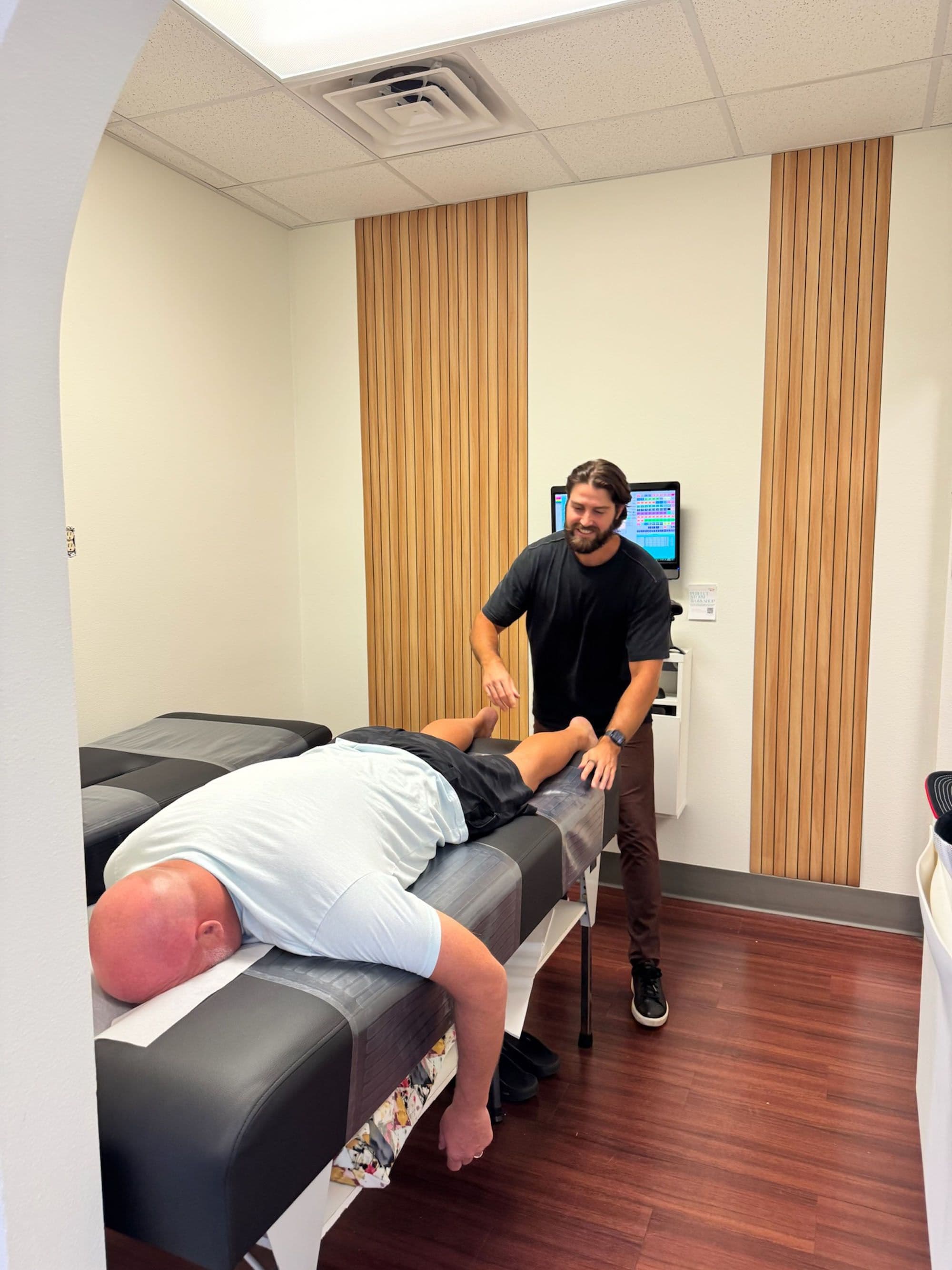
At The Roots Health Centers, we start by listening. When did the stiffness begin? What does your sleep setup look like? What does your workday involve? Then we evaluate how your neck and upper back move, how your posture behaves under load, and whether your nervous system is showing any patterns that point beyond simple muscle tightness. That may include a neurological evaluation when the story calls for it. Our doctors' perspective is that a stiff neck is often the visible end of a pattern, so we look at the neighboring areas that influence it, including the upper back and shoulders, which is why our stiff neck and shoulders page and our neck pain page are worth a read.
If chiropractic care is appropriate for you, care is tailored to your findings, your comfort level, and your goals. Every person is different, and we'd rather explain what we find and let you decide than promise a particular result. Where something falls outside our scope, we'll say so and point you toward the right provider.
Frequently Asked Questions
Can sleeping wrong really cause a stiff neck?
Yes. Hours in a twisted or unsupported position can leave neck muscles guarded and joints irritated, which shows up as stiffness when you wake. Sleep position is one of the most common contributors, though daytime posture and stress often play a part as well.
Should I use ice or heat for a stiff neck?
Either can be reasonable, and the better choice is usually the one that feels more comfortable to you. Some people like warmth to relax tight muscles, others prefer cold when the area feels irritated. If neither seems to help, or symptoms worsen, that's a good reason to get evaluated.
How do I know if a stiff neck is serious?
Stiffness with a high fever, severe headache, confusion, light sensitivity, or after significant trauma needs urgent medical care. Numbness, weakness, or symptoms traveling down an arm also deserve a prompt evaluation.
Can a chiropractor help with a stiff neck?
A chiropractor can evaluate how your neck and surrounding areas are moving, look for contributing patterns like posture and old injuries, and recommend an appropriate plan. Outcomes vary from person to person, and we'll always tell you if you'd be better served elsewhere.
Ready to Understand What's Behind Your Stiff Neck?
If you're tired of starting your mornings guarded and stiff, a conversation with our team can help you sort out what's contributing. Book a complimentary consultation at The Roots Health Centers in Lakewood Ranch, and we'll listen, look closely, and explain what we find in plain English.
Conditions We Treat

Neck Pain
Precise cervical adjustments and decompression that restore alignment, reduce nerve pressure, and eliminate chronic neck pain at its source.
Tech Neck
Forward head posture from daily screen use shifts the mechanical load on your cervical spine, compresses nerves, and drives chronic neck pain, headaches, and upper back tension. Corrective care addresses the structural change — not just the symptoms.
Whiplash
Comprehensive whiplash care for car accident victims — corrective chiropractic, decompression, and full PIP documentation within Florida's 14-day window.
Services Related to This Post
Keep Reading
Related articles
Pinched Nerve in Neck: Symptoms and How to Find Relief
Sharp pain, numbness, or a burning ache running from your neck into your arm? Here's how to recognize a pinched nerve in the neck, what causes it, and how to find relief.
Read articleIce or Heat for Back Pain? A Simple Guide to Choosing
Standing in front of the freezer wondering whether to grab the ice pack or the heating pad? Here's a plain-English guide to which one fits your back pain right now, and how to use either one safely.
Read article