

Are Chiropractors Legit? Training, Licensing and What the Evidence Shows
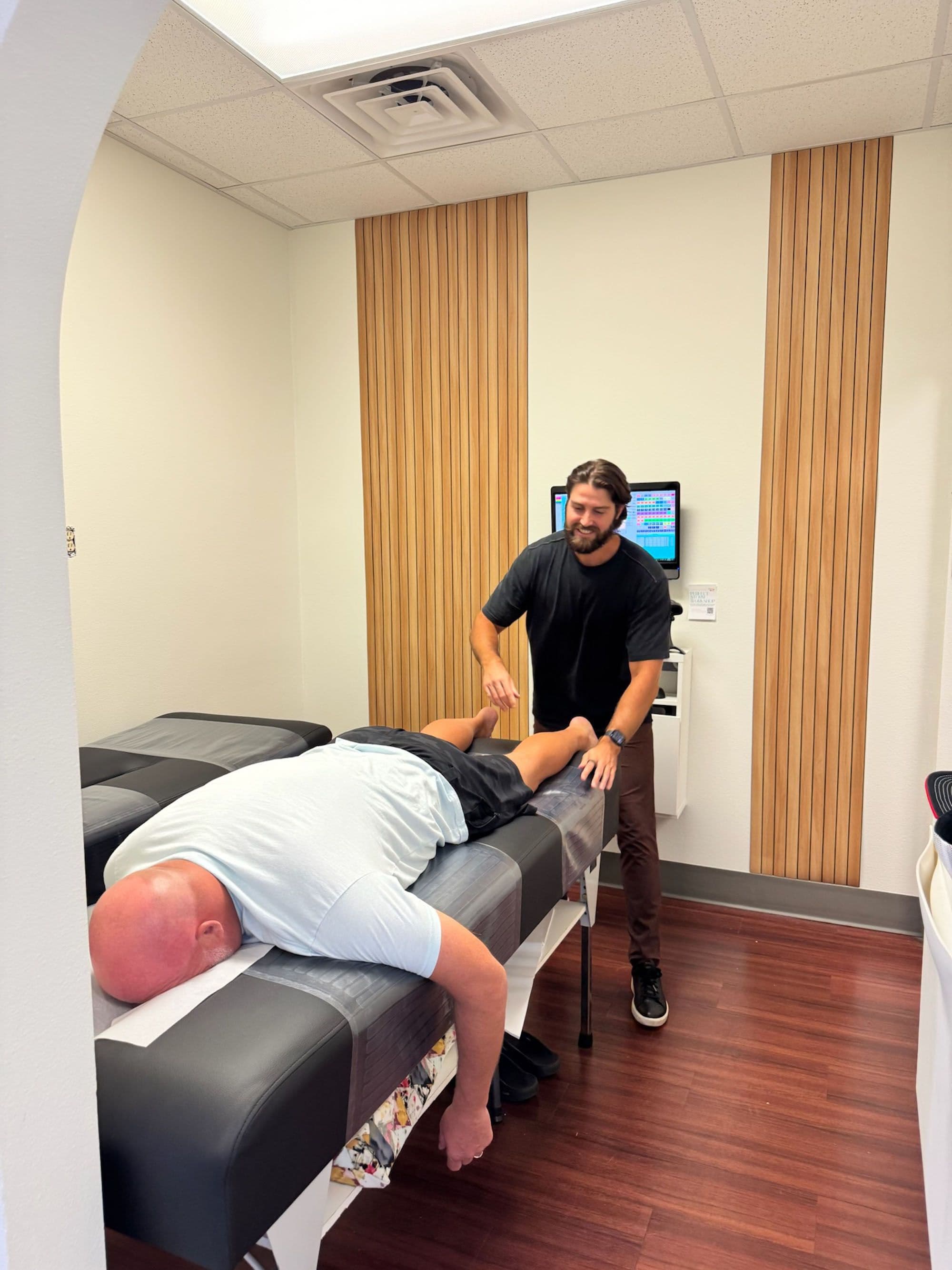
If you've ever wondered whether chiropractors are legit, you're in good company. Between jokes about cracking joints and strong opinions online, it's hard to know what to believe. The short answer: chiropractic is a licensed, regulated healthcare profession, and chiropractors are trained at the doctoral level to evaluate the spine and nervous system. Research supports spinal manipulation as one non-drug option for some kinds of low back and neck pain. It is not a cure-all, and a good chiropractor will say so. Below, we'll walk through how chiropractors are trained, what the research does and doesn't show, the red flags worth knowing, and what a legitimate visit looks like here in Lakewood Ranch.
How Chiropractors Are Trained and Licensed
A chiropractor holds a Doctor of Chiropractic (DC) degree, earned through a multi-year graduate-level program that includes anatomy, physiology, neurology, radiology, diagnosis, and supervised clinical work. After graduation, chiropractors must pass national board exams and meet state licensing requirements before they can practice. In Florida, you can verify that a provider holds an active license through the state's public license lookup, and you're always welcome to ask a clinic about their credentials.
If you want a deeper look at how a DC compares with an MD, our article on whether chiropractors are real doctors breaks it down. The key point is that chiropractors are doctors of a different discipline: they focus on the spine, joints, and nervous system rather than prescribing medication or performing surgery.
What the Research Says (and Doesn't Say)
Legitimacy isn't about whether a profession is perfect. It's about whether it's honest about what it can and can't do. Here is a fair summary of where things stand:
- Low back pain. Several clinical guidelines list spinal manipulation among the non-drug options worth considering for low back pain, alongside exercise, staying active, and other conservative care. Benefits in studies tend to be modest rather than dramatic.
- Neck pain. Research suggests manual therapy and manipulation may help some people with neck pain and neck-related headaches, particularly when combined with movement and posture work.
- Everything else. For conditions outside the musculoskeletal system, the evidence is much thinner. A trustworthy chiropractor won't promise outcomes for those conditions, and will refer you elsewhere when something falls outside their scope.
Research also reminds us that people respond differently. Two people with the same diagnosis can have very different experiences, which is why a careful evaluation matters more than a one-size-fits-all routine. Our view at The Roots Health Centers is to describe patterns, not make promises: what we tend to see, what may help, and what to watch for.
Where the Skepticism Comes From
The doubts people have aren't random, and some are fair. Here are the most common ones:
"Isn't chiropractic just popping joints?"
The sound people associate with adjustments is a release of gas within a joint. It isn't the point of care, and it isn't required. Many techniques are gentle and involve no popping at all. We use Torque Release Technique, a low-force approach, and we explain more in our comparison of chiropractic techniques.
"Is it safe?"
For most people, chiropractic care has a good safety record, and mild soreness afterward is the most common side effect. Rare serious events have been reported, which is why a proper history and exam come first. We cover this in detail in are chiropractors safe.
"Do they push endless visits?"
This one deserves honesty. Some clinics sell large prepaid packages before they've even examined you. A legitimate clinic explains its recommendations, tells you why, and lets you ask questions without pressure.
Signs of a Legitimate Chiropractic Clinic
When you're choosing a provider, look for these:
- A real evaluation first. You should get a history, a physical and neurological exam, and imaging only when it's necessary. Not an adjustment in the first five minutes.
- Clear explanations. You should leave knowing what was found, what the plan is, and why.
- Honest limits. Good chiropractors say "this is outside what we do" and refer you to a medical doctor, specialist, or emergency care when needed.
- No cure-all claims. Be wary of anyone who says chiropractic can address every illness, or who guarantees results.
- Transparent costs. You should be able to find out what a visit costs before you commit. Our guide to how much a chiropractor costs shows what drives pricing.
- Comfort and consent. You can say stop, ask for a different technique, or skip an adjustment at any point.
Red Flags Worth Walking Away From
- Promises that a condition will be gone, or that you'll definitely get better
- Pressure to sign a long prepaid plan on day one
- Telling you not to see your medical doctor or to stop care you were told to continue
- Scare tactics about your X-rays or spine
- No clear way to verify credentials
If you feel uneasy, trust that. A second opinion is always reasonable.
When Chiropractic Can Be a Good Fit
People typically come to us for back pain, neck pain, headaches, joint stiffness, and nerve-related symptoms such as tingling. Our chiropractic care starts with a consultation and a full neurological evaluation, followed by necessary X-rays, and then our doctors' recommendations. We don't promise adjustments on day one, because the first visit is about understanding what's going on, and sometimes the right answer is a referral.
Not sure what to expect? Read what happens at your first chiropractic visit so nothing feels like a surprise.
Frequently Asked Questions
Are chiropractors legit doctors?
Chiropractors earn a Doctor of Chiropractic degree and must be licensed to practice. They are doctors in their own discipline, which focuses on the spine and nervous system, but they are not medical doctors and don't perform surgery.
Is chiropractic care backed by science?
There is research supporting spinal manipulation as one non-drug option for some low back and neck pain, with generally modest benefits. The evidence is weaker for conditions outside the musculoskeletal system, so honest providers avoid broad claims.
Can a chiropractor help with a medical condition?
Chiropractors focus on musculoskeletal and nervous-system concerns. If something looks like it needs medical attention, a good chiropractor will refer you rather than guess.
How do I know if my chiropractor is licensed?
You can ask the clinic directly and check the state's public license lookup. A legitimate clinic is happy to share their credentials.
Is a chiropractic adjustment painful?
Most people describe adjustments as comfortable, and some feel mild soreness afterward, similar to after exercise. Low-force techniques are available if you prefer a gentler approach.
See for Yourself
The best way to answer "are chiropractors legit?" is to meet one, ask your questions, and see how it feels. At The Roots Health Centers in Lakewood Ranch, we offer a complimentary consultation and clinic tour so you can talk with our team before deciding anything. Book your complimentary consultation.
Conditions We Treat


Services Related to This Post
Keep Reading
Related articles
Are Chiropractors Real Doctors? DC vs. MD, Explained
Wondering if chiropractors are "real" doctors? Here's an honest look at what a Doctor of Chiropractic degree actually involves, and how it compares to an MD's training.
Read articleAre Chiropractors Safe? What to Know Before Your First Visit
Wondering if chiropractic adjustments are safe? Here's what the research shows, what the risks really are, and what to look for in a provider.
Read articleWhat to Expect at Your First Chiropractic Visit
Wondering what happens at your first chiropractic appointment? Here's the full walkthrough — intake, neurological evaluation, X-rays, and your care plan.
Read article