

Back Pain When Lying Down: Why It Happens and What May Help

You finally get into bed, ready to rest, and your back starts to ache, burn, or stiffen the moment you lie down. Back pain when lying down is frustrating because lying down is supposed to be the break your spine has been waiting for. The short answer is that your back is not really resting when it is flat: your mattress, your pillow, your hip position, and the tissues in your spine all change how weight is carried, and any irritated joint, disc, or nerve can complain when the day finally goes quiet. Below, we'll explain why it happens, the common contributors, positions that may help, the warning signs that call for prompt medical care, and how our team looks at it. This is educational and not a diagnosis.
Why Your Back Can Hurt More When You Lie Down
During the day, your muscles are busy. They hold you upright, shift your weight, and quietly distract you from small aches. When you lie down, that background activity drops off, and the signals from irritated tissues are easier to notice. Many people find their pain seems louder at night for exactly this reason.
Lying down also changes the load on your spine. In a standing position, the discs and joints share weight from head to pelvis. Flat on your back, the hips and low back can be pulled into a different curve, and on your side the spine and pelvis can twist if the surface or pillow does not suit you. A mattress that is too soft can let the pelvis sink, while one that is very firm can press on the hips and shoulders and leave a gap at the low back.
Finally, lying still for hours means tissues can stiffen. That is why some people feel fine when they climb into bed and sore when they roll over at 3 a.m. Our post on the best sleep position for spine health covers how posture changes through the night.
Common Reasons for Back Pain When Lying Down
Most people have more than one factor at play. These are the ones we see often around Lakewood Ranch.
A mattress or pillow that does not match your body
An older mattress that has developed a dip, or a pillow that tilts your neck up or down, can leave the spine out of line for hours. Pain that is worst in the morning and eases as you move around can point in this direction.
Tight hips and a tilted pelvis
When the muscles at the front of the hip are tight, lying flat on your back can arch the low back and compress the joints there. Tight hamstrings and a stiff pelvis can do the opposite. If you sit a lot, our post on lower back pain when sitting explains how those muscles get involved.
Irritated joints in the low back or pelvis
The small facet joints of the spine and the sacroiliac (SI) joints of the pelvis can become irritated by sustained positions. This often feels like a one-sided ache near the belt line or the top of the buttock, and it may sharpen when you roll over.
Disc irritation
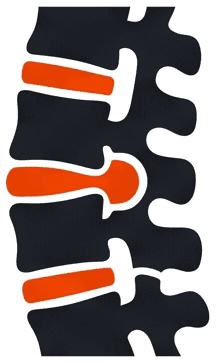
The discs between the spinal bones are sensitive to pressure and position. For some people, lying flat or on one side changes the pressure on an irritated disc, and the ache may spread into the buttock or thigh. Our post on herniated versus bulging discs and our herniated disc page describe what that can look like.
An irritated nerve
When a nerve in the low back is irritated, lying down can bring on pain, tingling, or numbness that travels into the leg. That pattern is often called sciatica, and it deserves a closer look if it keeps returning.
Muscle tension and a busy nervous system
Stress, a hard workout, or a long day on your feet can leave back muscles guarded. When your nervous system stays on high alert, the back can feel tight and achy even when you are trying to relax.
What the Pattern of Your Pain May Tell You
These are general clues, not a diagnosis:
- Aching that builds the longer you lie still, then eases once you get up and move: often linked to stiffness, mattress support, or position.
- Pain that is worse flat on your back and better with your knees bent: may reflect tight hip flexors or irritated joints.
- Pain that is worse on one side when you roll onto it: may involve the SI joint, a hip, or a lower spinal joint on that side.
- Pain that spreads into the buttock or leg: can point toward nerve irritation.
- Pain that eases when you change position: useful information, since it suggests a mechanical source.
- Pain that is steady, wakes you at night, and does not change no matter how you lie: is worth getting checked rather than waiting out.
Because these patterns overlap, a hands-on evaluation is more useful than guessing. Our lower back pain page explains how the many sources of low back discomfort fit together.
Positions and Setup Ideas That May Help
There is no single perfect sleep position. Small adjustments are the easiest place to start, and each person and case is different.
- On your back: Try a pillow under your knees so the hips and low back can settle into a more neutral curve.
- On your side: Place a pillow between your knees to keep the pelvis from twisting, and choose a head pillow that keeps your neck in line with your spine.
- On your stomach: This position tends to arch the low back and turn the neck, so many people feel better moving away from it. If you are not ready to switch, a thin pillow under the hips may reduce the arch.
- Check your mattress. If it sags, creaks, or leaves you feeling worse in the morning, it may be time to reconsider it. Medium support suits many people, but comfort matters more than a label.
- Wind down your spine first. A few minutes of easy movement or a warm shower before bed can leave muscles less guarded. Our guide to ice or heat for back pain can help you choose.
- Roll, do not twist. Getting in and out of bed by rolling onto your side and pushing up with your arms spares the low back.
If a change makes your pain sharper, stop and try something else. These are general ideas, not a plan for any one person.
When to Get Prompt Medical Care
Most back pain that shows up in bed is mechanical, but a few signs should not wait. Seek urgent medical attention if your back pain comes with:
- Loss of control of your bladder or bowels, or numbness in the groin or inner thighs.
- Progressive weakness in a leg, or a foot that drags.
- Fever, unexplained weight loss, or a history of cancer.
- Severe pain after a fall, accident, or injury.
- Pain that is relentless, wakes you repeatedly, and does not change with position.
If any of these fit, call your medical doctor or go to the emergency department right away. Our post on signs your back pain is not just muscular covers more of what to watch for.
How Our Team Looks at Back Pain That Shows Up in Bed
At The Roots Health Centers in Lakewood Ranch, we start by listening: when the pain shows up, how you sleep, what you do all day, what helps, and what does not. From there, our team performs a hands-on exam and a neurological evaluation to see how your spine, pelvis, hips, and nervous system are moving and responding, and we take any necessary X-rays when they are clinically indicated.
We look at the whole chain rather than only the sore spot. Gentle chiropractic care is one way we support spinal motion and how the body regulates itself, alongside sleep-position and movement guidance you can use at home. Our back pain page gives the broader picture of how we think about low back concerns. If something outside our scope turns up, we will refer you to the right provider.
Frequently Asked Questions
Why does my back hurt more when I lie down?
When you lie down, muscles that were busy all day relax and the signals from irritated joints, discs, or nerves become easier to notice. The surface and pillow you use can also change how your spine and pelvis are loaded.
Why does my lower back hurt when I lie flat on my back?
Lying flat can increase the arch in the low back when the hip flexors are tight, which can compress the small joints there. Many people find a pillow under the knees makes the position more comfortable.
What is the best way to lie down with back pain?
It depends on the person. Back sleepers often like a pillow under the knees, and side sleepers often like a pillow between the knees. The best position is one that keeps your spine in a neutral line and lets you shift comfortably during the night.
Could my mattress be causing my back pain?
It can contribute. A mattress that sags or feels too hard for your body can leave the spine out of line for hours. If your pain is worst on waking and eases as you move around, the mattress is worth considering.
Can a chiropractor help with back pain at night?
Many people with nighttime back pain visit a chiropractor to have their spinal and pelvic motion checked and to get personalized guidance. We cannot promise any particular outcome, and we will refer you to the right provider if something outside our scope is going on.
Ready to Understand Why Your Back Hurts at Night?
If your bed has turned into a place you dread, you deserve an explanation rather than another restless night of guessing. Come in for a complimentary consultation, meet the team, tour the clinic, and learn our approach, with no commitment to start care. Book your complimentary consultation and we will take it from there.
Conditions We Treat

Back Pain
Corrective chiropractic care that addresses the structural root cause of back pain — not just masking symptoms with medication.
Herniated Disc
Non-surgical care for herniated and bulging discs using FDA-cleared spinal decompression, corrective chiropractic, and integrated soft-tissue therapies.
Services Related to This Post
Keep Reading
Related articles
Best Sleep Position for Spine Health: A Chiropractor's Guide
Back, side, or stomach? The best sleep position for spine health depends on your body — but some positions protect your spine while others quietly damage it. Here's what our team recommends.
Read articleIce or Heat for Back Pain? A Simple Guide to Choosing
Standing in front of the freezer wondering whether to grab the ice pack or the heating pad? Here's a plain-English guide to which one fits your back pain right now, and how to use either one safely.
Read article