

Flat Feet and Knee or Back Pain in Adults: Is There a Connection?
If you have flat feet and your knees or low back ache by the end of the day, it's reasonable to wonder whether the two are connected. They can be. The short answer: flat feet change how your foot absorbs and spreads force with every step, and that can alter how the knee, hip, and low back share the load, which may add to pain for some adults. It isn't true for everyone, though. Plenty of people have flat feet and never have a problem, and plenty of knee and back pain has nothing to do with the arches. Below, we'll explain what flat feet are, how the foot can influence the joints above it, the clues worth noticing, when to get something checked right away, and how a careful evaluation looks at the whole picture. This is educational and not a diagnosis.
What Flat Feet Actually Are
Flat feet simply means the arch along the inside of the foot is low or has dropped so that more of the sole touches the ground. Two patterns are worth telling apart.
Flexible flat feet
With flexible flat feet, an arch appears when you sit, or when you rise up onto your toes, and flattens when you stand. This pattern is common, often lifelong, and frequently painless. Many people go decades without a second thought about it.
Rigid or acquired flat feet
Sometimes an arch that used to be there gradually lowers in adulthood. Changes in the tendon that helps hold up the arch, arthritis in the foot, a past injury, added body weight, or the joint changes that come with pregnancy can all play a part. If the arch stays flat even when you rise onto your toes, or the foot feels stiff or painful, it's worth having someone take a careful look.
How the Foot Can Influence the Knee, Hip, and Back
The foot is the base of everything above it. When the arch lowers and rolls inward as you walk, the shin tends to rotate inward with it. That can nudge the knee toward the midline, change how the thigh bone sits in the hip, and tilt the pelvis a little. Each joint up the chain may then adjust to make up the difference, and the muscles around the hips and glutes can end up working differently than they would otherwise.
Think of it like a building with one footing slightly out of level: the structure above can usually adapt, but over thousands of steps a day, those small adaptations can add up for some people. We want to be straightforward here: research on how much flat feet contribute to knee and back pain is mixed. Foot position is one piece of a bigger picture that also includes strength, mobility, past injuries, footwear, work, and activity habits.
Flat Feet and Knee Pain
Knee discomfort that shows up at the front of the knee, along the inner side, or after a long day on your feet is one of the patterns that sometimes goes along with a collapsing arch. When the knee drifts inward with each step, the tissues around it can be asked to handle forces from a slightly different direction. You can read more about the joint itself on our knee pain page.
Because the same arch-and-knee relationship comes up in runners and active adults, our posts on chiropractic care for knee pain and IT band syndrome versus runner's knee describe overlapping patterns and how to tell them apart.
Flat Feet and Low Back Pain
The low back sits at the other end of the chain. If the foot and knee are adapting on one or both sides, the pelvis and low back may be asked to adapt too. Some adults notice an ache across the low back or one side of the pelvis that builds with standing and walking and eases when they sit. That pattern shows up in everyday back pain and in the lower back pain that gets worse as the day goes on.
It's also easy for several things to overlap. Weak hip muscles, uneven leg lengths, and tight hips can all add to the same ache, which is why our posts on weak glutes and low back pain and leg length differences and back pain are useful companions to this one.
Clues Your Feet May Be Part of the Story
No single sign proves a connection, but these are worth noticing:
- Shoes that wear down mostly along the inside edge of the heel or sole
- Ankles that seem to roll inward when you stand or walk
- An achy or tired feeling along the arch, especially late in the day
- Heel pain first thing in the morning, which can overlap with plantar fasciitis
- Knees that tend to angle inward when you squat or step down
- Pain that feels better in supportive shoes and worse barefoot or in flat sandals
- A sense that your balance or stability is off on uneven ground
If several of these sound familiar, our page on weak ankles and arches describes the kinds of patterns we commonly see in the office.
When It May Be Something Else
Not every sore knee or back traces to the feet, and some symptoms need prompt medical attention. Seek care right away if you notice sudden swelling, redness, or warmth in the foot or leg, a foot or knee that can't bear weight, a sudden change in the shape of the foot after an injury, new numbness or weakness in the leg, fever along with back pain, or any loss of bladder or bowel control. Tingling or numbness in the feet that doesn't come from pressure is also worth mentioning, and you can read about those patterns on our numbness and tingling page. These are not things to work around.
How a Careful Evaluation Looks at the Whole Chain
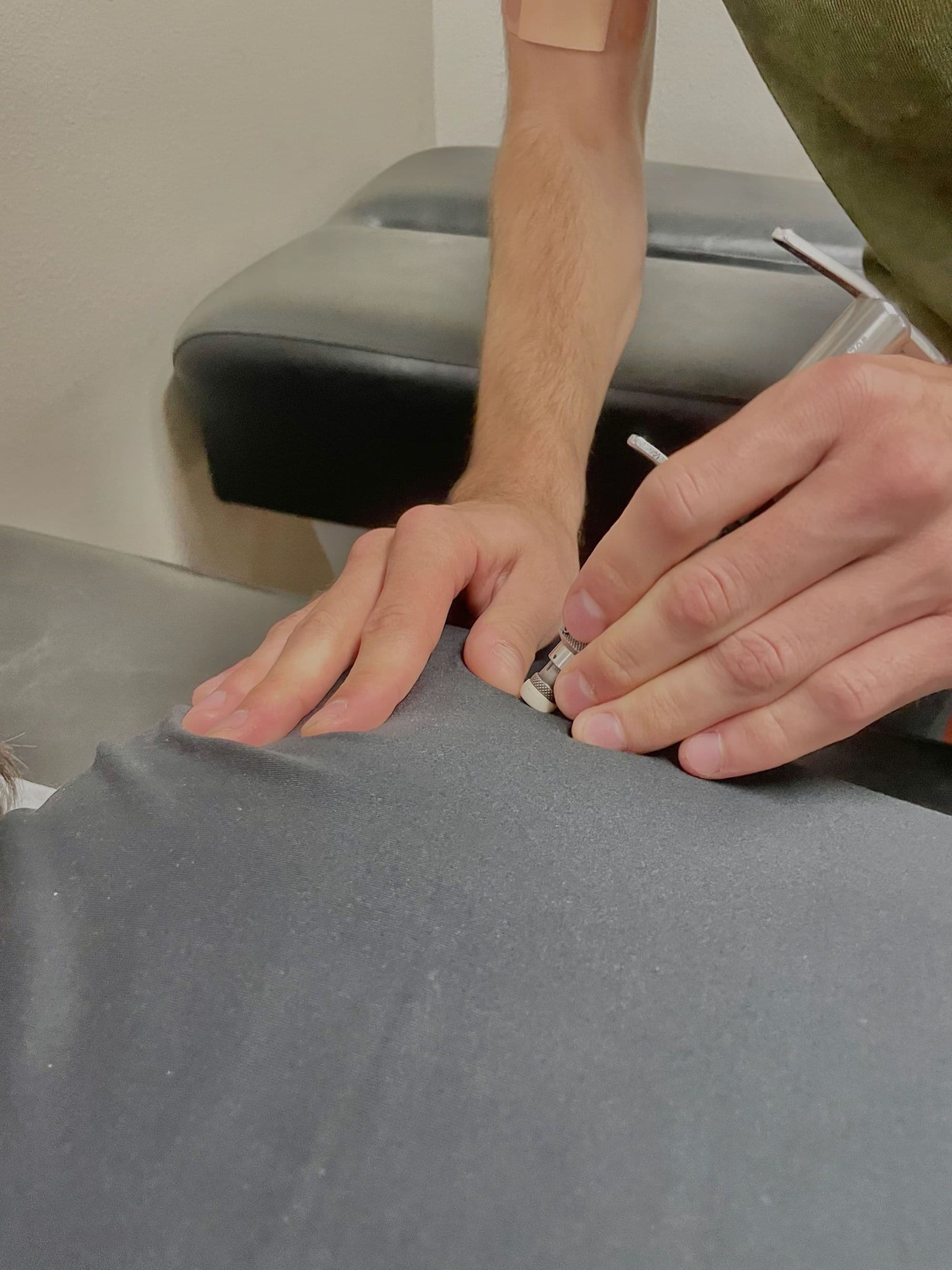
At The Roots Health Centers in Lakewood Ranch, we start by listening: where it hurts, when it started, what makes it better or worse, and the shoes, work, and activities that fill your week. Then our doctors look beyond the sore spot. We watch how you stand and walk, how your ankles, knees, hips, and pelvis move together, how steady you are on one leg, and how the foot itself sits and moves. We also pay attention to the nervous system, because muscles and joints coordinate best when the signals reaching them are clear. When it would add useful information, we may recommend any necessary X-rays.
What we find shapes the plan. A chiropractic approach may include gentle adjustments using Torque Release Technique to help the joints of the foot, ankle, hip, and spine move well, along with movement and strengthening guidance suited to you. If it looks like an arch support or a specialist's opinion would add value, we'll say so and work alongside your podiatrist or physician. Dr. Logan Swaim and our team explain what we see in plain language, make no promises about outcomes, and know that each person and case is different.
Everyday Habits That May Help
- Wear supportive shoes most of the day. Going barefoot or wearing flat sandals on hard floors can leave a low arch with less help.
- Rotate your footwear. Different shoes load your feet a little differently, and checking the wear pattern tells you something useful.
- Build your hips and glutes. Gentle strengthening, done comfortably, may help the knees and pelvis stay steadier.
- Train the small muscles of the foot. Slowly gripping a towel with your toes or rising onto the balls of your feet are simple starts, if they feel comfortable.
- Vary your surfaces and take breaks. Long stretches on hard floors tire the arches, so sit or shift when you can.
- Pay attention to pain signals. If something increases your pain, stop and ask a professional to watch how you move.
These are not a substitute for an evaluation, but they are reasonable places to begin.
Frequently Asked Questions
Can flat feet cause knee pain?
They can contribute for some adults. When the arch lowers, the shin and knee may rotate inward, which changes how the knee carries load. It's rarely the only factor, so the rest of the leg and your activity habits matter too.
Can flat feet cause lower back pain in adults?
Possibly. Changes in the foot can travel up the chain and influence the hips and pelvis, which may add to low back aching in some people. Research is mixed, and many people with flat feet have no back pain at all.
Do adults with flat feet need arch supports?
Not always. Some people feel better with supportive shoes or inserts, and others do fine without them. A careful look at how you stand and move helps you and your provider decide what makes sense.
Can a chiropractor help with flat feet?
A chiropractor can look at how your feet, ankles, knees, hips, and spine are working together and whether joint movement or muscle balance may be adding to your pain. We take a personalized approach, can't promise specific results, and will refer you when someone else is a better fit.
Want Someone to Look at the Whole Picture?
If your knees or back keep complaining and you've wondered about your feet, we'd be glad to take a careful look. Book a complimentary consultation at The Roots Health Centers in Lakewood Ranch. We'll listen, explain what we see, and talk through next steps that make sense for you. Learn more about our chiropractic care.
Conditions We Treat
Knee Pain
Non-surgical knee pain relief using knee decompression, shockwave therapy, red light therapy, and corrective chiropractic — addressing the mechanical root cause of joint dysfunction.
Back Pain
Corrective chiropractic care that addresses the structural root cause of back pain — not just masking symptoms with medication.
Plantar Fasciitis
Drug-free plantar fasciitis care combining shockwave therapy, red light therapy, and biomechanical correction — most patients see meaningful improvement within three visits.
Services Related to This Post
Keep Reading
Related articles
Achilles Tendonitis vs. Plantar Fasciitis: How the Two Connect
Heel and ankle pain often show up together for a reason. Here's the mechanical connection between Achilles tendonitis and plantar fasciitis, and what helps both.
Read articleChiropractic Care for Knee Pain: When It Helps, and When to Look Further
Knee pain isn't always a knee problem. Here's how hip and spine mechanics factor in, and when chiropractic care is (and isn't) the right first step.
Read article