

Jaw Clicking: Why Your Jaw Pops and When to Get It Checked
You open your mouth to take a bite of a sandwich and there it is again: a click, a pop, maybe a little grinding sound right in front of your ear. Jaw clicking is one of the most common things people mention in passing at our Lakewood Ranch office, usually with a shrug and a "that's normal, right?" The short answer: a jaw that clicks without pain is very common and is often not a concern on its own. Jaw clicking usually comes from the small disc inside the temporomandibular joint (TMJ) shifting slightly out of its ideal track as you open and close. When clicking comes with pain, locking, headaches, or neck tension, it is worth a closer look. Below, we cover why jaws click, when to get checked, the neck and posture connection most people never hear about, and simple habits that may help. This is educational information, not a diagnosis.
What Is Actually Making the Click?
Your jaw joint is one of the busiest joints in your body. It moves every time you talk, chew, swallow, and yawn. Each side has a rounded knob of the lower jaw (the condyle) that glides forward along the skull, with a small cushion of cartilage, called the articular disc, riding between the two bones.
When everything moves in sync, the disc stays seated on the condyle and you hear nothing. Jaw clicking usually means that rhythm is a little off:
- The disc slips forward and pops back. The condyle slides past the edge of the disc as you open, then catches it again with a click. Clinicians call this disc displacement with reduction. It is the most common source of a clicking jaw.
- The muscles are pulling unevenly. The chewing muscles on one side may be tighter or more active than the other, so the joint tracks off-center. That is a big reason so many people search "why is my jaw clicking on one side."
- The joint surfaces are a little rough. Wear and tear over the years can create a grinding or gritty sound (crepitus) rather than a clean click.
- Ligaments are looser than average. Some people simply have more flexible joints, and the jaw is no exception.
A click by itself does not tell you which of these is happening. The pattern around it does.
Why Does My Jaw Click When I Chew?
Chewing is when the jaw does its most repetitive, forceful work, so it is also when clicking tends to show up. A few everyday habits make it more likely:
- Chewing mostly on one side. If a tooth has been sensitive, you may have shifted to the other side without noticing, which loads one joint more than the other.
- Gum, tough meats, crusty breads, and bagels. Long, heavy chewing sessions tire the jaw muscles.
- Clenching or grinding. Many people clench during the day while concentrating or grind at night without knowing it. Waking up with a sore jaw or a dull headache at the temples is a common clue.
- Wide yawns and big bites. Opening very wide can carry the condyle past the disc and produce the classic click.
If your jaw clicks when you open your mouth wide but is quiet during normal speech, that often points to the disc-and-condyle timing described above.
When Should Jaw Clicking Be Checked?
A painless click that has been the same for years is usually not urgent. It is worth booking an evaluation when you notice:
- Pain in the jaw, in front of the ear, or in the temples
- A jaw that catches, locks open, or locks closed, even briefly
- Trouble opening your mouth fully or a jaw that shifts to one side as it opens
- Headaches, ear fullness, or ringing that seems to travel with jaw symptoms
- Neck pain or stiffness that flares at the same time
- Clicking that started after a fall, a car accident, or dental work
Seek emergency care right away if jaw pain comes with chest pressure, shortness of breath, sweating, or pain spreading into the arm, since jaw pain can be a warning sign of a heart problem. The same goes for a jaw that is locked after an injury or sudden facial swelling with fever.
Your dentist is a great partner for jaw clicking, particularly for bite questions or nighttime grinding. Many people also benefit from having the neck and posture side of the picture looked at, which is where we come in.
The Neck and Posture Connection
Here is the part most people never hear about. Your jaw does not work alone. The muscles that open and close it are closely linked to the muscles at the top of the neck, and the nerves that control them share pathways with the upper cervical spine.
When your head drifts forward, as it does over a phone, a laptop, or a long drive down I-75, the lower jaw is pulled slightly back and the chewing muscles have to work harder just to keep the mouth closed. Over time, that forward-head posture can change how the condyle tracks in the joint. This is one reason tech neck and jaw clicking so often show up together.
It works the other way too. A jaw that is tense and guarded all day can feed tension into the upper neck and the base of the skull. Many people with clicking jaws also deal with neck pain and tension-type headaches. Looking at the jaw, neck, and posture together tends to give a much clearer picture than looking at the jaw alone.
How to Stop Jaw Clicking: Habits That May Help
You cannot always make a click disappear, and a painless click does not need to vanish to be fine. The goal is a jaw that moves comfortably and is not overloaded. These simple habits may help:
- Rest position check. Lips together, teeth slightly apart, tongue resting gently on the roof of your mouth just behind your front teeth. Check in a few times a day, especially at your desk.
- Cut back on gum and very chewy foods for a while and cut food into smaller pieces.
- Chew on both sides so one joint is not doing all the work.
- Support big yawns. Rest a fist lightly under your chin when you yawn so the jaw does not open past its comfortable range.
- Mind your screen height. Raise your laptop or monitor so your head stays over your shoulders rather than in front of them.
- Warmth before stretching. A warm compress on the jaw muscles for a few minutes can make gentle opening and closing feel easier.
- Notice clenching. A small sticky note on your monitor that says "teeth apart" sounds silly, but it works for many people.
- Ask your dentist about nighttime grinding if you wake with a sore jaw.
If clicking is on one side only, pay attention to which side you sleep on and which side you chew on. Small one-sided habits add up.
What an Evaluation at The Roots Looks At
At The Roots Health Centers in Lakewood Ranch, we see TMJ and jaw pain as part of a bigger nervous-system and posture picture, not just a noisy joint. Your first visit starts with a conversation about when the clicking began, what makes it worse, and what else is going on, from headaches to sleep to stress.
From there, our team looks at how your jaw opens and tracks, how your upper neck moves, and how your head sits over your shoulders. A neurological evaluation helps us understand how your nervous system is handling stress and tension, and any necessary X-rays are taken only when they are clinically indicated. Dr. Logan Swaim and our team then explain what we found in plain English.
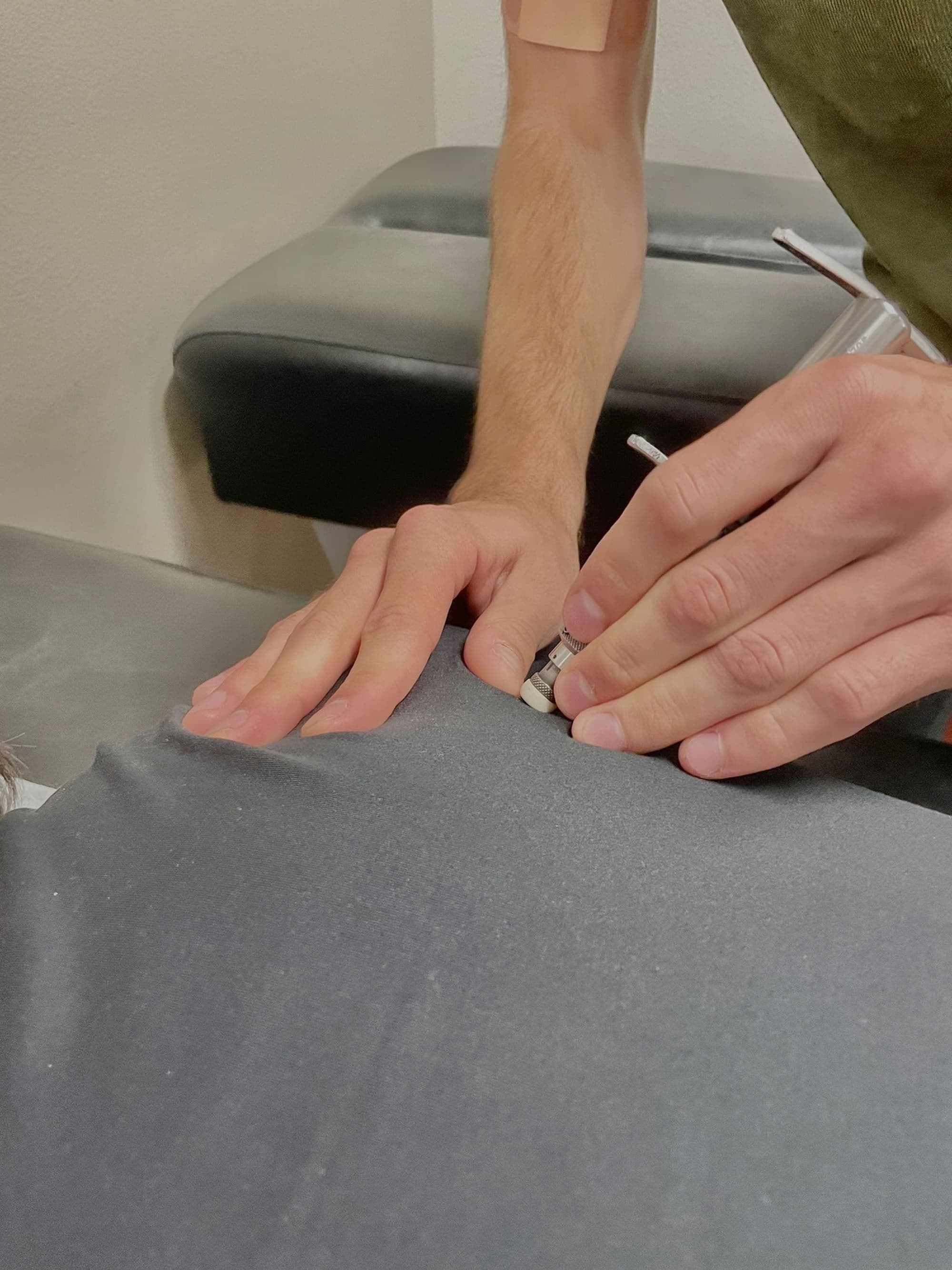
If chiropractic care is a fit, it may include gentle adjustments using Torque Release Technique, which uses a low-force instrument rather than twisting or cracking, along with posture and home-care guidance. Each person and case is different, so we take a personalized approach and talk through options together. If anything points to a dental, ear, or medical concern, we will tell you and help you find the right provider.
Frequently Asked Questions
Why is my jaw clicking all of a sudden?
A new click often follows a change in how the jaw is being used: more clenching during a stressful stretch, a new habit like chewing gum, dental work, a big yawn, or a bump to the face. If a new click comes with pain or locking, have it checked.
Why is my jaw clicking on one side?
One-sided clicking usually means that joint is moving or being loaded differently, often from chewing on one side, sleeping on that side, or uneven muscle tension that can be linked to neck posture.
Is jaw clicking bad?
Painless clicking is common and often harmless on its own. Clicking with pain, locking, limited opening, or frequent headaches is a sign the jaw is under more strain and is worth an evaluation.
How do you stop jaw clicking?
Start with the basics: keep teeth apart at rest, chew on both sides, limit gum, support yawns, and keep screens at eye level. If clicking continues with pain, an evaluation of the jaw, neck, and posture can help you understand what is driving it.
Can a chiropractor help with jaw clicking?
Chiropractic care may help by addressing the neck, posture, and muscle tension that influence how the jaw moves. It works well alongside your dentist rather than replacing dental care.
Ready to Find Out Why Your Jaw Clicks?
If your jaw has been clicking, catching, or aching along with neck tension or headaches, you do not have to keep guessing. Book a complimentary consultation with our team in Lakewood Ranch, meet the doctors, and get a clear explanation of what your jaw and neck are telling you.
Conditions We Treat

TMJ & Jaw Pain
Upper cervical and cranial adjustments that address the structural causes of TMJ dysfunction and jaw pain.

Neck Pain
Precise cervical adjustments and decompression that restore alignment, reduce nerve pressure, and eliminate chronic neck pain at its source.
Headaches & Migraines
Neurologically-focused care targeting the spinal misalignments that trigger tension headaches and debilitating migraines.
Services Related to This Post

Keep Reading
Related articles
TMJ Pain: Why the Dentist Isn't Always the Right First Stop
Jaw pain, clicking, grinding, headaches from your jaw — the problem often starts in the upper neck, not the jaw itself.
Read articleCervicogenic Headaches: When a Headache Is Actually a Neck Problem
Some headaches don't start in your head at all — they start in your neck. Here's how to recognize a cervicogenic headache, what causes it, and how chiropractic care may help.
Read articleNeck Cracking: Why It Happens and Whether It Is Harmful
Neck cracking is common and usually harmless, but habitual forceful cracking is worth a second look. Here is why your neck pops, when to be cautious, and what a gentler approach looks like.
Read article