

Headache at the Base of the Skull: Common Causes and When to Get Help
It starts as a dull ache where your head meets your neck, and by mid-afternoon it has wrapped up and over one side of your head. A headache at the base of the skull is one of the most common headache patterns we hear about, and the short answer is that it often begins in the upper neck rather than the head itself. Tight muscles, stiff joints, irritated nerves, and long hours with your head tipped forward can all send pain up to the base of the skull. Below, we walk through the usual causes, how to read your pattern, the red flags that need urgent care, and what a thorough exam looks at here in Lakewood Ranch. This is educational information, not a diagnosis.
Why the Base of the Skull Hurts
The base of the skull is where the top of your spine, the upper cervical joints, meets the head. Small muscles called the suboccipitals sit here, along with nerves that travel up the back of the head toward the scalp. Your brain itself does not feel pain; the aching usually comes from the muscles, joints, and nerves around it.
Because these structures share nerve pathways with the head, trouble in the neck can be felt as a headache. That is the idea behind what is called a cervicogenic headache, which we cover in our post on the neck and headache connection. Pain at the base of the skull is often a clue that the neck deserves attention.
Common Causes of a Headache at the Base of the Skull
Tension-type headaches
This is the classic band of tightness that starts in the neck muscles and spreads forward. Stress, poor sleep, clenched jaws, and tense shoulders all feed it. Our guide to tension headaches explains the pattern in more detail.
Forward head posture and screen time
For every inch your head drifts forward, the muscles at the back of the neck work harder to hold it up. Hours at a laptop or phone can leave those muscles overworked and sore by evening. We see this often in people with tech neck, and it is a common reason for a headache that builds through the workday.
Stiff joints in the upper neck
When the small joints at the top of the spine stop moving well, nearby muscles guard and tighten. Pain often shows up on one side, may worsen when you turn your head, and can come with a stiff neck. Our page on neck pain covers this picture.
Irritated nerves at the back of the head
The occipital nerves run from the upper neck up the back of the scalp. When they are irritated, people describe sharp, zapping, or burning pain, sometimes with a tender scalp. Our post on occipital neuralgia goes through the details.
A pinched nerve in the neck
A nerve root that is squeezed lower in the neck can refer pain upward and sometimes into the shoulder or arm. See our overview of a pinched nerve for how that tends to feel.
Sleep position and pillows
Waking up with the ache is a hint. A pillow that props the head too high or too low can leave the neck bent for hours. We talk about this in our post on waking up with a stiff neck.
Past injuries
A fall, a car accident, or a sports hit can strain the upper neck. Sometimes the headache appears days after the event. Our post on whiplash and delayed symptoms explains why.
Reading Your Pattern
A few observations can help you and any provider narrow things down. It helps to jot these down for a few days:
- Which side? One-sided pain at the base of the skull is common with neck-related headaches. Both sides, like a tight band, points more toward tension.
- What makes it worse? Turning your head, looking down at a phone, or sitting at a desk all day can tell a story.
- When does it show up? Morning headaches suggest sleep position; late-day headaches suggest posture and workload.
- Is there a stiff neck? Limited neck motion along with the headache raises the neck as the source.
- Any arm symptoms? Tingling or numbness into the arm or hand suggests a nerve root may be involved.
- Any dizziness or visual changes? These deserve a prompt exam and are covered in the red flags below.
The pattern is not a diagnosis, but it gives a careful clinician a better place to start.
Red Flags: When a Headache Needs Urgent Care
Most headaches at the base of the skull are musculoskeletal, but a few patterns are not. Call 911 or go to the nearest emergency room if you have:
- A sudden, severe headache that feels like the worst of your life
- Headache with fever, a stiff neck you cannot bend forward, and sensitivity to light
- Sudden weakness, numbness, or drooping on one side of the face or body
- Trouble speaking, confusion, vision loss, or double vision
- Sudden loss of balance, severe dizziness, or trouble walking
- A headache after a significant fall, car accident, or blow to the head
- Chest pressure or shortness of breath along with the headache
Also see a medical provider promptly if headaches are new after age 50, are getting steadily worse, wake you from sleep, or come with unexplained weight loss. Neck movement should never be forced or twisted when any of these signs are present.
Gentle Things That May Help in the Meantime
Every person is different, so treat these as general ideas rather than a plan.
- Raise your screen so your eyes land at the top third of the display and your head can sit over your shoulders.
- Take posture breaks. Stand, roll your shoulders, and gently look side to side every half hour or so.
- Use warmth. A warm compress on the back of the neck may ease tight muscles. Skip it if your skin is numb or you have circulation concerns.
- Check your pillow. Your neck should stay roughly in line with your spine when you lie down.
- Stay hydrated and keep regular meals. Skipped meals and dehydration can make headaches worse for some people.
- Notice stress. Jaw clenching and shoulder shrugging under pressure feed the cycle. Our guide to desk stretches offers easy movements to try.
If the headaches keep returning, that is a good reason to have the neck looked at instead of just managing each episode.
How a Chiropractic Exam Approaches This
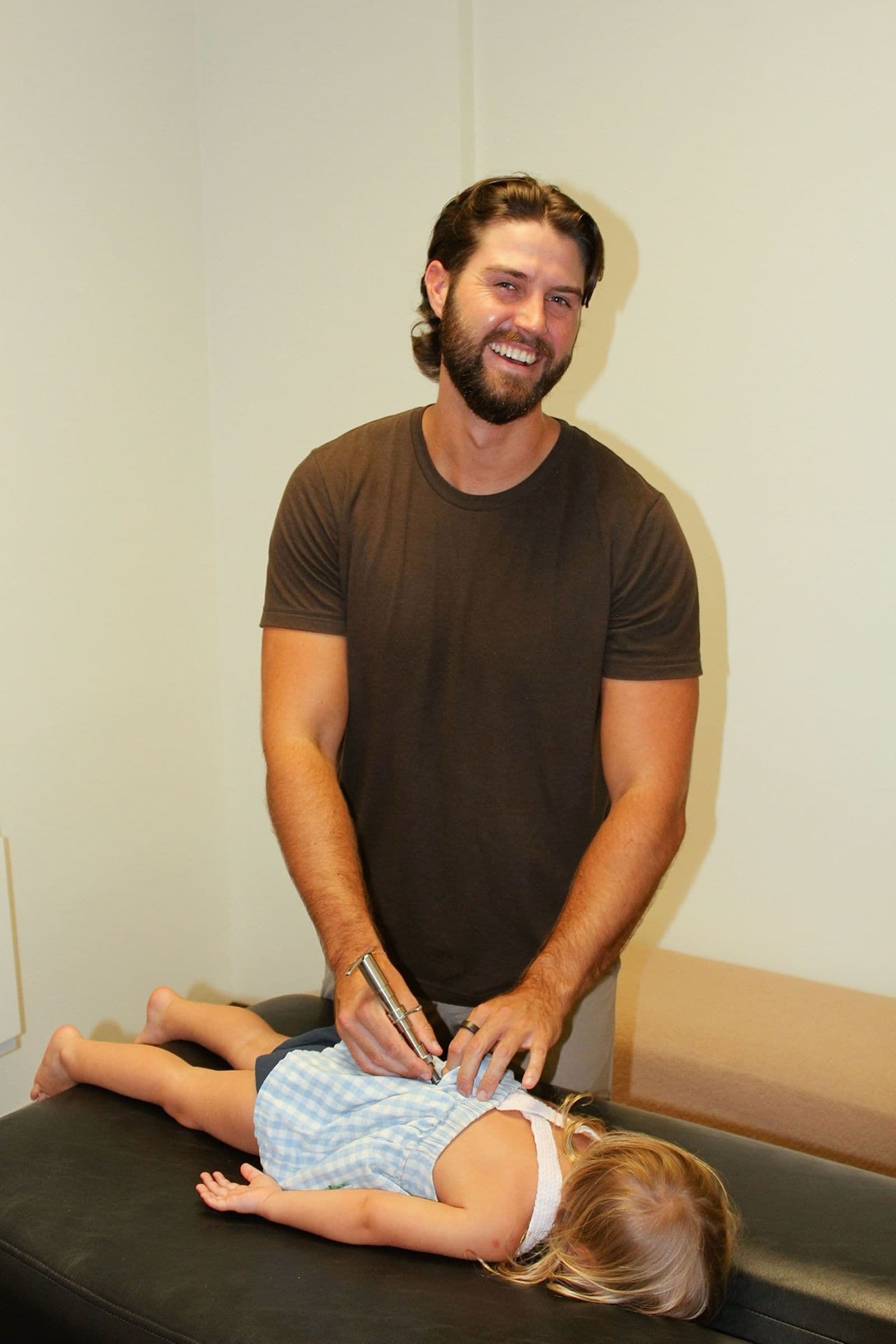
At The Roots Health Centers in Lakewood Ranch, we start with your story: when the headaches began, what you were doing, what eases them, and what makes them worse. Then we look at how your neck and upper spine move, how your posture holds up, and whether any nerve signs show up. When it is appropriate, our team also completes a neurological evaluation and necessary X-rays. If anything on that exam points to a problem outside our scope, we refer you to the right provider.
When a neck-related cause is likely, our doctors use gentle, low-force care built around Torque Release Technique. There is no forceful twisting, and we do not promise a specific outcome or timeline, because every case is different. You can read more about how we approach headaches and migraines and our chiropractic care, or browse our headache symptom page.
Frequently Asked Questions
What causes a headache at the base of the skull?
Common causes include tight neck muscles, stiff joints in the upper neck, irritated occipital nerves, posture strain from screens, and sleep position. A thorough exam helps sort out which is most likely for you.
Why do I get headaches at the base of my skull when I wake up?
A pillow that holds your neck bent, or sleeping with your head twisted, can leave the upper neck sore by morning. Clenching your teeth overnight can add to it.
Is a headache at the base of the skull serious?
Usually it is musculoskeletal, but a sudden severe headache, fever with a stiff neck, weakness, speech trouble, or vision changes need emergency care right away.
How do I get rid of a headache at the base of the skull?
Gentle posture changes, warmth, movement breaks, and a better pillow may help ease it. If it keeps coming back, have the neck evaluated so the cause is addressed, not only the symptom.
Can a chiropractor help with headaches at the base of the skull?
When the headache is tied to the neck, a chiropractic exam can look at joint motion, posture, and nerve signs, and offer gentle care when it is appropriate. We do not promise specific results.
Ready to Find Out Where Your Headaches Start?
If the ache at the base of your skull keeps coming back, it is worth understanding why. Book a consultation and our team will take a careful look at your neck, your posture, and your story.
Conditions We Treat
Headaches & Migraines
Neurologically-focused care targeting the spinal misalignments that trigger tension headaches and debilitating migraines.

Neck Pain
Precise cervical adjustments and decompression that restore alignment, reduce nerve pressure, and eliminate chronic neck pain at its source.

Tech Neck
Forward head posture from daily screen use shifts the mechanical load on your cervical spine, compresses nerves, and drives chronic neck pain, headaches, and upper back tension. Corrective care addresses the structural change — not just the symptoms.
Services Related to This Post

Keep Reading
Related articles
Occipital Neuralgia: Headaches at the Base of the Skull
That sharp, electric pain radiating from the base of your skull could be occipital neuralgia — not just another headache. Here's what's actually happening and what may help.
Read articleCervicogenic Headaches: When a Headache Is Actually a Neck Problem
Some headaches don't start in your head at all — they start in your neck. Here's how to recognize a cervicogenic headache, what causes it, and how chiropractic care may help.
Read article