

Lower Back Pain on the Right Side: Causes, Red Flags, and What Helps
Lower back pain on the right side is one of the most common complaints we hear in Lakewood Ranch, and it usually leaves people with one question: is this my back, or is something else going on? The short answer is that most one-sided lower back pain comes from the muscles, joints, discs, or nerves of the lower spine and pelvis. A smaller share comes from organs that sit nearby, such as the right kidney, the appendix, or the gallbladder. Below, we walk through the red flags first, then the common causes, how your pattern offers clues, and what a thorough evaluation looks at. This is educational information, not a diagnosis.
First, the Red Flags: When Right-Side Back Pain Needs a Doctor Today
Some causes of right-sided lower back pain have nothing to do with the spine and need medical care quickly. Go to urgent care or the emergency room, or call 911, if your pain comes with:
- Fever, chills, or burning with urination, which can point to a kidney infection
- Severe, wave-like pain that moves toward the groin, or blood in the urine, which can point to a kidney stone
- Pain that starts near the belly button and moves to the lower right abdomen, especially with nausea, vomiting, or loss of appetite
- Pain after a hard fall, a car accident, or other significant injury
- Numbness in the groin or inner thighs, or new trouble controlling your bladder or bowels
- Weakness in a leg that is getting worse, or a foot that catches or drags
- Unexplained weight loss, night pain that does not ease with any position, or a history of cancer
If none of these are present and your pain changes when you move, bend, sit, or stand, a musculoskeletal cause is much more likely. That is where the rest of this article comes in.
Why Lower Back Pain Shows Up on One Side
Your lower spine is built in pairs. There is a facet joint on each side of every vertebra, a sacroiliac (SI) joint on each side of the pelvis, and a nerve root leaving the spine on each side at every level. The muscles that hold you upright run in matching left and right columns. When one side is overloaded, irritated, or stiff, the pain often stays on that side.
Daily habits can tip the balance, too. Carrying a child on one hip, sleeping on the same side every night, reaching to the right at a desk, or a golf or pickleball swing that always rotates the same way can all load one side of the lower back more than the other.
Common Causes of Lower Back Pain on the Right Side
Muscle strain or spasm
The most common cause. Lifting, twisting, or a long day of yard work can strain the muscles beside the spine, especially the quadratus lumborum, a deep muscle that connects the pelvis to the lower ribs. Pain is usually achy, worse with certain movements, and sometimes comes with a tight, guarded feeling. Our post on lower back pain when bending over covers this pattern.
Facet joint irritation
The small joints at the back of the spine can become stiff and irritated, causing a sharp or achy pain just to one side of the spine. It often feels worse leaning backward, twisting, or standing for a long time. Our post on facet joint syndrome explains this in more detail.
Sacroiliac (SI) joint dysfunction
Pain low in the back, right over the dimple at the top of the buttock, often points to the SI joint. It may hurt with climbing stairs, rolling in bed, or standing on one leg. See our guide to SI joint pain.
A disc problem or pinched nerve
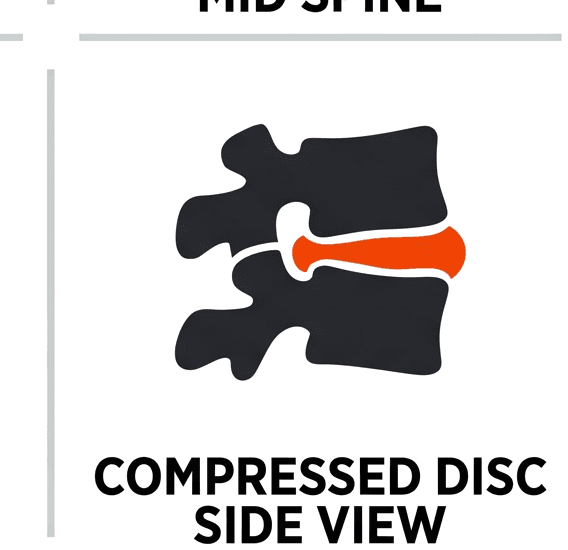
A bulging or herniated disc can press on a nerve root on one side. That can cause back pain along with pain, numbness, or tingling that travels into the buttock or down the leg, a pattern often called sciatica. Sitting and bending forward often make disc-related pain worse.
Hip and pelvic mechanics
A stiff hip, tight hip flexors, or weak glutes can shift how load travels through the lower back. Over time, one side of the back may end up working harder. Our post on tight hip flexors and low back pain explains the connection.
Organ-related causes
The right kidney sits just under the lower ribs on that side, and the appendix, gallbladder, liver, and part of the bowel are nearby. Kidney stones, kidney infections, appendicitis, gallbladder problems, and in women, ovarian or other pelvic conditions can all refer pain to the right side of the back. Pain from an organ usually does not change much with movement or position, and it often comes with other symptoms such as fever, nausea, or changes in urination. Those deserve a medical evaluation first.
Reading Your Pattern
A few observations can help you and your provider narrow things down. Jot them down before your visit:
- Does movement change it? Pain that shifts when you bend, twist, sit, or stand usually points to the muscles, joints, or discs. Steady pain that ignores position raises the question of an organ.
- Where exactly is it? Just beside the spine suggests a muscle or facet joint. Low over the buttock dimple suggests the SI joint. Up under the ribs and toward the side raises the kidney question.
- Does it travel? Pain, numbness, or tingling into the buttock or leg points toward a nerve.
- What makes it worse? Sitting, standing up from a chair, rolling in bed, or coughing each point somewhere different. Our posts on lower back pain when sitting and back pain when coughing or sneezing cover two of these.
- Are there other symptoms? Fever, urinary changes, nausea, or digestive changes belong in the conversation with your medical provider.
Simple Things That May Help in the Meantime
Once the red flags are ruled out, these general ideas may help ease a mechanical right-side backache. Each person and case is different, so stop anything that sharply increases your pain.
- Keep moving gently. Short, easy walks often feel better than long stretches of bed rest. See is walking good for back pain.
- Try heat or ice. Many people find heat soothing for muscle tightness and ice helpful for a fresh flare. Our post on ice or heat for back pain walks through both.
- Break up sitting. Stand and move every 30 to 45 minutes if you work at a desk or drive for long periods.
- Even out your habits. Switch the hip you carry a child on, the shoulder you carry a bag on, and the side you reach toward.
- Check your sleep position. A pillow between the knees when side-sleeping, or under the knees when lying on your back, may ease pressure on the lower back.
- Lift with your legs. Keep loads close to your body and avoid twisting while you lift.
How We Look at Right-Side Lower Back Pain at The Roots
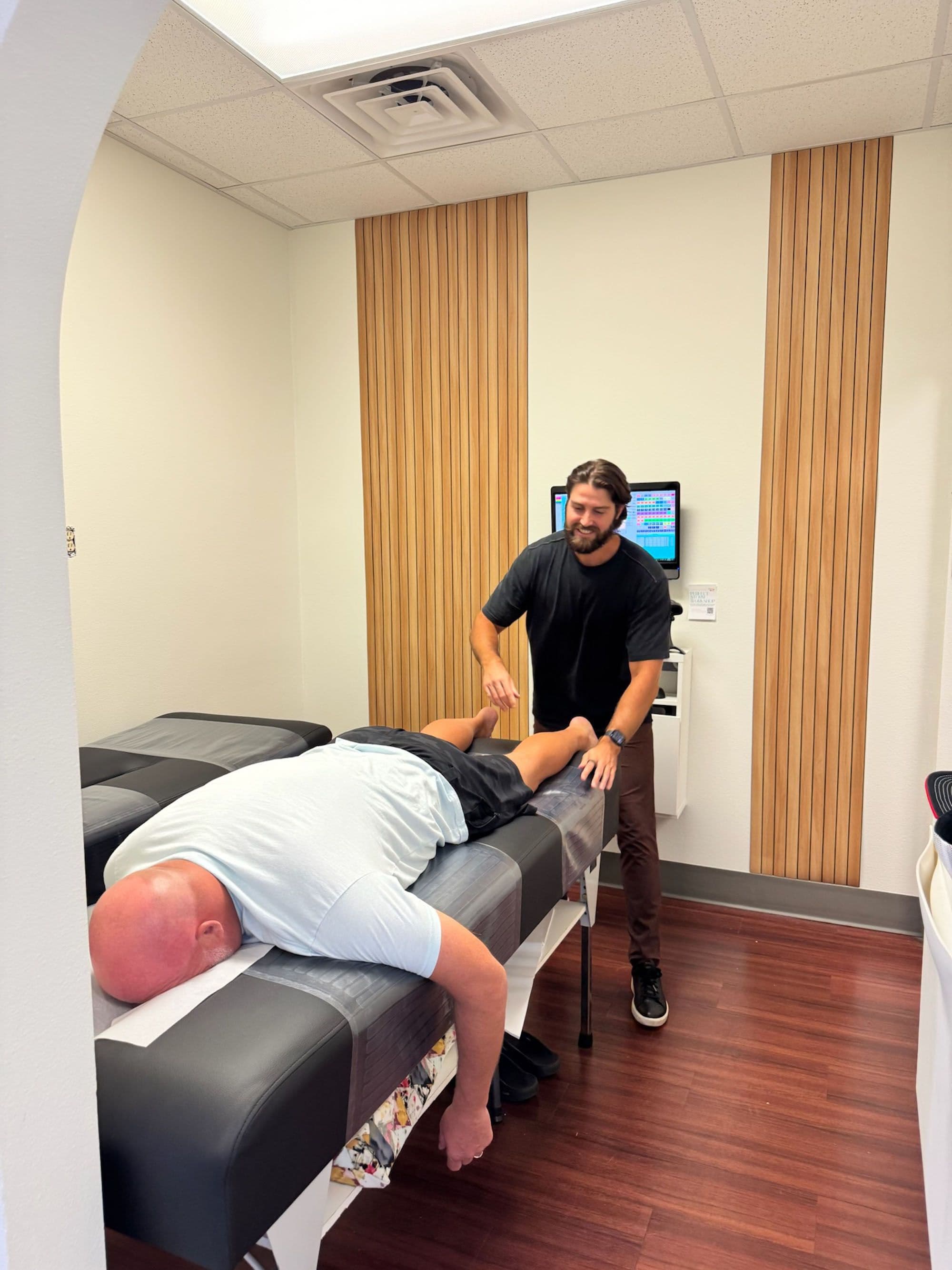
At The Roots Health Centers in Lakewood Ranch, we start by listening. When did the pain begin? What makes it better or worse? Does it travel? If anything in your story sounds like it could involve the kidneys, appendix, or another organ, we point you to the right medical provider first.
When the picture points to the spine and pelvis, your visit includes a consultation, a full neurological evaluation, and any necessary X-rays, so we can see how your spine, pelvis, and nervous system are working together instead of guessing. Our doctors then explain what we found in plain English and talk through options.
If care is a good fit, our chiropractic care uses Torque Release Technique (TRT), a gentle, low-force approach with no twisting or cracking required. For some disc-related cases, spinal decompression may also be part of the conversation. We do not promise a specific result or timeline, because every back is different. You can read more about common patterns on our back pain and lower back pain pages.
Frequently Asked Questions
What causes lower back pain on the right side?
Most often, a strained muscle, an irritated facet or SI joint, or a disc pressing on a nerve. Less often, organs on the right side, such as the kidney or appendix, can refer pain to the back. Pain that changes with movement usually points to a musculoskeletal cause.
What causes lower back and hip pain on the right side?
The SI joint, a pinched nerve, tight hip flexors, or weak glutes can all create pain that spans the lower back and hip on one side. Our post on hip pain and the spine connection explains how the two are linked.
Can constipation cause lower back pain on the right side?
It can contribute. A backed-up bowel can create pressure and a dull ache that some people feel in the lower back. If back pain comes with ongoing digestive changes, talk with your medical provider.
How do I know if right-side back pain is my kidney?
Kidney pain usually sits higher, just under the ribs and toward the side, and does not change much with movement. It often comes with fever, painful or frequent urination, or blood in the urine. Those signs need prompt medical care.
How can I relieve lower back pain on the right side?
Gentle movement, heat or ice, breaking up long periods of sitting, and evening out one-sided habits may help mild, mechanical pain. If it keeps returning or comes with leg symptoms, a thorough evaluation can help find the source.
Get Answers About Your Right-Side Back Pain
One-sided back pain is common, but it is worth understanding rather than just pushing through. If you are in Lakewood Ranch, Bradenton, or Sarasota, book a complimentary consultation and our team will take a careful look at what is going on and talk through your options.
Conditions We Treat
Back Pain
Corrective chiropractic care that addresses the structural root cause of back pain — not just masking symptoms with medication.
Sciatica
Non-surgical care for sciatic nerve pain using spinal decompression, corrective chiropractic, and supporting therapies.
Herniated Disc
Non-surgical care for herniated and bulging discs using FDA-cleared spinal decompression, corrective chiropractic, and integrated soft-tissue therapies.
Services Related to This Post

Keep Reading
Related articles
SI Joint Pain: Causes and Non-Surgical Relief
SI joint pain causes deep low-back and hip pain often mistaken for sciatica. Learn what causes it and how to find relief without surgery.
Read articleFacet Joint Syndrome: Symptoms, Causes, and How to Find Relief
Facet joint syndrome causes stiff, aching back or neck pain that worsens with movement. Learn the causes, symptoms, and non-surgical relief options.
Read article