

Knee Pain Going Down Stairs: Causes and What May Help
You reach the top of the stairs without a thought, then start down and your knee complains: a dull ache around the kneecap, a sharp catch on the inside, or a wobbly feeling like it might give way. If you've been avoiding stairs or gripping the railing a little tighter, you're far from alone. The short answer: knee pain going down stairs is common because descending puts more demand on the knee than almost any other everyday movement, and the cause is often a mix of joint irritation, muscle weakness, and how the hips, feet, and spine are moving above and below the knee. Below, we'll walk through why stairs are so tough on knees, the most common patterns, simple ways to lighten the load, the warning signs that need prompt care, and how we approach knee complaints here in Lakewood Ranch.
Why Going Down Stairs Is Harder on Your Knees Than Going Up
Most people expect climbing to be the hard part, yet many find the descent more painful. Going up, your muscles work to lift you. Going down, they work to lower you in a controlled way, and that braking effort is carried mostly by the muscles on the front of the thigh. Each step asks your knee to absorb your body weight while it bends, and the force through the joint can climb to several times body weight with every step.
That braking job depends on a chain of things working together: strong thigh and hip muscles, a stable foot and ankle, and a pelvis and low back that keep your body centered over the leg. When any link is weak, tight, or irritated, the knee tends to take up the slack. That's why knee pain going down stairs can show up even when the knee itself looks fine on a quick glance.
It's also why the pain can be hard to pin down. The same flight of stairs may feel fine one day and miserable the next, depending on how rested, warmed up, or inflamed the tissues are.
Common Reasons for Knee Pain Going Down Stairs
Irritation behind or around the kneecap
The kneecap glides in a groove at the end of your thighbone. When it tracks slightly off-center, or when the tissues around it are overloaded, you may feel an ache at the front of the knee that flares on stairs, hills, or after sitting a long time. This pattern is especially common in active people and in those who've recently increased their walking, golf, or pickleball. Our guide to chiropractic care for knee pain describes how these patterns are typically sorted out.
Wear and stiffness in the joint
Over the years, the cushioning surfaces in the knee can thin and the joint can become stiffer and more sensitive. People often notice it first on stairs, getting out of a chair, or in the morning. If stiffness is your main complaint, our page on joint stiffness offers a wider view, and our arthritis page covers the broader picture.
Meniscus irritation
The meniscus is the C-shaped cartilage that cushions the knee. A twist, a deep squat, or gradual wear can irritate it, leading to sharp pain on the inner or outer side, catching, or a feeling that the knee won't straighten. We explain this in meniscus tears and non-surgical options.
Weak hips and glutes
If the muscles at the side and back of your hip aren't doing their share, your thigh can drift inward as you step down, which twists the knee. Weak glutes are a frequent partner of knee, hip, and low back complaints alike. See weak glutes and low back pain for how the connection works.
Foot and ankle mechanics
Flat or collapsing arches change how force travels up the leg. If your foot rolls in with each step, the lower leg rotates and the knee can end up working at an awkward angle. Our post on flat feet and knee or back pain in adults goes deeper.
Pelvis and low back influence
A stiff or uneven pelvis and low back can change how your weight lands on each leg. Sometimes what feels like a knee problem has a spine-and-nervous-system component, because the nerves that run to the thigh and knee begin in the low back. That is one reason a full look from the spine down to the feet can be more useful than looking at the knee alone.
Clues That Can Help You Tell the Patterns Apart
No checklist can replace an evaluation, but the way your knee feels can offer helpful hints you can share with whoever examines you:
- Ache at the front of the knee, worse on stairs and after sitting: often points toward the kneecap area and the muscles that guide it.
- Sharp pain on one side, catching, or locking: can suggest the meniscus or another structure inside the joint.
- Stiffness first thing in the morning that eases as you move: is common with wear-related joint changes.
- A feeling of the knee buckling or giving way: may involve muscle weakness, a ligament, or nerve signaling to the thigh muscles, and deserves a prompt look.
- Pain that travels from the low back or hip into the knee: can mean the source isn't the knee at all.
- Pain on the outer side after running or long walks: is often linked with tightness along the outside of the thigh.
Write down what you notice: which stair, which side, what time of day, and what makes it better or worse. That record is surprisingly useful.
Warning Signs: When to Get Checked Promptly
Most stair-related knee aches are uncomfortable rather than dangerous. But please seek medical care promptly, or call 911 when appropriate, if knee pain comes with:
- A knee that is hot, red, or noticeably swollen, especially with fever or chills
- Pain after a fall, twist, or accident, or a knee that cannot bear weight
- A knee that locks and will not straighten, or repeatedly gives way
- Visible deformity of the knee or leg
- Calf pain, swelling, or warmth in one leg, which can signal a blood clot
- New numbness, tingling, or weakness in the leg or foot
Pain that keeps waking you at night or keeps getting worse is also reason enough to be evaluated rather than waiting it out.
Everyday Ways That May Lighten the Load on Your Knees
These are general comfort strategies, not a substitute for being evaluated. Many people find that small changes make stairs easier:
- Lead with the stronger leg going up, and the sore leg going down. The old saying "up with the good, down with the bad" has a reason: the leg that steps down first takes the braking load, so some people find it easier to let the other leg do that work.
- Use the handrail. Letting your arm share some of the load takes pressure off the knee.
- Take stairs one at a time. Pausing with both feet on each step reduces the repeated braking force.
- Step down softly, with your knee pointing the same way as your toes. Avoid letting the knee collapse inward.
- Wear supportive shoes. Cushioned, stable footwear can make a noticeable difference to how force travels up the leg.
- Warm up first. A few minutes of easy walking before a long flight of stairs often feels better than starting cold.
- Build hip and thigh strength gradually. Gentle, controlled strengthening is one of the most widely recommended approaches for knee comfort. Because the right exercises depend on the cause, it's wise to have the pattern identified first.
- Keep moving. Complete rest tends to leave joints stiffer. Comfortable, regular activity such as easy walking is usually better than stopping altogether, unless a clinician advises otherwise.
If a change makes your pain worse, go back to what felt better and mention it at your evaluation. Your body's response is useful information.
How We Look at Knee Pain at The Roots Health Centers
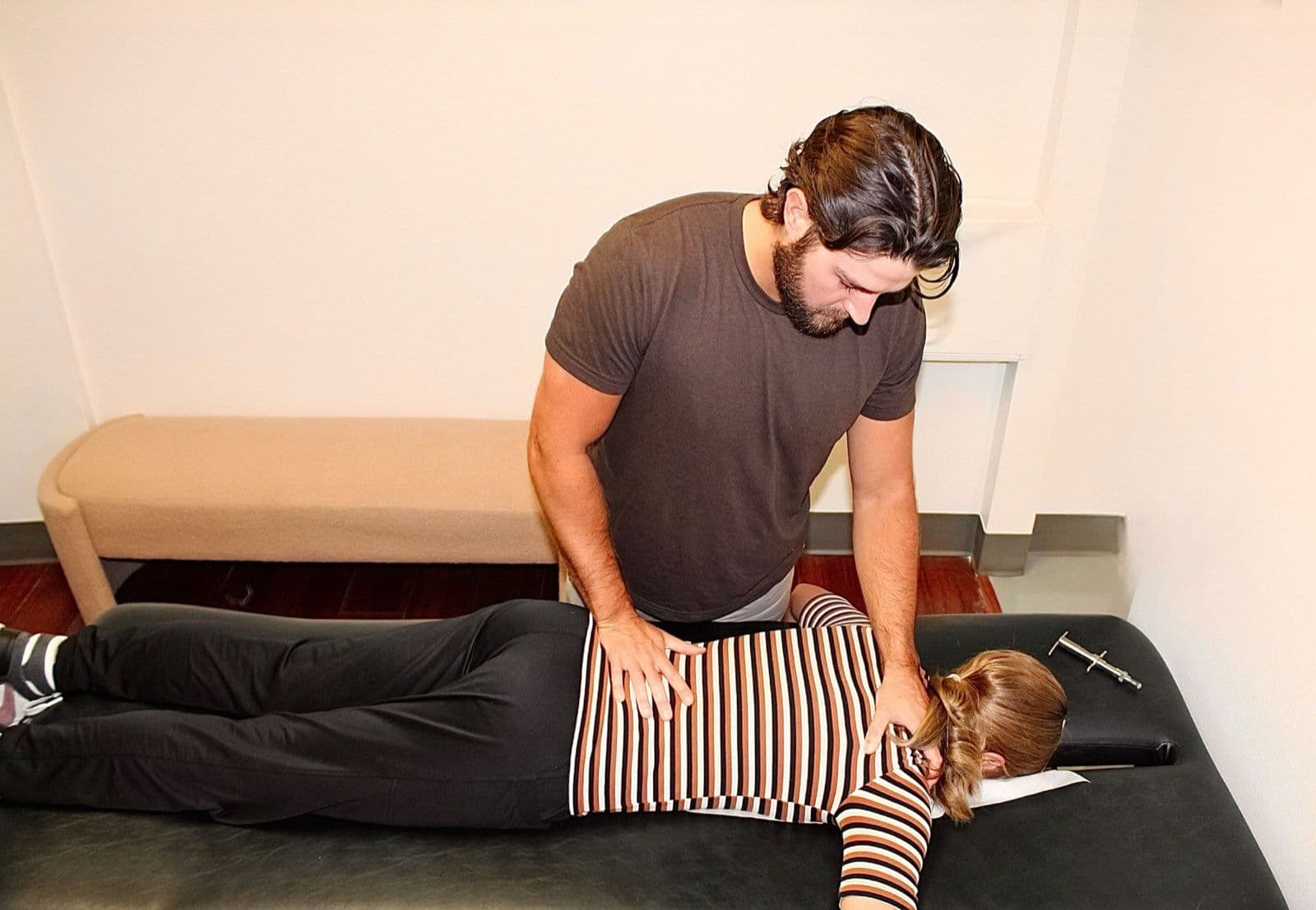
At The Roots Health Centers in Lakewood Ranch, we start by listening: where it hurts, which movements bring it on, what you've already tried, and how it's affecting the things you love, whether that's golf, pickleball, walking the neighborhood, or simply getting around your own home. Then we look at the whole chain: how your feet, knees, hips, pelvis, and spine move together, a full neurological evaluation, and any necessary X-rays so we're working from findings rather than guesses.
Our doctors then explain what they found in plain language. If your pattern looks like a spine, joint, or nervous-system issue we can help with, we'll walk you through the options that may fit your situation. If it looks like something that needs another provider, such as an orthopedic specialist or your primary care doctor, we'll tell you plainly and point you in the right direction. Every person and every case is different, so recommendations are personalized to what your body is showing us.
You can read more about our approach on the chiropractic care page, and our knee pain page gives an overview of the patterns we commonly see in the office.
Frequently Asked Questions
What causes knee pain when going down stairs?
Common contributors include irritation around the kneecap, wear-related joint changes, meniscus irritation, weak hip and thigh muscles, and foot or pelvic mechanics that change how force travels through the leg. Often more than one is involved.
Why does my knee hurt more going down stairs than up?
Going down, your thigh muscles must slow and control your body weight while the knee bends. That braking effort loads the joint and the tissues around the kneecap more than climbing does.
How can I walk down stairs with knee pain?
Many people find it easier to use the handrail, take one step at a time, step down softly with the knee over the toes, and wear supportive shoes. If pain persists, it's worth having the cause identified.
Is climbing stairs good for knee pain?
For many people, comfortable activity helps keep joints moving. But if stairs sharply increase your pain, cause swelling, or make the knee give way, it's best to have it evaluated and ease off until you know the cause.
When should I see someone about knee pain on stairs?
If it lasts more than a short while, keeps returning, causes swelling or locking, makes the knee buckle, or comes with any of the warning signs above, get it checked.
Get a Clear Answer About Your Knee
You shouldn't have to plan your day around where the stairs are. If knee pain keeps showing up when you step down, our team can help you understand what's behind it and what your options are. Book your complimentary consultation and bring your questions.
Conditions We Treat
Knee Pain
Non-surgical knee pain relief using knee decompression, shockwave therapy, red light therapy, and corrective chiropractic — addressing the mechanical root cause of joint dysfunction.
Arthritis
Drug-free arthritis care that reduces joint inflammation, slows degeneration, and restores function — using corrective chiropractic, decompression, red light therapy, and shockwave.
Services Related to This Post
Keep Reading
Related articles
Chiropractic Care for Knee Pain: When It Helps, and When to Look Further
Knee pain isn't always a knee problem. Here's how hip and spine mechanics factor in, and when chiropractic care is (and isn't) the right first step.
Read articleMeniscus Tears: Non-Surgical Options Worth Knowing About
A meniscus tear doesn't always mean surgery. Here's what a meniscus tear actually is, common symptoms, and non-surgical options worth knowing about first.
Read articleWeak Glutes and Low Back Pain: The Overlooked Connection
Weak glutes can quietly leave your low back doing extra work. Here's how the hip-and-back connection works, the signs to watch for, and what a proper look involves.
Read article