

Lower Back Pain After Sleeping: Why You Wake Up Sore and What Helps
You go to bed feeling fine and wake up with a stiff, aching low back that takes a while to loosen up. Lower back pain after sleeping is one of the most common complaints we hear in Lakewood Ranch, and the short answer is that it usually comes from how your spine was positioned and loaded for hours, combined with joints and muscles that were already a little irritated. Below, we'll walk through the common reasons you wake up sore, what the pattern of your pain can suggest, the warning signs that call for a prompt exam, simple ideas to try, and how our team looks at it. This is educational and not a diagnosis.
Why Your Back Can Hurt After a Night of Sleep
Sleep is supposed to be restful, but your spine does not take the night off. For six to eight hours, your low back holds whatever shape your mattress, pillows, and sleep position give it. If that shape keeps the joints and muscles slightly stretched or compressed the whole time, they can be stiff and sore when you wake.
At night you also move less than you do during the day. Joints that are used to frequent small movements can get "gelled" and stiff, which is why many people feel worst first thing in the morning and better after a few minutes of moving around. Hormone and inflammation patterns shift overnight too, and the nervous system can turn up its sensitivity to discomfort when you are already tired.
If your back feels worse the longer you lie there, our post on back pain when lying down covers that closely related pattern.
Common Reasons for Lower Back Pain After Sleeping
Most people have more than one contributor. Here are the patterns we see most often.
Sleep position
Sleeping on your stomach often arches the low back and twists the neck, which can leave the lumbar joints cranky by morning. Sleeping on your back with no support under the knees can also let the low back flatten or arch in ways that bother some people. Side sleeping with the top knee dropping forward can twist the pelvis. Our guide to the best sleep position for spine health goes through each position in detail.
A mattress or pillow that no longer fits
A mattress that sags in the middle lets the hips sink and bends the spine for hours. One that is very firm may not let your shoulders and hips settle into it. There is no single right answer, and what works for one person may not work for another, but if your pain eases when you sleep somewhere else, your bed may be part of the story.
Irritated joints in the low back and pelvis
The small facet joints in the back of the spine and the sacroiliac joints at the base of the spine can become irritated from sitting, lifting, or repeated twisting. They often feel stiff and achy after long periods without movement. See our overview of back pain for how these presentations commonly show up.
Disc irritation
The discs between the vertebrae handle pressure all day, and some people notice that disc-related pain is worse after prolonged sitting or in the morning. Pain with bending forward, or pain that travels into the buttock or leg, is worth mentioning at an exam.
Tight hips and weak support muscles
Tight hip flexors and weak glutes can pull on the low back, especially after a day of sitting. Our post on weak glutes and low back pain explains the connection.
Sitting and stress carried into bed
Long days at a desk or in the car leave the low back already tired by bedtime. Stress adds muscle tension that does not always switch off at night.
What the Pattern of Your Pain Can Suggest
These are patterns, not diagnoses, but they give you something useful to describe at an appointment:
- Stiff and sore on waking, easing as you move: common with joint stiffness and muscle tension.
- Worse after sleeping on your stomach: may relate to low back extension and neck rotation.
- Worse on one side of the low back or at the back of the pelvis: can involve the sacroiliac joint.
- Pain that wakes you at night and does not change with position: deserves a closer look.
- Pain with leg symptoms such as tingling or numbness: may involve an irritated nerve. Our sciatica page describes that pattern.
- Pain that is worse at the end of the day and in the morning: often mechanical, related to sitting and loading.
If your discomfort is mainly in the low back, our lower back pain page pulls the common presentations together in one place.
Warning Signs That Need a Prompt Exam
Most morning back pain is mechanical, but some signs should not wait. Seek urgent medical care if you have:
- Numbness in the groin or inner thighs, or new trouble controlling your bladder or bowels.
- Sudden weakness in one or both legs.
- Back pain with fever, unexplained weight loss, or a history of cancer.
- Back pain after a fall, car accident, or other significant injury.
- Severe pain that is steadily getting worse or is unrelieved by any position.
Book a prompt exam if the pain keeps waking you at night, spreads into a leg, or has not eased even though you have adjusted your sleep setup.
Gentle Ideas to Try While You Get Answers
Each person and case is different, so think of these as general ideas rather than a plan.
- Support the curves. Back sleepers sometimes feel better with a pillow under the knees. Side sleepers often prefer a pillow between the knees to keep the pelvis level.
- Rethink stomach sleeping. If you cannot sleep any other way, a thin pillow under the hips may reduce the arch in the low back.
- Move before you get up. Gentle knee-to-chest motions or slow pelvic tilts in bed can ease stiffness before you stand.
- Get up and move a little. A short walk after waking often feels better than sitting stiffly with coffee. Our post on whether walking is good for back pain goes deeper.
- Try warmth. Many people find a warm shower in the morning loosens things up. Our guide to ice or heat for back pain explains when each tends to be useful.
- Break up evening sitting. Standing and moving for a few minutes each hour keeps the low back from being stiff at bedtime.
- Look at your bed honestly. If it is old, sagging, or much worse than a hotel mattress, it may be time to compare.
If these make no difference, or you are unsure what is driving the pain, a hands-on evaluation is a better next step than guessing.
How We Look at Morning Back Pain at The Roots
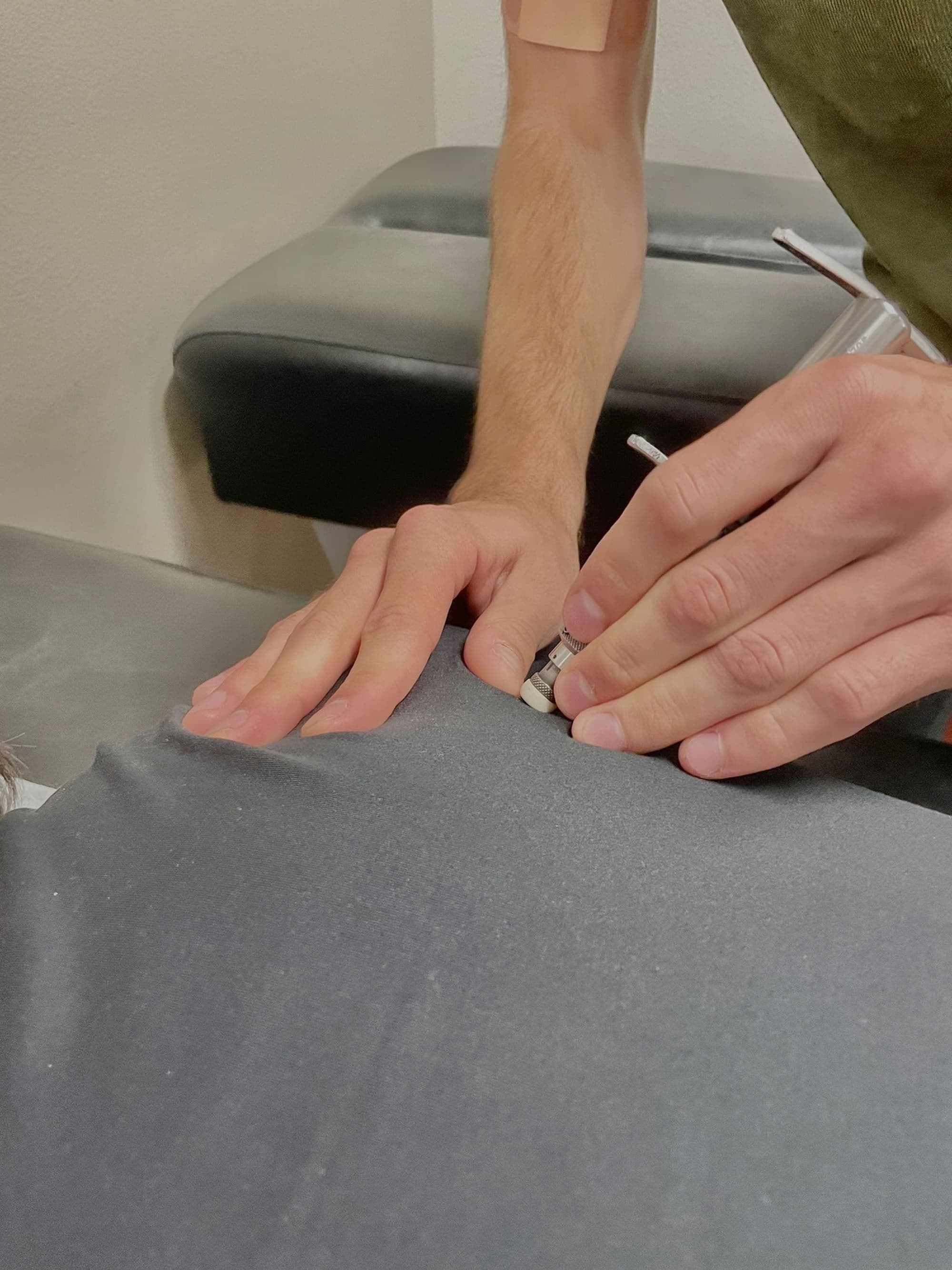
At The Roots Health Centers, we start with your story: when the pain began, how you sleep, what your days look like, and what else has been going on in your body. Then we look at how you move, including the low back, hips, pelvis, and the way your nervous system is coordinating the whole chain. Any necessary X-rays are part of that picture, and if something falls outside our scope, we will say so and point you to the right provider.
From there, our team recommends a personalized approach. That may include gentle chiropractic care for the spine and pelvis. We use Torque Release Technique, a gentle, instrument-based approach, and we never promise a particular outcome, because every person and every back is different. Our aim is to find the pattern behind your pain so your plan fits you.
Frequently Asked Questions
Why does my lower back hurt when I wake up?
Often because your spine held one position for hours, your joints stiffened from lack of movement, and muscles that were already tired from the day had no chance to loosen. Sleep position, mattress, and existing joint irritation are common contributors.
Is it better to sleep on my back or my side for lower back pain?
There is no single best answer. Many people are comfortable on their back with a pillow under the knees or on their side with a pillow between the knees. Stomach sleeping tends to bother more people. The best position is the one that keeps your spine in a neutral, comfortable shape for you.
Can a bad mattress cause lower back pain?
It can contribute. A mattress that sags or does not support your body type can leave your spine bent for hours. If your pain is better away from home, your mattress may be part of the picture.
Should I stretch or rest when my back hurts in the morning?
Gentle movement usually feels better than staying still for most people with stiffness. Sharp pain, pain with leg weakness or numbness, or pain after an injury should be checked before you push through it.
When should I see a chiropractor for back pain after sleeping?
Consider an exam if the pain has lasted more than a few weeks, keeps coming back, or limits things you enjoy. Seek urgent care first for the warning signs listed above.
Ready to Find Out What Is Behind Your Morning Back Pain?
If you are tired of starting the day stiff and sore, you deserve a clear explanation of what your body is doing. Book a complimentary consultation with our team in Lakewood Ranch to talk through your symptoms and see whether we can help.
Conditions We Treat


Services Related to This Post

Keep Reading
Related articles
Best Sleep Position for Spine Health: A Chiropractor's Guide
Back, side, or stomach? The best sleep position for spine health depends on your body — but some positions protect your spine while others quietly damage it. Here's what our team recommends.
Read articleMid Back Pain in the Morning: Why Your Upper Back Feels Stiff When You Wake Up
Waking up with a tight, achy band across your mid back? Here is why the thoracic spine gets stiff overnight and what may help you start the day more comfortably.
Read article