

Mid Back Pain in the Morning: Why Your Upper Back Feels Stiff When You Wake Up
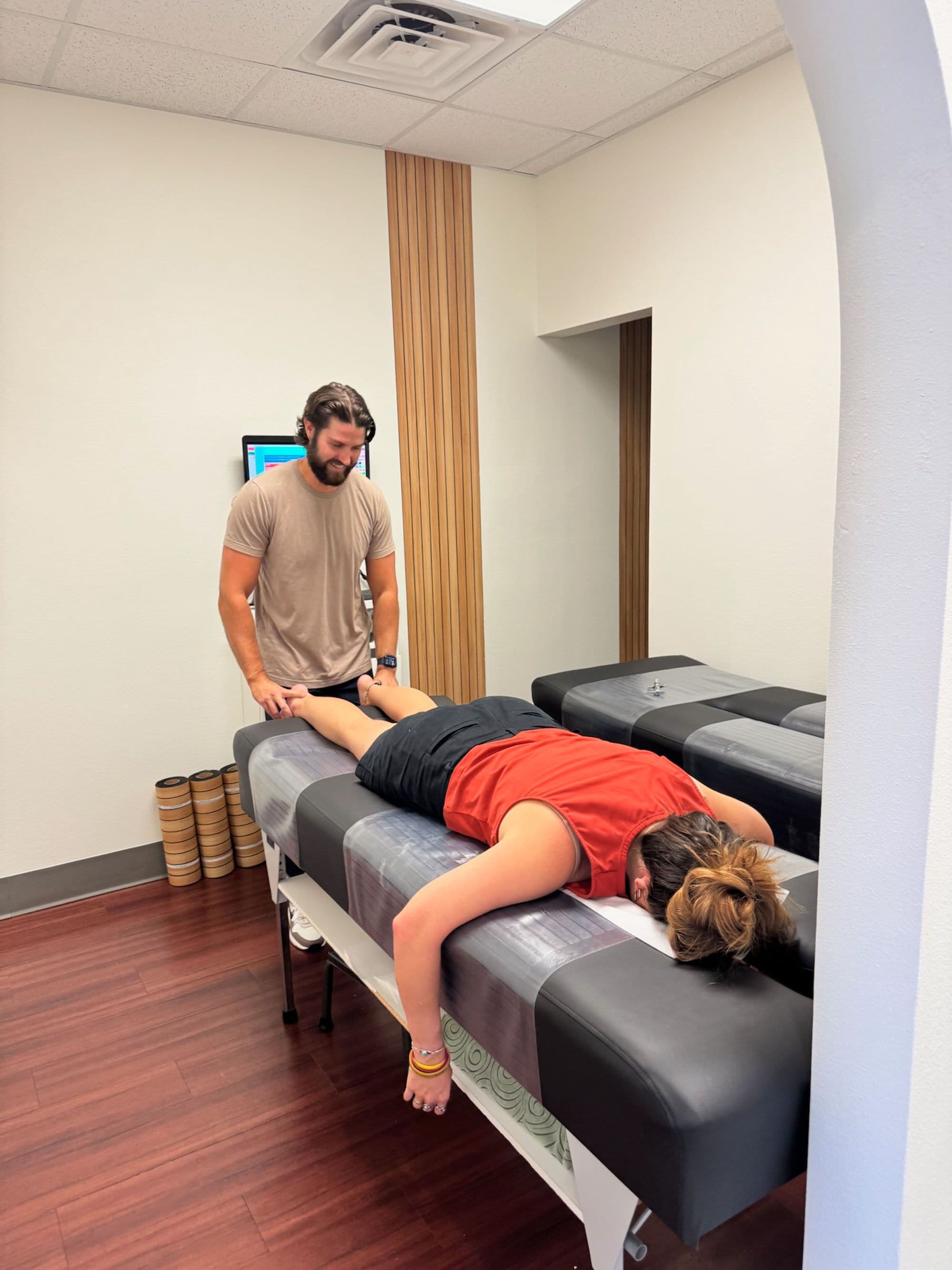
You wake up, roll over, and there it is: a tight, achy band across the middle of your back, somewhere between your shoulder blades and your waist. It loosens up as you move around, but it makes the first part of the morning a lot less pleasant. If you deal with mid back pain in the morning, you are far from alone. The short answer is that your mid back, called the thoracic spine, is built for stability rather than big movement, and hours of stillness plus the wrong sleep setup can leave it feeling stuck. Below, we'll explain what is going on in that part of your spine, the everyday habits that often contribute, gentle things many people find helpful, and the signs that mean it is time to get checked. This is educational information, not a replacement for care from your own provider.
What Is the Mid Back, Exactly?
Your spine has three main sections. The neck (cervical spine) and low back (lumbar spine) are built to move a lot. The mid back, or thoracic spine, sits in between. It has twelve vertebrae, and every one of them connects to a pair of ribs. That rib cage makes the area sturdy and protective, but it also means the joints there have a lot of small connections that can feel restricted when they are not moving well.
Because the thoracic spine is tied to your ribs and your breathing, it is also affected by how you breathe, how you sit, and even how stressed you feel. A tight mid back can show up as a dull ache, a burning sensation between the shoulder blades, or a stiff, 'locked' feeling when you try to rotate or take a deep breath. If you mostly feel it between the shoulder blades, our post on pain between the shoulder blades walks through that pattern in more detail.
Why Mid Back Pain in the Morning Happens
There is rarely a single cause. More often, several small things stack up overnight. Here are the most common contributors we hear about from people in Lakewood Ranch, Bradenton, and Sarasota.
Hours without movement. While you sleep, your joints and the soft tissues around them spend a long stretch in one position. Fluid movement in and around the spine slows down, and tissue can feel stiff and tight when you first get going. This is why many people feel better after they have been up and moving for a while.
Your sleep position. Sleeping curled tightly on your side, or stomach-sleeping with your head turned, can hold the mid back in a twisted or rounded position for hours. Pillows that are too high or too low can also change the angle of your upper spine. Our post on the best sleep position for spine health covers simple adjustments.
An unsupportive mattress or pillow. A surface that is too soft can let your midsection sink, while one that is very firm may not support the natural curves of your spine. Neither is right for everyone, so comfort and support both matter.
Daytime posture carried into the night. If you spend your days hunched over a laptop, a steering wheel, or a phone, the muscles around the thoracic spine can get tired and tight. That tension does not always switch off when you lie down. You can read more about how long days at a desk add up in how sitting affects your back.
Shallow breathing and stress. Stress often leads to shorter, higher breaths. Because the ribs attach to the mid back, tight breathing can leave those joints and muscles working harder than they need to. Many people notice their upper back feels worse during stressful weeks.
Activity the day before. Gardening, golf, pickleball, lifting boxes, or a long drive can all load the mid back. Sometimes the soreness shows up the next morning rather than right away.
Patterns Worth Paying Attention To
Occasional stiffness after a long day is common. These patterns suggest it is worth having someone take a closer look:
- Pain that returns most mornings and does not ease as you move around
- Stiffness that is getting steadily worse over weeks rather than improving
- Pain that wraps around the ribs or changes with deep breaths or twisting
- Stiffness that comes with neck tension or headaches. You may recognize this from waking up with a stiff neck
- Pain in the mid back along with tingling or numbness in the arms, hands, or legs
- Morning joint stiffness in several areas at once, which is a different pattern from a single sore spot
General back pain has many possible sources, from muscles and joints to discs and nerves. Our overview of back pain explains how the different pieces fit together, and our page on joint stiffness covers what that feeling can mean when it shows up in more than one place.
Gentle Morning Habits Many People Find Helpful
These are everyday comfort ideas, not a plan for any one person. Go slowly and stop if anything causes sharp pain.
- Start with a slow breath. Before you get up, lie on your back and take a few slow, deep breaths, letting your ribs expand in all directions. This gives the rib joints a gentle wake-up.
- Try a small seated rotation. Sit tall on the edge of the bed with your arms crossed over your chest and turn gently to one side, then the other. Keep it comfortable and do not force the range.
- Use an open-book stretch. Lie on your side with your knees bent and arms stretched in front of you, then slowly open the top arm like a book. Let your gaze follow your hand.
- Move before you sit. A short walk or a few minutes around the house before settling at a desk or the breakfast table can help your back feel less stuck.
- Warm up with a shower. Gentle warmth often makes tight muscles feel easier to move. If you have reduced sensation anywhere, check the water temperature carefully first.
- Check your pillow height. Your head and neck should rest in a neutral line with your spine, not tipped up or dropped down.
If you are comfortable doing so, our desk stretches for back and neck pain are also easy to fit into the day and can help ease the buildup that carries over to bedtime.
Setting Up Your Evening for a Better Morning
What you do in the hours before bed can make a difference in how your mid back feels when you wake up.
- Take movement breaks in the evening. If you have been seated for hours, stand, walk, and gently open up your chest before bed.
- Avoid falling asleep in the recliner or on the couch. Soft, unsupportive spots often leave the mid back in a rounded position all night.
- Support the natural curves. Side sleepers often do well with a pillow between the knees. Back sleepers may prefer a small pillow under the knees.
- Wind down your breathing. A few slow breaths before sleep can help release some of the day's tension in the ribs and upper back.
- Notice patterns. Keep a simple note of what you did the day before on your worst mornings. Over a couple of weeks, the pattern is often easy to spot, and it is useful information to share with your provider.
If sleep itself is a struggle, you may also find our post on chiropractic care and sleep helpful.
How We Look at It at The Roots
When someone comes to The Roots Health Centers with a stiff, achy mid back, we start by listening. Our doctors, including Dr. Logan Swaim, want to know when it happens, what makes it better or worse, what your days and nights look like, and what else you are noticing in your body.
From there, your visit may include a full neurological evaluation, a look at how your spine and ribs move, and any necessary X-rays when they are clinically appropriate. Because the thoracic spine connects to so many other areas, we pay attention to the neck, low back, and breathing patterns as well. Gentle chiropractic care, including Torque Release Technique, is one of the options we may discuss, and our chiropractic care page explains how that works.
Each person and case is different, so we take a personalized approach based on what your body is showing us. Our goal is to understand why your mid back keeps feeling stuck so any plan is built around you.
When to Seek Prompt Medical Care
Mid back pain is usually musculoskeletal, but a few warning signs need quick attention. Contact a medical provider promptly, or seek emergency care, if your back pain comes with chest pressure, shortness of breath, pain spreading into your jaw or arm, fever, unexplained weight loss, a recent significant fall or accident, new weakness, or loss of bladder or bowel control. Do not wait for a scheduled visit in those situations.
Frequently Asked Questions
Why does my mid back hurt when I wake up?
Most often it is a mix of staying in one position for hours, your sleep setup, and tension carried over from the day. Stress, breathing patterns, and the previous day's activity can all play a part. If it happens regularly, it is worth getting evaluated.
Is mid back pain in the morning serious?
Usually it is not, especially when it eases as you move. It deserves attention if it keeps returning, gets worse over time, or comes with other symptoms like numbness, tingling, or weakness.
What is the best sleeping position for mid back pain?
There is no single best position. Many people are comfortable on their back with a small pillow under the knees, or on their side with a pillow between the knees. The goal is to keep your head, neck, and spine in a neutral line.
Can a chiropractor help with mid back stiffness?
A chiropractor can look at how your spine and ribs are moving, identify patterns that may be contributing, and discuss supportive options. Each person is different, so the first step is an evaluation.
Take the Next Step
If mornings keep starting with a stiff mid back, you don't have to just live with it. Book a complimentary consultation with our team in Lakewood Ranch. You can meet the doctors, tour the clinic, and talk through what you are experiencing, with no commitment to start care.
Conditions We Treat
Services Related to This Post
Keep Reading
Related articles
Chiropractic Care and Sleep: How Nervous-System Regulation May Support Better Rest
Struggling to sleep well? An overworked, dysregulated nervous system may be part of why. Here's how nervous-system-focused chiropractic care fits into the picture.
Read articlePain Between the Shoulder Blades: Common Causes and What Helps
Aching or burning pain between your shoulder blades is common, and it often starts somewhere else. Here are the usual causes, the warning signs, and what may help.
Read articleWaking Up With a Stiff Neck: Why It Happens and What May Help
Waking up with a stiff neck is common, and usually not serious. Here's what's often behind it, the warning signs worth taking seriously, and gentle steps that may help.
Read article