
Sciatica Flare-Ups When Traveling or Flying: What Helps on the Road
If your sciatica flares up on a flight, a long drive to the Keys, or a road trip up I-75, you're not imagining it. Sciatica flying is a very common complaint: hours of sitting in a tight seat can leave you with a deep ache in the buttock, a pulling feeling down the back of the leg, or tingling that gets louder the longer the trip goes. The short answer: sitting for long stretches keeps your hips bent and your low back flat, which can irritate the sciatic nerve pathway, and small changes in how you sit, move, and pack may take some of the pressure off. Below, we'll explain why travel sets sciatica off, what to do before, during, and after a trip, and when leg symptoms deserve a proper look. This is educational, not a replacement for care from your own provider.
Why Sciatica Flares Up When You Travel
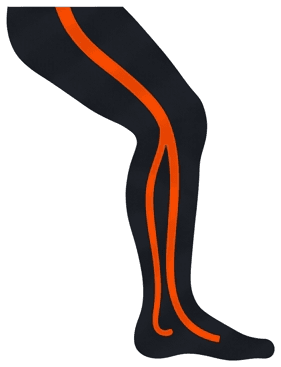
The sciatic nerve is the longest nerve in the body. It starts as nerve roots in the lower spine, passes through the buttock, and runs down the back of each leg. "Sciatica" isn't a diagnosis on its own; it's the name for the pattern of pain, numbness, or tingling that follows that path. Our sciatica page explains the common reasons the nerve gets irritated.
Travel tends to stack several triggers at once:
- Long, unbroken sitting. Your hips stay bent and your low back loses its natural curve, which can load the discs and joints of the lower spine.
- Pressure under the buttock. A firm airline or car seat presses on the muscles around the nerve, including the deep hip muscle called the piriformis. If that sounds familiar, our post on piriformis syndrome versus sciatica covers how the two overlap.
- Awkward luggage moments. Hoisting a bag into an overhead bin or twisting to grab a suitcase from the trunk can irritate an already sensitive back.
- Cramped legs. Limited legroom keeps you in one position, with little chance to shift your weight.
- Dehydration and stress. Travel days are often rushed, and tense muscles tend to hold on tighter.
- A wallet or phone in your back pocket. Sitting on it tilts the pelvis and can press right where the nerve runs.
None of this means travel is bad for your back. It means the setup and the habits around it matter.
Before You Go: Set Yourself Up
A little planning on the front end can make the trip itself easier.
Choose your seat with your back in mind
If you can, pick an aisle seat so you can stand, stretch, and walk without climbing over anyone. On the road, think about who drives which leg so you can change position.
Pack a small support kit
Many people find a thin lumbar roll or a rolled towel helpful for filling the hollow of the low back. A small cushion can take pressure off the buttock. Keep these within reach rather than in the overhead bin.
Pack light and pack smart
A backpack with two straps, or a rolling bag, is easier on the spine than a heavy single-shoulder bag. Ask for help lifting luggage when you can. Our guide to lifting without hurting your back walks through the movements.
Dress for movement
Comfortable clothing and supportive shoes make it easier to get up, walk the aisle, and stand at a rest stop without fuss.
Plan your breaks
On a drive, decide ahead of time where you'll stop. On a flight, think about when you can walk. It's easier to move early than to wait until you're already stiff.
During the Trip: Habits That May Help
Think of your body as something that likes variety. Staying in one perfect position for hours rarely works as well as moving often.
- Sit all the way back. Let your pelvis rest against the seat so your low back is supported, with your knees roughly level with your hips.
- Shift often. Small changes, like tilting your pelvis, sitting tall for a moment, or moving your weight side to side, keep different muscles involved.
- Stand and walk when you safely can. On a flight, walk the aisle when the seat belt sign allows. On the road, plan real stops and walk for a few minutes.
- Try gentle moves in your seat. Slow ankle circles, a relaxed knee-to-chest lift, or a gentle seated twist within a comfortable range may ease stiffness. If anything sends pain down the leg, back off.
- Keep your wallet out of your back pocket. It sounds minor, but it can make a real difference.
- Sip water. Staying hydrated helps you feel better on a travel day overall.
- Loosen your grip and your shoulders. If you notice them creeping up, drop them and exhale slowly.
For drivers, our post on back pain from driving and seat setup covers seat position in more detail, and much of it applies to a long road trip with sciatica too.
These are everyday comfort habits, not a plan for any one person. Don't push through sharp pain.
After You Arrive
The hours after a long trip are when many people feel it most. A few thoughts:
- Walk before you settle in. Gentle movement for a few minutes can feel better than going straight to a couch or hotel bed.
- Use a comfortable sleeping position. Lying on your side with a pillow between your knees, or on your back with a pillow under your knees, is often more comfortable when the nerve is irritated.
- Ease back into activity. Resist the urge to make up for lost time with a long hike or a heavy lift on day one.
- Pay attention to patterns. Note which part of the trip, which seat, or which movement brought symptoms on. That information is useful if you decide to get evaluated.
If you're curious how heat and cold compare for a sore back, we cover it in ice or heat for back pain.
When Leg Symptoms Deserve a Closer Look
Mild stiffness that eases once you're moving again is common. It's worth scheduling an evaluation if:
- Pain, numbness, or tingling travels below the knee or into the foot
- Symptoms keep returning with every trip or sitting stretch
- Your leg feels weak, or your foot catches when you walk
- Pain wakes you at night or keeps building
- The pattern started after a fall, accident, or new injury
Our page on radiating pain describes how pain that travels can show up and why it's worth paying attention to.
Seek emergency care right away if back pain comes with new loss of bladder or bowel control, numbness in the groin or inner thighs, or sudden weakness in a leg. Those can be signs of a serious problem and shouldn't wait. Leg swelling, redness, or calf pain after a long flight is also worth urgent medical attention, because it can be unrelated to the spine.
What a Visit Looks Like at The Roots
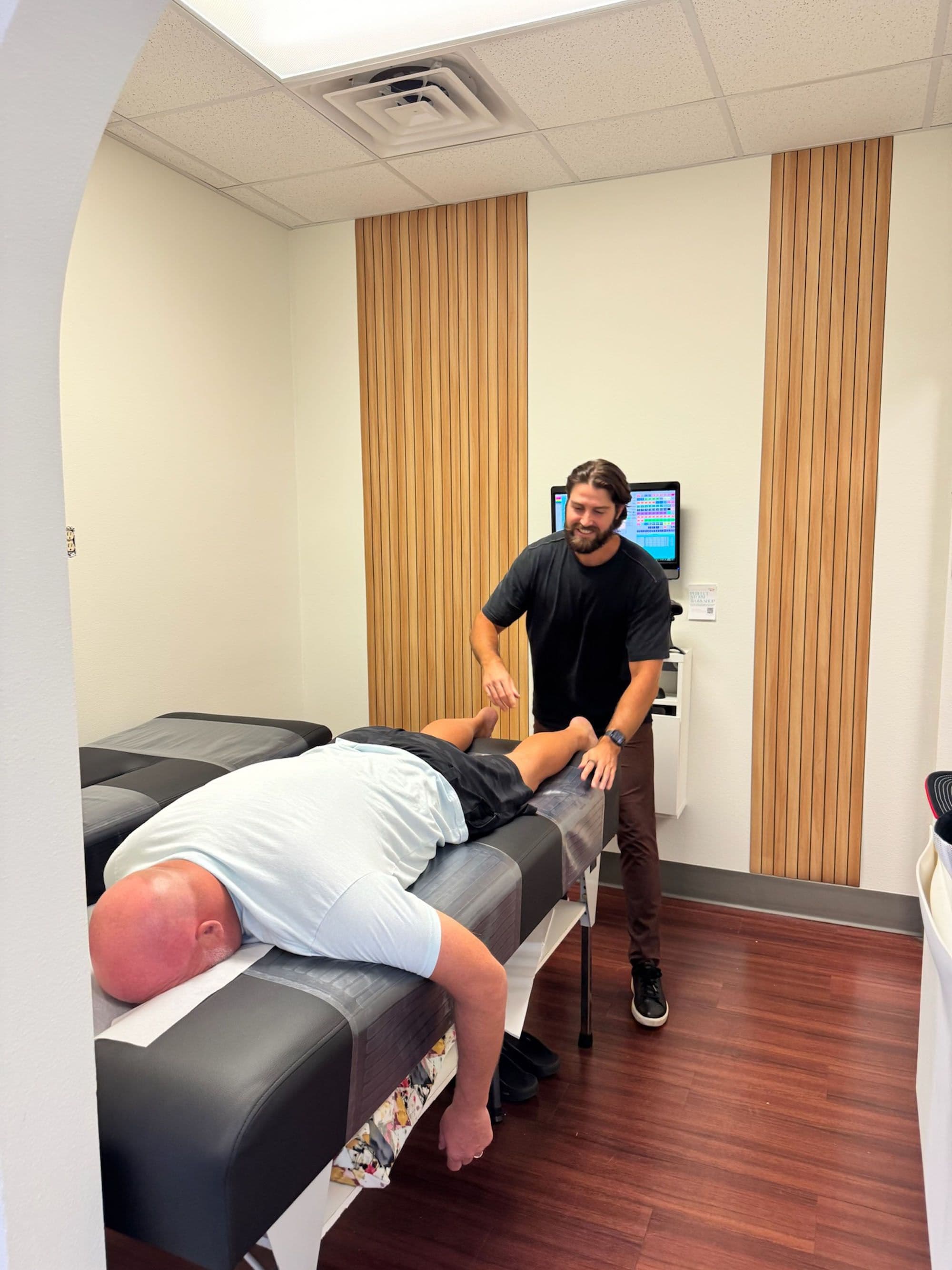
At The Roots Health Centers in Lakewood Ranch, we start by listening: when the symptoms show up, how you travel, what position helps, and what you've already tried. Then we look at how your spine, hips, and nervous system are working together, including a neurological evaluation and any necessary X-rays. Our team uses gentle methods, including Torque Release Technique, and we explain what we find in plain English so you know what's going on and what your options are. Each person and case is different, so we take a personalized approach.
If you'd like to understand the bigger picture, our back pain page is a good next stop. Many of our neighbors in Lakewood Ranch, Bradenton, and Sarasota are snowbirds, frequent flyers, or weekend road-trippers, so travel-triggered flare-ups are something our team hears about often.
Frequently Asked Questions
Why does my sciatica get worse when I fly?
Long sitting keeps your hips bent and flattens the curve of your low back, and firm seats press on the muscles around the sciatic nerve. Limited legroom also makes it hard to change position, so irritation can build over the flight.
How can I sit on a plane with sciatica?
Many people find it helps to sit all the way back, support the low back with a small roll or towel, shift position often, and walk the aisle when it's safe. An aisle seat makes moving easier.
Is it okay to take a long road trip with sciatica?
For many people, yes, with planning. Frequent stops, a supportive seat setup, and shared driving can help. If leg pain, numbness, or weakness is getting worse, it's worth being evaluated before a long trip.
What position is best for sciatica pain at night after traveling?
Side-lying with a pillow between the knees, or on your back with a pillow under the knees, is often more comfortable. Everyone is different, so go with what eases your symptoms.
When should I see someone about sciatica?
If symptoms keep returning, travel below the knee, come with weakness, or follow an injury, it's time to have it looked at.
Get a Clear Picture Instead of Guessing
Sciatica that follows you on every trip is a signal worth understanding. If you'd like a careful look at what may be behind it, our team can walk you through what we find and what your options are. Book your complimentary consultation and we'll start with your story.