

Trigger Points vs. a Chiropractic Adjustment: What's the Difference?
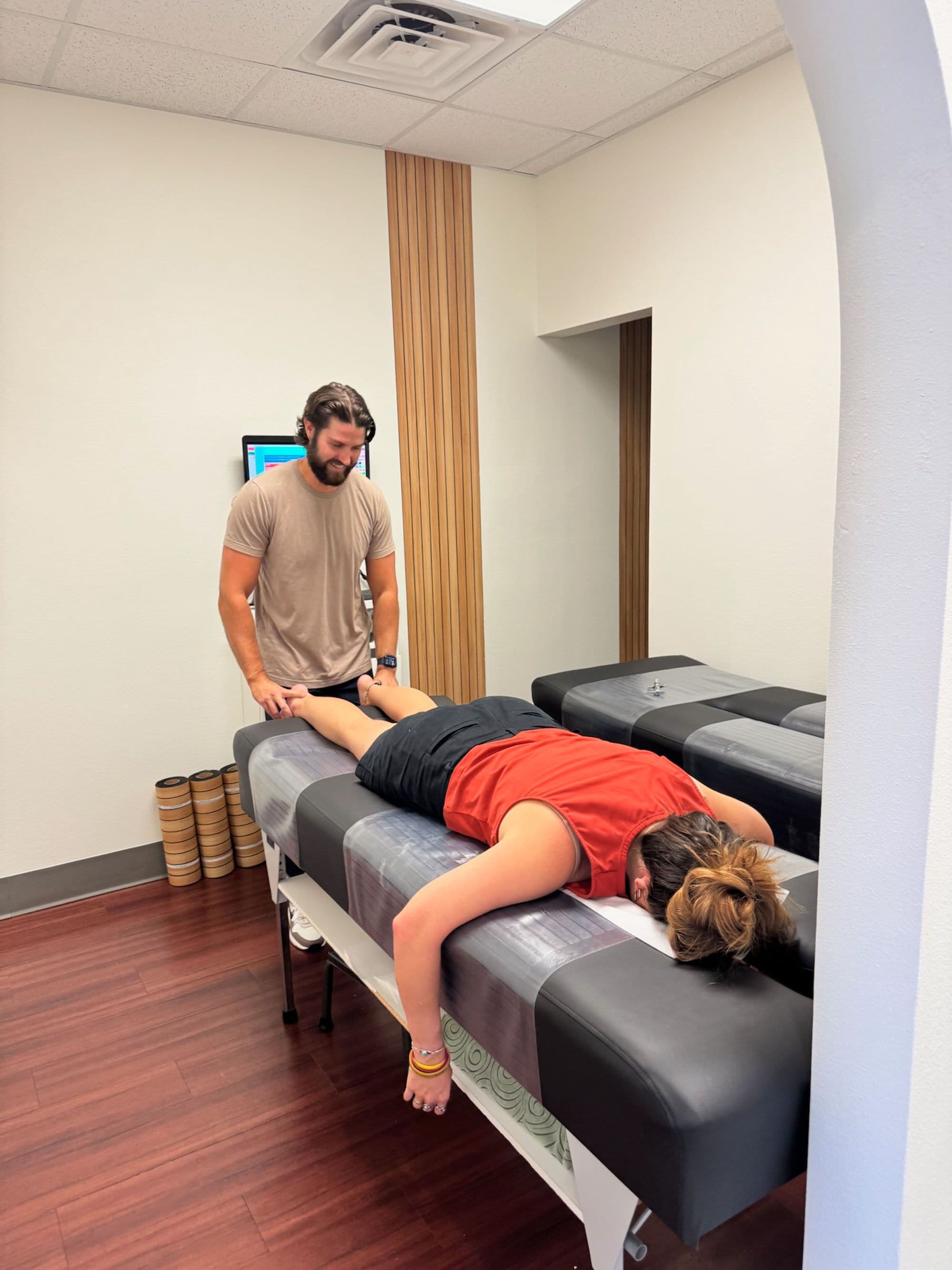
If you've ever left a massage feeling like your shoulder muscle finally let go, only to have a chiropractor point to something different going on in the joint underneath it, you've bumped into one of the most common points of confusion in musculoskeletal care: trigger points vs. a chiropractic adjustment. They're not competing explanations for the same problem — they're two different structures, and understanding which one (or both) is behind your pain can save you months of chasing the wrong fix.
What Is a Trigger Point?
If a massage therapist, physical therapist, or even a friend with strong thumbs has ever pressed on a spot in your shoulder or upper back and made you wince, you've met a trigger point. A trigger point is a tight, hyperirritable band of muscle tissue — sometimes called a "muscle knot" — that stays contracted even when the rest of the muscle is at rest. Press on it and you'll often feel pain not just at that spot, but somewhere else entirely. A trigger point in the upper trapezius, for example, commonly refers pain up into the head, which is part of why tension-type headaches and shoulder knots get confused with each other so often.
Trigger points form in soft tissue — the muscle and the fascia (connective tissue) wrapped around it. That's an important distinction, because it's also where the confusion with chiropractic care starts.
What Does a Chiropractic Adjustment Actually Do?
A chiropractic adjustment is a controlled, specific force applied to a joint — most often a vertebral joint in the spine — that isn't moving the way it should. When two vertebrae lose their normal range of motion, whether from posture, an old injury, repetitive stress, or simply how you slept, the joint can become restricted. An adjustment is aimed at restoring that joint's motion and supporting the nervous system's ability to communicate through that segment of the spine.
So here's the short version: a trigger point is a problem in the muscle. A joint restriction is a problem in the joint. They're not the same structure, they don't respond to the same input, and — this is the part most people don't realize — they very often show up together in the same area at the same time.
Why They Get Confused
It's an easy mix-up, for a few reasons:
- They often overlap. A restricted joint changes how the muscles around it have to work, which can create the exact kind of chronic overload that produces trigger points nearby. A stiff mid-back joint, for instance, is a common companion to a stubborn knot between the shoulder blades.
- Both can refer pain. A trigger point in the neck can radiate into the head. A restricted joint can refer discomfort along a nerve pathway into an arm or leg. Neither type of pain necessarily shows up exactly where the problem started, which makes self-diagnosis tricky.
- Both can be sore to the touch. Pressing on either a trigger point or an irritated joint capsule can hurt — but the way each one responds to care is different.
Common Places This Overlap Shows Up
Some regions see this pattern more than others:
- Neck and upper shoulder. The upper trapezius is one of the most common trigger point locations in the body, and it sits right next to some of the most commonly restricted joints in the cervical spine. Tension headaches, a stiff neck, and a knot between the shoulder blade and spine frequently travel together.
- Low back. Muscles bracing around a restricted lumbar joint can develop their own trigger points over time, which is one reason low back pain can feel like it's "everywhere" rather than one clear spot.
- Hip and glutes. A tight muscle deep in the hip can mimic other nerve-related leg pain by irritating a nearby nerve pathway — a genuinely different mechanism from a joint or disc issue, but one that can feel almost identical from the outside.
Each of these patterns is a reason a proper evaluation matters more than trying to self-diagnose from a symptom map you found online.
Do You Need an Adjustment, Muscle Work, or Both?
This is the question that actually matters, and the honest answer is: it depends on what your evaluation turns up. Each person's presentation is different, and the point of a consultation and exam is to figure out what your case actually needs rather than assume.
That said, some general patterns tend to hold up:
- Pain that's sharply localized near the spine and doesn't move when you press around it is more often joint-related and tends to respond to chiropractic care focused on the joints of the spine and neck.
- A "knot" you can find and press on, that creates a recognizable ache or referred pain pattern, is more classically a trigger point — the kind that soft tissue work, stretching, and addressing the underlying overload pattern tend to target.
- Chronic tightness in the shoulder or upper back that keeps returning is frequently a sign that a joint restriction is quietly driving repeated muscle overload — which is why addressing only the knot, over and over, without ever asking why it keeps coming back, often doesn't hold.
This overlap is also the piece that makes some patients wonder whether they should see a massage therapist or a chiropractor first — and honestly, for a lot of people dealing with back pain that involves both a stiff joint and a stubborn knot, the answer is both, just not necessarily on the same day or in the same order every time.
What This Looks Like at The Roots
Care at The Roots starts with a consultation and a full neurological evaluation, so the team can see what's actually going on before recommending anything — not a generic plan applied to everyone who walks in with a sore shoulder. Adjustments use Torque Release Technique, a low-force, precise approach to restoring joint motion, rather than the higher-force manual techniques some people picture when they think of an adjustment. Where muscle tissue itself needs attention, that gets folded into a personalized care plan — because a joint that moves well but sits inside chronically overloaded muscle tissue is still going to feel tight.
If you've been chasing the same knot for months, or you've had adjustments that helped for a few days before the same ache came back, it may be worth asking which piece — the joint, the muscle, or both — hasn't actually been addressed yet.
Frequently Asked Questions
Is a chiropractic adjustment the same as deep tissue massage? No. An adjustment applies a specific, controlled force to a joint to help restore its motion. Deep tissue massage works directly on muscle and fascia. They target different tissues and are often used to complement each other rather than replace one another.
Can a chiropractor address trigger points? Trigger points are muscle-tissue findings, and where they're contributing to your presentation, a chiropractor may fold soft-tissue approaches into your broader care plan alongside adjustments — the exact mix depends on what your evaluation shows.
Why does my trigger point keep coming back after it's worked on? If a trigger point returns repeatedly in the same spot, it's worth asking what's keeping the muscle overloaded in the first place — a nearby joint restriction is one common, often-overlooked driver.
Do adjustments feel the same as pressing on a trigger point? Most patients describe an adjustment as a quick pressure or release, not the same kind of sharp sensation as a thumb pressing directly into a knot. Everyone's experience is a little different, which is part of why the initial consultation matters.
How long does it take to notice a difference? Each person and case is different, so The Roots takes a personalized approach based on what your body needs — the team can walk you through what to realistically expect for your specific situation at your consultation.
Ready to find out what's actually driving your pain — the joint, the muscle, or both? Schedule a complimentary consultation at The Roots Health Centers in Lakewood Ranch and get a straight answer instead of another guess.
Conditions We Treat
Back Pain
Corrective chiropractic care that addresses the structural root cause of back pain — not just masking symptoms with medication.

Neck Pain
Precise cervical adjustments and decompression that restore alignment, reduce nerve pressure, and eliminate chronic neck pain at its source.
Shoulder Pain
Impingement, rotator cuff strain, bursitis, tendonitis, referred pain from the neck — shoulder pain has more possible sources than almost any other complaint. Naming the right one is the difference between care that works and months of chasing symptoms.
Services Related to This Post
Keep Reading
Related articles
Massage or Chiropractor First? An Honest Decision Guide
Confused about whether massage or chiropractic care comes first for your pain? Here's an honest, symptom-by-symptom guide to help you decide.
Read articleDoes Cracking Your Back Actually Help? What TRT Does Differently
Cracking your own back might feel satisfying, but it isn't the same as a chiropractic adjustment. Here's what's actually happening, and why TRT works differently.
Read articleChiropractic Techniques Compared: Activator, Gonstead, and Torque Release
Not all chiropractic adjustments look the same. A plain-English comparison of Gonstead, Activator, and Torque Release Technique, and why The Roots uses TRT.
Read article