

Shoulder Pain When Sleeping: Causes and What May Help
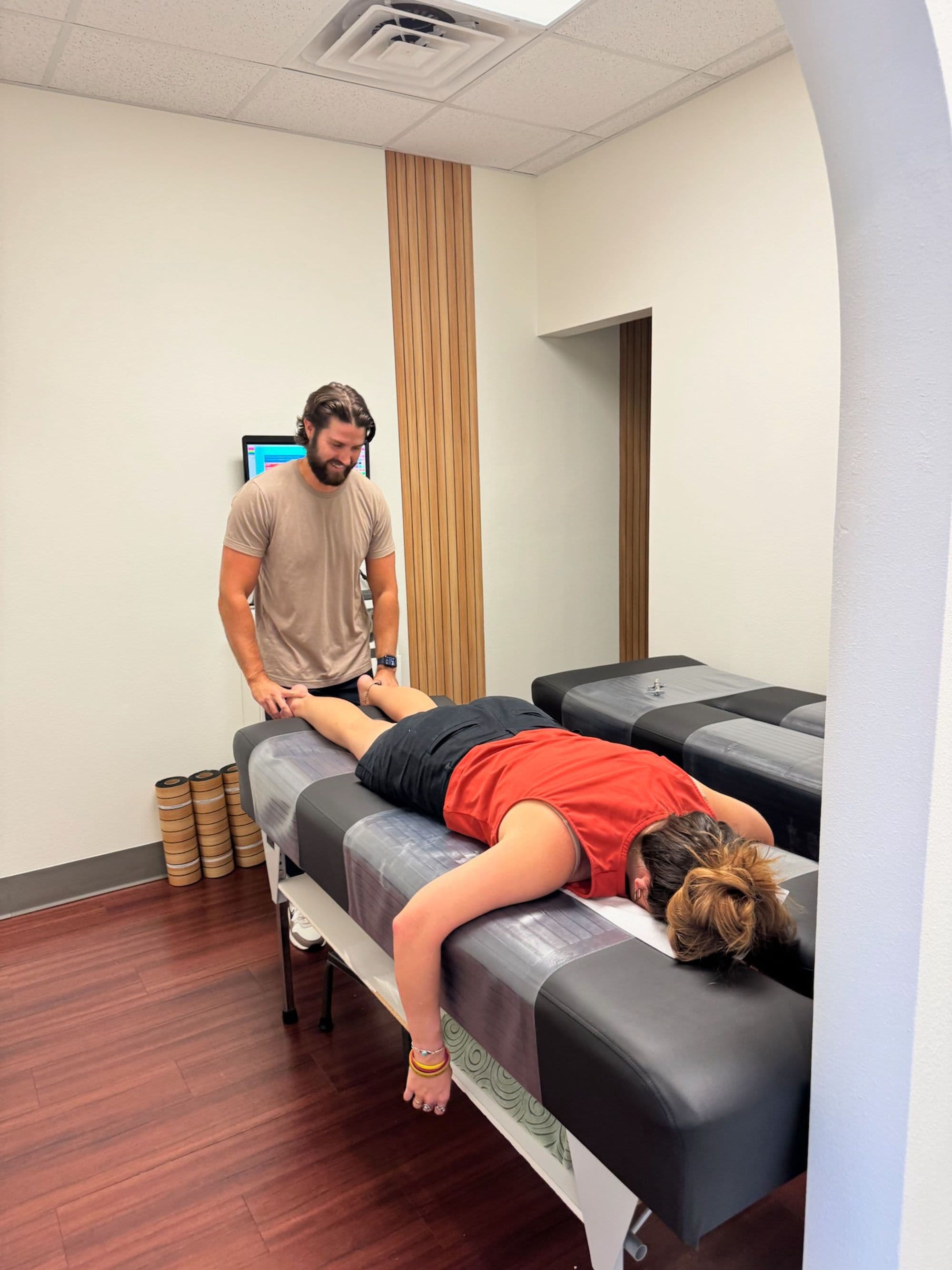
You fall asleep fine, then wake at 2 a.m. with a deep ache in your shoulder, or you can't lie on one side without it throbbing. If that's your nights lately, you're in good company. Shoulder pain when sleeping is usually a sign that the joint, the tendons around it, or the neck and upper back that feed it are irritated, and lying down for hours puts steady pressure on all of them. Below, we'll walk through the most common reasons, positions that may ease the strain, the red flags that call for prompt medical care, and how we look at shoulder pain here in Lakewood Ranch.
Why Shoulder Pain Feels Worse at Night
During the day you're constantly moving, which keeps blood flowing and shifts load from one tissue to another. At night you hold one position for hours. If you're on your side, your body weight compresses the shoulder directly. If you're on your back, the arm can drift into a position that stretches an irritated tendon. Either way, a shoulder that was only mildly sensitive during the day can become loud in bed.
There's another factor: with fewer distractions at night, we simply notice pain more. And the shoulder doesn't work alone. The neck, upper back, and rib cage all affect how it moves, so pain that shows up at night is sometimes coming from further up or down the chain than you'd expect.
Common Reasons for Shoulder Pain When Sleeping
Rotator cuff irritation
The rotator cuff is a group of four small muscles and tendons that steady the shoulder. When they're overworked or irritated, lying on that side often brings on a deep, dull ache that can spread down the upper arm. Our guide to rotator cuff pain and non-surgical options explains the pattern in more detail.
Shoulder impingement
When tendons get pinched in the narrow space at the top of the joint, reaching overhead or lying with your arm above your head can set off pain. Many people feel it first at night. We cover this in shoulder impingement.
Stiffness and a shrinking range of motion
A shoulder that gets progressively tighter, especially one that's hard to rotate outward, may be heading toward frozen shoulder. Night pain is a common early complaint, and the stiffness can make it hard to find any comfortable position.
Neck and nerve involvement
Sometimes what feels like shoulder pain starts in the neck. An irritated nerve root can send aching, burning, or tingling toward the shoulder and arm, and certain sleeping postures squeeze it more. Our overview of a pinched nerve describes what that often looks like, and our post on pinched nerve signs and relief goes deeper.
Posture and daily habits
Hours at a desk or on a phone can leave the shoulders rounded and the upper back stiff, which changes how the joint sits. If that sounds like you, see our notes on tech neck and stiff neck and shoulders.
For a broader view of what may be involved, our shoulder pain page is a good starting point, and the shoulder pain symptom guide covers what different sensations can mean.
Sleep Position Ideas That May Ease the Pressure
These are general comfort strategies, not a substitute for being evaluated. Many people find that small changes make a real difference:
- Avoid lying on the sore shoulder. Sleeping on the opposite side takes the direct pressure off the joint.
- Hug a pillow. If you're on your good side, resting the top arm on a pillow in front of you keeps it from dropping forward and pulling on the shoulder.
- Try back sleeping with support. A small pillow under the sore arm, or under your elbow, may help the shoulder stay in a neutral position.
- Keep the arm out of the overhead position. Tucking your arm under your head or pillow can pinch irritated tendons.
- Check your pillow height. A pillow that's too high or too flat tilts the neck and changes the angle at the shoulder.
- Wind down first. A few minutes of gentle shoulder rolls or easy stretching before bed can ease stiffness, as long as it doesn't aggravate your pain.
Our guide to the best sleep position for spine health goes further on pillows and alignment. If a change makes things worse, go back to what felt better and mention it when you're evaluated. Your body's response is useful information.
Warning Signs: When to Get Checked Promptly
Most night-time shoulder aches are uncomfortable rather than dangerous. Still, please seek medical care right away, or call 911 if appropriate, when shoulder pain comes with:
- Chest pressure, shortness of breath, sweating, or pain spreading into the jaw or left arm
- Pain after a fall or accident, or a visibly deformed shoulder
- Fever, chills, or a shoulder that is red, swollen, or hot
- Sudden weakness or inability to lift the arm
- Numbness or weakness spreading down the arm or into the hand
- Severe pain that wakes you every night and doesn't change with position
- Unexplained weight loss or a history of cancer alongside new shoulder pain
If your pain has simply been hanging around and wearing down your sleep, that's reason enough to have it looked at rather than waiting it out.
How We Look at Shoulder Pain That Shows Up at Night
At The Roots Health Centers in Lakewood Ranch, we begin by listening. Which side hurts? Does it ease when you move? Is it in the joint itself, the top of the shoulder, or does it travel down the arm? Then we look at how your neck, upper back, ribs, and shoulder move together, perform a full neurological evaluation, and take any necessary X-rays so we're working from findings rather than guesses.
The goal is to understand whether your pain looks like a joint, soft tissue, spine, or nerve pattern, or whether it needs another provider's attention. If it does, we'll tell you plainly and point you in the right direction. If it fits a spine and nervous system pattern, Dr. Logan Swaim and the team will explain what they found in everyday language and what options may fit your situation. Every person and every case is different, so recommendations are personalized. You can learn more about our approach on the chiropractic care page.
Frequently Asked Questions
Why does my shoulder hurt more at night?
Staying in one position for hours concentrates pressure on the same tissues, and fewer distractions make pain easier to notice. A shoulder that's only mildly irritated by day can feel much worse in bed.
How should I sleep with shoulder pain?
Many people find it more comfortable to sleep on the opposite side, hugging a pillow so the top arm is supported, or on their back with a small pillow under the sore arm. Avoid tucking the arm overhead.
Can a neck problem cause shoulder pain at night?
Yes. Irritation of a nerve in the neck can refer pain, tingling, or aching to the shoulder and arm, and some sleeping positions can make it more noticeable. An exam can help sort out where it's coming from.
How do I prevent shoulder pain when sleeping on my side?
A supportive pillow for the head, another to hold the top arm, and a shoulder that isn't bearing your full body weight can all help. If the pain keeps returning, it's worth finding out why.
When should I see someone about shoulder pain at night?
If it's waking you regularly, isn't settling, limits your range of motion, spreads down the arm, or comes with any of the warning signs above, get it checked.
Get a Clear Answer and a Better Night
You shouldn't have to dread bedtime because of a sore shoulder. If your pain keeps showing up when you lie down, our team can help you understand what's behind it and what your options are. Book your complimentary consultation and bring your questions.
Conditions We Treat
Shoulder Pain
Impingement, rotator cuff strain, bursitis, tendonitis, referred pain from the neck — shoulder pain has more possible sources than almost any other complaint. Naming the right one is the difference between care that works and months of chasing symptoms.
Frozen Shoulder
Non-surgical care for adhesive capsulitis (frozen shoulder) using shockwave therapy, red light therapy, and corrective adjustments to restore range of motion and end chronic shoulder pain.
Pinched Nerve
A pinched nerve is a mechanical problem — a disc, joint, or inflamed tissue pressing on a nerve where it exits the spine. The pain, tingling, or numbness travels the nerve's path, which is why arm symptoms so often start in the neck.
Services Related to This Post
Keep Reading
Related articles
Rotator Cuff Pain: Non-Surgical Options That May Help
Reaching overhead or sleeping on that side shouldn't hurt. Here's what causes rotator cuff pain, how to tell it apart from impingement or a tear, and non-surgical options that may help.
Read articleShoulder Impingement: Non-Surgical Options for Lasting Relief
Shoulder impingement causes pain when you reach or lift overhead. Here's what causes it, how it's different from frozen shoulder or a rotator cuff tear, and non-surgical options that may help.
Read articleBest Sleep Position for Spine Health: A Chiropractor's Guide
Back, side, or stomach? The best sleep position for spine health depends on your body — but some positions protect your spine while others quietly damage it. Here's what our team recommends.
Read article