

Neck Pain When Turning Your Head: Causes and Relief

You glance over your shoulder to back out of a parking spot, and there it is: a sharp catch, a pull, or a deep ache that stops your head short. Neck pain when turning your head is one of the most common complaints we hear, and the short answer is that it usually comes from irritated joints, tight muscles, or an irritated nerve in the neck rather than something dangerous. Below, we'll walk through the most common causes, what each tends to feel like, gentle things that may ease it, the warning signs that need prompt medical care, and how we look at it here in Lakewood Ranch.
Why Turning Your Head Brings Out the Pain
Your neck is built for movement. Seven small vertebrae stack up under your skull, with paired joints (called facet joints) along the back, discs between the bones, and dozens of muscles that guide every turn. The top two vertebrae do most of the rotating, which is why looking over your shoulder asks so much of the upper neck in particular.
Turning is also a movement that compresses one side of the neck while stretching the other. If a joint is stiff, a muscle is guarding, or a nerve is sensitive, rotation is often the first motion to expose it. That's why many people feel fine looking straight ahead, then wince the moment they turn.
Common Causes of Neck Pain When Turning Your Head
Stiff or irritated facet joints
When a joint in the neck isn't gliding well, turning toward that side can feel like hitting a wall, often with a sharp, localized pinch. The pain is typically one-sided and may sit at the base of the skull or low in the neck. Poor movement in one segment can make the neighbors work harder, which spreads the soreness.
Muscle tension and spasm
The muscles along the neck and between the shoulder blades tighten when they're overworked or when you've held one posture too long. A tight muscle limits rotation and produces a pulling ache. Many people notice it after a poor night's sleep, a stressful week, or long hours at a screen. Our post on waking up with a stiff neck covers the overnight version.
Posture and screen habits
A head that drifts forward puts extra load on the lower neck and upper back, and over time the neck can become stiff and sensitive to turning. If you spend your day looking down at a phone or laptop, you may recognize this pattern as tech neck. Our desk stretches for back and neck pain offers easy habits to build in.
An irritated nerve in the neck
Sometimes turning your head pinches a nerve root where it exits the spine. That can produce sharp pain that travels into the shoulder or arm, along with tingling or numbness. See our overview of a pinched nerve and the guide to pinched nerve in the neck symptoms and relief for what that often feels like.
Whiplash and past injuries
A car accident, fall, or sports collision can leave the neck sensitive to rotation long after the original injury, and symptoms can show up days later. If your pain began after any kind of impact, it deserves a proper evaluation.
Wear-and-tear changes
As we age, discs thin and joints change. These changes are very common and do not always cause pain, but they can narrow the space around joints and nerves and make turning feel tight or grinding. For a broader view, our neck pain page is a good starting point.
What the Pain Pattern May Tell You
The way your neck hurts can give useful clues. These are general patterns, not a diagnosis:
- Sharp and one-sided, with a clear stopping point: often points toward a joint or a muscle that is guarding.
- Dull, achy, and spread across both sides: frequently related to posture and muscle fatigue.
- Pain that shoots into the shoulder, arm, or hand, with tingling or numbness: may suggest a nerve is irritated.
- Pain with headaches at the base of the skull: can reflect upper-neck joint irritation. Our post on cervicogenic headaches explains the connection.
- Pain that began after an accident: needs to be examined rather than guessed at.
Gentle Ways to Ease It at Home
These are general comfort ideas, not a substitute for being evaluated. Many people find that small changes help:
- Keep moving, gently. Slow, easy turns within a comfortable range tend to be better than holding the neck still. Stop if something sharpens.
- Use warmth. A warm towel or shower may relax tight muscles. Some people prefer a cold pack for the first day after a flare. Whichever feels better is fine.
- Check your screen height. Raise your monitor or laptop so your eyes are level with the top third of the screen.
- Take movement breaks. Standing up and rolling your shoulders every so often interrupts long stretches in one posture.
- Adjust your pillow. A pillow that is too tall or too flat can keep the neck in a strained position all night.
- Turn your whole body. When checking blind spots, use your shoulders and torso as well as your head so the neck does not take all of the rotation.
If any of these makes the pain worse, go back to what felt better and mention it when you are evaluated. Your response is useful information.
Warning Signs: When to Get Checked Promptly
Most neck pain with turning is mechanical and settles down. Still, seek medical care right away, or call 911 if appropriate, when neck pain comes with:
- Sudden, severe headache unlike any you have had, or fever with a stiff neck
- Chest pain, shortness of breath, or pain spreading into the jaw or left arm
- Weakness, numbness, or loss of coordination in an arm or leg
- Trouble speaking, vision changes, facial droop, or sudden dizziness
- Loss of bladder or bowel control
- Pain after a fall, collision, or accident
- Unexplained weight loss or a history of cancer alongside new neck pain
If your pain simply keeps coming back or is limiting what you can do, that's reason enough to have it looked at rather than waiting it out.
How We Look at Neck Pain That Shows Up With Rotation
At The Roots Health Centers in Lakewood Ranch, we start by listening. When did it begin? Which direction hurts? Does it travel into the shoulder or arm? Then we look at how your neck, upper back, and shoulders move together, perform a full neurological evaluation, and take any necessary X-rays so we are working from findings rather than guesses.
Our aim is to understand whether your pattern looks like a joint, muscle, posture, or nerve issue, or whether it needs another provider's attention. If it does, we'll tell you plainly and point you in the right direction. If it fits a spine and nervous system pattern, Dr. Logan Swaim and the team will explain what they found in everyday language and which options may fit your situation. Our approach is gentle and uses Torque Release Technique, and every recommendation is personalized. You can learn more on our chiropractic care page.
Frequently Asked Questions
Why does my neck hurt when I turn my head?
Most often because a joint is stiff, a muscle is guarding, or a nerve is irritated. Turning compresses one side of the neck and stretches the other, so it tends to reveal these problems first.
Why does my neck hurt when I turn my head to the right (or left)?
One-sided pain with rotation often points to a facet joint or muscle on that side. An exam can help show which structures are involved.
Is neck pain when turning my head serious?
Usually it is mechanical and not dangerous, but pain after an injury, or with numbness, weakness, fever, or severe headache, needs prompt medical attention.
Can a pinched nerve cause pain when I turn my head?
Yes. Turning can narrow the space where a nerve exits the spine, causing sharp pain that may travel into the shoulder or arm, sometimes with tingling.
When should I see a chiropractor for neck pain?
If it keeps returning, limits your turning, or you are unsure what is behind it, an evaluation can help you understand your options.
Get a Clear Answer for Your Neck
You should not have to dread checking your blind spot. If your neck keeps catching when you turn, our team can help you understand what is behind it and what your options are. Book your complimentary consultation and bring your questions.
Conditions We Treat

Neck Pain
Precise cervical adjustments and decompression that restore alignment, reduce nerve pressure, and eliminate chronic neck pain at its source.
Pinched Nerve
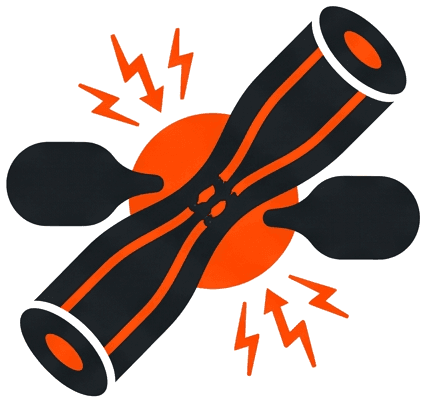
A pinched nerve is a mechanical problem — a disc, joint, or inflamed tissue pressing on a nerve where it exits the spine. The pain, tingling, or numbness travels the nerve's path, which is why arm symptoms so often start in the neck.

Tech Neck
Forward head posture from daily screen use shifts the mechanical load on your cervical spine, compresses nerves, and drives chronic neck pain, headaches, and upper back tension. Corrective care addresses the structural change — not just the symptoms.
Services Related to This Post
Keep Reading
Related articles
Waking Up With a Stiff Neck: Why It Happens and What May Help
Waking up with a stiff neck is common, and usually not serious. Here's what's often behind it, the warning signs worth taking seriously, and gentle steps that may help.
Read articlePinched Nerve in Neck: Symptoms and How to Find Relief
Sharp pain, numbness, or a burning ache running from your neck into your arm? Here's how to recognize a pinched nerve in the neck, what causes it, and how to find relief.
Read articleDesk Stretches for Back and Neck Pain: A 10-Minute Routine
Feeling it in your neck and lower back by 3pm? Here's a simple 10-minute desk stretch routine, plus why the ache keeps coming back no matter how many stretches you do.
Read article