

Degenerative Disc Disease: What It Means and Your Options
If an X-ray or MRI report used the words "degenerative disc disease," it's easy to read that as something is wrong with me — but the phrase is a bit of a misnomer. Degenerative disc disease isn't actually a disease; it's a descriptive term for the natural, expected changes that happen in spinal discs over time. Nearly everyone develops some degree of disc degeneration by their 40s and 50s, and a large share of people with visible disc changes on imaging have no pain at all. What matters isn't whether your discs show wear — it's whether that wear is contributing to your symptoms, and what can realistically help.
What Is Degenerative Disc Disease, Really?
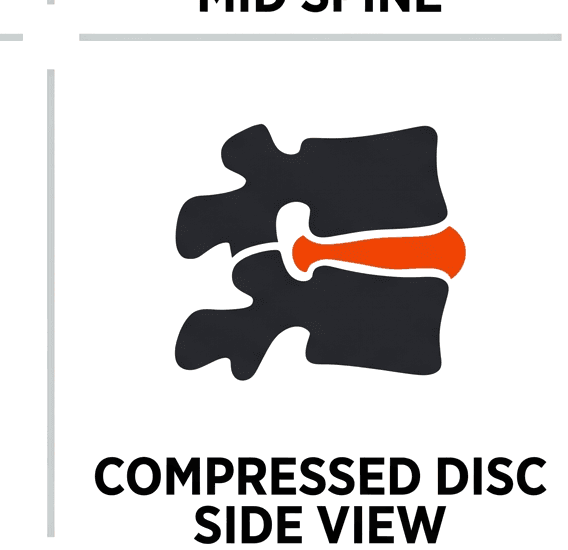
Spinal discs sit between each vertebra, acting as shock absorbers and allowing the spine to bend and twist. Each disc has a tough outer ring (the annulus fibrosus) surrounding a gel-like center (the nucleus pulposus). Over time — and with normal use — discs naturally lose hydration, height, and elasticity. The outer ring can develop small tears, and the disc becomes less able to cushion movement the way it did decades earlier.
This process is a normal part of aging, similar to how skin loses elasticity or joints get stiffer over the years. The word "disease" makes it sound like an active, progressive illness, but for most people it's simply wear that occurs over time — sometimes without ever causing a single symptom.
What Causes Disc Degeneration?
Several factors influence how quickly and how noticeably discs degenerate:
- Age. Disc hydration decreases steadily starting in early adulthood — this is the single biggest factor.
- Repetitive stress or injury. Years of heavy lifting, high-impact activity, or a past back injury can accelerate wear at specific levels.
- Genetics. Family history plays a real role in how someone's discs age (more on this below).
- Smoking. Nicotine reduces blood flow to spinal discs, which rely on that circulation for nutrient exchange since they have no direct blood supply of their own.
- Body weight and posture. Extra load and prolonged poor positioning add mechanical stress over time.
- Occupation. Jobs involving frequent bending, twisting, or vibration (like long-haul driving) are associated with earlier disc changes.
Most people have more than one contributing factor rather than a single clear cause.
The Stages of Disc Degeneration
Disc degeneration is often described in four general stages:
- Dysfunction. Small tears develop in the outer disc wall; the disc itself is still relatively healthy, but surrounding muscles and joints may begin compensating.
- Dehydration and instability. The disc loses more water content and height, and the spinal segment can become less stable.
- Stabilization. The body responds by forming bone spurs (osteophytes) around the disc space — an attempt to restabilize the segment, which can sometimes narrow nearby spaces for nerves.
- Collapse. The disc space narrows further and adjacent vertebrae may develop more significant arthritic changes.
These stages don't move on a fixed timeline, and plenty of people live full, active lives with disc changes anywhere in this range — especially when the surrounding spine stays mobile and well-supported.
Common Symptoms — and Why They Vary So Much
Degenerative disc disease can show up as:
- Low back or neck pain that's worse with sitting, bending, or lifting
- Pain that improves with walking or position changes
- Intermittent flare-ups followed by quieter stretches
- Numbness, tingling, or weakness radiating into an arm or leg, if a nearby nerve root is affected
Some people with significant disc changes on imaging have no symptoms at all, while others with mild changes have real, limiting pain. This is exactly why imaging alone doesn't tell the whole story — how your spine is actually functioning matters more than what a single MRI slice shows. If pain is radiating down a leg, it's also worth understanding how that compares to sciatica and other nerve-related pain patterns.
Is Degenerative Disc Disease Hereditary?
Yes, to a meaningful degree. Research on twins and family history has found that genetics play a significant role in how quickly discs lose hydration and structural integrity — in some studies, more than lifestyle factors like occupation. If a parent or sibling has dealt with early disc problems, it's reasonable to be more proactive about the factors within your control: staying active, maintaining good movement mechanics, avoiding smoking, and getting problems evaluated early rather than waiting for a flare to become severe.
Non-Surgical Options Worth Knowing About
For most people, degenerative disc disease responds well to conservative, non-surgical care. Options worth understanding include:
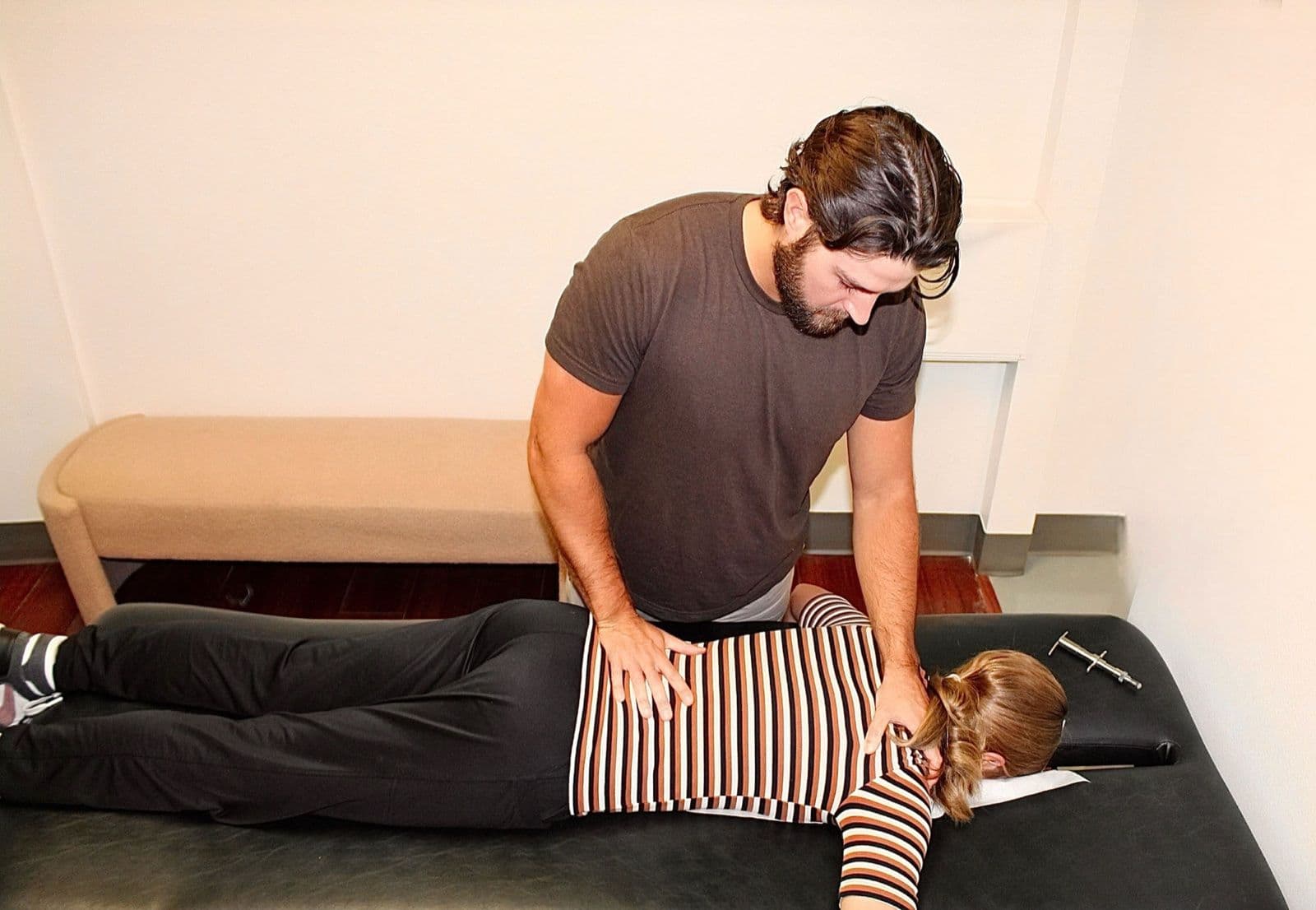
Chiropractic care. Restoring mobility to the segments above and below a degenerating disc may reduce the compensatory strain that often drives day-to-day discomfort. At The Roots Health Centers, we use Torque Release Technique — a low-force, precise approach — rather than aggressive manipulation directly at a compromised segment.
Spinal decompression. Non-surgical spinal decompression gently creates space within the disc space, which may support fluid exchange and reduce pressure on nearby nerve structures. It's a common recommendation for disc-related discomfort that hasn't responded to more general care.
Movement and mechanics. Discs rely on movement for nutrient exchange since they have no direct blood supply, so appropriate activity — not prolonged rest — is generally part of a good plan. A herniated disc and a degenerated disc are related but different presentations, and the right approach depends on which one (or both) is present.
Addressing contributing factors. Smoking cessation, weight management, and posture and ergonomic changes all support the modifiable side of the equation.
When It Needs More Than Conservative Care
Most degenerative disc disease is manageable without surgery, but certain signs warrant more urgent medical evaluation: progressive weakness in a leg or arm, loss of bladder or bowel control, or pain that's rapidly worsening despite rest. These are uncommon, but they're the reason a thorough evaluation — including imaging when clinically indicated — matters before starting any care plan.
What a Visit at The Roots Health Centers Looks Like
Every new patient begins with a consultation, a full neurological evaluation, and any necessary X-rays — so recommendations are based on your actual spine, not a generic assumption about degenerative disc disease. Each person's presentation is different, so we take a personalized approach based on what your evaluation shows rather than a one-size-fits-all protocol.
Frequently Asked Questions
What is degenerative disc disease?
It's the term for the natural changes spinal discs undergo over time — loss of hydration, height, and elasticity. Despite the name, it's a normal aging process rather than an active disease, and many people with visible disc changes on imaging have no pain at all.
What causes degenerative disc disease?
Age is the biggest factor, along with genetics, past injury, smoking, occupation, and repetitive mechanical stress. Most people have a combination of contributing factors rather than one single cause.
Is degenerative disc disease hereditary?
Genetics play a meaningful role in how quickly discs age, according to research on family history and twin studies. A family history of disc problems is a reason to be proactive about the factors you can control.
What are the stages of degenerative disc disease?
Clinicians commonly describe four stages: dysfunction, dehydration and instability, stabilization (bone spur formation), and collapse. Progression isn't on a fixed timeline, and many people stay active and comfortable throughout.
Can degenerative disc disease improve with non-surgical care?
Many people see meaningful day-to-day improvement in comfort and function with conservative approaches like chiropractic care, non-surgical decompression, and appropriate movement — though outcomes vary by individual and the specific structures involved.
If you've been told you have degenerative disc disease and aren't sure what it actually means for you, the best next step is a real evaluation — not a guess based on an imaging report alone. Schedule a complimentary consultation at The Roots Health Centers in Lakewood Ranch. We'll look at your full spine and nervous system and walk you through what we find in plain language.
The Roots Health Centers, 8209 Natures Way, Unit 115, Lakewood Ranch, FL 34202. (941) 877-1507.
Conditions We Treat

Back Pain
Corrective chiropractic care that addresses the structural root cause of back pain — not just masking symptoms with medication.
Herniated Disc
Non-surgical care for herniated and bulging discs using FDA-cleared spinal decompression, corrective chiropractic, and integrated soft-tissue therapies.
Spinal Stenosis
Non-surgical care for spinal stenosis using FDA-cleared decompression therapy and corrective chiropractic to take pressure off compressed nerves and restore comfortable walking.
Services Related to This Post
Keep Reading
Related articles
Herniated Disc vs. Bulging Disc: What's the Difference?
Both show up on MRIs, both can cause pain — but they're not the same thing. Here's how to tell the difference and what your options are.
Read articleSpinal Decompression Therapy: How Non-Surgical Decompression Works and Who It Helps
What non-surgical spinal decompression actually is, how it differs from surgery and basic traction, and which back and disc problems it helps.
Read article