

Knee Pain When Bending: What the Location of Your Pain May Be Telling You
Getting in and out of the car, kneeling to pull weeds, sitting down on a low couch, crouching to grab something from a bottom shelf. If you have knee pain when bending, all of these everyday moves start to feel like a negotiation. The short answer to why it happens: bending the knee squeezes and slides the kneecap against the thigh bone, compresses the cartilage cushions inside the joint, and stretches the tendons around it. If any one of those parts is irritated, bending is when you feel it. The most useful clue you have is where the pain sits. Pain at the front, the back, the inside, or the outside of the knee each tends to point toward a different pattern. Below, we walk through the warning signs first, then each pattern, the role your hips, feet, and back play, gentle ideas that may help, and how our team in Lakewood Ranch approaches knee pain. This is educational information, not a diagnosis.
First, the Red Flags: When Knee Pain Needs a Doctor Right Away
Go to urgent care or the emergency room if knee pain comes with:
- A knee that is hot, red, and swollen, especially with fever or chills
- Being unable to put weight on the leg after a fall, twist, or collision
- A knee that looks deformed, or a pop followed by fast swelling
- Swelling, warmth, or tenderness in the calf, which can signal a blood clot
- Numbness, coldness, or a pale or blue color in the lower leg or foot
Call your doctor promptly if your knee locks and will not straighten, keeps giving way, swells again and again, or keeps getting worse instead of better. If you have had a knee replacement, any new pain, warmth, or drainage near the incision deserves a call to your surgeon.
Why Bending Is When Your Knee Complains
Your knee is a hinge with a lot of moving parts. As it bends, the kneecap glides down a groove in the thigh bone, and the pressure behind it rises the deeper you bend. Two C-shaped pads of cartilage called the menisci get squeezed between the bones. The quadriceps tendon and patellar tendon at the front stretch to their longest, while the hamstring tendons and the back of the joint capsule fold up behind you.
That is why a knee can feel fine walking on flat ground and then protest the moment you squat, kneel, or take stairs. Bending simply loads the structures that are already irritated. Many people notice it most after sitting for a while, a pattern sometimes called the moviegoer sign, or first thing in the morning when joint stiffness is at its worst.
Where It Hurts: Common Patterns Behind Knee Pain When Bending
These are patterns, not diagnoses. Plenty of people have more than one thing going on, and only a hands-on exam can sort it out.
Pain at the Front of the Knee
An ache around or behind the kneecap that flares with squatting, kneeling, stairs, or sitting with your knees bent often points to irritation where the kneecap meets the thigh bone. It is common in runners, people who kneel for work or hobbies, and anyone who has recently ramped up activity. Pain just below the kneecap, right on the tendon, can come from an irritated patellar tendon, especially after jumping sports or pickleball. Our post on knee pain when squatting goes deeper on this front-of-knee pattern.
Pain at the Back of the Knee
Tightness or fullness behind the knee when you bend deeply can come from a fluid-filled Baker's cyst, a strained hamstring or calf tendon, or the back part of a meniscus being pinched. A Baker's cyst often shows up alongside arthritis or a meniscus problem rather than on its own. Because a blood clot can also cause pain behind the knee, new swelling here along with calf pain deserves a medical check. We cover this area in detail in our guide to pain behind the knee.
Pain on the Inside of the Knee
Inner knee pain with bending and twisting is a classic setup for an irritated medial meniscus, especially if you also notice catching, clicking, or swelling. A sore spot a little lower, just below the joint line, can come from the tendons that attach there. A strain of the inner knee ligament usually follows a specific moment, like a sideways bump or a twisting fall.
Pain on the Outside of the Knee
Outside knee pain that builds during running, cycling, or long walks often comes from the iliotibial band rubbing over the side of the knee. A lateral meniscus problem is another possibility, especially with locking or catching. See our post on pain on the outside of the knee for how these two compare.
Stiffness and Aching All Around the Knee
A general ache, morning stiffness, and a knee that feels creaky and reluctant to bend fully is a common picture of wear and tear in the joint. Osteoarthritis is the most common type of arthritis in the knee, and it tends to feel worse after rest and a bit better once you get moving.
Look Above and Below the Knee
The knee sits between the hip and the foot, and it often takes the blame for problems that start somewhere else.
- Hips: Weak or tight hip muscles can let the knee drift inward as you bend, which loads the inside of the knee and the kneecap unevenly.
- Feet and ankles: Flat arches or a stiff ankle can change how the shin rotates, and the knee absorbs the difference with every step and squat.
- Lower back: An irritated nerve root in the lower back can send pain toward the front or side of the knee. If your knee pain comes with back pain, numbness, or tingling down the leg, the source may be higher up than you think.
This is why a thorough look at knee pain checks how you stand, walk, and squat, not just the knee itself.
What May Help Knee Pain When Bending
If none of the red flags apply, these everyday ideas may help calm an irritated knee while you figure out what is going on:
- Adjust the load, do not stop moving. Bend to the depth that feels comfortable rather than all the way. Gentle movement like walking on flat ground, swimming, or easy cycling keeps the joint nourished.
- Mind long sits. Stand and straighten your legs every so often during long drives, movies, or desk work.
- Ice or heat. Many people find ice helpful after activity that flares the knee, and heat helpful for morning stiffness. Use whichever feels better, with a cloth between your skin and the pack.
- Strengthen the support system. The thigh and hip muscles act as shock absorbers. Simple moves like straight-leg raises, side-lying leg lifts, and sit-to-stands from a chair may help, as long as they do not sharpen the pain.
- Check your shoes. Worn-out or unsupportive shoes can change how force travels up to the knee.
- Kneel with care. A cushion under the knees when gardening or cleaning can take pressure off the kneecap.
If you are thinking about over-the-counter pain relievers, ask your doctor or pharmacist what is safe for you, especially if you take other medications.
How Chiropractic Care Fits for Knee Pain
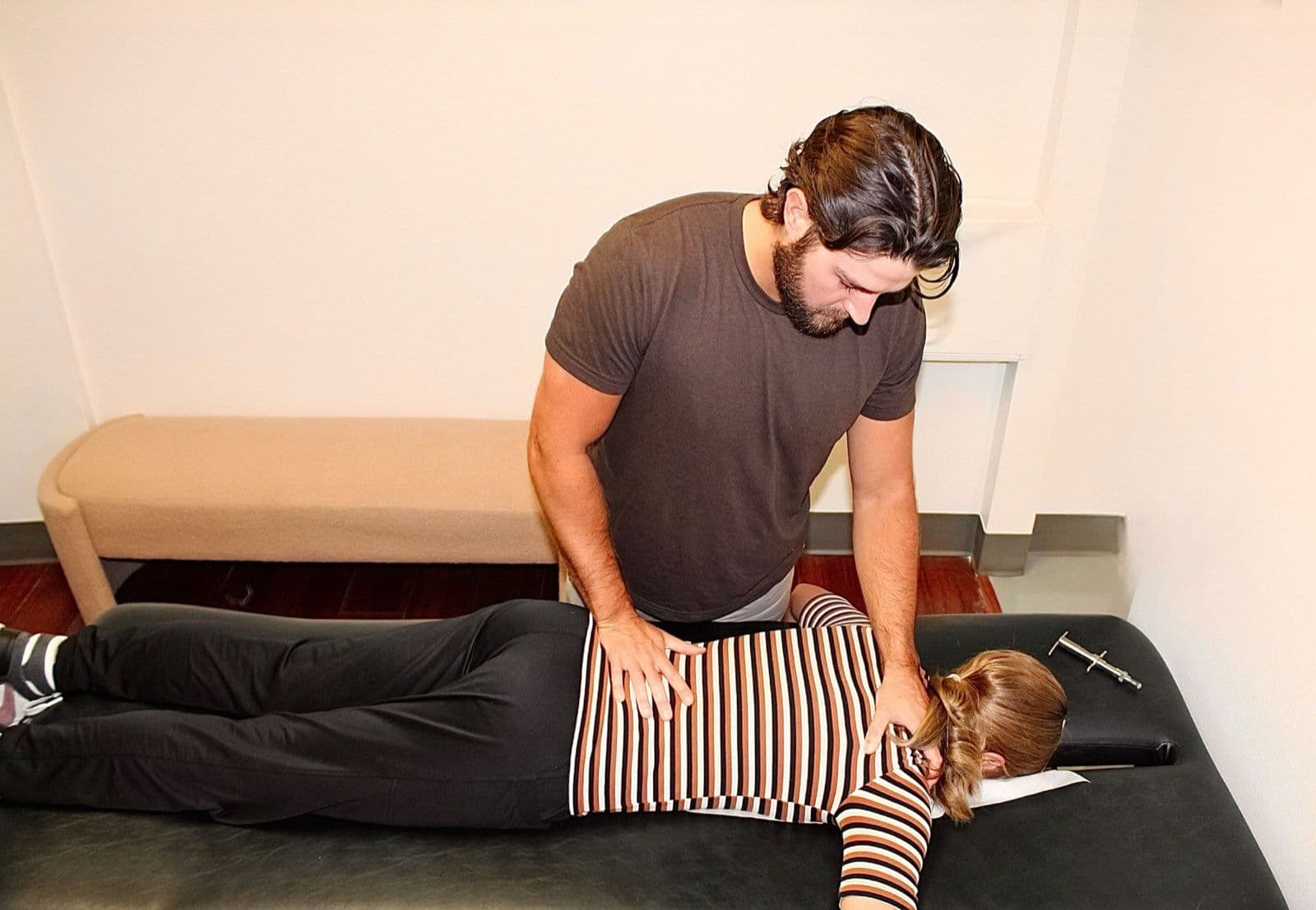
At The Roots Health Centers, our doctors look at knee pain as part of the whole chain from your lower back to your feet. A visit starts with a conversation about when the pain started and what makes it better or worse, followed by an exam of the knee, hip, ankle, and spine and a full neurological evaluation. If something in your history or exam suggests an injury that needs imaging or a specialist, we will tell you and point you in the right direction.
When chiropractic care is a good fit, our doctors use Torque Release Technique, a gentle, low-force approach with no twisting or cracking required, alongside movement and strengthening guidance you can use at home. Care plans are built around what we find, and every person responds differently, so we will talk through what to expect rather than promise a set number of visits. You can read more about our approach on our knee pain page.
Frequently Asked Questions About Knee Pain When Bending
What causes pain in the knee when bending?
The most common sources are irritation behind the kneecap, an irritated meniscus, tendon strain, a Baker's cyst, and arthritis. Where the pain sits, front, back, inside, or outside, is one of the best clues to which one is involved.
Why does my knee hurt when I bend it but not when I walk?
Walking on flat ground only bends the knee a little. Deeper bending, like squatting, kneeling, or stairs, raises the pressure behind the kneecap and squeezes the meniscus much more, so irritated structures speak up then.
What causes pain behind the knee when bending?
A Baker's cyst, a hamstring or calf tendon strain, and the back part of a meniscus are common causes. Because a blood clot can also cause pain behind the knee, new swelling there with calf pain or warmth should be checked by a doctor promptly.
How can I ease knee pain when bending?
Bend only as deep as feels comfortable, keep moving gently, use ice or heat for comfort, and build strength in your thighs and hips. If the pain sticks around, keeps you from your normal activities, or comes with swelling or locking, get it evaluated.
Get Your Knee Checked in Lakewood Ranch
Knee pain when bending is common, but you do not have to keep tiptoeing around stairs and low chairs while you guess at the cause. If you live in Lakewood Ranch, Bradenton, or Sarasota and want a clear picture of what is behind your knee pain, our team would be glad to help. Book a complimentary consultation and we will listen to your story, look at the whole picture, and talk through your options.
Conditions We Treat
Knee Pain
Non-surgical knee pain relief using knee decompression, shockwave therapy, red light therapy, and corrective chiropractic — addressing the mechanical root cause of joint dysfunction.

Arthritis
Drug-free arthritis care that reduces joint inflammation, slows degeneration, and restores function — using corrective chiropractic, decompression, red light therapy, and shockwave.
Services Related to This Post
Keep Reading
Related articles
Knee Pain When Squatting: Why It Happens and What Helps
Knee pain when squatting is rarely just a knee problem. Here is what commonly sits behind it, which signs need a prompt exam, and how a whole-body look at movement can help.
Read articlePain Behind the Knee: Common Causes and When to Get It Checked
Pain behind the knee has several possible sources, from a tight hamstring to a fluid-filled cyst to an irritated nerve. Here is how to read the pattern, spot red flags, and know what a thorough exam looks at.
Read articleKnee Pain Going Down Stairs: Causes and What May Help
Does your knee ache or give way on the way down the stairs? Here's why descending stairs is so demanding on the knee, what may be behind the pain, and when to get it checked.
Read article