

Lower Back Pain on the Left Side: Common Causes and When to Worry

If the ache in your lower back sits on the left side, just above your belt line or near the dimple over your pelvis, you probably want to know two things: what is causing it, and whether it is something serious. Most of the time, lower back pain on the left side comes from the muscles, joints, and discs of the spine, often from everyday habits that load one side more than the other. Less often, it comes from an organ that sits on the left side of the body, like the left kidney or the colon. Below, we walk through both, the red flags that mean you should get checked right away, and what a careful spine evaluation looks at. This is educational information, not a diagnosis.
When Left-Side Lower Back Pain Needs Care Right Away
Call 911 or go to the ER if lower back pain on the left side comes with:
- Sudden, severe, tearing pain in the back or belly, especially with dizziness or fainting. If you are older, smoke, or have high blood pressure, this can be a problem with the aorta, the large blood vessel that runs just left of your spine.
- Numbness in the groin or inner thighs, new trouble controlling your bladder or bowels, or weakness in both legs
- Fever, chills, burning with urination, or blood in your urine, which can point to a kidney infection
- Severe pain that comes in waves and travels toward the groin, which can be a kidney stone
- Black or bloody stools, or belly pain with vomiting
- Pain after a fall or car accident, or back pain with unexplained weight loss or a history of cancer
If you are pregnant, call your OB or midwife about new back pain with cramping, bleeding, or leaking fluid. None of these are things to wait out.
What Lives in Your Lower Left Back
It helps to picture what sits in that spot. Closest to the surface are muscles: the quadratus lumborum (QL), which runs from your lowest rib to the top of your pelvis, and the long muscles that run along your spine. Deeper are the joints and discs of the lower spine and the sacroiliac (SI) joint, where your spine meets your pelvis. In front of all that, tucked behind the belly, sit the left kidney, part of the colon, and in women the left ovary.
Here is the single most useful clue you have at home: spine and muscle pain usually changes with movement and position. It sharpens when you bend, twist, roll over, or stand up from a chair, and eases when you find the right position. Organ-related pain usually does not care how you move. It tends to stay the same whether you sit, stand, or lie down, and it often comes with other symptoms like fever, urinary changes, or digestive trouble.
Common Spine and Muscle Causes of Lower Back Pain on the Left Side
One-sided habits
Most of us use our bodies unevenly. Carrying a toddler on your left hip, slinging a heavy bag over one shoulder, sitting on a wallet in your back pocket, leaning on the same armrest, or always reaching to the same side at work can load the left side day after day. Over time, the muscles on that side tighten and guard, and the joints underneath take on extra stress.
A strained quadratus lumborum
The QL is one of the most common sources of a deep, nagging ache just above the left hip. It often sharpens when you stand up from a chair, roll over in bed, cough, or lean to the side, and it can feel like there is no comfortable position. Because the QL attaches to your lowest rib, the ache can climb toward your flank, which is why people sometimes worry it is their kidney.
Sacroiliac (SI) joint irritation
The SI joint sits right under the dimple on each side of your lower back. When it gets irritated, pain usually lands at or just below the belt line on one side and can wrap into the buttock or groin. It often flares when you climb stairs, get in and out of the car, roll over in bed, or stand on one leg to put on your pants.
A disc or pinched nerve on the left
A disc can bulge more toward one side. When it presses on a nerve root on the left, you may feel low back pain plus pain, tingling, or numbness running down the left buttock and leg. That pattern is often called sciatica. Weakness in your foot or leg is a reason to get checked promptly.
Stiff, irritated spinal joints
The small facet joints at the back of each vertebra can stiffen and become irritated with age, repetitive bending, or old injuries. Facet pain is often worse when you lean back or twist and a little better when you bend slightly forward.
Weak or uneven hip and glute muscles
When the glute muscles on one side do not fire well, the lower back on that side often picks up the slack. We cover this in more depth in our article on weak glutes and low back pain. Tight hip flexors and a small difference in leg length can add to the imbalance.
Organ-Related Causes Worth Knowing
These are less common than spine causes, but they matter because they need a medical doctor first.
- The left kidney: A kidney stone or infection usually causes deep flank pain under the ribs, sometimes with fever, nausea, burning with urination, or pain that travels toward the groin. It usually does not change much when you move.
- The colon: The lower part of your colon runs down the left side of your belly. Constipation, trapped gas, or inflammation in the colon can create pressure that some people feel in the lower left back. Fever, a tender belly, or changes in your stool are clues that it is digestive.
- Gynecologic causes: In women, an ovarian cyst, endometriosis, or menstrual cramps can cause left-sided lower back pain, often tied to the monthly cycle.
- The pancreas and spleen: Problems here usually cause upper back pain along with belly pain, but mention it to your doctor if you notice both.
If your pain does not change with movement, wakes you up with a fever, or comes with any of these symptoms, start with your medical doctor.
How the Left Side Differs From the Right
We wrote a separate guide to lower back pain on the right side, and the spine and muscle causes overlap a lot. What changes is the list of nearby organs. The right side has the liver, gallbladder, and appendix. The left side has the lower colon, the spleen higher up, and the aorta running close to the spine.
Handedness plays a role too. Many right-handed people brace with their left side when they lift, carry, or reach, so the left QL and SI joint can quietly work overtime. Parents who carry a little one on the same hip all day see the same pattern.
What You Can Try at Home
Each person and case is different, so think of these as gentle starting points, not a prescription.
- Spread the load. Switch hips when you carry a child, switch shoulders with your bag, and take your wallet out of your back pocket before you sit.
- Keep moving, gently. Short, easy walks are usually better than lying still all day.
- Use heat or ice. Many people find heat relaxes a guarded muscle, while ice may calm a fresh flare. Use whichever feels better, for short stretches at a time.
- Sit with support. Keep your feet flat, scoot your hips to the back of the chair, and get up every 30 to 45 minutes. Our guide to lower back pain when sitting has more ideas.
- Try a gentle side stretch. Stand tall, reach your right arm overhead, and lean slightly to the right to open up the left side. Stop if it sharpens the pain or sends symptoms down your leg.
- Support your sleep. Side sleepers can tuck a pillow between the knees. Back sleepers can put one under the knees.
- Stay regular. If constipation is part of the picture, water, fiber, and movement may ease the pressure. Talk with your doctor if it keeps happening.
- Keep a quick log. Note what makes the pain better or worse, whether it travels, and any other symptoms. It makes your visit far more useful.
How Chiropractic Care May Help
At The Roots Health Centers in Lakewood Ranch, we start by listening: where the pain sits, what makes it worse, what your days look like, and your health history. If anything points toward the kidney, colon, or another organ, we send you to the right medical provider first.
When it is a spine and muscle story, our team looks at the whole chain, not just the sore spot: how your pelvis sits, how each SI joint moves, how your hips and lower back share the load, and how your nervous system is responding. When it is appropriate, that includes a neurological evaluation and any necessary X-rays, so recommendations are based on what we actually find rather than a guess.
Our chiropractic care uses Torque Release Technique, a gentle, low-force approach with no twisting or cracking required. When a disc is part of the picture, spinal decompression may be part of the conversation. We also coach the everyday habits, like carrying, sitting, and sleeping, that kept loading the left side in the first place. Each person and case is different, so we take a personalized approach and never promise a specific outcome.
You can read more about the back pain we commonly see in the office, and about lower back pain as a symptom.
Frequently Asked Questions
What causes pain on the lower left side of the back?
Most often, a strained quadratus lumborum muscle, an irritated SI joint, a disc or pinched nerve, or one-sided habits like carrying a child on one hip. Less often, the left kidney, the colon, or gynecologic causes are involved, usually along with other symptoms like fever or urinary or digestive changes.
Can constipation cause lower back pain on the left side?
It can. The lower colon runs down the left side of your belly, and a backup of stool or gas can create pressure some people feel in the lower left back. If the ache eases after a bowel movement, that is a helpful clue. See your doctor if constipation keeps happening, or if you have fever, blood in your stool, or belly pain.
Can gas cause lower left back pain?
Trapped gas can cause pressure and a dull ache that wraps toward the back. It tends to come and go with digestion rather than with how you move.
How do I know if my left lower back pain is my kidney?
Kidney pain usually sits higher, on the flank just under the ribs, feels deep, does not change much with movement, and often comes with fever, nausea, burning with urination, or blood in the urine. Muscle and joint pain usually changes when you bend, twist, or sit. If you are not sure, get checked.
When should I see a doctor for lower back pain on the left side?
Right away for severe or tearing pain, fever, urinary changes, blood in your stool or urine, numbness in the groin, or new bladder or bowel trouble. Book a visit if the pain is not settling down, keeps coming back, or travels down your leg.
Get a Clear Answer About Your Left-Side Back Pain
You do not have to keep guessing whether it is a muscle, a joint, or something else. Book a complimentary consultation and our team in Lakewood Ranch will take a careful look at what is going on and talk through your options in plain English. We welcome patients from Lakewood Ranch, Bradenton, Sarasota, and the surrounding area.
Conditions We Treat
Back Pain
Corrective chiropractic care that addresses the structural root cause of back pain — not just masking symptoms with medication.
Sciatica
Non-surgical care for sciatic nerve pain using spinal decompression, corrective chiropractic, and supporting therapies.
Herniated Disc
Non-surgical care for herniated and bulging discs using FDA-cleared spinal decompression, corrective chiropractic, and integrated soft-tissue therapies.
Services Related to This Post

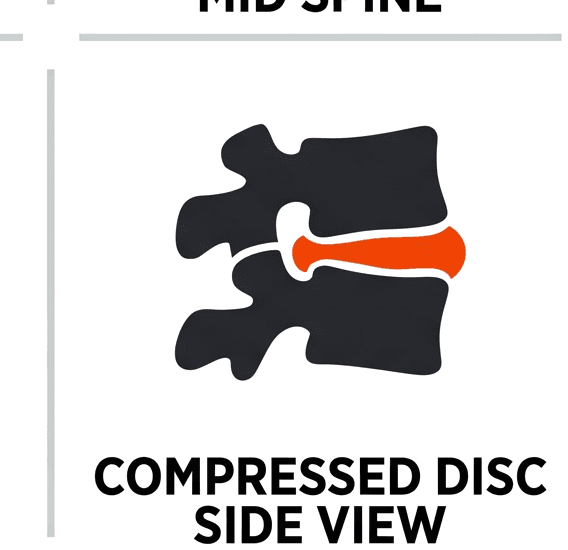
Keep Reading
Related articles
Weak Glutes and Low Back Pain: The Overlooked Connection
Weak glutes can quietly leave your low back doing extra work. Here's how the hip-and-back connection works, the signs to watch for, and what a proper look involves.
Read articleLower Back Pain When Sitting: Why It Happens and What May Help
Does your low back ache the longer you sit? Here's why sitting strains the spine, what may be behind it, simple changes that may help, and when to get it checked.
Read article