

Neck Pain on the Left Side: Causes, Red Flags, and What Helps
You turn to check your blind spot, or you look down at your phone, and there it is again: a sharp pull or a deep ache on the left side of your neck. Maybe it runs into your shoulder blade. Maybe it brings a headache along for the ride. Neck pain on the left side is one of the most common complaints we hear in our Lakewood Ranch office, and the good news is that most of the time it comes from muscles, joints, or a nerve that is being squeezed, not from something dangerous. The left side simply tends to be the side doing more of the work, or the side your body has been quietly favoring. Below, we walk through the common causes, the red flags that need care right away, and the habits and care options that may help your neck move and feel better.
First, the Red Flags: When Left-Sided Neck Pain Needs Care Right Away
Because the heart sits on the left, people often worry that left neck pain could be cardiac. Usually it is not, but sometimes it can be, and that is worth taking seriously.
Call 911 or go to the nearest emergency room if neck pain on the left side comes with:
- Chest pressure, tightness, or pain, especially with pain spreading into the jaw or left arm
- Shortness of breath, sweating, nausea, or lightheadedness
- Sudden, severe headache unlike any you have had before
- Facial droop, slurred speech, vision changes, or weakness on one side of the body
- A stiff neck with fever, confusion, or sensitivity to light
- Neck pain after a fall, car accident, or blow to the head
Call your doctor promptly if you notice a new lump in the neck, unexplained weight loss, pain that wakes you every night no matter how you lie, or numbness and weakness in your arm that keeps getting worse. Those are not chiropractic emergencies, and you deserve a full medical look first.
What Causes Neck Pain on the Left Side?
Your neck balances a head that weighs about as much as a bowling ball on seven small vertebrae, with dozens of muscles and a bundle of nerves passing through. When one side gets overloaded, it lets you know. These are the presentations we commonly see in the office.
Muscle strain and trigger points
The levator scapulae and upper trapezius run from your neck to your shoulder blade. If you carry a bag on your left shoulder, cradle a phone on the left, or sleep with your head turned one way, these muscles can tighten and develop tender knots. The pain is often a dull ache that runs from the side of your neck down toward the top of your shoulder blade.
Posture and tech neck
When your head drifts forward over a laptop or phone, the muscles at the back and sides of your neck work much harder to hold it up. Many people also rotate slightly toward a second monitor or toward the window side of the car. Over weeks, that one-sided load adds up. We cover this pattern in depth on our tech neck page.
Irritated facet joints
Each vertebra connects to the next through small paired joints called facets. When a joint on the left side gets stiff or irritated, it can cause sharp, local pain when you turn or tilt your head toward that side, and sometimes a feeling that the neck is stuck.
A pinched nerve
If a disc bulges or the space where a nerve exits the spine narrows, the nerve root can get irritated. That usually shows up as pain that travels into the left shoulder, arm, or hand, sometimes with tingling or numbness in specific fingers. Learn more about this pattern on our pinched nerve page.
Sleeping position
A pillow that is too high, too flat, or sleeping on your stomach with your head turned left for hours can leave you waking up with a one-sided crick that eases as the day goes on.
Stress and jaw clenching
Stress tends to settle in the neck and shoulders. If you clench your jaw or chew mostly on your left side, the muscles that connect your jaw, skull, and neck can stay tight and feed into left-sided neck pain and headaches.
What Your Pain Pattern Can Tell You
Where and when the pain shows up are some of the best clues you have. These patterns are not a diagnosis, but they can help you describe what is going on.
- Pain only on the left side when turning your head: often points to a stiff facet joint or tight muscles on that side.
- Pain from the neck into the shoulder blade: commonly muscular, from the levator scapulae or upper trapezius.
- Pain running down the arm with tingling: suggests a nerve root may be involved.
- Pain with headaches at the base of the skull: the upper neck joints and muscles can refer pain up into the head. Our page on headaches and migraines explains that connection.
- Worse in the morning, better by afternoon: often related to sleep position or pillow height.
- Worse at the end of the workday: usually a posture and workstation pattern.
How to Relieve Neck Pain on the Left Side at Home
Each person and case is different, so think of these as gentle starting points, not a prescription. Stop anything that makes your pain sharper or sends symptoms down your arm.
- Move gently, often. Slow, pain-free head turns and tilts a few times an hour usually beat holding perfectly still.
- Try heat for tight muscles. A warm shower or heat pack on the left side of the neck can help tight muscles relax. Some people prefer a cold pack for a fresh flare; use whichever feels better.
- Even out your load. Switch shoulders with your bag, use speakerphone or earbuds instead of a shoulder-cradled phone, and center your main monitor in front of you.
- Raise your screens. Bring your phone and laptop closer to eye level so your head is not hanging forward.
- Check your pillow. Aim for a height that keeps your nose in line with the center of your chest when you lie on your side or back.
- Notice your jaw. Let your teeth rest slightly apart and your tongue rest on the roof of your mouth during the day.
- Breathe low. Shallow chest breathing recruits neck muscles. A few slow belly breaths can take some of that load off.
How to Sleep With Neck Pain on the Left Side
Sleep is often where one-sided neck pain starts or lingers. If your left side hurts, try sleeping on your back or on your right side with a pillow that fills the gap between your ear and the mattress. Avoid stomach sleeping, which forces your head to stay rotated for hours. A small rolled towel inside your pillowcase can support the curve of your neck if your pillow feels flat. Our guide to waking up with a stiff neck has more sleep-specific tips.
What an Evaluation at The Roots Looks At
At The Roots Health Centers in Lakewood Ranch, we look at neck pain as a nervous-system and movement picture, not just a sore spot. Your visit starts with a conversation: when the pain began, what makes it better or worse, how you sleep and work, and whether anything travels into your arm or head.
From there, our team checks how your neck turns and tilts in each direction, how your shoulders and upper back are moving, and how your head sits over your body. A neurological evaluation helps us understand how your nervous system is handling stress and tension, and any necessary X-rays are taken only when they are clinically indicated. Dr. Logan Swaim and our team then explain what we found in plain English. If anything points to a medical concern, we will tell you and help you connect with the right provider.
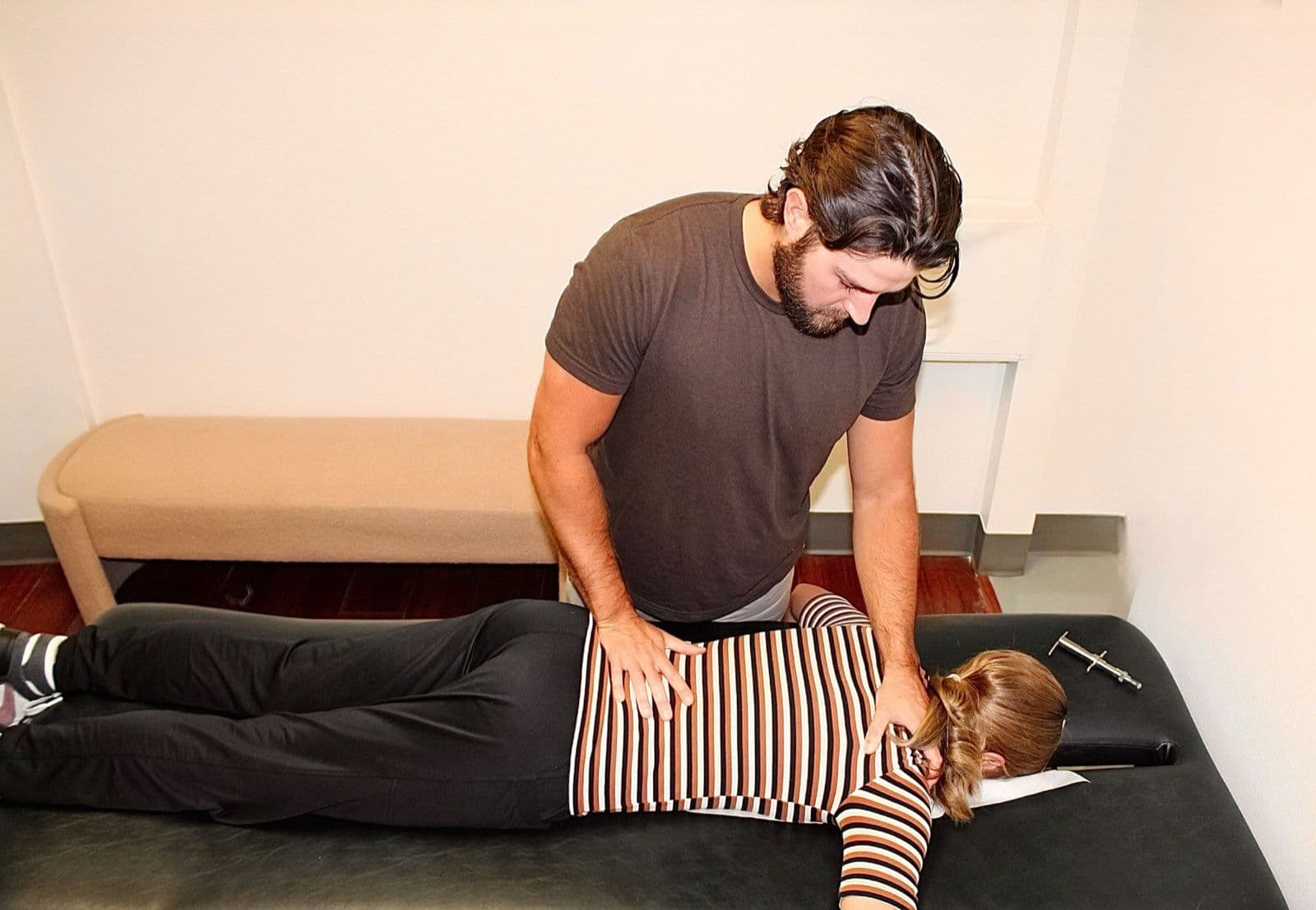
If chiropractic care is a fit, it may include gentle adjustments using Torque Release Technique, a low-force approach with no twisting or cracking required, along with posture and home-care guidance. Each person and case is different, so we take a personalized approach based on what your body needs to reach your goals.
Frequently Asked Questions
What causes neck pain on the left side?
The most common causes are muscle strain, posture habits like tech neck, an irritated facet joint, sleeping position, stress and jaw clenching, and a pinched nerve. Less often, left-sided neck pain can be linked to the heart, so pain with chest pressure, shortness of breath, or sweating needs emergency care.
Can left side neck pain be heart related?
It can be, though it is not the most common cause. Neck or jaw pain that comes with chest discomfort, pain in the left arm, shortness of breath, nausea, or sweating can be a sign of a heart problem. Call 911 rather than waiting to see if it passes.
How do I relieve severe neck pain on the left side?
If the pain is severe, sudden, or came with any red flag above, get medical care first. For severe muscular pain without red flags, gentle movement, heat or cold, a supportive sleep position, and avoiding one-sided loads may help while you get it evaluated.
When should I see someone about left-sided neck pain?
If the pain keeps coming back, spreads into your arm or hand, causes headaches, or is changing how you sleep or work, it is worth having it checked rather than waiting it out.
Can a chiropractor help with neck pain on one side?
Many people with one-sided neck pain find that chiropractic care helps them move more comfortably. A good evaluation looks for the reason one side is overloaded, so your care plan addresses the pattern and not just the sore spot.
Ready to Find Out Why the Left Side of Your Neck Hurts?
If neck pain on the left side keeps pulling at you while you drive, work, or sleep, you do not have to keep guessing. Book a complimentary consultation with our team in Lakewood Ranch, meet the doctors, and get a clear explanation of what your neck is telling you. We serve families from Lakewood Ranch, Bradenton, and Sarasota.
Conditions We Treat

Neck Pain
Precise cervical adjustments and decompression that restore alignment, reduce nerve pressure, and eliminate chronic neck pain at its source.
Pinched Nerve
A pinched nerve is a mechanical problem — a disc, joint, or inflamed tissue pressing on a nerve where it exits the spine. The pain, tingling, or numbness travels the nerve's path, which is why arm symptoms so often start in the neck.

Tech Neck
Forward head posture from daily screen use shifts the mechanical load on your cervical spine, compresses nerves, and drives chronic neck pain, headaches, and upper back tension. Corrective care addresses the structural change — not just the symptoms.
Services Related to This Post

Keep Reading
Related articles
Neck Pain When Turning Your Head: Causes and Relief
A sharp catch or ache every time you check your blind spot? Here's what may be behind neck pain when turning your head, what may ease it, and when to get it looked at.
Read articlePinched Nerve in Neck: Symptoms and How to Find Relief
Sharp pain, numbness, or a burning ache running from your neck into your arm? Here's how to recognize a pinched nerve in the neck, what causes it, and how to find relief.
Read articleWaking Up With a Stiff Neck: Why It Happens and What May Help
Waking up with a stiff neck is common, and usually not serious. Here's what's often behind it, the warning signs worth taking seriously, and gentle steps that may help.
Read article