

Spondylolisthesis: When a Vertebra Slips Forward
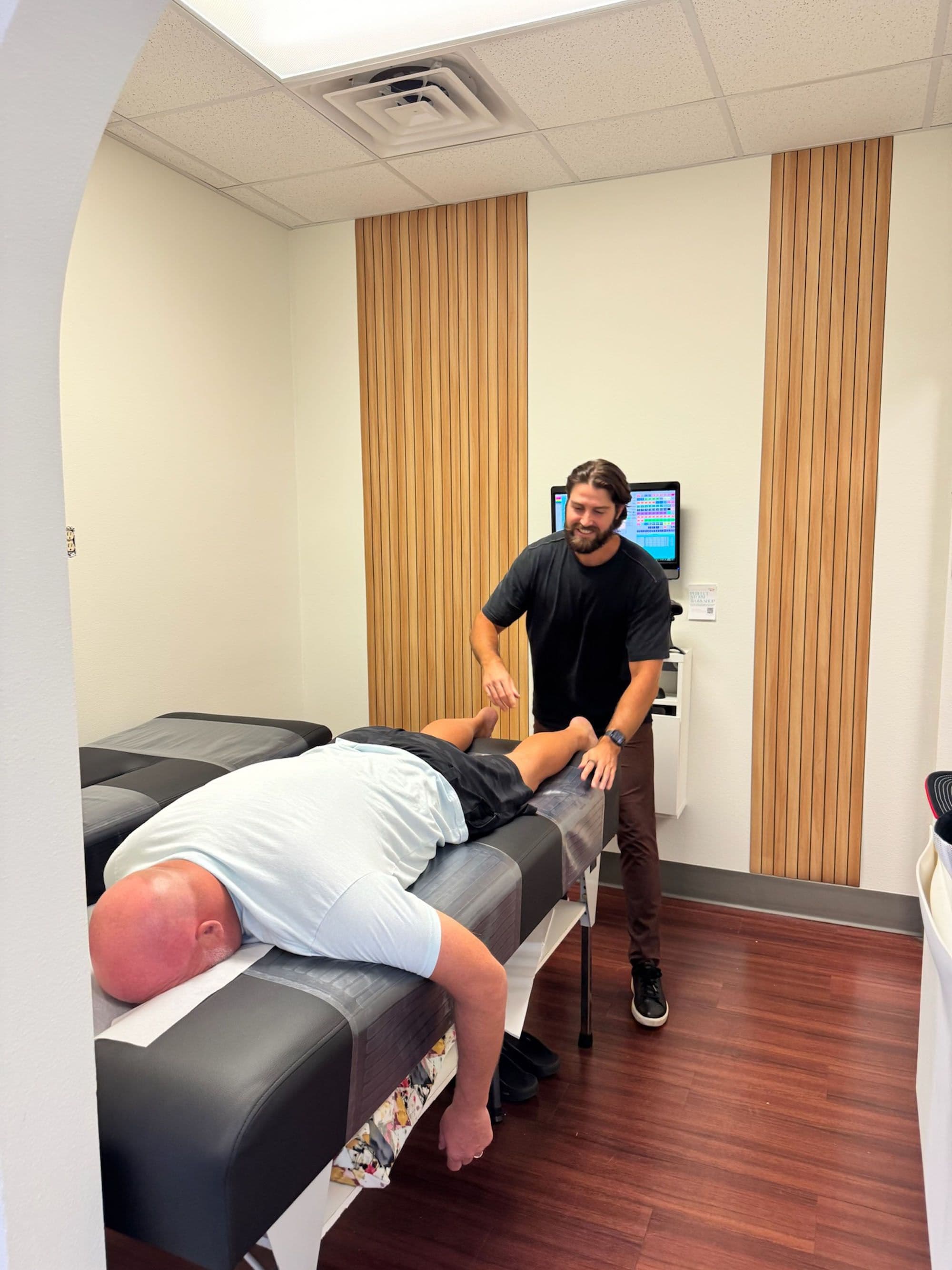
If you've been told you have a "slipped vertebra" or diagnosed with spondylolisthesis, you're probably wondering what that actually means for your back and what happens next. Spondylolisthesis occurs when one vertebra slides forward over the bone below it, and it's a more common finding than most people realize — especially in the lower back. At The Roots Health Centers, we see it show up in active adults, weekend athletes, and people who've simply lived in their spine for a few decades. Here's what's actually happening, what causes it, and the non-surgical options worth understanding first.
What Is Spondylolisthesis?
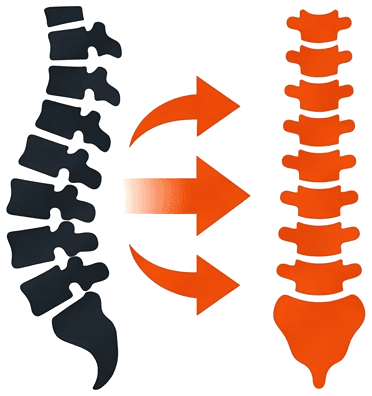
Your spine is a stack of vertebrae, each one meant to sit directly on top of the one below it, held in place by discs, ligaments, and small joints called facet joints. Spondylolisthesis happens when that alignment breaks down — one vertebra, most often in the lower back at L4 or L5, shifts forward relative to the vertebra beneath it. The result is a step-like misalignment that can narrow the space available for nearby nerves and change how your spine distributes load with every step, twist, and lift.
What Causes a Vertebra to Slip?
A few distinct patterns lead to spondylolisthesis:
A stress fracture in a specific spinal joint (isthmic). This is the type most associated with athletes who repeatedly extend or bend backward — gymnastics, weightlifting, and football linemen are classic examples.
Age-related wear (degenerative). This is the most common type in adults over 50. Facet joints and discs wear down over the years, allowing gradual forward slippage without any single fracture event.
A birth-related structural difference (dysplastic). Some people are born with a vertebra shaped in a way that predisposes it to slip later in life.
Trauma. A fall or direct injury can shift a vertebra out of alignment.
Repeated heavy loading over years. Work or sport that consistently loads the low back can contribute over time.
Here in Lakewood Ranch, we often see the degenerative pattern in active adults who golf or play pickleball regularly — sports that involve a lot of rotation and spinal extension.
Symptoms of Spondylolisthesis
- Low back pain that worsens with standing, walking, or arching backward, and eases when sitting or bending forward
- Tight hamstrings that don't respond to stretching
- A noticeable change in the curve or posture of your lower back
- Leg pain, tingling, or weakness if the slip narrows space around a nerve root
- A "catching" or unstable feeling in the low back with certain movements
Many people with a mild slip have no symptoms at all — it's sometimes found incidentally on imaging done for another reason entirely.
Spondylolisthesis vs. Herniated Disc vs. Spinal Stenosis
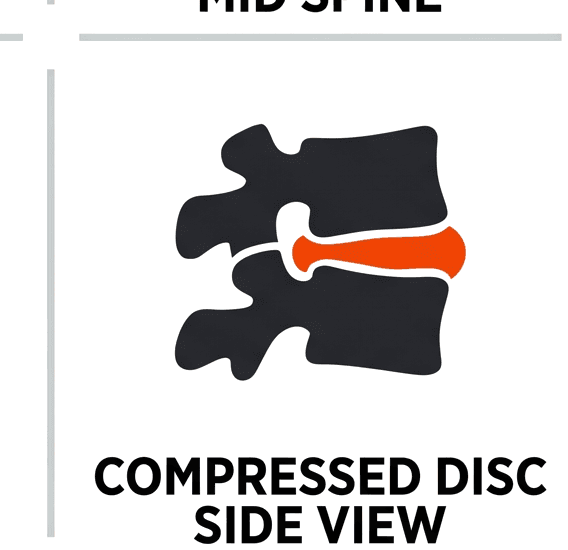
Because low back pain can come from several structures at once, it's easy to lump these together. A herniated disc involves the disc's inner material pushing outward, which typically causes more localized nerve irritation. Spinal stenosis is a narrowing of the space around the spinal cord or nerves, which can happen with or without a slipped vertebra — in fact, spondylolisthesis is one of the more common causes of stenosis, since the shifted bone crowds the same space. Spondylolisthesis itself is specifically about the alignment between two vertebrae. It's possible to have more than one of these findings on the same MRI, which is why a full picture matters more than a single label.
Grades of Spondylolisthesis
Doctors grade spondylolisthesis by how far one vertebra has shifted relative to the one below it: Grade I (up to 25% slip), Grade II (25–50%), Grade III (50–75%), and Grade IV (more than 75%). The vast majority of people diagnosed with spondylolisthesis fall into Grade I or II, and grade alone doesn't determine how much pain someone feels — some people with a higher-grade slip have minimal symptoms, while some with a lower grade struggle more. What matters clinically is the whole picture: your symptoms, your nerve function, and whether the slip is stable or progressing.
Non-Surgical Options That May Help
Most cases of spondylolisthesis, particularly Grade I and II, are managed without surgery. A few approaches worth understanding:
A thorough evaluation of spinal mechanics and stability. Our Corrective Chiropractic approach starts with a consultation and a full neurological evaluation, along with any necessary X-rays, to understand exactly where and how the vertebra has shifted before recommending a path forward.
Spinal decompression for nerve-related symptoms. When a slip is narrowing space around a nerve root, spinal decompression therapy is one option that may help relieve pressure on the affected area.
Core and spinal stability work. Because spondylolisthesis is fundamentally a stability issue, building strength in the muscles that support the low back is often part of a longer-term approach — not to reverse the slip itself, but to help the spine function better around it.
Activity modification during flare-ups. Temporarily easing off movements that consistently provoke symptoms, like repeated backward bending or heavy loaded lifting, gives irritated tissue room to settle down.
We take a personalized approach based on what your evaluation and imaging actually show, since spondylolisthesis varies widely from person to person.
When Surgery Might Be Considered
Surgery is typically reserved for higher-grade slips, a slip that continues to progress, significant or worsening nerve symptoms, or cases where a thorough trial of non-surgical care hasn't provided meaningful relief. It's not the first conversation for most people diagnosed with spondylolisthesis, but it's a legitimate option in the right circumstances, and an honest evaluation should tell you where you fall on that spectrum rather than assuming either extreme.
Living With a Diagnosed Slip Day to Day
A spondylolisthesis diagnosis doesn't mean stopping the activities you enjoy — it usually means changing how you do a few specific things.
Lift by hinging at the hips, not bending through the low back. A slipped vertebra is especially sensitive to repeated spinal flexion under load. Learning to hip-hinge — pushing your hips back rather than folding forward — keeps the load off the segment that's already unstable.
Watch backward bending during a flare. Extension-based movements — a full golf backswing, certain yoga poses, reaching overhead while arching — are often the ones most likely to aggravate an isthmic-type slip. That doesn't mean giving up golf or pickleball, both popular here in Lakewood Ranch; it usually means adjusting mechanics or dialing back volume for a stretch, then reassessing.
Sleep in a position that keeps your spine neutral. Side-sleeping with a pillow between the knees, or back-sleeping with a pillow under the knees, tends to be more comfortable than sleeping on your stomach, which extends the low back.
Build core stability before you chase endurance. A slip is a stability problem before it's a strength problem. Gentle bracing and stabilization work, done consistently, tends to matter more than how much weight you can lift.
None of this replaces knowing your specific grade and stability. What's fine for one person's Grade I slip may not be fine for someone else's — which is exactly why we start with an evaluation rather than a generic list of do's and don'ts.
How We Approach a Diagnosed Slip at The Roots
When someone comes in with a spondylolisthesis diagnosis — or with symptoms that look like one — our process starts the same way every new patient visit does: a consultation, a full neurological evaluation, and any necessary X-rays. If you're bringing in outside imaging, we'll review it directly rather than starting from scratch.
From there, we're looking at a few specific questions: how much has the vertebra actually shifted, and does it look stable on imaging? Is there nerve involvement, and if so, does the pattern look more like sciatica or more like general mechanical back pain? And what does your day-to-day life actually demand of your spine — a desk job is a different conversation than a job involving repeated lifting.
Each person and case is different, so we take a personalized approach based on what your evaluation and imaging actually show, not a one-size-fits-all protocol. If you've never been through a full evaluation before, our guide to what to expect at your first chiropractic visit walks through what that first appointment looks like.
Frequently Asked Questions
Can spondylolisthesis get better without surgery? Many people manage their symptoms well with non-surgical care, particularly with Grade I and II slips. Each case is different, so what helps depends on your specific evaluation and imaging.
Is spondylolisthesis the same as a herniated disc? No. Spondylolisthesis is about the alignment between two vertebrae, while a herniated disc involves the cushioning disc between them. The two can occur together, which is why a full evaluation matters.
Can I keep exercising with spondylolisthesis? Often, yes, with some adjustments. Movements that don't provoke your specific symptoms are usually fine, while repeated backward bending or heavy axial loading are worth discussing with your provider first.
Does spondylolisthesis always cause pain? No — some people have a slip that shows up incidentally on imaging without ever causing noticeable symptoms. Pain depends on factors like how much space is left for nearby nerves and how stable the segment is.
How is spondylolisthesis diagnosed? It's typically confirmed with X-rays, which show the alignment between vertebrae clearly, sometimes along with additional imaging if nerve involvement is suspected.
Can golf or pickleball make spondylolisthesis worse? Repeated backward bending and rotation — like a full golf swing — can aggravate an isthmic-type slip, especially during a flare. Most people don't need to quit; adjusting mechanics or backing off volume for a stretch and reassessing is usually the more practical approach.
What's the best sleeping position for spondylolisthesis? Side-sleeping with a pillow between the knees or back-sleeping with a pillow under the knees tends to keep the low back more neutral than sleeping on your stomach, which many people find more comfortable.
Getting a Clear Picture of Your Spine
A slipped vertebra doesn't have to mean a lifetime of guessing about your low back. Come in for a complimentary consultation at The Roots Health Centers in Lakewood Ranch, and let's get a clear picture of what your spine actually needs.
Conditions We Treat
Spinal Stenosis
Non-surgical care for spinal stenosis using FDA-cleared decompression therapy and corrective chiropractic to take pressure off compressed nerves and restore comfortable walking.
Back Pain
Corrective chiropractic care that addresses the structural root cause of back pain — not just masking symptoms with medication.
Sciatica
Non-surgical care for sciatic nerve pain using spinal decompression, corrective chiropractic, and supporting therapies.
Services Related to This Post
Keep Reading
Related articles
Spinal Stenosis: A Non-Surgical Care Plan That Actually Works
Spinal stenosis doesn't have to mean back surgery. Here's the non-surgical protocol that helps most patients walk comfortably again.
Read articleHerniated Disc vs. Bulging Disc: What's the Difference?
Both show up on MRIs, both can cause pain — but they're not the same thing. Here's how to tell the difference and what your options are.
Read articleFacet Joint Syndrome: Symptoms, Causes, and How to Find Relief
Facet joint syndrome causes stiff, aching back or neck pain that worsens with movement. Learn the causes, symptoms, and non-surgical relief options.
Read article