

Pain Under the Left Shoulder Blade: Common Causes and When to Worry
You feel it when you reach into the back seat, turn to check your blind spot, or sit at the computer a little too long: a deep ache tucked under your left shoulder blade. Pain under the left shoulder blade is common, and most of the time it comes from the muscles, rib joints, and nerves of the upper back and neck. But this spot also sits close to the heart, the left lung, and the stomach, so it is one area where it pays to know the warning signs before you assume it is just a tight muscle. Below, we walk through the red flags first, then the everyday causes, the clues that help tell them apart, and what may help. This is educational information, not a diagnosis.
Start Here: When Left Shoulder Blade Pain Is an Emergency
Call 911 right away if pain under or near the left shoulder blade comes with any of these:
- Chest pain, pressure, squeezing, or tightness, even if it is mild
- Pain spreading into the left arm, jaw, neck, or upper belly
- Shortness of breath, sweating, nausea, lightheadedness, or unusual tiredness
- Sudden, severe, tearing pain between the shoulder blades
- Sudden sharp pain with a deep breath plus trouble breathing, a racing heart, or a swollen calf
- Pain after a hard fall or car accident
Heart symptoms do not always look like the movies, especially for women, people with diabetes, and older adults. Sometimes the only clue is an ache in the upper back or left shoulder blade with fatigue or breathlessness. If you are unsure, get checked. Nobody at an ER will mind that it turned out to be a muscle.
You should also see a medical provider promptly for pain that comes with fever, cough, burning after meals, black stools, unexplained weight loss, or pain that is constant and does not change no matter how you move.
What Sits Under Your Left Shoulder Blade
Your shoulder blade (scapula) is a flat, triangular bone that glides over the back of your ribcage. It is held in place by layers of muscle: the trapezius across the top, the rhomboids between the blade and the spine, the levator scapulae running up into the neck, and the serratus anterior wrapping around the ribs underneath. Beneath those muscles are the middle (thoracic) vertebrae and the small joints where each rib connects to the spine.
A little deeper, on the left side, sit the heart, the left lung, the stomach, the spleen, and the tail of the pancreas. Nerves from these organs share pathways in the spinal cord with nerves from the upper back, which is why trouble in an organ can be felt as pain under the shoulder blade. That is called referred pain, and it is the reason the red flags above come first.
Common Muscle and Joint Causes of Pain Under the Left Shoulder Blade
Muscle strain and trigger points
The rhomboids and levator scapulae work all day to hold your shoulder blade steady while your arm moves. Overload them, and they tighten into tender knots that ache under or along the inner edge of the blade. The pain is often dull and nagging, and you can usually find a sore spot when you press on it.
Stiff rib and mid-back joints
When one of the joints where a rib meets the spine stops moving well, the area can feel catchy and sharp with a deep breath, a twist, or a sneeze. People often describe it as a knife under the shoulder blade. It is uncomfortable but usually changes with position. Our article on costochondritis and rib pain covers the front-of-chest version of this story.
A pinched nerve in the lower neck
The nerves that leave the lower neck supply muscles around the shoulder blade. When a disc or joint in the neck irritates one of those nerves, the first thing you may feel is an ache under the blade, sometimes before any arm symptoms show up. If you also notice neck stiffness, tingling into the hand, or weakness in your grip, a pinched nerve is worth looking into.
A shoulder blade that does not glide well
If the muscles that steady the blade are weak or out of balance, the blade can tip or wing slightly as you lift your arm. That puts extra strain on the muscles underneath and can feel like a deep ache under the blade after reaching, lifting, or working overhead. Our shoulder pain page explains how the shoulder and upper back share the load.
Why the Left Side? Everyday Habits That Load It
Right-sided shoulder blade pain often traces back to mousing and writing with the right hand. On the left, the habits are different but just as sneaky:
- Cradling your phone between your left ear and shoulder, or holding it in your left hand while you scroll
- Driving with your left arm propped on the window ledge or console, which is very common on long drives up I-75
- Carrying a purse, diaper bag, or toddler on the left side
- Sleeping on your left side with your arm tucked under the pillow, or on your stomach with your head turned the same way every night
- A laptop or second monitor set off to the left, so you twist slightly for hours
- Left-handed sports, or a golf or pickleball swing that loads the left shoulder blade on follow-through
None of these is a problem on its own. Day after day, though, they keep the same muscles working without a break.
Clues That Point to Muscle and Joint Pain vs Something Else
These are patterns, not rules, but they are worth noticing and sharing with any provider:
- Changes with movement or position: more likely muscle or joint. If reaching, twisting, or pressing on the spot reproduces the pain, that is a helpful clue.
- Worse with a deep breath or a sneeze, but you can breathe normally: often a rib joint, though new sharp pain with breathing deserves a call to your doctor.
- Comes with neck stiffness or tingling into the arm: may involve a nerve in the neck.
- Shows up with exertion, like climbing stairs or walking uphill, and eases with rest: do not wait. That pattern can point to the heart and needs a medical evaluation.
- Burning after meals or worse lying down after eating: may be the stomach or esophagus.
- Constant, deep, and unchanged by anything you do: get it checked medically.
Our stiff neck and shoulders page describes related patterns we see in Lakewood Ranch, Bradenton, and Sarasota.
Gentle Things That May Help
Once serious causes are ruled out, these simple changes may ease the load on your left shoulder blade. Each person is different, so think of this as a list of ideas, not a plan.
- Switch sides on purpose. Hold your phone in your right hand, carry the bag on the other shoulder, and use a headset for long calls.
- Bring your work in front of you. Center your main screen and keyboard so you are not twisting for hours.
- Rest both arms when you drive. Keep your hands low on the wheel and let your shoulders drop.
- Do a doorway stretch. Forearms on the door frame, step gently forward to open the chest that pulls the blades forward.
- Try shoulder blade squeezes. Gently draw your shoulder blades back and down, hold for a few breaths, and release. Our desk stretches for back and neck pain add a few more.
- Use heat or cold, whichever feels better. Warmth often relaxes tight muscle; cold may calm a fresh flare.
- Keep moving. Easy walking usually helps the upper back more than staying still.
If a stretch sends pain down your arm, makes it sharper, or leaves you short of breath, stop and get checked.
How We Look at Shoulder Blade Pain at The Roots
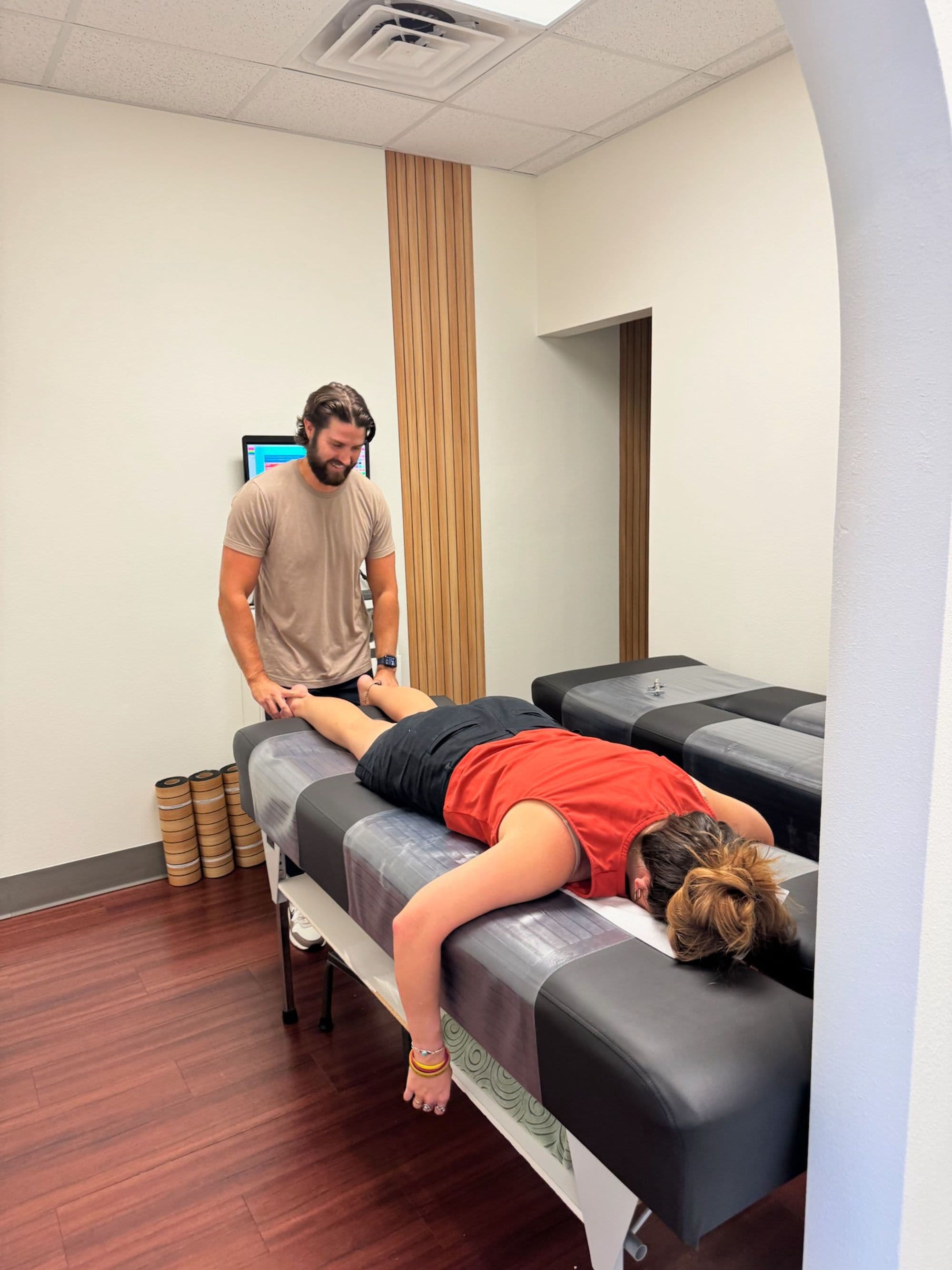
At The Roots Health Centers in Lakewood Ranch, we start by listening. Where exactly is the pain? What were you doing when it started? What makes it better or worse? Then our doctors look at how your neck, mid-back, ribs, and shoulder are moving, and check how your nerves are responding with a neurological evaluation. When needed, we take any necessary X-rays.
If anything points away from the spine, such as a heart, lung, or stomach pattern, we will tell you and help you get to the right provider. That is part of good care.
When the picture does look mechanical, our team may recommend gentle, personalized chiropractic care using Torque Release Technique, a low-force approach with no twisting or cracking of the neck. We pair that with simple changes to how you sit, sleep, and carry. We do not promise a specific result, because every body and history is different. You can read more on our neck pain page, and if your pain is on the other side, see our guide to pain under the right shoulder blade.
Frequently Asked Questions
What causes pain under the left shoulder blade?
Most often it is a strained muscle, a stiff rib or mid-back joint, or an irritated nerve in the lower neck. Less often it is referred from the heart, lungs, or stomach, which is why chest pain, breathlessness, or sweating with this pain needs emergency care.
Is pain under the left shoulder blade a heart attack?
Usually it is not, but it can be. Heart-related pain often comes with chest pressure, breathlessness, sweating, nausea, or pain in the arm or jaw, and it may show up with exertion. If any of those are present, call 911.
Can gas cause pain under the left shoulder blade?
Trapped gas or stomach upset can sometimes refer discomfort toward the left upper back. If it keeps happening, comes with burning after meals, or you notice black stools, see your doctor.
Why does it hurt under my left shoulder blade when I breathe?
A stiff rib joint or tight muscle can make a deep breath feel sharp or catchy. Sudden sharp pain with breathing plus shortness of breath, a fast heartbeat, or a swollen leg needs emergency care.
Can a chiropractor help with shoulder blade pain?
If red flags are ruled out and the pain changes with movement and posture, an exam can show which joints and muscles are involved. Our team will tell you honestly whether we think we can help.
Get a Clear Answer About Your Shoulder Blade Pain
You should not have to wonder every time you reach, twist, or take a deep breath. If the ache under your left shoulder blade keeps coming back, book a complimentary consultation with our team in Lakewood Ranch. We welcome patients from Lakewood Ranch, Bradenton, Sarasota, and the surrounding area.
Conditions We Treat
Shoulder Pain
Impingement, rotator cuff strain, bursitis, tendonitis, referred pain from the neck — shoulder pain has more possible sources than almost any other complaint. Naming the right one is the difference between care that works and months of chasing symptoms.

Neck Pain
Precise cervical adjustments and decompression that restore alignment, reduce nerve pressure, and eliminate chronic neck pain at its source.
Pinched Nerve
A pinched nerve is a mechanical problem — a disc, joint, or inflamed tissue pressing on a nerve where it exits the spine. The pain, tingling, or numbness travels the nerve's path, which is why arm symptoms so often start in the neck.
Services Related to This Post

Keep Reading
Related articles
Pain Under Right Shoulder Blade: Causes, Red Flags, and What May Help
Pain under the right shoulder blade is often muscle or spine related, but sometimes it points elsewhere. Here is how to sort out the causes, spot red flags, and know what may help.
Read articlePain Between the Shoulder Blades: Common Causes and What Helps
Aching or burning pain between your shoulder blades is common, and it often starts somewhere else. Here are the usual causes, the warning signs, and what may help.
Read articleCostochondritis: Why Your Rib Cage Hurts and What Helps
Sharp, stabbing pain near your breastbone can be frightening — but it's often costochondritis, not your heart. Here's what causes it and what may help.
Read article