

Shoulder Pain Radiating Down the Arm: What It Can Mean and When to Worry
It starts as an ache at the top or back of your shoulder. Then it starts to travel: down the outside of your upper arm, sometimes past the elbow, sometimes all the way into your hand with a buzz of tingling. Reaching for a seatbelt hurts. Lying on that side at night is out of the question. Shoulder pain radiating down the arm is one of the most common things people describe to us, and the first question is always the same: where is it actually coming from? The honest answer is that there are three main sources. The shoulder joint itself, most often the rotator cuff, can send pain down the outside of the upper arm. A pinched nerve in the neck can send pain, tingling, or numbness down the arm and into the hand. And, less commonly but most importantly, the heart can refer pain into the shoulder and arm. Below, we cover the warning signs first, then the clues that help tell these sources apart, what may help at home, and how our team in Lakewood Ranch looks at it. This is educational information, not a diagnosis.
First, When Shoulder and Arm Pain Needs Emergency Care
Call 911 right away if shoulder or arm pain, especially on the left side, comes with any of these:
- Chest pressure, squeezing, tightness, or pain
- Shortness of breath, cold sweats, nausea, or lightheadedness
- Pain spreading to the jaw, neck, or back
- Pain that comes on with exertion and eases with rest
- Sudden weakness, numbness, or drooping on one side of the face or body, or trouble speaking
Heart-related pain does not always feel dramatic. In women and in people with diabetes, it can show up as a vague ache in the arm or shoulder with tiredness or shortness of breath. If something feels off and you are not sure, call 911. It is always better to be checked and sent home.
Call your doctor promptly if the pain follows a fall or accident, comes with fever, a hot and swollen joint, or unexplained weight loss, wakes you every night no matter how you lie, or comes with real weakness in the arm or hand, a weaker grip, or clumsiness. One arm that is swollen, discolored, or heavy-feeling also needs prompt attention.
Why Shoulder Pain Radiates Down the Arm
Pain does not always stay where it starts. Your brain maps pain from deep structures, such as joints, tendons, nerve roots, and organs, onto the skin and muscles that share the same wiring. That is why a problem in one place can be felt somewhere else. This is called referred pain, and it is the reason shoulder pain so often seems to travel.
The nerves that supply your shoulder and arm start in the lower neck, roughly the C5 through C8 levels, then pass under the collarbone and through the armpit on their way to the hand. Irritation anywhere along that route can be felt further down the line. Meanwhile, the shoulder joint itself shares nerve supply with the skin over the outer upper arm, so a cranky rotator cuff tends to be felt there rather than in the joint.
Common Causes of Shoulder Pain That Radiates Down the Arm
Rotator cuff irritation and impingement
The rotator cuff is a group of four tendons that hold the ball of the shoulder in its socket. When those tendons are irritated, frayed, or pinched under the bony roof of the shoulder, the pain is usually felt deep in the shoulder and down the outside of the upper arm, often stopping around the elbow. It tends to flare when you lift your arm out to the side or overhead, reach behind your back, or lie on that side. Golfers, pickleball and tennis players, painters, and anyone who reaches overhead a lot see this often. Our guide to rotator cuff pain goes deeper.
A pinched nerve in the neck
When a nerve root in the lower neck is squeezed by a disc bulge, bone spurs, or swelling, the pain can shoot from the neck or shoulder blade down the arm, sometimes past the elbow and into specific fingers. It often comes with tingling, numbness, or weakness, and it tends to flare when you tilt your head back or toward the painful side. Many people feel surprisingly little neck pain. A pinched nerve is one of the most common reasons shoulder pain travels below the elbow. If your pain sits mainly by the shoulder blade, see our guide to a pinched nerve in the shoulder blade.
Frozen shoulder
With frozen shoulder, the capsule around the joint thickens and tightens. Pain can spread into the upper arm, and the shoulder gradually loses motion in every direction, not just when lifting. It is more common between 40 and 60 and in people with diabetes or thyroid conditions.
Thoracic outlet syndrome
The nerves and blood vessels heading to your arm squeeze through a tight space between the collarbone, the first rib, and the neck muscles. When that space narrows, people often feel aching in the shoulder and arm with tingling in the ring and pinky fingers, worse with the arms overhead or when carrying bags. We cover it in our thoracic outlet syndrome guide.
Shoulder arthritis and bursitis
Wear-and-tear changes in the joint, or an irritated bursa (a small fluid-filled cushion), can cause a deep ache that spreads into the upper arm, often with stiffness in the morning.
The heart
As covered above, heart problems can refer pain into the left shoulder and arm, and sometimes the right. Pain that comes with exertion, chest symptoms, or shortness of breath should never be written off as a muscle problem.
Shoulder or Neck? Clues in Your Pattern
The way your pain behaves offers useful hints. These are patterns, not a diagnosis, and more than one source can be involved at once.
Patterns that point toward the shoulder:
- Pain stops around the elbow
- It flares when you lift your arm, reach overhead, or reach behind your back
- Lying on that shoulder hurts
- There is a painful arc partway through raising your arm
- Little or no tingling or numbness in the hand
Patterns that point toward the neck:
- Radiating pain that travels below the elbow into the forearm or fingers
- Tingling, pins and needles, or numbness in specific fingers
- It flares when you look up, turn your head, or tilt your head toward the painful side
- Resting your hand on top of your head eases it
- Neck stiffness or pain by the shoulder blade along with the arm symptoms
Which fingers tingle can also be telling. Thumb and index finger often point to the C6 level, the middle finger to C7, and the ring and pinky fingers to C8 or the ulnar nerve. An exam is what sorts it out, because the shoulder and the neck can both be involved at the same time, and one can keep the other irritated.
How to Relieve Shoulder Pain That Radiates Down the Arm: What May Help at Home
While you are figuring out the source, these steps help many people feel more comfortable:
- Keep it moving within comfort. Gentle pendulum swings, letting the arm hang and drawing small circles, keep the shoulder from stiffening. Total rest tends to make shoulders stiffer.
- Try chin tucks if the neck is involved. Sitting tall, slide your chin straight back, hold a few seconds, and release.
- Use heat or ice. Heat often eases guarded muscles. Some people prefer ice for a fresh flare. Use whatever feels better, wrapped in a cloth, for short stretches.
- Change your sleep setup. Sleep on your back or on the other side, and hug a pillow so the sore arm rests supported instead of falling forward.
- Take breaks from overhead work and long stretches at the computer. Raise your screen to eye level and keep the mouse close.
- Avoid pushing through sharp pain. If a movement sends tingling or pain further down the arm, back off. That is the nerve telling you it is not ready.
If you are thinking about an over-the-counter pain reliever, ask your doctor or pharmacist what is safe for you.
How Our Team Looks at Shoulder Pain That Travels Down the Arm
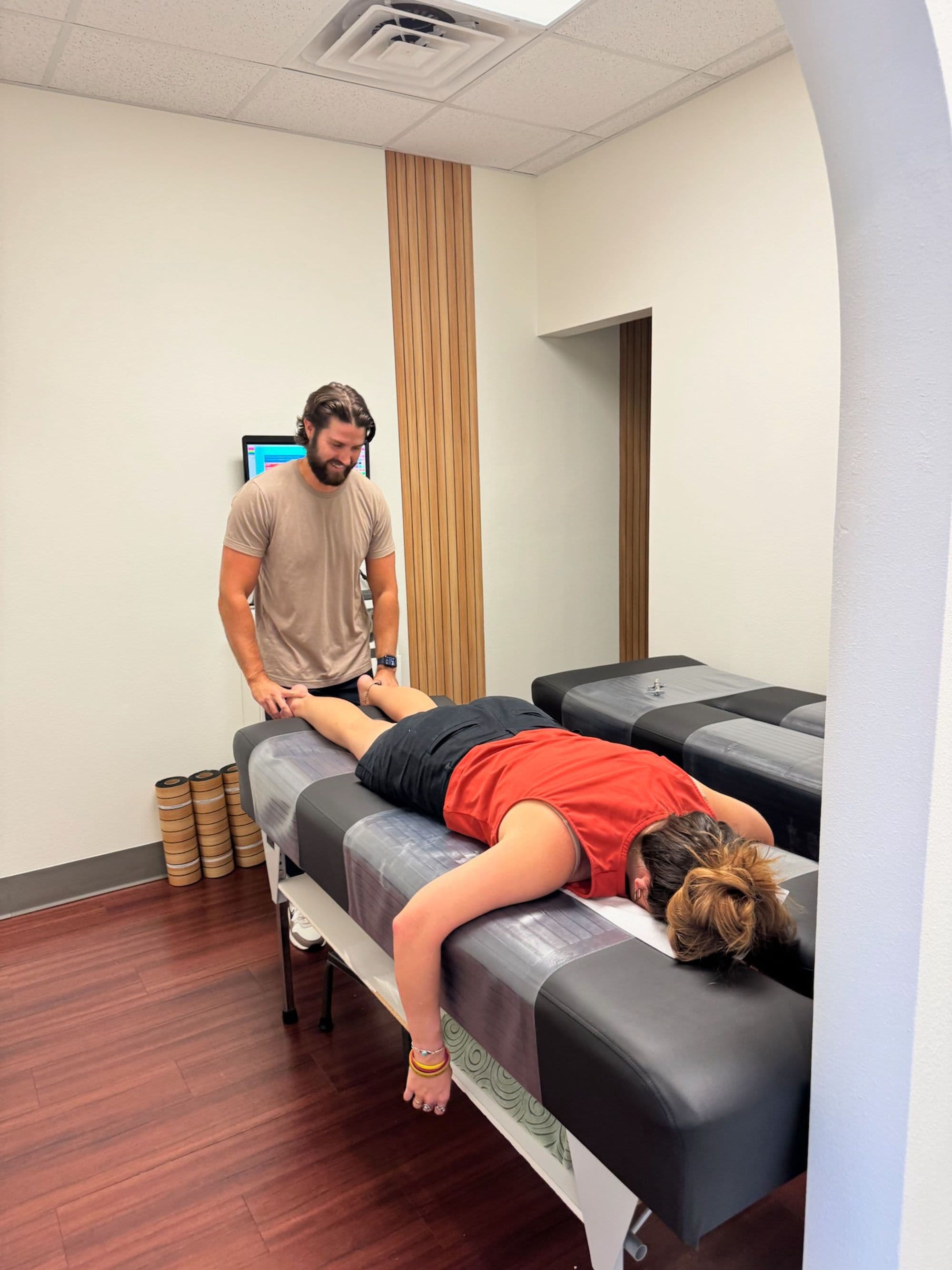
Because the source can be the shoulder, the neck, or both, we do not just look where it hurts. Your visit starts with a conversation about your history, your work and hobbies, and how the pain behaves. Then comes a neurological evaluation that checks reflexes, strength, and sensation down the arm, along with shoulder movement testing and any necessary X-rays. Together those help us see whether the shoulder joint, a nerve root in the neck, or both are driving your shoulder pain.
If chiropractic care is a good fit, our doctors use Torque Release Technique, a low-force, instrument-based approach with no twisting or cracking of the neck. Whether and when an adjustment makes sense is decided after the evaluation, not before. Care may also include shoulder and posture exercises, workstation and sleep changes, and, where it fits, other options in our office. Each person and case is different, so we take a personalized approach. If anything in your evaluation points outside our scope, we will tell you and help you get to the right provider.
Frequently Asked Questions About Shoulder Pain Radiating Down the Arm
What causes shoulder pain that radiates down the arm?
The most common causes are rotator cuff irritation, which usually stays above the elbow, and a pinched nerve in the neck, which often travels below the elbow with tingling. Frozen shoulder, thoracic outlet syndrome, and arthritis are other possibilities. Heart problems can also cause shoulder and arm pain, which is why chest symptoms or shortness of breath need emergency care.
Can frozen shoulder pain radiate down the arm?
Yes. Frozen shoulder often causes an ache that spreads into the upper arm. The telltale sign is a shoulder that steadily loses motion in every direction, not just when lifting overhead.
Is left shoulder pain radiating down the arm a heart attack?
It can be, especially when it comes with chest pressure, shortness of breath, sweating, nausea, or pain with exertion. Many cases turn out to be the shoulder or neck, but you should never guess. If you have any of those signs, call 911.
When should I see someone for shoulder pain that goes down my arm?
Get checked if it is not easing, keeps coming back, wakes you at night, or comes with numbness, tingling, or weakness. Use the emergency signs above for anything sudden.
Get Your Shoulder and Arm Pain Checked in Lakewood Ranch
Pain that keeps traveling down your arm is your body asking for a closer look, not something you have to live with. If you are in Lakewood Ranch, Bradenton, or Sarasota and want to know whether your shoulder, your neck, or both are behind it, book a complimentary consultation with our team. We will listen, look at the whole pathway from your neck to your fingertips, and talk through your options with you.
Conditions We Treat
Shoulder Pain
Impingement, rotator cuff strain, bursitis, tendonitis, referred pain from the neck — shoulder pain has more possible sources than almost any other complaint. Naming the right one is the difference between care that works and months of chasing symptoms.
Pinched Nerve
A pinched nerve is a mechanical problem — a disc, joint, or inflamed tissue pressing on a nerve where it exits the spine. The pain, tingling, or numbness travels the nerve's path, which is why arm symptoms so often start in the neck.
Frozen Shoulder
Non-surgical care for adhesive capsulitis (frozen shoulder) using shockwave therapy, red light therapy, and corrective adjustments to restore range of motion and end chronic shoulder pain.
Services Related to This Post
Keep Reading
Related articles
Rotator Cuff Pain: Non-Surgical Options That May Help
Reaching overhead or sleeping on that side shouldn't hurt. Here's what causes rotator cuff pain, how to tell it apart from impingement or a tear, and non-surgical options that may help.
Read articleThoracic Outlet Syndrome: The Numb-Arm Mystery Explained
Numb, heavy, or tingly arm — especially overhead? Thoracic outlet syndrome is often misdiagnosed. Here's what it is and non-surgical options that may help.
Read article