

Lower Back Pain When Standing Up: Why It Happens and What May Help
You push up from the couch, the car seat, or the edge of the bed, and your low back catches. Sometimes it's a sharp grab, sometimes a stiff ache that eases after a few steps. If you're dealing with lower back pain when standing up, the most common explanation is that your spine, hips, and core have been held in one position for a while and aren't ready to share the load when you suddenly ask them to move. It's usually a pattern, not a mystery, and that pattern gives you clues. Below, we'll walk through the usual suspects, simple habits that may help, and the signs that mean it's time to have your back looked at. This is educational information, not a diagnosis.
Why Standing Up Can Set Off Low Back Pain
Going from sitting to standing is one of the most demanding transitions your low back makes all day. Your hips straighten, your trunk shifts forward and then upright, and your deep core muscles need to brace to keep the spine steady. If any link in that chain is slow to wake up, the low back often picks up the slack.
A few things tend to be going on at once:
- Stiff joints after rest. Spinal and pelvic joints like movement. After a long stretch in one position, they can feel "gummy" and protest when you first load them.
- Muscles that have shortened. Sitting keeps the hip flexors in a shortened position, which can tug on the low back when you stand. Our post on tight hip flexors and low back pain explains that link.
- Glutes that aren't contributing. When the glutes are sluggish, the low back does extra work. We cover that in weak glutes and low back pain.
- Irritated discs or nerves. Pain that sharpens on standing, or that travels into the buttock or leg, can involve a disc or a nerve root.
- Guarding. After a flare-up, your body can tense up to protect the area, which makes the first few movements feel worse.
Common Causes, and How They Tend to Feel
Muscle strain or overuse
A dull, achy tightness that's worst for the first few steps and loosens as you move is a very common pattern. It often shows up after yardwork, a long drive, or a weekend of projects. Because the muscles are guarding, even a small movement can feel dramatic.
Facet joint irritation
The small joints at the back of each vertebra can get cranky, especially when you straighten up or lean backward. People often describe a pinching or catching feeling on one side. The "first step" stiffness that eases with motion is typical.
Sacroiliac (SI) joint strain
The SI joints connect your spine to your pelvis. When one is irritated, pain can sit low on one side, near the belt line, and flare when you stand from sitting or shift your weight. Our guide to SI joint pain goes deeper.
Disc-related pain
Discs act as cushions between vertebrae. When one is irritated, bending forward, sitting for long stretches, and then standing up can all be uncomfortable. If you also notice leg symptoms, a herniated disc or sciatica may be part of the picture.
Nerve irritation
Sharp, shooting, burning, or electric sensations that travel from the back into the buttock, thigh, or foot suggest a nerve is being irritated. Numbness or tingling alongside the pain is worth taking seriously. A pinched nerve in the low back can behave this way.
What May Help When You Stand Up
These are gentle, everyday habits. Each person and case is different, so use them as starting points rather than rules.
Scoot forward first
Before you stand, slide to the front of the seat and place your feet slightly behind your knees. Starting closer to the edge shortens the distance your trunk has to travel.
Lead with your hips and nose over toes
Lean forward from the hips (not by rounding your back), keep your nose roughly over your toes, then push through your feet. Let your legs and glutes do the lifting. Using the armrests or your thighs for light assistance is perfectly fine.
Breathe out as you rise
A slow exhale as you stand helps your deep core brace naturally, instead of holding your breath and bracing with your back.
Take a moment before walking
Pause for a breath once you're upright. Let your hips settle under you before your first step, rather than lunging into a walk while stiff.
Break up long sitting
Standing up to shift position regularly gives your joints something to do before they stiffen. Our post on how sitting affects your back has more ideas, and a few gentle moves from our desk stretches guide can be done right where you are.
Keep moving in a comfortable range
Gentle walking is often more comfortable than staying still. We discuss that in is walking good for back pain.
Setting Up Your Day to Make Standing Easier
Small environmental changes can lower how much your back has to work:
- Seat height. Chairs that are very low make you work harder to rise. A firmer or slightly higher seat can reduce the effort. This matters for the car seat, too.
- Support. A small cushion or rolled towel behind the low back can make a long sit more comfortable for some people.
- Footwear. Supportive shoes (or at least shoes with a stable base) give your hips and spine a steadier foundation than slippery socks on a hard floor.
- Morning routine. If your pain is worst when getting out of bed, roll to your side and use your arms to push up rather than sitting straight up like a sit-up.
In Lakewood Ranch, Bradenton, and Sarasota, a lot of people also spend long stretches in the car or on the golf course. If that sounds like you, building a quick "reset" into those stops, such as standing, a few slow hip hinges, and a deep breath, may pay off.
When Standing-Up Pain Deserves a Closer Look
Most short-lived stiffness settles with gentle movement. It's worth getting evaluated if you notice:
- Pain that returns every time you stand, week after week
- Pain that travels into the buttock, leg, or foot
- Numbness, tingling, or weakness in a leg or foot
- Pain that is getting worse or waking you at night
- Pain that followed a fall, accident, or lifting injury
These patterns can point to joint, disc, or nerve involvement, and it helps to know what's behind them rather than guess. Our overview of back pain and our lower back pain symptoms page explain more about what to watch for.
Seek urgent medical care right away if back pain comes with loss of bladder or bowel control, numbness in the groin or inner thighs, fever, or sudden severe weakness in a leg.
How We Look at It at The Roots
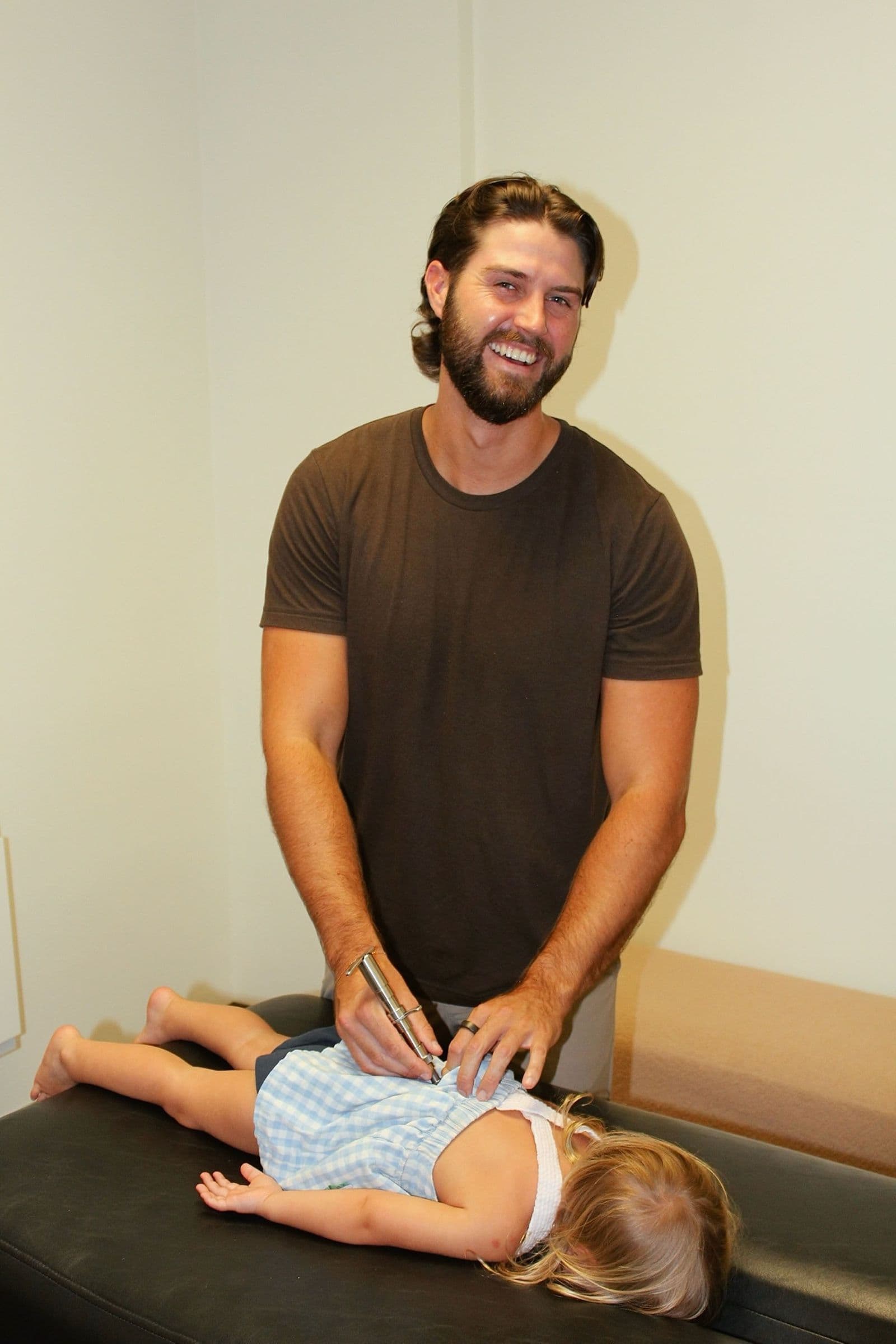
When someone tells us their back hurts every time they stand, we start by listening: when it happens, what it feels like, and what makes it better or worse. Then we complete a neurological evaluation and look at how your spine, hips, and nervous system are working together, taking X-rays only when they're necessary. Dr. Logan Swaim often says that pain is a signal worth understanding, not just something to push through. Our chiropractic care is built around finding the pattern behind your symptoms and explaining your options in plain English. If something belongs with another provider, we'll tell you.
Frequently Asked Questions
Why does my lower back hurt when I stand up from sitting?
Often it's because joints and muscles have stiffened during sitting, and the low back has to work harder if the hips and glutes are slow to engage. Disc or nerve irritation can also make that transition uncomfortable.
Why does my back hurt when I stand up after sitting for a long time?
Long sitting keeps your hips flexed and your spinal joints in one position. When you stand, those tissues are asked to change quickly, which can cause that first-step ache or catch.
Is it normal for my lower back to hurt when I get out of bed?
Morning stiffness is common, but pain that is sharp, keeps worsening, or comes with leg symptoms is worth having checked rather than ignored.
When should I see a chiropractor for back pain on standing?
It's reasonable to book a visit if the pain keeps coming back, travels into your leg, or comes with numbness or tingling. For anything sudden and severe, seek urgent medical care first.
Ready to Find Out What's Behind It?
You don't have to just work around a back that grabs every time you stand. Our team in Lakewood Ranch can walk you through what's going on and what your options are. Book a complimentary consultation and we'll start with a conversation about what you're feeling.
Conditions We Treat
Services Related to This Post
Keep Reading
Related articles
Tight Hip Flexors and Low Back Pain: Why Sitting Makes It Worse
Tight hip flexors can quietly tug on your low back, especially if you sit most of the day. Here's how the connection works, what may help, and when to get checked.
Read articleWeak Glutes and Low Back Pain: The Overlooked Connection
Weak glutes can quietly leave your low back doing extra work. Here's how the hip-and-back connection works, the signs to watch for, and what a proper look involves.
Read articleHow Sitting 8 Hours a Day Is Quietly Wrecking Your Spine
Modern work keeps you seated, but your spine wasn't built for that. Here's what prolonged sitting actually does to your body — and what may help.
Read article